Water Chemistry for Tea: How TDS & pH Unlock "Hui Gan" (Returning Sweetness)
Quick Summary: The "Golden Rule" for premium tea (especially Pu-erh and Oolong) is water with a TDS of 30–80 ppm and low alkalinity. High calcium levels in hard water (>150 ppm) cause "tea scum" and muted sweetness (Hui Gan). For a perfect brew, aim for a pH of 6.5–7 and use targeted filtration or remineralization.
In This Guide
The Alchemy of Extraction
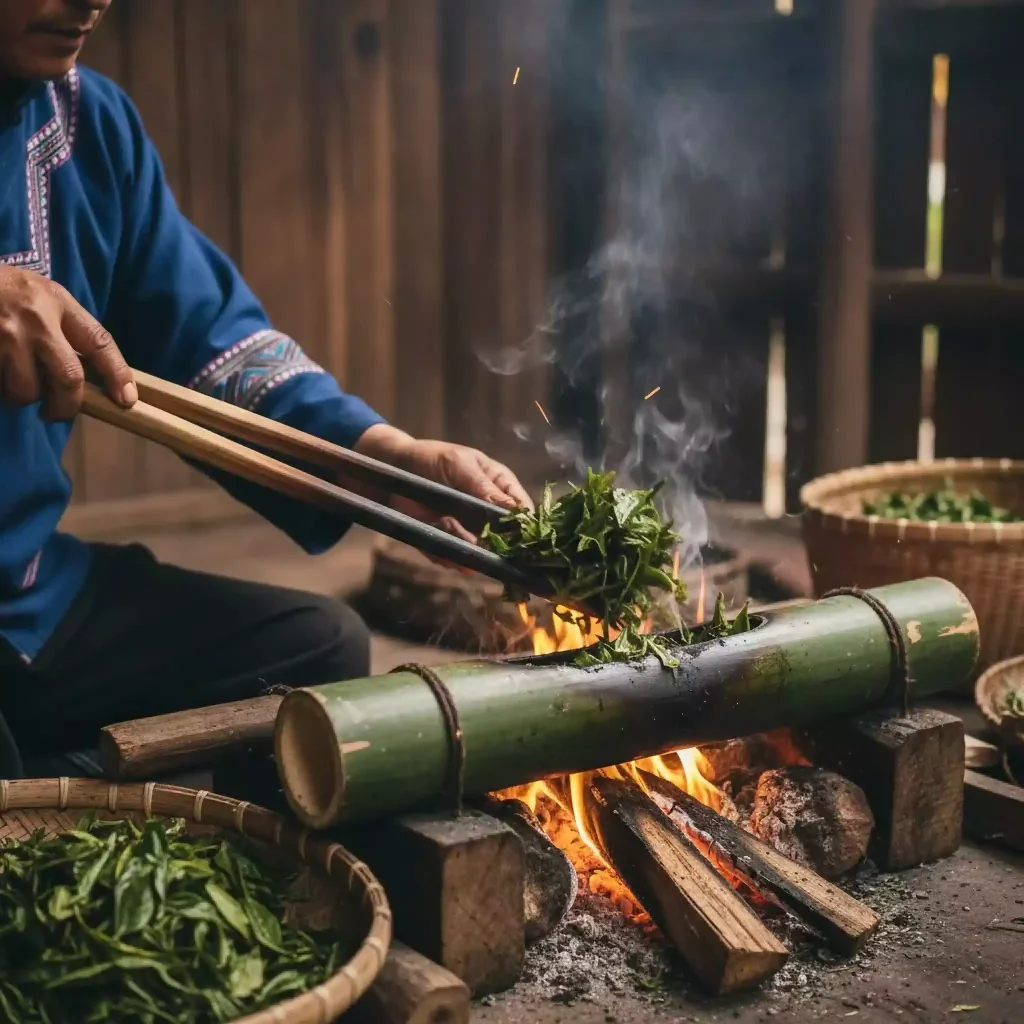
An ancient Chinese proverb whispers: “Water is the soul of tea.” While it sounds like pure poetry, it is, in fact, a fundamental law of food science. Tea is not just a drink; it is a complex extraction process where water serves as the master solvent, deciding which flavors are liberated and which remain locked within the leaf.
Many tea enthusiasts across Manhattan, London, or Vienna face a recurring frustration: a premium tea that tasted transcendent at the source suddenly turns flat, muddy, or lifeless in their own cup. The culprit is rarely the leaf. Instead, the chemistry of the local tap—the invisible minerals and shifting pH levels—has fundamentally altered the tea’s DNA.
Understanding water chemistry—specifically TDS, pH, and alkalinity—is the final bridge between a casual steep and a true 2g Rhythm session.
In this guide, we strip away the mysticism to explore the measurable factors that define Hui Gan (returning sweetness), clarity, and texture. Whether you are dealing with aggressive hard water or overly-stripped filtered water, these science-backed protocols will help you reclaim the full potential of your tea, no matter where your kettle sits.
TDS
Total Dissolved Solids
The concentration of minerals and salts in your water. Think of it as the "traffic" in the water; too much traffic (high TDS) prevents tea flavors from moving out of the leaf.
pH
Potential of Hydrogen
The acidity or alkalinity of your water. Tea is naturally acidic. If your water is too alkaline (high pH), it will darken the brew prematurely and mute the vibrant top notes.
ALKALINITY
The Buffer Capacity
The water's ability to resist pH changes. High alkalinity acts like a chemical "shield" that prevents the tea’s natural character from shining through, often resulting in a flat taste.
The Chemistry Behind Returning Sweetness (Hui Gan)
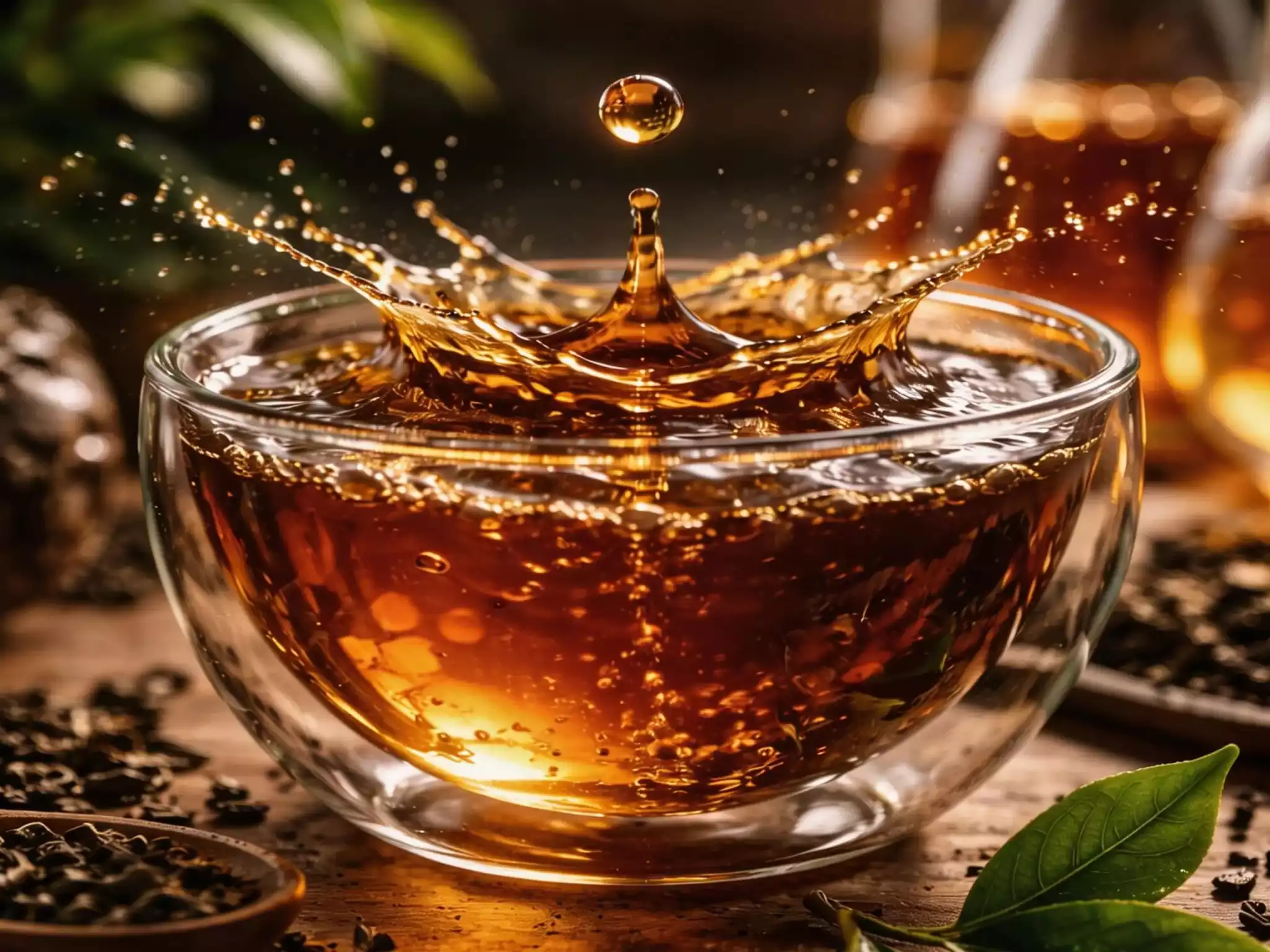
Returning sweetness—hui gan—is that lingering, pleasant sweetness that emerges in the throat and mouth after swallowing good tea. On a molecular level, it results from interactions between water minerals and the tea's compounds.
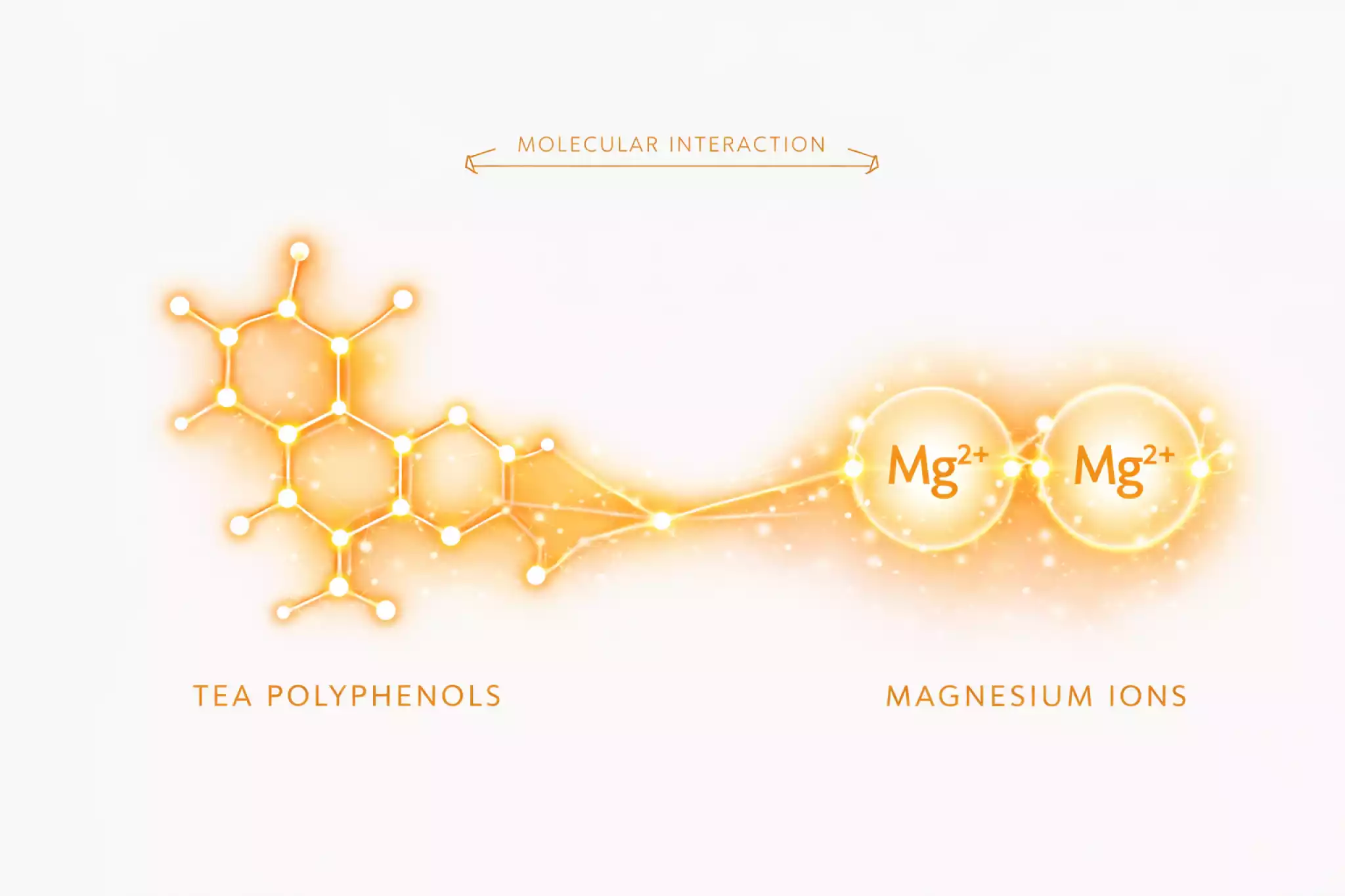
Magnesium ions (Mg²⁺) in moderate amounts enhance perceived sweetness by forming soluble complexes with tea polyphenols, softening astringency from tannins. Calcium ions (Ca²⁺), however, behave differently: at high levels they bind preferentially with polyphenols, creating large insoluble precipitates that suppress sweetness. [Study: Impact of Water Composition on Tea Extraction]. Think of magnesium as a flavor amplifier and calcium as a flavor suppressor.
Alkalinity (the water's buffering capacity against pH change) also plays a critical role. Tea naturally contains organic acids and amino acids (like L-theanine) that give the brew a mildly acidic base. High-alkalinity water, rich in bicarbonate (HCO₃⁻), neutralizes these acids, raising pH. In a more alkaline environment, polyphenols oxidize faster, darkening the liquor and flattening the bright, refreshing returning sweetness. Ideal brewing water has low-to-moderate alkalinity to preserve the tea's natural acidity and highlight fresh, savory notes alongside sweetness.
The Golden TDS Rule: Why 30–80 ppm Often Works Best
Total Dissolved Solids (TDS), measured in ppm (parts per million), quantifies the total mineral content in water. While the SCAA Water Standards suggest a target of 150 ppm for coffee, specialty tea—with its delicate volatile aromatics—often performs better at a leaner 30–80 ppm.
Controlled brewing experiments with the same high-mountain oolong reveal clear patterns across TDS levels:
| TDS Range | Water Type | Sweetness / Returning Sweetness | Astringency | Aroma Clarity | Liquor Brightness | Overall Balance |
|---|---|---|---|---|---|---|
| < 10 ppm | Pure / RO water | Low (thin, flat) | Low | High but fleeting | Clear | Lacks structure and depth |
| 30–80 ppm | Soft to moderately hard | High (strong returning sweetness) | Balanced | Clear and persistent | Bright and vibrant | The Sweet Spot: excellent body with refreshing clarity |
| >150 ppm | Hard water | Suppressed | High (rough) | Muted | Dull / cloudy | Over-extracted, bitter-dominant |
Aiming for around 50 ppm is a safe, reliable starting point for consistent results. If your raw pu-erh tastes unexpectedly harsh or muted, water quality is often the hidden culprit. For more on this, see: Why Your Raw Pu-erh Tea Doesn't Taste as Good as Others'.
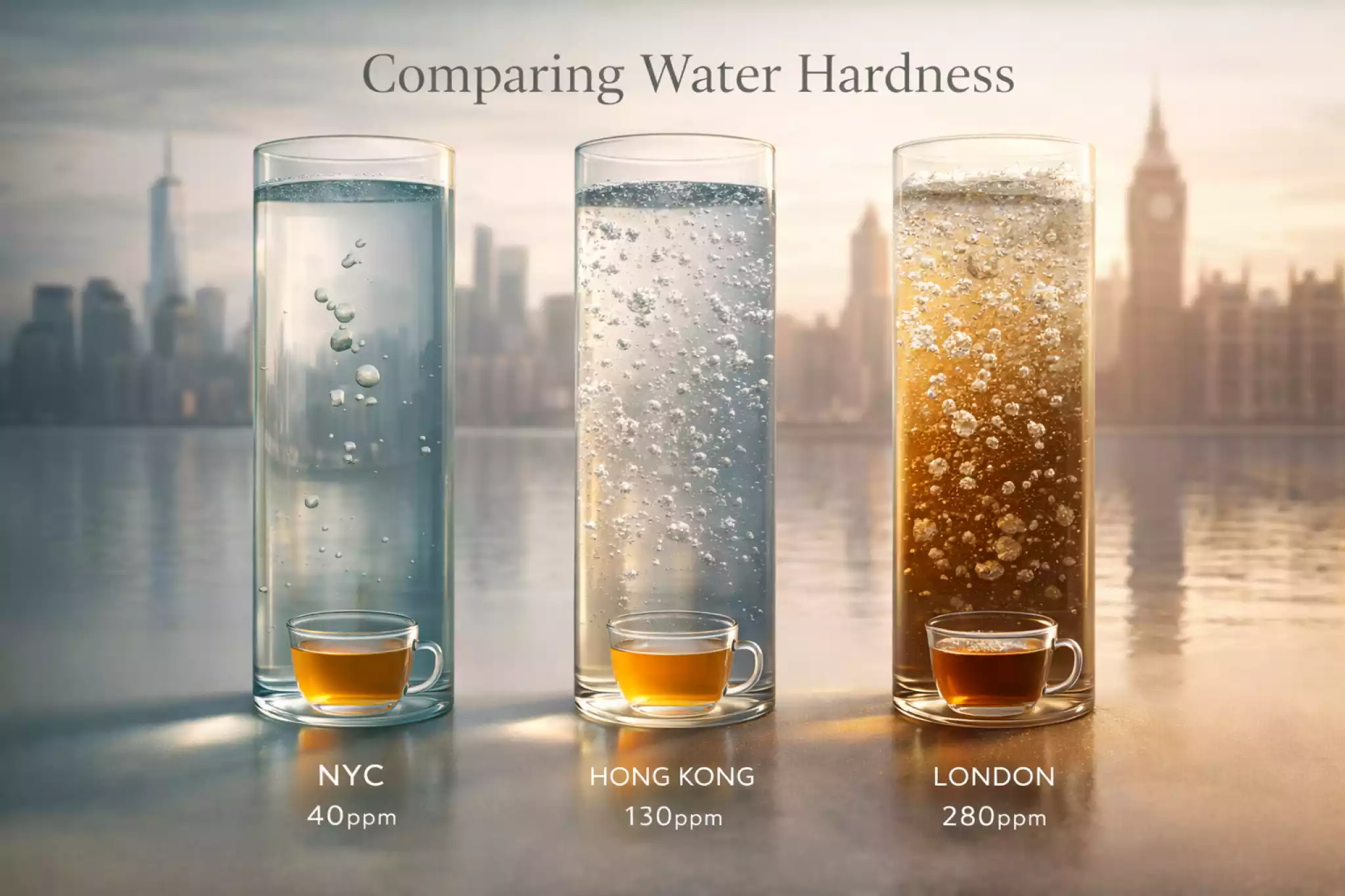
Tackling Hard Water: The Truth About Cloudy Tea and Surface Scum
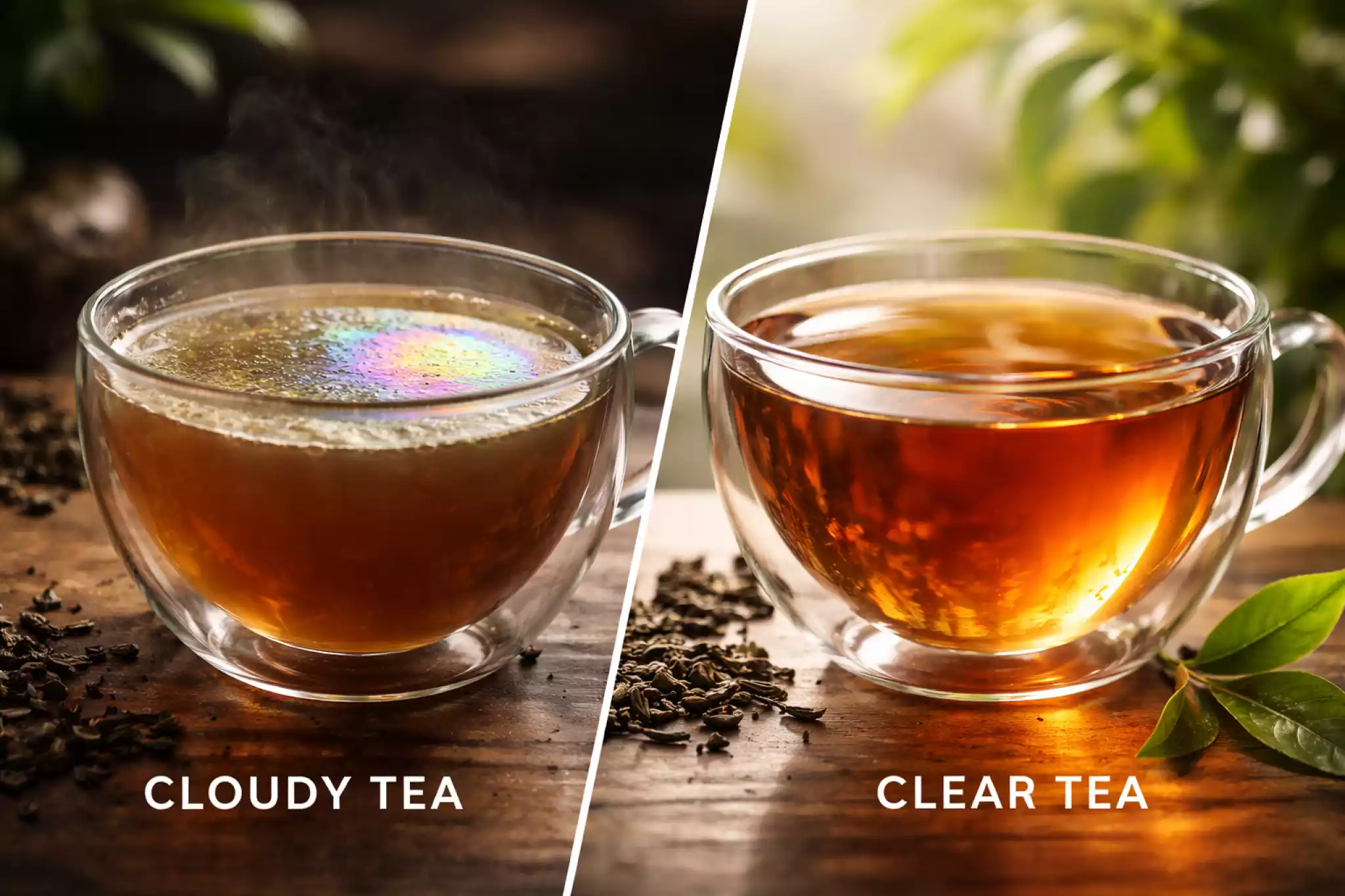
In much of the UK, US, and continental Europe, tap water is hard (high in calcium and magnesium), leading to two common issues: cloudy liquor and unsightly surface scum.
That iridescent film floating on top is not tea oil—it's a chemical reaction. Tea polyphenols (especially theaflavins and thearubigins) bind with calcium ions in hard water to form insoluble calcium-polyphenol complexes that rise to the surface as a grayish or rainbow-colored scum. This not only looks unappealing but also locks away flavor compounds, reducing intensity. High bicarbonate levels further darken black and ripe pu-erh teas by accelerating oxidation into thearubigins and theabrownins, turning bright red liquor dull and murky. For visually sensitive teas, these changes are irreversible. Overcoming hard water is often the single biggest upgrade Western tea drinkers can make. Learn more about common pitfalls in: Beyond the Earl Grey Trap.
High bicarbonate levels further darken black and ripe pu-erh teas by accelerating oxidation, turning bright red liquor dull and murky. According to the Harvard T.H. Chan School of Public Health, these polyphenol interactions are not just about taste—they define the bioavailability of the tea's antioxidant properties.
Practical Fixes: Water Correction Recipes for Hard-Water Regions
Here are three evidence-based approaches, from simple to advanced—choose based on your budget and precision needs.
Option A: Remineralized Pure Water (Third Wave Style) 🧪
Start with distilled or reverse-osmosis (RO) water (TDS ≈ 0 ppm), then add a commercial mineral packet. This method, popularized by Third Wave Water,
ensures your 2g Rhythm remains consistent whether you are in London or Los Angeles.
- Pros: Highly repeatable, stable results.
- Best for: Serious tasters who want consistency across sessions.
Option B: Targeted Filtration 🚰
Not every filter works equally well for tea. For hard-water regions, we especially recommend:
- ZeroWater pitcher or bottle: Drops TDS near zero—excellent base, but always remineralize afterward to avoid flat taste.
- BWT Magnesium Mineralizer or similar magnesium-focused cartridges: Adds beneficial Mg²⁺ while reducing excess calcium—great middle-ground for tea.
- Standard Brita: Limited hardness reduction; better for chlorine only.
Option C: Simple DIY Recipe ⚖️
For experimenters who want full control:
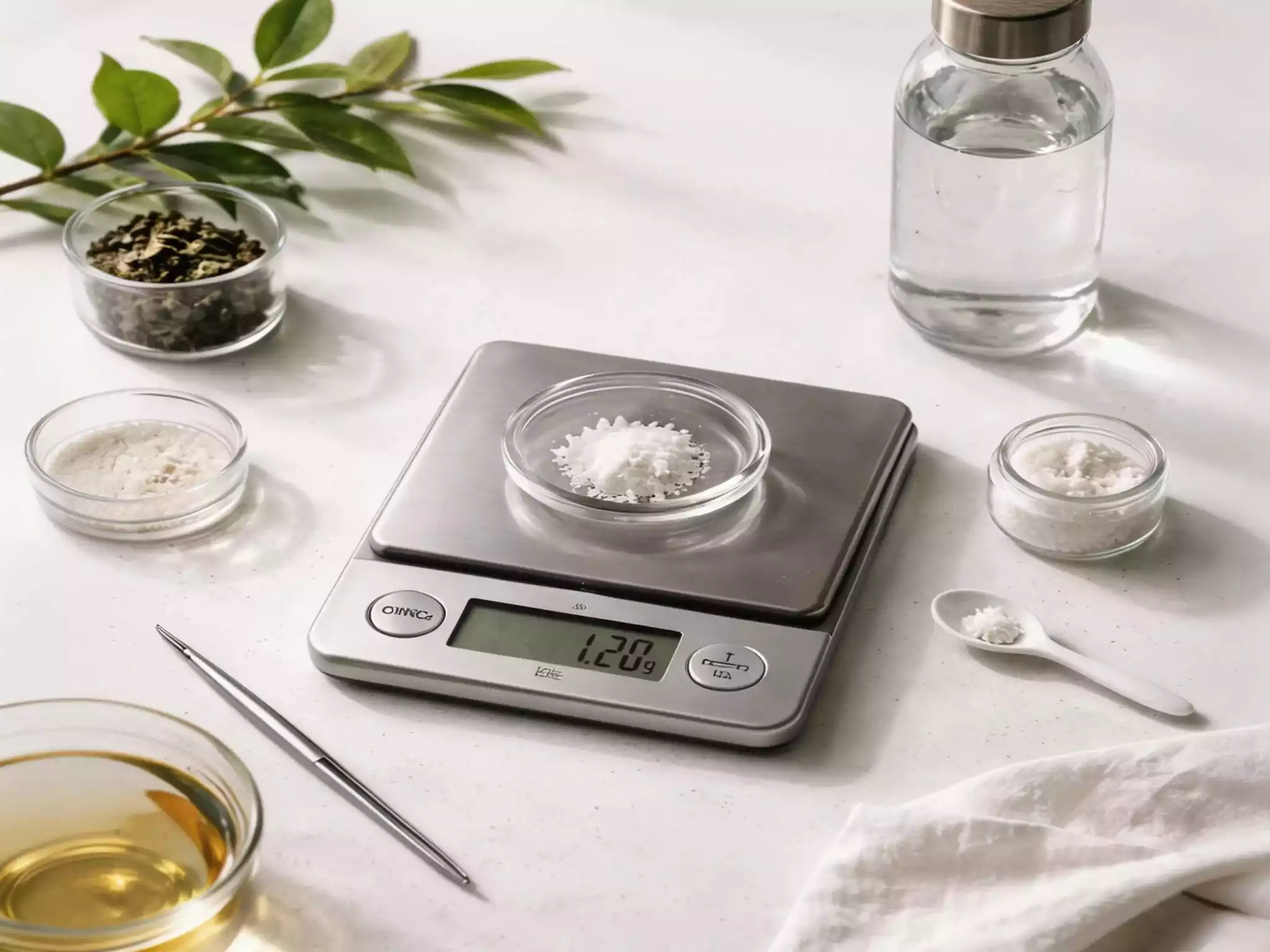
🧪 Steeped Roots "Sweet Water" Recipe
Per 5 Liters of Distilled/RO Water:
- 0.5g Epsom Salt (Food Grade): Boosts sweetness and Hui Gan.
- 0.1g Baking Soda (Food Grade): Balances acidity without muting aroma.
Result: ~50 ppm TDS. Ideal for high-mountain Oolongs and Raw Pu-erh.
Note: Use only food-grade ingredients from trusted sources. Overdosing baking soda raises alkalinity too high—measure TDS and pH after mixing.
Conclusion & Recommendation
Water chemistry isn't about turning tea into a lab project—it's about removing variables so the leaves can shine. Don't let your local tap water cap your experience of great tea.
To accurately test how water impacts your brew, we recommend using our 2g Rhythm—a consistent tea-to-water ratio that makes mineral variances much easier to detect and compare.
Run a simple side-by-side tasting: brew the same tea twice—once with your regular tap water, once with corrected soft water (~50 ppm TDS). Compare aroma, sweetness, astringency, and color. The difference is usually eye-opening and far more convincing than theory alone. To deepen your tasting skills and fully appreciate these nuances, check out How to Drink Tea Like a Master.
Tea reflects its terroir, and water is the universal solvent of that terroir. Master your water, and you're not just brewing—you're reconstructing flavor at the molecular level.
❓ Frequently Asked Questions about Tea Water Chemistry
What is the ideal TDS for brewing premium tea?
For most specialty teas like Pu-erh and Oolong, a TDS range of 30–80 ppm is ideal. This provides enough mineral content to act as a flavor catalyst without over-extracting bitterness or muting the tea's natural sweetness.
Why does my tea have a rainbow-colored film or scum on top?
That film (Tea Scum) is a result of calcium ions in hard water reacting with tea polyphenols. It is a chemical precipitate that indicates high water hardness and alkalinity, which usually dulls the tea's flavor and clarity.
Can I use 100% distilled water to brew tea?
Technically yes, but it is not recommended. Pure distilled water (0 ppm TDS) often produces a flat, thin-bodied brew because it lacks the minerals (like magnesium) needed to pull out and balance the complex sweetness and aromatic compounds of the leaf.
Does boiling water remove TDS or hardness?
Boiling only removes temporary hardness (calcium bicarbonate), which often settles as limescale in your kettle. It does not reduce permanent hardness or total dissolved solids; in fact, evaporation can slightly increase the concentration of remaining minerals.
Further Reading
- Tea Brewing Handbook for Beginners – Core techniques for new brewers
- The Force of Water in Your Cup of Tea – Deeper dive into water's role
- Why Your Raw Pu-erh Tea Doesn't Taste as Good as Others'
- The Earl Grey Trap
- How to Drink Tea Like a Master: Hui Gan, Throat Yun & More