
Understanding Tea Metabolism:
How Tea Compounds Actually Work Inside You
Tea compounds — particularly EGCG (epigallocatechin gallate) and Large Yellow Tea Polysaccharides (LYP) — influence human health through three primary pathways: fat oxidation and metabolic rate (EGCG + caffeine synergy can increase fat burn by ~17% before aerobic exercise), gut barrier integrity and microbiota diversity (LYP enriches short-chain fatty acid–producing probiotics), and cardiovascular protection via antioxidant and anti-inflammatory activity. Optimal daily intake: 400–600 mg EGCG from 3–4 cups of high-grade green tea or ceremonial matcha. Timing and sourcing matter as much as quantity.
I. What Tea Metabolism Actually Means — and Why It Changes How You Buy
Here's a question I don't think tea drinkers ask often enough: what happens to tea after you swallow it?
Most people, even enthusiastic tea drinkers, think of tea as something they experience in the cup — the flavor, the aroma, the ritual. Which is completely valid. But there's an entire second act that happens inside you, and understanding it changes how you think about which teas to drink, when to drink them, and why quality sourcing isn't just about taste.
Tea metabolism refers to the complete arc of what happens to tea's bioactive compounds — polyphenols, catechins, caffeine, amino acids, polysaccharides — from absorption in your gut, through distribution into your tissues, their interaction with your cellular machinery, and eventually excretion. The field sits at the intersection of food science, pharmacology, and gut biology, and the last decade of research has made it genuinely interesting.
I want to be upfront about something before we dive in: tea is not medicine. It doesn't cure diseases. The research we'll discuss is largely observational or based on specific concentrations that may be higher than what you'd get from casual daily drinking. What the evidence actually supports — and it does support this convincingly — is that regular, quality tea consumption creates measurable, cumulative benefits across several health domains. That's a meaningful claim even if it's less dramatic than the headline versions you'll see on supplement bottles.
The Key Players: A Brief Introduction
Before we go deeper, it helps to know who we're talking about. Tea's health-relevant compounds are a diverse cast.
Short answer: don't apply the 400–600mg EGCG target directly to raw puerh. Here's why the comparison isn't apples-to-apples:
- Different catechin profile: Raw puerh undergoes sun-drying and natural post-fermentation, which progressively converts EGCG into other polyphenolic compounds. A 3-year raw puerh contains meaningfully less EGCG per gram than a first-flush Sencha — and a 10-year cake less still.
- Different evidence base: The "dose-response" research for EGCG is built almost entirely on green tea and matcha extracts. Human bioavailability data for raw puerh's specific compound matrix is still accumulating. We can't directly transfer those dosage numbers.
- Different value proposition: Raw puerh's health potential likely comes more from theabrownins, gallic acid, and microbial metabolites than from replicating green tea's catechin density. Chasing EGCG from puerh is using the wrong metric for the right tea.
✅ Practical reframe: If raw puerh is your primary daily tea, think in terms of overall polyphenol diversity rather than single-compound dosage. 3–4 steepings of a ≤3-year raw puerh (5–8g leaf) gives you a meaningful and distinct polyphenol intake — rotate with green tea to cover both profiles.
A first-flush Japanese Gyokuro, shade-grown and harvested in April, can contain 3–4× the EGCG concentration of a generic green tea bag. Processing method, storage temperature, and time since harvest all degrade catechin content. Which means: if you're drinking tea partly for the metabolic benefits, buying well-sourced, harvest-dated, whole-leaf tea isn't just about flavor snobbery. It's about whether there's anything biochemically active left in your cup.
II. EGCG and Weight Management: What the Research Actually Shows
Of all tea's compounds, EGCG has the most substantial body of research behind it — and also some of the most aggressively overstated health claims floating around wellness blogs. Let me try to give you the accurate version.
EGCG is a catechin: a type of polyphenol. It is found in meaningful concentrations almost exclusively in green and white tea; traditional processing methods for black and oolong tea convert much of it into other compounds. This is why, when research discusses EGCG's metabolic effects, the relevant tea is almost always green.
How EGCG Influences Fat Oxidation
Fat oxidation is the process of breaking down stored fat molecules for energy. Your body does this constantly — the question is at what rate, and what substrates it's preferentially burning at any given time. EGCG influences this process through several intersecting mechanisms.
A well-cited meta-analysis of 11 randomized controlled trials found that EGCG consumption was associated with a statistically significant reduction in body weight and body mass index. The effects were modest but consistent — and importantly, greatest in studies with habitual low caffeine consumers, which points toward the caffeine interaction we'll discuss next.
Important caveat: most studies used isolated EGCG supplements at concentrations higher than typical tea drinking. Whole-tea drinking studies show smaller but still meaningful effects — and crucially, they don't carry the same risk profile as high-dose supplementation.
The Caffeine Synergy: Why This Combination Matters
This is where tea becomes genuinely interesting from a metabolic perspective — and where it has a meaningful advantage over isolated EGCG supplements.
Caffeine is itself a metabolic stimulant, acting primarily through adenosine receptor antagonism. But when EGCG and caffeine are present together — as they naturally are in tea — something more than the sum of their individual effects occurs.
When combined with caffeine, EGCG's fat-oxidizing effects are significantly amplified. Studies examining moderate aerobic exercise (walking, cycling) have found that consuming EGCG and caffeine together before exercise can increase fat oxidation by approximately 17% compared to either compound alone or placebo. — Observations consistent across multiple exercise metabolism studies, summarized in the International Journal of Obesity, 2020
The mechanism: caffeine enhances the COMT-inhibiting effect of EGCG (since caffeine itself also slows norepinephrine breakdown), and the two compounds together create a more sustained sympathomimetic environment — meaning your body gets a stronger and longer-lasting signal to mobilize and burn fat.
The practical implication of this: a high-quality green tea or matcha, consumed 30–45 minutes before moderate aerobic exercise, may meaningfully shift your substrate utilization toward fat during that session. This is not a dramatic effect. It is a consistent, cumulative one.
- Ceremonial-grade Matcha: Shade-grown → concentrated L-Theanine and EGCG. Stone-ground → all compounds in suspension, nothing filtered. Current-year harvest is essential.
- High-grade Gyokuro: Maximum shade-growing time (25+ days) yields the highest catechin and L-Theanine concentrations of any brewed green tea.
- First-flush Sencha from Shizuoka or Kagoshima: A more accessible daily driver with solid EGCG content. Harvest date matters — buy current year.
What to avoid for EGCG: generic green tea bags (fannings-grade, old stock, significant catechin degradation), and any green tea that doesn't disclose a harvest date.
Impact on Metabolic Rate: Realistic Expectations
Beyond acute fat oxidation during exercise, there's a separate body of evidence around EGCG's effect on basal metabolic rate — the calories you burn simply existing.
Multiple studies have found that regular green tea consumption is associated with a 4–5% increase in 24-hour energy expenditure. In absolute terms for a typical adult, that's roughly 80–100 additional calories per day. Not nothing — but not a replacement for fundamentals either.
For context: the 400–600mg daily EGCG target cited in research corresponds to roughly 3–4 cups of high-grade Sencha or 2–3 servings of ceremonial matcha. It is not achievable through generic green tea bags, and certainly not through "green tea extract" gummies with no sourcing transparency.
For metabolic and fat-oxidation benefits, the evidence points toward two optimal windows:
- 30–45 minutes before moderate aerobic exercise — maximizes the caffeine-EGCG synergistic effect on fat oxidation during activity
- Morning consumption on an empty stomach — some evidence suggests higher catechin absorption rates; also avoids the iron absorption interference that can occur when green tea is consumed with iron-rich meals
Avoid consuming high-EGCG teas alongside milk (casein proteins bind to catechins, reducing bioavailability) or immediately with meals high in non-heme iron.
"Tea's metabolic benefits are not acute or dramatic. They are cumulative, consistent, and deeply influenced by the quality and freshness of what's in your cup."
— A point the supplement industry would prefer you not think too hard aboutIII. Tea Polysaccharides and Gut Health: The Less-Discussed Story
EGCG and catechins get most of the attention in tea science journalism. But there's a quieter, equally compelling research thread developing around tea polysaccharides — particularly Large Yellow Tea Polysaccharides (LYP).
Yellow tea is one of the least produced and least exported tea categories in the world. It undergoes a unique "wet piling" (闷黄, mén huáng) process after initial green tea processing, which creates distinct polysaccharide profiles not found in green or black teas. Most Western tea drinkers have never encountered it. Which makes the emerging gut health research on LYP both exciting and slightly premature to translate into strong buying recommendations — but worth understanding.
Improving Intestinal Barrier Function
The intestinal barrier is one of those things you don't think about until it becomes a problem. It's a single cell-layer thick, spanning your entire small intestine, and its job is to allow nutrients through while keeping pathogens, toxins, and undigested food particles out of your bloodstream.
When this barrier becomes compromised — a condition sometimes called "leaky gut" in popular literature, more precisely termed "increased intestinal permeability" in the clinical literature — it contributes to systemic inflammation, metabolic disruption, and immune dysregulation.
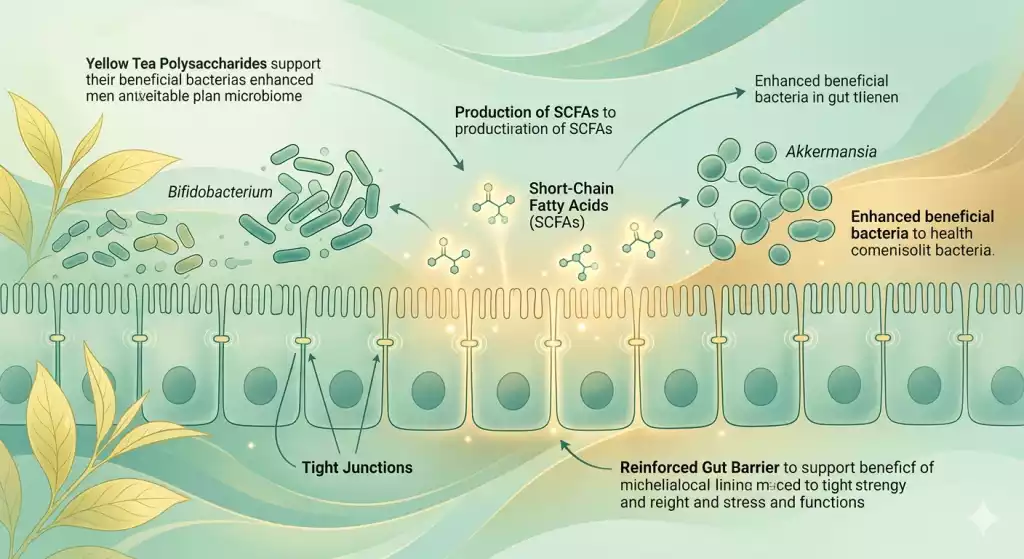
Studies in animal models (primarily murine, with some in vitro human tissue work) have found that LYP supplementation:
• Increases expression of tight-junction proteins (claudin-1, occludin, ZO-1) — the molecular "seals" between intestinal cells that maintain barrier integrity
• Maintains mucosal layer thickness and goblet cell density — the mucus layer acts as a physical buffer protecting intestinal cells
• Reduces lipopolysaccharide (LPS) translocation in high-fat diet models — LPS is a bacterial toxin whose leakage into the bloodstream is a key driver of metabolic inflammation
Context check: Most of this research is preclinical. Human trial data on LYP specifically is limited. The direction is clear and promising; the magnitude and translation to human supplementation quantities remains an active research area.
Modulating the Gut Microbiota
This is where the tea-gut health story gets genuinely interesting — and connects to a field that is itself one of the most active in contemporary biology.
Your gut microbiome — the several trillion bacteria, archaea, fungi, and other microorganisms colonizing your digestive system — functions almost like a metabolic organ. It influences everything from caloric extraction from food, to immune system calibration, to mood via the gut-brain axis. Disruption of microbiome diversity (dysbiosis) is now implicated in obesity, type 2 diabetes, inflammatory bowel conditions, and cardiovascular disease.
LYP appears to act as a selective prebiotic — feeding beneficial bacteria while creating an environment less hospitable to pathogenic species. The specific mechanisms:
LYP isn't the only tea compound with gut microbiota effects. EGCG and other catechins are also significantly metabolized by gut bacteria — the relationship is bidirectional. Your microbiome determines how much of EGCG's metabolites reach systemic circulation. People with lower gut microbiome diversity absorb and convert tea polyphenols less efficiently. This is one reason inter-individual variation in response to tea is so large: two people drinking the same tea can have dramatically different blood levels of bioactive metabolites.
Immune Response Regulation
Beyond the physical and chemical barriers, LYP appears to have immunomodulatory effects at the mucosal immune level. This is distinct from systemic immunity and refers to the immune defense specific to the gut lining.
In research models, LYP has been observed to suppress the production of pro-inflammatory cytokines (TNF-α, IL-6, IL-1β) while supporting secretory IgA — the primary antibody in mucosal immunity. The net effect is a reduction in chronic low-grade intestinal inflammation without impairing appropriate immune responses to actual pathogens.
Why does this matter beyond the gut? Because chronic low-grade intestinal inflammation is now understood to be a significant driver of systemic metabolic syndrome — the cluster of conditions (abdominal obesity, insulin resistance, elevated triglycerides, hypertension) that substantially raises cardiovascular and diabetes risk. Reducing that inflammatory baseline has downstream effects throughout the body.
Yellow tea (黄茶) is produced in extremely limited quantities, primarily in Hunan, Sichuan, and Anhui provinces in China. Authentic varieties include Jun Shan Yin Zhen (君山银针), Meng Ding Huang Ya (蒙顶黄芽), and Huo Shan Huang Ya (霍山黄芽). Outside China, you'll rarely find it in retail stores, and what you do find is frequently mislabeled or aged beyond usefulness.
If you're interested in sourcing genuine yellow tea, look for specialty importers with direct Chinese relationships who can provide harvest dates and specific production method details. The mén huáng process should be explicitly mentioned. Expect to pay $25–45/50g for authentic material.
IV. Tea Compounds and Cardiovascular Health
The epidemiological evidence here is among the strongest in tea science — and has been building for decades. Population studies across Japan, China, and the Netherlands have consistently found inverse relationships between regular tea consumption and cardiovascular disease risk. The question that metabolic research tries to answer is: what's actually driving that relationship?
Oxidative Stress, Inflammation, and the Vascular System
Your cardiovascular system is under constant oxidative stress — the byproduct of normal metabolism, immune activity, and environmental exposure. When reactive oxygen species (free radicals) outpace your antioxidant defenses, they damage cellular structures including lipoproteins and vascular endothelium — the thin cell layer lining your blood vessels.
This matters particularly for LDL cholesterol. Oxidized LDL is dramatically more pro-atherogenic than native LDL — it triggers the inflammatory cascade that leads to plaque formation, arterial stiffening, and ultimately heart disease. Tea's polyphenols are potent electron donors — meaning they neutralize free radicals before they can oxidize LDL or damage vascular tissue.
• LDL oxidation inhibition: EGCG directly prevents LDL oxidation in ex vivo studies; regular green tea consumption is associated with lower oxidized LDL in circulating blood
• Endothelial function: Catechin consumption is associated with improved flow-mediated dilation (a measure of blood vessel flexibility and endothelial health)
• Blood pressure: Meta-analyses consistently find modest but significant reductions in both systolic and diastolic blood pressure associated with regular tea consumption — effects most pronounced in black tea and hibiscus-containing preparations
• Platelet aggregation: Tea polyphenols appear to reduce platelet aggregation (the first step in clot formation) through prostacyclin-related pathways
Inflammation and oxidative stress are so deeply intertwined in cardiovascular disease that they're worth considering together. Many of tea's anti-inflammatory effects operate through the NF-κB pathway — a central regulator of inflammatory gene expression. EGCG has been shown to inhibit NF-κB activation, effectively turning down the volume on the inflammatory signaling that damages vessels over time.
Specific Teas and Their Cardiovascular Profiles
The research is not uniformly distributed across all tea types. Here's what the evidence actually says about specific categories.
- Concentrated catechins (shade-growing amplifies polyphenol production)
- Suspension of whole leaf — all compounds ingested, nothing filtered out
- L-Theanine blunts caffeine spike, providing sustained alpha-wave calm
- Anti-LDL oxidation effects well-documented
- Rich in theaflavins and thearubigins — the oxidized polyphenols of black tea
- Consistently associated with improved endothelial function in trials
- Blood pressure reductions most pronounced with black tea in meta-analyses
- Robust flavour; pairs well with morning routine
- Rich in anthocyanins — potent antioxidants with documented antihypertensive effects
- Inhibits ACE (angiotensin-converting enzyme) — similar mechanism to some blood pressure medications
- Effective as an evening-appropriate, caffeine-free option
- Works synergistically blended with black tea
- Retains moderate catechins (incl. EGCG), alongside gallic acid and flavonoid glycosides
- Natural aging generates theabrownins — emerging research links these to lipid metabolism and gut microbiota modulation
- Rich layered flavor: freshness of green tea meets the earthiness of early aging
- For drinkers who want polyphenol diversity and long-term aging potential in the same leaf

This is worth stating plainly because it contradicts common British-influenced tea culture: adding milk to black tea significantly reduces the cardiovascular benefits. Casein proteins in milk bind to polyphenols — particularly theaflavins — forming complexes that are much less bioavailable. Several controlled studies have confirmed that the positive effects of black tea on endothelial function are abolished when milk is added. If cardiovascular benefit is a goal alongside your morning Assam, consider drinking it black, or with a small amount of non-dairy milk (which has far less casein).
V. Translating This Into a Practical Daily Protocol
Science is only useful if it changes what you actually do. So here's how I'd think about integrating this research into real daily tea drinking — without it becoming a supplement regimen that misses everything that makes tea worth drinking in the first place.
A Daily Tea Protocol Built Around the Evidence
- Morning (7–9am) — Ceremonial Matcha or high-grade Gyokuro: Highest EGCG concentration, L-Theanine for focused calm. If you exercise in the morning, drink this 30–40 minutes before. Avoid with iron-rich food; alone or with a small amount of food is fine.
- Mid-morning or pre-exercise — First-flush Sencha: A lighter EGCG hit to complement or extend the morning window. Good daily driver for maintaining the 400–600mg EGCG target across 3–4 cups.
- Afternoon — Assam or Keemun Black Tea, plain: Rich in theaflavins for cardiovascular support. No milk. A good natural afternoon coffee replacement with meaningful metabolic benefit.
- Evening — Hibiscus blend or Yellow Tea: Caffeine-free. Hibiscus for antihypertensive anthocyanins; yellow tea (if you can source genuine material) for LYP gut health effects. Cold-brewing hibiscus overnight preserves anthocyanin content better than hot steeping.
- What to avoid across all of this: Generic tea bags from unspecified origins with no harvest dates. They're not just less enjoyable — they're measurably less effective for the metabolic benefits we've discussed.
| Tea Type | Primary Metabolic Benefit | Key Compound | Optimal Timing | Quality Signal |
|---|---|---|---|---|
| Ceremonial Matcha | Fat oxidation, antioxidant, cardiovascular | EGCG (highest per serving) | Morning / pre-exercise | Current-year, named farm, stone-milled |
| Gyokuro | EGCG + L-Theanine synergy; relaxed focus | EGCG, L-Theanine | Morning | 25+ days shade, harvest dated |
| First-flush Sencha | Daily EGCG maintenance dose | Catechins | Morning / mid-morning | April–May harvest, current year |
| Raw Puerh / Sheng (≤3yr) | Polyphenol diversity, lipid metabolism, aging-derived theabrownins | Catechins (mod.), gallic acid, theabrownins (increasing with age) | Afternoon / post-meal | Named Yunnan origin (e.g. Bulang, Yiwu), storage disclosed, pressing date visible |
| Assam / Keemun Black | Cardiovascular, endothelial function | Theaflavins, thearubigins | Afternoon | Single estate, no added flavoring |
| Yellow Tea (LYP) | Gut barrier, microbiome modulation | Large Yellow Tea Polysaccharides | Evening or any time | Named variety, 闷黄 process disclosed |
| Hibiscus (blend) | Blood pressure, evening antioxidant | Anthocyanins | Evening | Whole dried calyces, vibrant color |

Frequently Asked Questions
The research-backed range is 400–600mg EGCG per day, distributed across multiple servings. This translates to approximately 3–4 cups of high-grade Sencha or 2–3 servings of ceremonial matcha. Generic green tea bags from supermarkets contain 20–40mg EGCG per bag — you'd need to drink 10–20 bags a day to hit that target, which is neither practical nor pleasant.
The more actionable takeaway: quality matters more than quantity. Two cups of first-flush Gyokuro deliver more EGCG than ten cups of generic green tea bags, with far more L-Theanine to smooth the caffeine curve and far more interesting things happening in the cup.
Technically possible in terms of isolated EGCG delivery — but with significant caveats. First, isolated high-dose EGCG supplements have been associated with hepatotoxicity (liver stress) at doses above roughly 800mg/day in some individuals. No such risk exists with tea drinking at reasonable quantities. Second, you lose the synergistic compounds: the caffeine interaction, the L-Theanine modulation, the polysaccharides, the flavonoids. Tea is a complex whole-food matrix, and the evidence increasingly suggests the whole is more than the sum of the parts. Third, and perhaps most importantly: supplements don't require you to slow down for ten minutes, use beautiful water, and pay attention to what you're tasting. That matters for reasons we haven't even gotten to.
Yes, significantly. EGCG concentrations decrease substantially as tea undergoes oxidation during processing. This is not a flaw — it's a transformation. The catechins in black tea convert into theaflavins and thearubigins, which have their own distinct antioxidant and cardiovascular benefits. Different compounds, different mechanisms, different but still meaningful health effects. The metabolic profile of black tea is genuinely distinct from green tea — not inferior, just different in emphasis. Oolong sits on a spectrum depending on oxidation level, with lighter oolongs retaining more catechins and heavily roasted or dark oolongs having profiles closer to black tea.
For most people and most teas, yes — practical upper limits exist. Caffeine intake above roughly 400mg/day produces diminishing returns and increasing side effects in the majority of adults. Excessive green tea consumption on an empty stomach can cause nausea and gastric discomfort in some people. Very high EGCG intake (well above what you'd get from 4–5 cups) has shown potential liver stress signals in isolated studies, though this appears to be a supplement rather than tea-drinking concern. The practical sweet spot: 3–5 cups of varied teas daily, distributed throughout the morning and afternoon, with lighter or caffeine-free options in the evening. The body of evidence doesn't support going much beyond that for additional benefit, and the diminishing-returns curve gets steep quickly.
This is one of the genuinely fascinating aspects of current tea science. Only about 20–40% of tea polyphenols are absorbed in the small intestine intact. The rest travel to the large intestine, where gut bacteria metabolize them into smaller compounds called microbial metabolites — including urolithins, valerolactones, and various phenolic acids. These metabolites are often more bioavailable and biologically active than the parent compounds. Which means your microbiome composition directly determines how much of tea's benefits you're actually accessing. This is a major reason why individuals vary so much in their response to tea — and another reason why the gut health angle matters beyond just the gut. Better microbiome diversity → more efficient tea polyphenol conversion → more systemic benefit.
Yes — and the reframe is actually freeing. Instead of chasing the "400–600mg EGCG" target designed for green tea drinkers, think in terms of polyphenol diversity and complementarity:
- Choose younger raw puerh (≤3 years): Catechin content — including EGCG — is meaningfully higher in new-harvest sheng than in aged material. If metabolic activity is a priority alongside flavor exploration, younger tea gives you both.
- Brew with intention: Fast early steepings (10–15 seconds for the first 2–3 rounds) extract the aromatic and catechin-rich compounds without over-concentrating astringents. Longer later steepings draw out the deeper, more complex polyphenols including emerging theabrownins.
- Rotate with green tea: Raw puerh and green tea have overlapping but distinct polyphenol spectra. A morning matcha or sencha + afternoon sheng puerh covers more metabolic ground than either alone — this is the right mental model.
- Respect the gastric lining: New-harvest raw puerh is high in polyphenols and should not be consumed in large quantities on an empty stomach. Post-meal is the safer window, especially for younger, more aggressive teas.
📌 Core principle: raw puerh's health value is a long game — short-term, lean into polyphenol diversity; long-term, the compounds shift as the tea ages, creating an entirely different and still-valuable metabolic profile. It's not competing with green tea. It's doing something else.
VI. Conclusion: What We Know, What We Don't, and Why It Still Matters
Let me summarize what the evidence actually supports, as of 2026, and where the genuinely open questions remain.
What the research supports clearly
- EGCG + caffeine synergy is real and measurable, particularly for fat oxidation during aerobic exercise and for modest increases in resting metabolic rate
- Tea polyphenols have meaningful antioxidant and anti-inflammatory effects that are mechanistically linked to reduced cardiovascular disease risk — supported by both molecular research and population epidemiology
- Black tea (theaflavins) and hibiscus (anthocyanins) have consistent, replicable associations with improved blood pressure and endothelial function
- LYP shows strong preclinical evidence for gut barrier improvement and microbiome modulation — with human trial data still developing
- The bidirectional relationship between gut microbiome and tea polyphenol metabolism is real — your microbiome determines how much benefit you extract from tea, and tea shapes your microbiome in return
- Raw puerh (young sheng, ≤3 years) offers a distinct polyphenol spectrum — moderate catechins plus gallic acid, flavonoid glycosides, and aging-generated theabrownins — that complements rather than duplicates green tea's catechin-dominant profile. The two are best rotated together, not compared on a single-compound metric
What remains genuinely uncertain
Honest tea science reporting requires acknowledging the gaps. Human clinical trial data for LYP specifically is thin. Most EGCG metabolism research uses isolated supplementation at concentrations higher than realistic tea drinking delivers. Inter-individual variation in polyphenol metabolism is enormous and incompletely understood. The optimal brewing parameters for maximizing specific compound bioavailability are studied far less than the compounds themselves.
The most interesting open questions for the next decade of tea research: How does microbiome composition mediate the relationship between tea drinking and metabolic disease risk? Are there specific cultivars or processing methods that optimize bioavailability beyond just raw compound concentration? What's the interaction between tea polyphenols and the gut-brain axis — and how does that connect to the documented cognitive and mood effects of L-Theanine?
These are not small questions, and we don't yet have complete answers. What we do have is a compelling body of evidence pointing in a consistent direction: that regular consumption of quality tea, in its diverse forms, creates a measurably favorable metabolic environment over time.
The Real Reason This Science Changes What You Buy
I didn't write this piece to turn tea drinking into a supplement protocol. The reason I find tea metabolism research compelling is precisely because it closes the loop on something I already knew from tasting: that quality matters, that freshness matters, that sourcing matters — and now there's biochemical evidence explaining why.
When you buy a tin of something with no harvest date, vague origin, and aggressive flavoring — you're not just missing out on a better tasting experience. You're drinking tea that may have degraded past the point where its EGCG is meaningfully active. You're losing the polysaccharides that never survived long-chain commodity handling. You're getting the color and the ritual, without the compounds.
The solution is the same as it always is in this space: buy from people who know what they're selling, who can tell you when and where it was harvested, and who understand what they're asking you to put in your cup. The research gives you new language for an old principle.
Good tea is good for you. Not all tea is good tea. The difference matters — and now you know why, molecule by molecule.
Continue Reading
Beyond Lipton: A Beginner's Map to Sourcing High-Quality Tea Online (2026 Guide) Why Your $50 Tea Tastes Bad: It's Not the Leaf, It's the Storage The No-Jitters Energy Hack: L-Theanine vs. Caffeine — What Tea Type Delivers Most? First Flush Darjeeling 101: How to Buy, Brew, and Actually Taste the Difference Japanese Green Tea Styles Compared: Sencha vs. Gyokuro vs. Matcha for BeginnersChacko, S.M. et al. "Beneficial effects of green tea: A literature review." Chinese Medicine, 2010 · Chen, I.J. et al. "Therapeutic effect of high-dose green tea extract on weight reduction: A randomized, double-blind, placebo-controlled clinical trial." Clinical Nutrition, 2016 · Huang, J. et al. "The anti-obesity effects of green tea in human intervention and basic molecular studies." European Journal of Clinical Nutrition, 2014 · Liu, Z. et al. "Tea polysaccharides: Extraction, purification, structural characteristics and bioactivities." Carbohydrate Polymers, 2021 · Rao, P.V. & Gan, S.H. "Cinnamon: A multifaceted medicinal plant." Evidence-Based Complementary and Alternative Medicine, 2014 · Tea Research Association Japan, Cultivar and Compound Database, 2025 · World Tea Expo DTC Market Report, 2025 · Gong, J. et al. "Chemical composition and health benefits of Pu-erh tea: An overview." Food Research International, 2022 · Zhao, M. et al. "Theabrownins from Pu-erh tea attenuate hyperlipidemia via gut microbiota modulation." Nature Communications, 2023 · Yunnan Tea Research Institute, "Catechin dynamics in raw Pu-erh during natural aging," 2024
This article is for informational and educational purposes only and does not constitute medical advice. Tea compounds discussed are not intended to diagnose, treat, cure, or prevent any disease. Individual responses to dietary compounds vary significantly. Consult a qualified healthcare professional before making significant dietary changes, particularly if managing existing health conditions. Pricing ranges are estimates as of April 2026 and vary by retailer and market conditions.