Tea Ceremony Through the Lens of Chinese Philosophy
On the tea mat rests a lidded bowl, silent as meditation: the lid above, embracing all phenomena; the tea bowl at the center, holding the essence; the saucer below, grounding the foundation. This is the "Three Talents Bowl" (San Cai Wan) — a humble vessel that crystallizes the cosmic view of Heaven, Earth, and Humanity. The precious tea within also embodies the harmonious trinity of "Herb, Wood, and Humanity" — the herb as the root of the tea plant grounded in earth, the wood as the vitality of upward-growing branches, and humanity as the wisdom and emotion infused through picking, processing, and sipping. When we view tea through this trinity, what we taste transcends mere flavor; it is the nectar of life imbued with celestial essence.
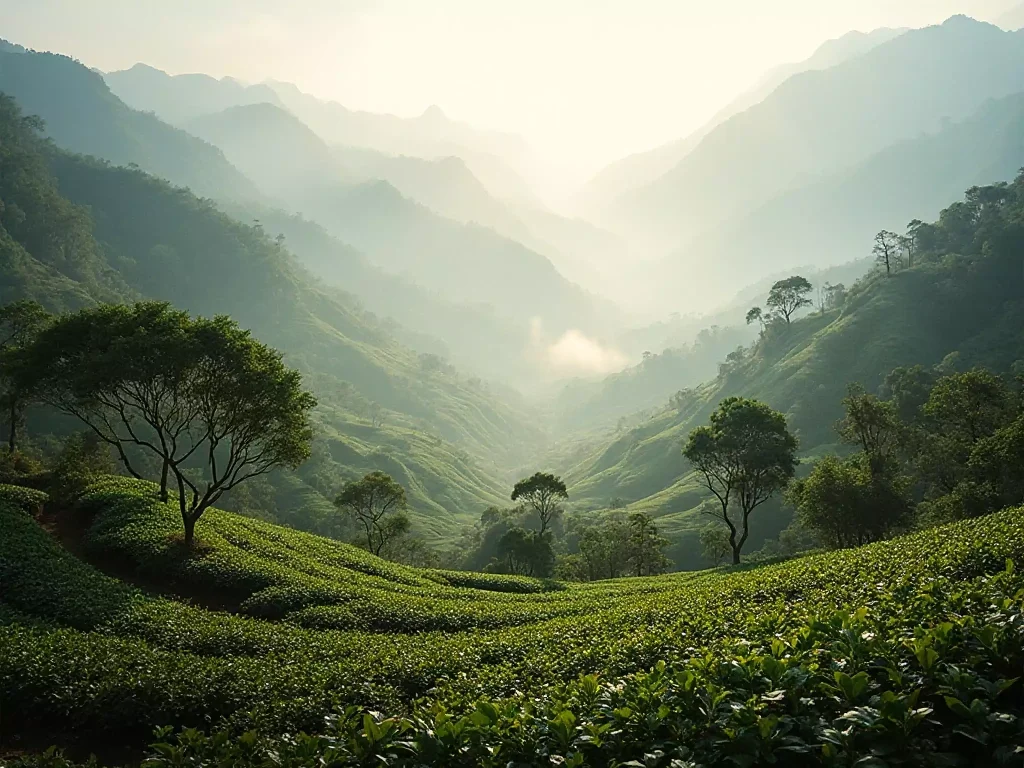
The triune nature of tea is rooted in nature and elevated by culture. Tea Sage Lu Yu declared in the Classic of Tea: "Tea is the sublime tree of the South." This noble tree receives heavenly light, draws earthly energy, and drinks pure springs. Within its leaves lie active compounds—polyphenols, amino acids, vitamins—nature's own health code. Human wisdom, meanwhile, permeates every step: recognizing, processing, brewing, and savoring tea, transforming botanical substance into cultural spirit and bodily nourishment. Tea's bittersweetness is both the herb's true taste and life's reflection, echoing the Book of Songs: "Who says tea is bitter? Its sweetness rivals shepherd's purse." Flavors merge; sentiments resonate.
The Dance of Five Phases in Tea Ceremony
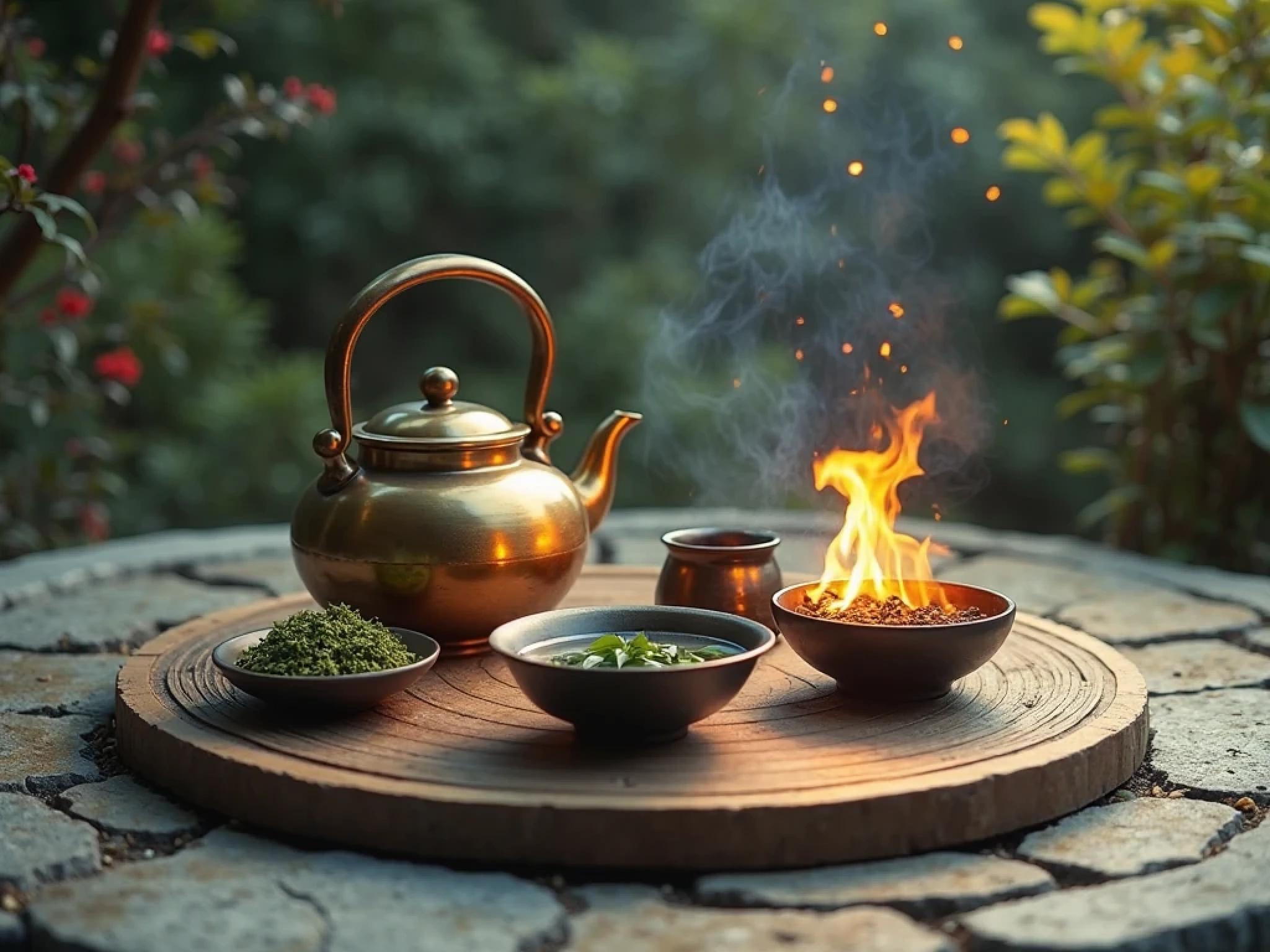
Brewing tea in a lidded bowl not only performs the harmony of the Three Talents but stages an exquisite ritual of the Five Phases (Wuxing: Gold, Wood, Water, Fire, Earth) in mutual generation:
Manifested in metal teaware (iron/copper kettles). Gold's nature is firm, conducting heat swiftly to transform water's softness into searing energy. It gathers celestial essence like precious metal, awakening the tea's inner qualities.
Embodied by the tea leaves themselves, born of the sublime tree. Wood's nature ascends, ever-renewing. The leaves carry sunlight, rain, and soil's nourishment. In the bowl, they unfurl in water, releasing vitality and fragrance—the very source of the brew's soul.
As water—the source of brewing and the tea soup's medium. Water's nature flows downward, nurturing all. It dissolves the tea's essence, carrying its aroma and taste. Its temperature, quality, and movement profoundly shape the tea's expression.
Representing the energy source (charcoal/electric heat) that boils water. Fire's nature blazes, governing change. It grants water its vital boil, rousing the dormant spirit within the leaves. It symbolizes dynamic energy and transcendence.
Incarnated in the lidded bowl, teacups, and other ceramic vessels. Earth's nature is steadfast, bearing all. The bowl itself is Earth's creation (clay). It stably upholds Heaven (lid), Humanity (bowl), and Earth (saucer).
Harmony of Three Talents and Wellness
The Three Talents unite in the bowl; the Five Phases interplay through the ritual. Thus emerges tea's truest nourishing power:
Heaven-Lid (Gold/Earth attributes): Like a canopy, it gathers the tea's fragrant essence, preventing dissipation. As the Yellow Emperor's Inner Canon states, "The upper body is like mist"—essence preserved.
Earth-Saucer (Earth attribute): Steady as the land, it maintains warmth (Earth governs nurturing), yielding a mellow, comforting brew. Its virtue is to support and nourish body and mind.
Humanity-Bowl (Wood/Earth attributes): Humanity stands between Heaven and Earth, holding the bowl, balancing Water and Fire (pouring timing, temperature), observing the leaves dance within the vessel.
Harmony of Phases, Nourishment of Being: In this space of trinity harmony and balanced elemental flow, the tea leaves' natural actives release optimally and gently. Polyphenols (antioxidants), theanine (calming), minerals, and vitamins are more readily absorbed and transformed by the body. They combat free radicals, regulate metabolism, sharpen focus, and soothe the spirit.
Historical Origins of the Five Phases Philosophy
Conceptual Origins of the Five Phases
The Five Phases theory (Wuxing) dates back to the Shang and Zhou dynasties (c. 1600-256 BCE). Initially referring to five fundamental materials (gold, wood, water, fire, earth), it evolved into a philosophical framework describing cosmic interactions and cyclical transformations.
Earliest Textual Records
The Book of Documents (Shangshu), specifically the "Hong Fan" chapter (c. 10th century BCE), contains the first systematic description: "The Five Phases: First, water; second, fire; third, wood; fourth, metal; fifth, earth. Water moistens downward; fire flares upward; wood is curved or straight; metal is malleable; earth permits sowing and reaping."
Archaeological Evidence
The Mawangdui Silk Texts (discovered in 1973 in a Han Dynasty tomb) include "Wuxing" manuscripts dating to the Warring States period (475-221 BCE). The Chu Tomb No. 1 at Mashan, Hubei (c. 3rd century BCE) yielded silk with woven "Five Phases" characters—the earliest physical artifact bearing the term.
Philosophical Development
During the Warring States period, Zou Yan systematized the theory. By the Han Dynasty, Dong Zhongshu integrated it with Yin-Yang theory in Luxuriant Dew of the Spring and Autumn Annals, establishing the Five Phases as central to Chinese cosmology, medicine, and statecraft.
Frequently Asked Questions about Tea Ceremony & Chinese Philosophy
What does the “Three Talents Bowl” (San Cai Wan) symbolize in tea ceremony?
The Three Talents Bowl symbolizes the unity of Heaven, Earth, and Humanity. The lid represents Heaven, gathering aroma and essence; the bowl represents Humanity, mediating water, fire, and leaves; and the saucer represents Earth, grounding and stabilizing the entire ritual. Together, they embody a holistic worldview rooted in Chinese cosmology.
How do the Five Phases (Wuxing) manifest during tea preparation?
In tea ceremony, the Five Phases appear as a dynamic process: Fire heats the kettle, often made of metal representing Gold; boiling Water extracts the essence of the tea leaves, representing Wood; and the tea soup ultimately rests in ceramic vessels formed from Earth. Each phase generates and supports the next, creating balance and transformation.
Why is tea considered both a natural herb and a cultural expression?
Tea originates as a herb rooted in soil and nourished by Heaven and Earth, yet it becomes cultural through human recognition, processing, brewing, and contemplation. Its flavor reflects both natural chemistry and human wisdom, transforming botanical substance into spiritual and bodily nourishment.