The Silent Language of the Tea Table: Decoding Ancient Etiquette in Modern China
Tea in China is not merely a beverage—it is a cultural vessel where etiquette, poetry, and philosophy converge. Every gesture at the tea table carries centuries of meaning, from the Emperor's secret finger tap to the wisdom hidden in a cup filled only seven-tenths full.
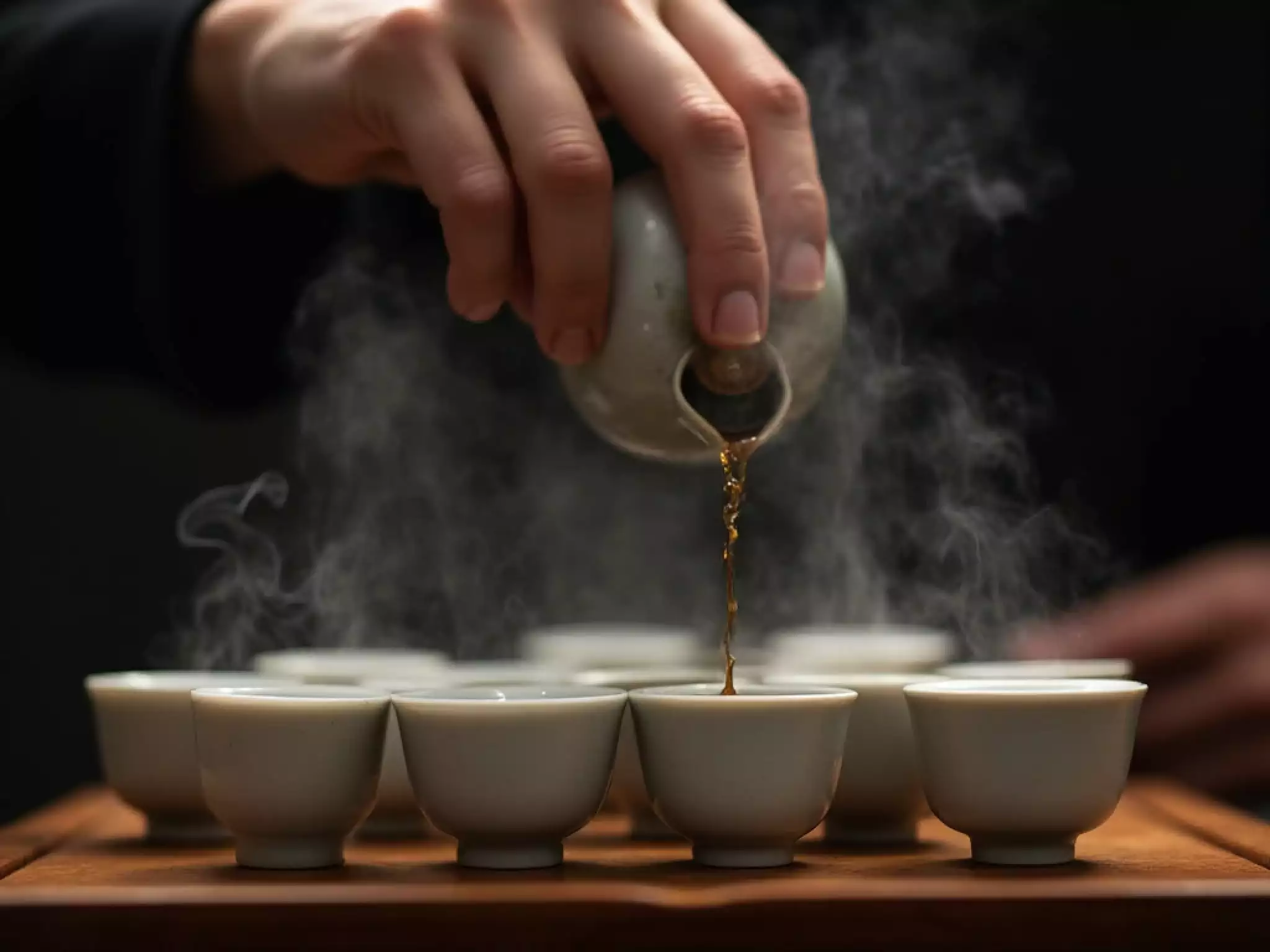
Close your eyes and imagine: The soft hiss of water meeting clay. The delicate clink of porcelain on wood, barely audible, like distant wind chimes. Steam rises in lazy spirals, carrying the earthy whisper of ancient tea mountains. And then—a gentle tap-tap-tap of fingertips on the table, a secret language spoken without words.
This is the world of Gongfu Cha (功夫茶), the traditional Chinese tea ceremony where every movement, every sound, every gesture is infused with layers of cultural meaning built over millennia.
From the Tang and Song dynasties to contemporary tea gatherings in Shanghai apartments and Los Angeles tea studios, tea-table etiquette has carried a trinity of values: Confucian respect, Daoist harmony, and Buddhist clarity. Classical poets didn't just describe tea's taste—they encoded the comportment expected around it. Those poetic images became the cultural grammar behind today's rituals.
Tea and the Cultural Thread: History, Literature, and Ritual as One
Chinese tea traditions resist neat categorization into "history," "culture," and "poetry"—they are a seamless tapestry. Early works like Cha Jing (茶经, The Classic of Tea) by Lu Yu set both practical and spiritual tones. Tang and Song dynasty poets used tea scenes to express temperament and social values. These literary images became the interpretive lens through which concrete rules—who to serve first, how to hold a cup, how full to pour—acquired moral and aesthetic significance.
Tea frames quietness; in that quietness we practice courtesy.
But this quietness is not passive. It's an active form of communication, where silence speaks volumes and simple gestures carry the weight of philosophy.
The Emperor's Secret: The Legend Behind the Finger Tap
A Tale from the Qing Dynasty
The most intriguing gesture in Chinese tea etiquette—the finger tap—traces its origin to an 18th-century act of imperial subterfuge.
Emperor Qianlong (乾隆, 1711-1799), known for his love of tea and his penchant for adventure, would occasionally embark on Wei Fu Si Fang (微服私访)—secret journeys among his subjects in disguise. During one such journey to Jiangnan (the prosperous region south of the Yangtze River), the Emperor visited a teahouse with his trusted attendants.
Wanting to maintain his cover, Qianlong himself poured tea for his companions. This created an impossible dilemma: Imperial protocol demanded that attendants immediately kneel and bow deeply when served by the Emperor. But in a crowded teahouse, such a display would instantly reveal their identities and ruin the disguise.
One quick-thinking attendant solved the problem ingeniously. Instead of kneeling with his body, he "bowed" with his hand—bending his index and middle fingers to tap the table three times, mimicking the gesture of a person kneeling and bowing their head.
The symbolism:
- The two extended fingers represented the two legs of someone kneeling
- The bent knuckles represented a bowed head
- The three taps symbolized the traditional "three kowtows"
What began as imperial espionage became everyday etiquette. Today, this gesture—known as Kou Shou Li (叩手礼, "finger kowtow courtesy")—remains one of the most charming and widely practiced tea table gestures in Chinese culture.
Practical Gongfu Tea Etiquette—Explained with Cultural Context
The following rules are commonly observed at modern Gongfu Cha services. After each guideline, you'll find cultural explanations showing how the rule follows centuries of philosophy and poetic imagery.
0. Appreciating the Leaves: The Sensory Prologue
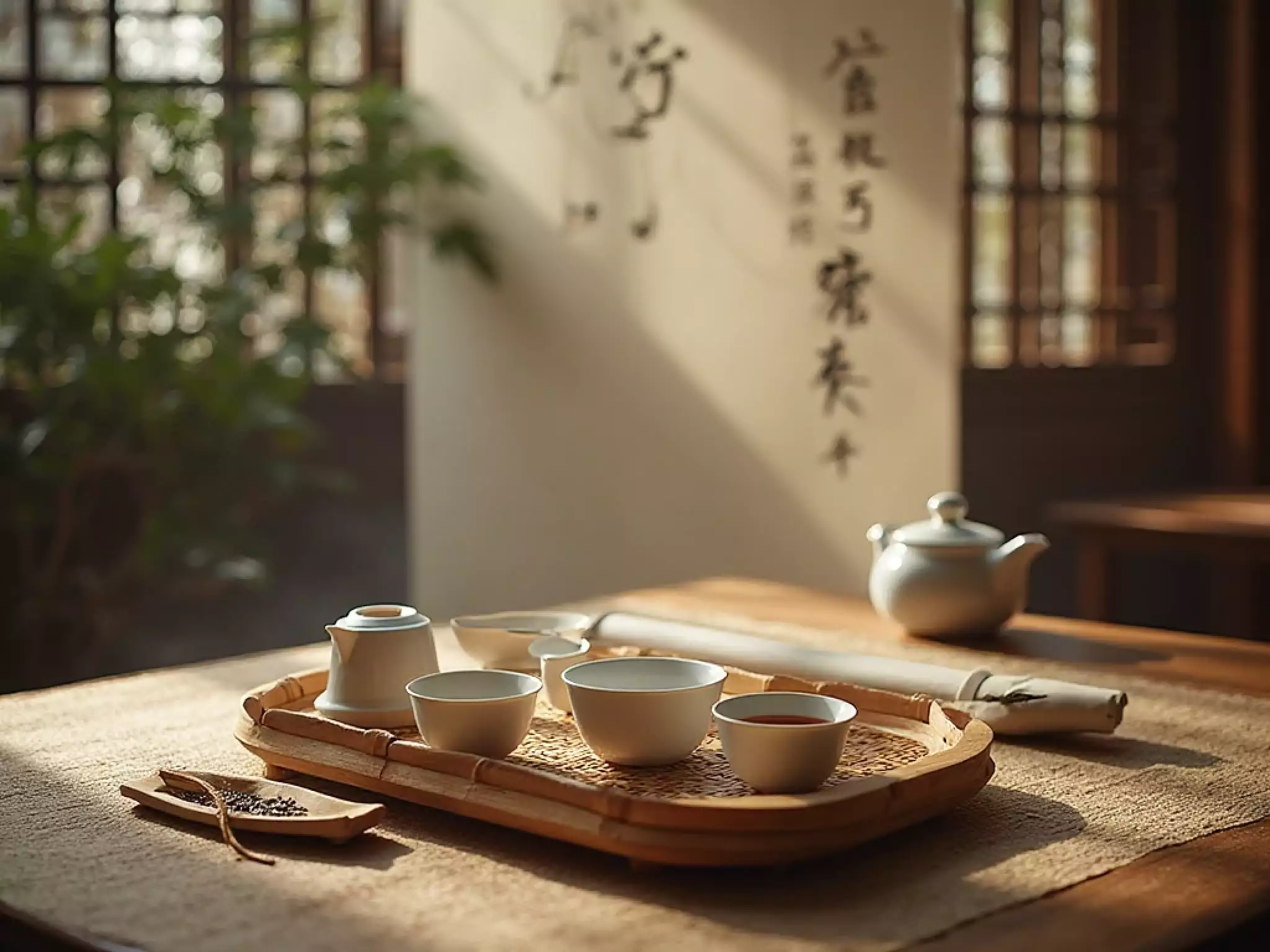
The Ritual: Before the first drop of water is poured, a thoughtful host will present the dry tea leaves in a Cha He (茶荷, tea vessel) for the guests to examine.
How to Participate:
- Observe: Notice the shape, color, and texture of the leaves. Are they tightly rolled pearls or long, wiry needles?
- Inhale: Hold the vessel with both hands. Bring it close to your nose and take a deep, slow breath. Exhale gently away from the leaves (to avoid moistening them with your breath), then inhale again.
- Pass with Care: After appreciating the aroma, pass the vessel to the guest on your left (or right, following the host’s flow) using both hands.
The Cultural Why: This stage is called Wen Xiang (闻香, "smelling the fragrance"). It signifies that the guests are not just there to consume a drink, but to honor the craftsmanship of the tea itself. It is the moment where the busy world outside finally fades away, replaced by the scent of the mountains.
1. Pouring Order: From Senior to Junior—Age, Rank, and Seat
The Rule: The host pours tea first for elders and the highest-ranking guests (including family rank and social or professional hierarchy). If no clear hierarchy exists, pour from left to right in seat order.
The Cultural Why: Confucian emphasis on Xiao (孝, filial piety) and social order made precedence a moral practice, not merely polite convention. The act of serving elders first physically enacts the Confucian principle that social harmony flows from proper recognition of relationships.
Modern Nuance: In contemporary settings without clear hierarchy, the left-to-right succession is a pragmatic adaptation that preserves orderly reciprocity while avoiding awkwardness.
2. The Philosophy of Seven-Tenths Full: The Art of Leaving Space
The Rule: Fill each cup about seven parts out of ten (approximately 70%).
The Dialectic of Tea and Wine
A traditional Chinese saying captures this beautifully:
"茶满欺客,酒满敬人"
"Tea filled to the brim shows disrespect; wine filled to the brim shows respect."
Why the difference?
- Temperature: Tea is served hot—overfilling makes it impossible to hold the cup without burning fingers
- Aroma: The empty space in the cup captures and concentrates the tea's fragrance, like the bowl of a wine glass
- Philosophy: This embodies Yu Di (余地, "remaining space")—the wisdom of leaving room
The Deeper Meaning: In Chinese aesthetics, from calligraphy to garden design, Liu Bai (留白, "leaving white" or negative space) represents humility, restraint, and the understanding that completeness is found in incompleteness. A cup filled to the brim is aggressive, presumptuous—it leaves no room for the guest's own presence.
Western Parallel: Western readers familiar with Japanese wabi-sabi or the concept of negative space in Chinese ink paintings will recognize this principle: perfection lies not in maximizing, but in knowing when to stop.
3. Teapot and Kettle Alignment: The Geography of Respect
The Rule: Never point the teapot spout or kettle spout directly at a guest. Do not position the teapot handle directly facing a guest.
The Cultural Why: In Chinese martial culture and everyday symbolism, pointing sharp or projecting objects at people carried aggressive connotations. A spout aimed at someone was like an accusatory finger—or worse, a weapon. The subtle avoidance is a physical form of respect, ensuring the tea service feels welcoming rather than confrontational.
The Aesthetic Dimension: Proper placement also reflects Bu Zao (不燥, "unobtrusive elegance")—the handle should be accessible to the server but not visually dominating the space.
4. The Language of Fingers: The Three Grades of Gratitude
While the legend of Emperor Qianlong gives us the origin, modern tea etiquette has refined the finger tap into three distinct versions based on social hierarchy:
- From Junior to Senior (The Full Kowtow): If you are receiving tea from an elder or a mentor, make a soft fist and tap the table with all five fingertips (or the knuckles of a folded fist). This symbolizes the "five bodies casting to the ground" (五体投地), the highest form of traditional reverence.
- Between Peers (The Cupped Hand): When served by a friend or colleague of similar age, keep your index and middle fingers together and tap the table. This acts as a silent "Gong Shou" (拱手), the traditional gesture of cupping one hand in the other as a sign of mutual respect.
- From Senior to Junior (The Nod): If you are the elder serving tea to a younger person, they should still tap, but the senior can acknowledge a guest's service by tapping with one finger (usually the index). This is the equivalent of a graceful "nod of approval."
Timing is Key: The tap should happen precisely as the host is pouring or just after they finish. It is the rhythmic heartbeat of a polite tea session.
5. The Symphony of Sound: Handling Cups, Lids, and Movement
The Rules:
- Set cups down gently; avoid heavy clinks that disturb the contemplative mood
- Avoid crossing arms or reaching over others; maintain orderly movement
- Only lift and adjust the teapot lid when necessary—excessive fiddling appears nervous or disrespectful
- When lifting your cup, do so with both hands or cradled in your palm—not by pinching the rim
The Cultural Why: Song Dynasty poets often compared the sound of tea service to Song Tao (松涛, "wind through pines")—natural, soft, occasional. Harsh clattering breaks this aesthetic. The tea table should sound like nature: gentle water, quiet ceramic, hushed voices.
Sensory Awareness: Pay attention to:
- The whisper of water entering the pot
- The barely-audible touch of cup to wood
- The quiet breath of steam escaping
- The soft rustle of tea leaves settling
These sounds create the Jing (静, "stillness") that allows genuine conversation and contemplation to emerge.
6. Refilling and Respecting Tempo
The Rule: Refill only when a cup is nearly empty, and do so with minimal disruption. If a guest has not finished, the host should not automatically pour more.
The Cultural Why: Respecting a guest's drinking tempo preserves hospitality while avoiding intrusive gestures. It balances Yin Qin (殷勤, "attentiveness") with Jie Zhi (节制, "restraint")—being available without being overbearing.
Reading the Table: A skilled host watches peripheral vision for cups lowering to the table, listens for the soft sound of porcelain meeting wood, and refills in smooth, unhurried motions that feel like natural continuations of the gathering's rhythm.
7. Seating, Invitation, and the Flow of Roles
The Rule: Seating arrangements often reflect social relationships. The host's movement around the table should be steady and deliberate. Guests follow the host's cue for when to begin sipping.
The Cultural Why: Tea is simultaneously private and social—it sets the tone for conversation without dictating it. The host acts as a gentle conductor, establishing rhythm without dominating the gathering.
The Paradox: Hierarchy or Equality?
Western readers might notice an apparent contradiction: Gongfu Cha etiquette emphasizes Confucian hierarchy (serving elders first, recognizing rank), yet tea culture is often described as egalitarian and Zen-like.
The Resolution: Both are true, and they coexist beautifully.
Tea as Social Leveler
While Confucian structure provides the framework, Daoist and Buddhist influences infuse the experience with equality. Once everyone is seated and tea begins flowing, the distinctions blur. The CEO and the student both receive the same tea, prepared with the same care. Conversation flows naturally—no one is "below" or "above" in the shared appreciation of flavor, aroma, and moment.
A famous Chan Buddhist saying captures this: "Cha Chan Yi Wei" (茶禅一味, "Tea and Zen share the same taste")—meaning that in the presence of tea, we return to our essential nature, unadorned by social masks.
The Modern Reality: In contemporary Gongfu Cha settings—whether in Guangdong teahouses or California tea studios—the tea table functions as a balancing ground. Initial gestures honor social bonds and familial respect, but once the first cup is poured, the gathering becomes a space where genuine connection transcends rank.
What These Rules Mean: The Spirit Behind the Gestures
Every modest rule—from the direction of a kettle spout to the choice of tapping with one or two fingers—preserves a trinity of values:
| Value | Physical Expression | Philosophical Root |
|---|---|---|
| Respect (敬, Jìng) | Serving elders first, finger taps, gentle handling | Confucian social harmony through proper relationships |
| Harmony (和, Hé) | Quiet movements, orderly sequence, leaving space | Daoist principle of flowing with natural order |
| Clarity (清, Qīng) | Attentive silence, minimal disruption, focused presence | Buddhist mindfulness and present-moment awareness |
Navigating Social Awkwardness: A Situational Guide
Traditional etiquette can feel intimidating. Here's how to handle common uncomfortable moments with grace:
Scenario 1: I accidentally clinked my cup loudly
What to do: Pause briefly, make gentle eye contact with the host, and offer a soft smile or slight nod. Do not apologize verbally—excessive apologies break the Jing (quietness) more than the original clink did.
Why: The tea table values tranquility over perfection. A quiet acknowledgment maintains atmosphere; an apology draws attention to the mistake.
Scenario 2: I forgot to tap my fingers when served
What to do: Simply tap when you remember, even if it's 10 seconds later. The gesture's meaning doesn't expire.
Why: Genuine courtesy is always welcome, even if delayed. Hosts understand that Western guests may be learning these gestures.
Scenario 3: I don't know if I'm senior or junior to other guests
What to do: If hosting, simply pour left to right around the table. If you're a guest and unsure whether to accept tea first, defer with a gentle gesture—indicating the person next to you should receive first.
Why: Modesty never offends. Deferring to others embodies Rang (让, "yielding")—a virtue in itself.
Scenario 4: Someone is monopolizing the conversation during tea
What to do: As host, gently redirect by asking another guest a specific question. As a fellow guest, simply listen and wait—the tea table's natural rhythm will create openings.
Why: Forceful interruption violates He (harmony). The tea itself creates natural pauses as cups empty and are refilled.
Frequently Asked Questions
Why is pouring order important in gongfu tea?
Pouring from senior to junior reflects Confucian Xiao (filial piety) and respect for social bonds. It physically enacts the principle that social harmony flows from proper recognition of relationships—not as rigid hierarchy, but as acknowledgment of the care and wisdom that comes with age and experience.
What does the two-finger tap mean at the tea table?
The two-finger tap (Kou Shou Li) is a silent "thank you" that originated when Emperor Qianlong's attendants couldn't bow openly during his secret travels. The two fingers represent kneeling legs; the tap represents a bow. Today it allows guests to express gratitude without interrupting conversation—a refined, non-verbal shorthand for respect.
Why fill tea cups only 70% full?
Filling to 70% (seven-tenths full) serves three purposes: (1) Practical: prevents spills and burning fingers on hot cups; (2) Aesthetic: allows aroma to collect in the cup's empty space; (3) Philosophical: embodies Yu Di (leaving room)—the wisdom that completeness lies in knowing when to stop, reflecting humility and the principle of negative space central to Chinese art and thought.
Is it rude to decline tea at a Chinese gathering?
Declining politely is acceptable, but do so with explanation and grace. Say something like "I'm grateful, but I've had enough tea for now" or "I'll wait a bit before my next cup." Simply refusing without acknowledgment can seem cold. If health prevents you from drinking tea, explain briefly—hosts will understand and may offer alternatives.
Should I bring a gift when invited to a tea gathering?
A small, thoughtful gift is appreciated but not required. Good choices include: high-quality tea from your region, seasonal fruit beautifully presented, or a small item related to tea culture (like a nice cloth or simple tea tool). Avoid overly expensive gifts, which can make the host uncomfortable. The key is thoughtfulness, not extravagance.
The Spirit of Tea Etiquette: Where Ritual Meets Reality
When you sit at a tea table—whether in a traditional teahouse in Chengdu or a modern tea studio in Brooklyn—these rules are not chains but channels. They guide interaction toward deeper connection, creating a space where social roles soften and authentic presence emerges.
In the rising steam and the gentle tap of fingers, centuries of philosophy become breathable, drinkable, shareable.
The beauty of Gongfu Cha etiquette is that it doesn't demand perfection—it invites participation. You'll make mistakes. Cups will clink. You'll forget to tap. The tea will spill slightly. And in every case, the tea table's principle of He (harmony) means that grace is extended, not judgment.
Because ultimately, every rule—from spout direction to finger taps to seven-tenths fullness—serves a single purpose: to create a space where people can gather, slow down, and remember what it means to be fully present with one another.
The silent language of the tea table, once decoded, becomes an invitation to a quieter, more attentive way of being together.