
The Art of Breaking a Tea Cake
In the SteepedRoots lifestyle, "breaking tea" is more than just a preparation step—it is an intimate dialogue with the leaves. Compressed cakes and bricks of Raw Puerh, Ripe Puerh, or Shaihong (Sun-dried Red Tea) hold layers of leaves that have embraced each other through time. Proper technique preserves the integrity of the leaves, ensuring a pure, rich flavor profile while avoiding unnecessary dust and damage.
I. Preparation & General Principles
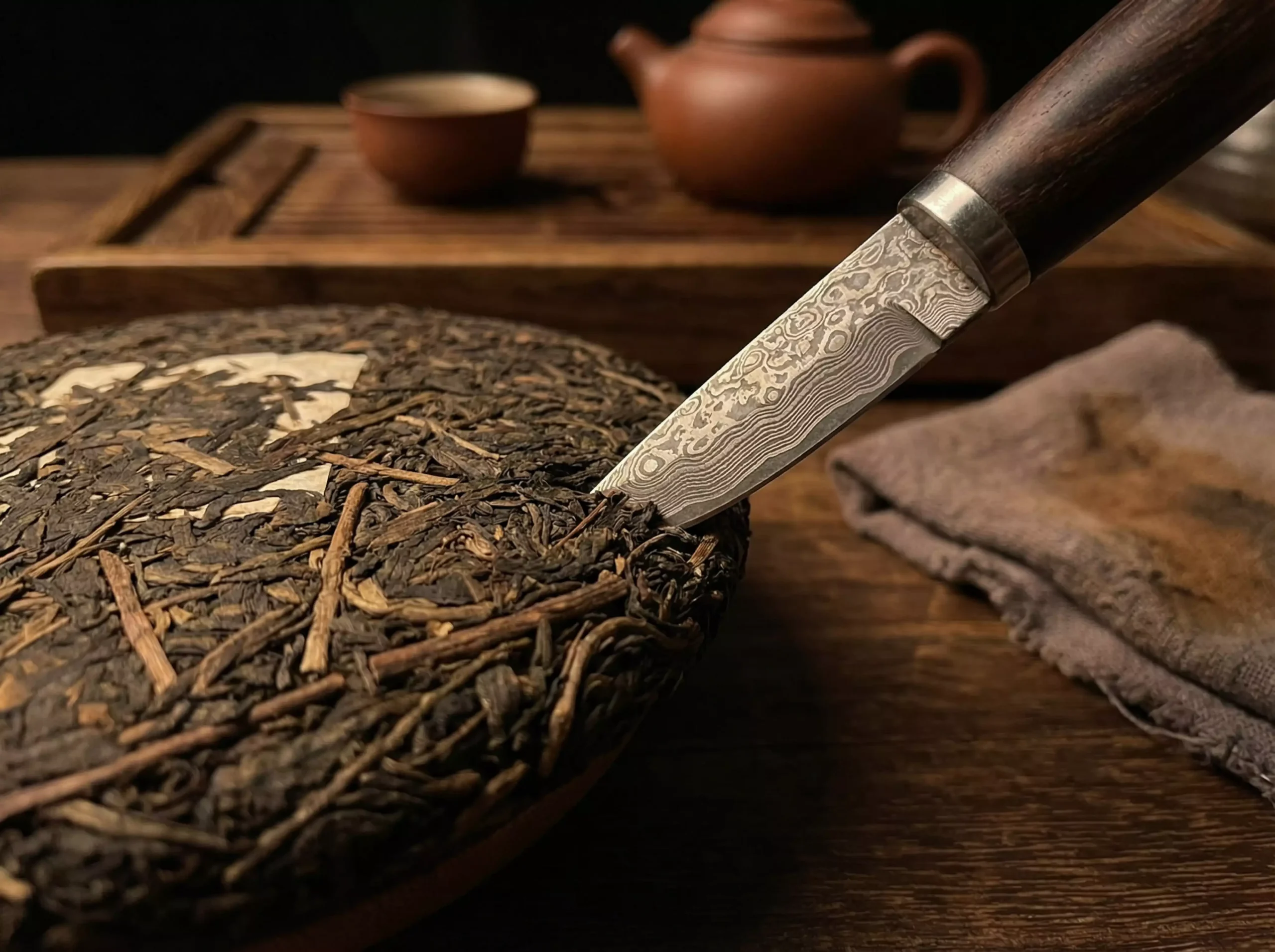
Before you begin, here is a secret most teachers overlook: Imagine your tea cake as a tightly bound book. The leaves are the pages. Your goal is not to drill into the tea, but to gently separate these pages, one by one. This mindset shift—from "breaking" to "opening"—is what preserves the soul of the leaf.
- Workspace: Choose a clean, stable surface. A tea tray or a piece of white paper helps catch loose flakes.
- The Philosophy: Follow the natural grain. Your goal is to peel away flakes, not to crush the leaves into powder.
- Start from the Back: Most cakes have a "dimple" (indentation) at the back. Starting here protects the aesthetic of the front.
II. Steps for Different Shapes
1. Round Tea Cakes (Bing Cha)
Round cakes have a radial leaf structure. After palm pressure, identify a natural gap. Insert your tool horizontally along the grain. Think of it as sliding a bookmark between pages. Gently wiggle to lift a thin layer, repeating until a flake peels off naturally.
2. Square Tea Bricks (Zhuan Cha)
Bricks are the most "book-like" of all. Start from a corner or the side edge. Push the tool horizontally into a layer and wiggle slightly. By prying "page by page," you avoid snapping the brittle fibers of a dense ripe Puerh brick.
III. Choosing Your Tools (Tea Needle vs. Tea Knife)
1. The Tea Needle (Pick for Precision)

Best for tight-pressed cakes and preserving leaf length.
2. The Tea Knife (Pick for Power)

Stronger leverage for dense bricks and larger flakes.
IV. The Philosophy of Imperfection
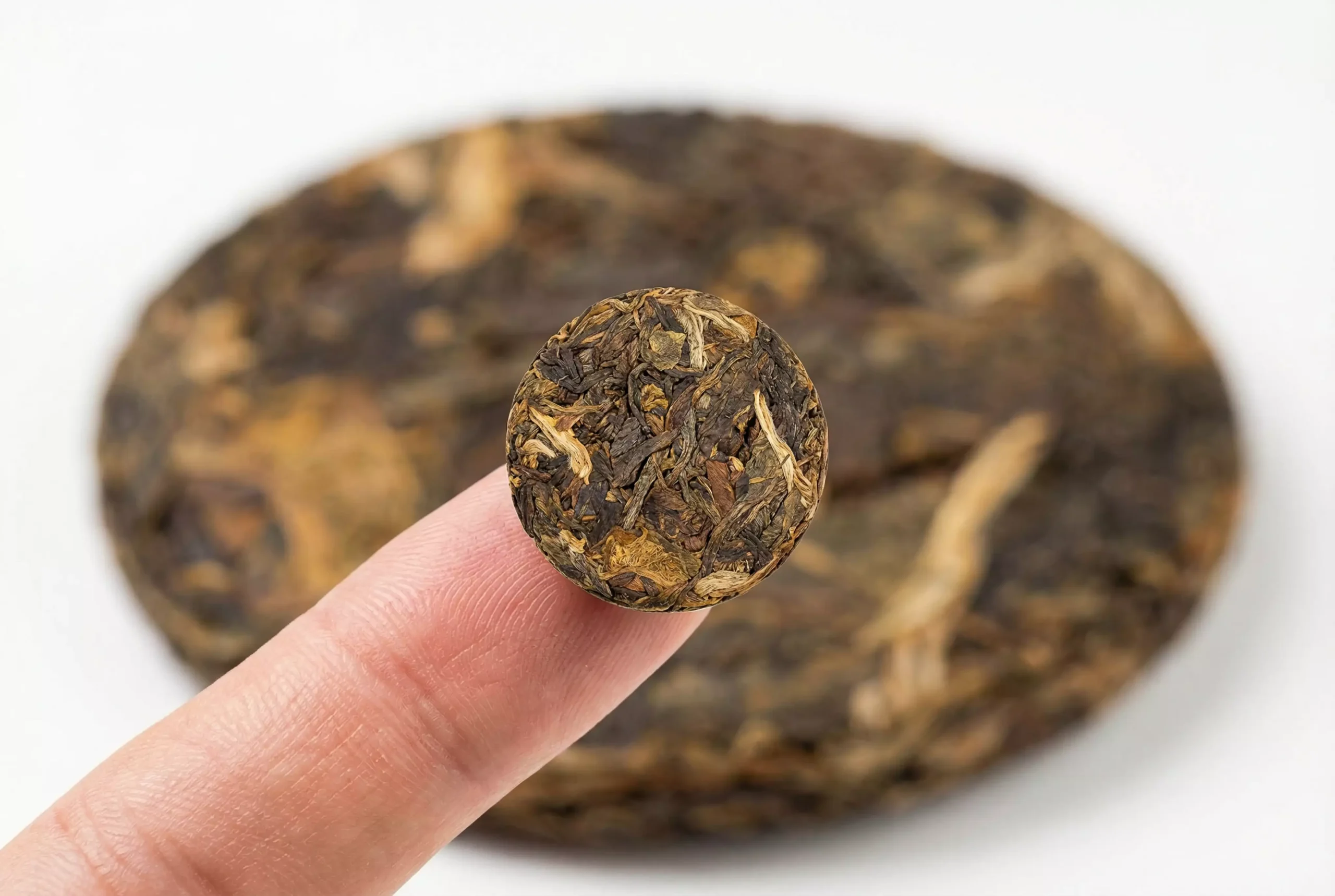
It is impossible to pry a cake with 100% whole leaves. In the SteepedRoots philosophy, we embrace these small "broken" bits. They release their essence quickly, adding immediate body and a vibrant Hui Gan (sweet aftertaste) to your first steep.
Ready to Read Your Tea?
Now that you've "opened" your tea book, it's time to infuse. Choose your path:
Common Questions (FAQ)
What is the best tool for breaking a tea cake?
A specialized tea needle is best for precision and tight-pressed cakes, as it slides between fibers without cutting them. A tea knife offers more leverage for dense bricks and aged ripe Puerh.
Can I use a regular kitchen knife?
It is not recommended. Kitchen knives are designed to cut across fibers, which will damage the tea leaves and create excessive dust. If you don't have a tea tool, a sturdy letter opener or an oyster knife is a much safer alternative.
Why does the "dimple" at the back matter?
The central indentation (the back of the cake) is often the most loosely compressed area. Starting here allows you to find an entry point easily without disturbing the beautiful, uniform presentation of the cake's front face.
What should I do with the tiny broken bits?
Don't throw them away! These small fragments (tea "dust") have a high surface area and release flavor instantly. Mixing a small amount of these bits with whole leaves creates a more robust, full-bodied first infusion.
Finger tips dance, and leaves quietly stretch. At SteepedRoots, we believe the best tea comes from the gentlest touch.