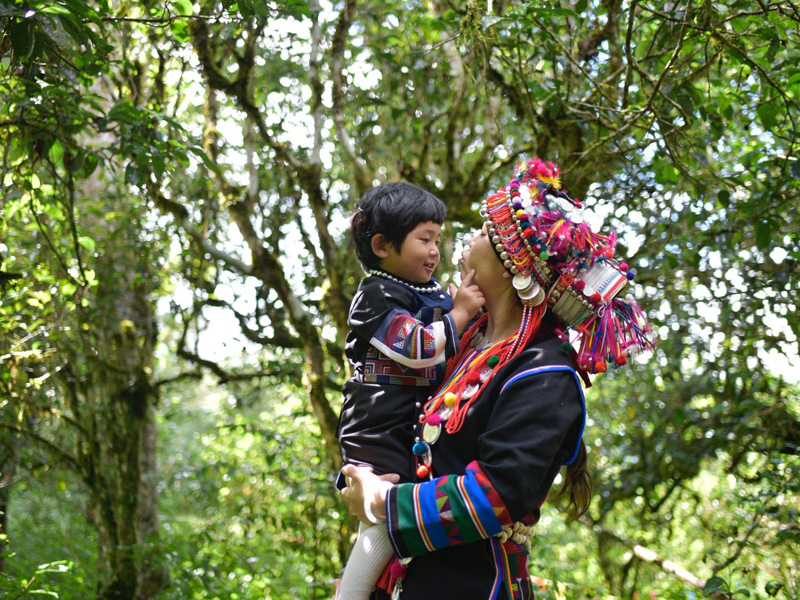
The Forest Guardians: A Conversation with Hani Elders on Ancient Tea Mountains
Beyond Organic—How Ancient Agroforestry Defines Biodiversity in Yunnan's Tea Forests
Interview conducted January 2026 in Menghai County, Xishuangbanna, Yunnan Province
Published February 20, 2026
The road from Menghai town winds upward through morning mist, past neat rows of terraced tea and into something wilder. Ancient trees tower overhead. The air smells of earth and moss and something indefinable—what the Hani people call the breath of the dragon mountain.
I came here in January 2026 with a simple question: How have these tea forests survived for centuries without pesticides, without chemical fertilizers, without the industrial interventions we consider essential to modern agriculture?
The answer, I would learn, has nothing to do with farming technique and everything to do with an unwritten contract between a people and their land—a contract older than any written law, enforced not by government but by belief.
"我们与山林签下的契约,比文字更早,比生命更长。"
"The contract we signed with the forest is older than writing, longer than life itself."
— Elder Bolong, Hani community leader
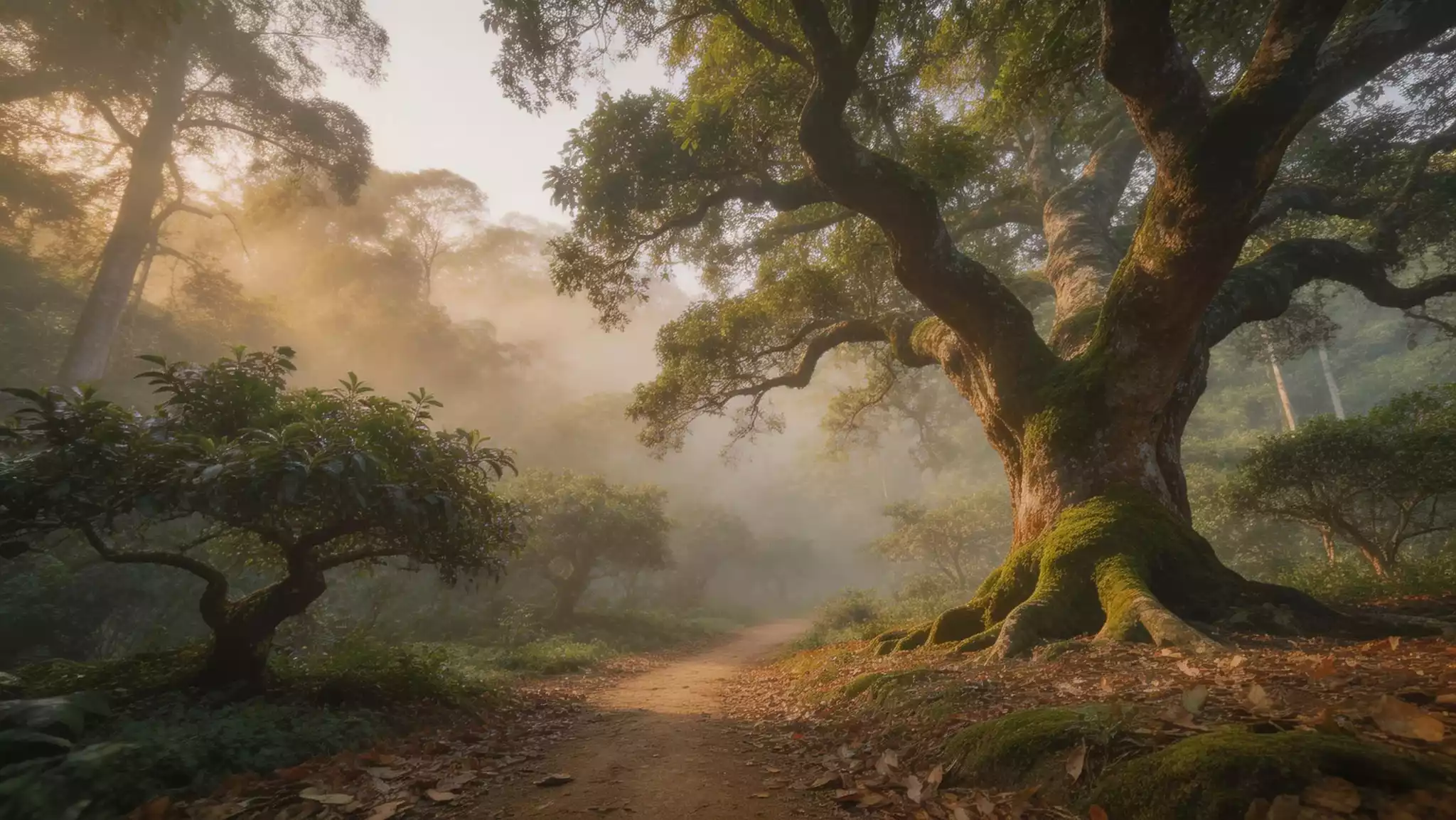
Meeting Elder Bolong: The Dragon Mountain's Keeper
Elder Bolong (波龙) meets me at the village entrance—a weathered man in his seventies, wearing a traditional Hani jacket and a farmer's practical boots. His handshake is firm, his eyes bright with the kind of intelligence that comes from seven decades of observing patterns most of us never notice.
We walk behind the village, climbing toward the sacred forest.
Bolong:
"You see these tea mountains? To outsiders, they look wild—like natural forest. But to us Hani people, every leaf carries our ancestors' instructions. Nothing here grows by accident."
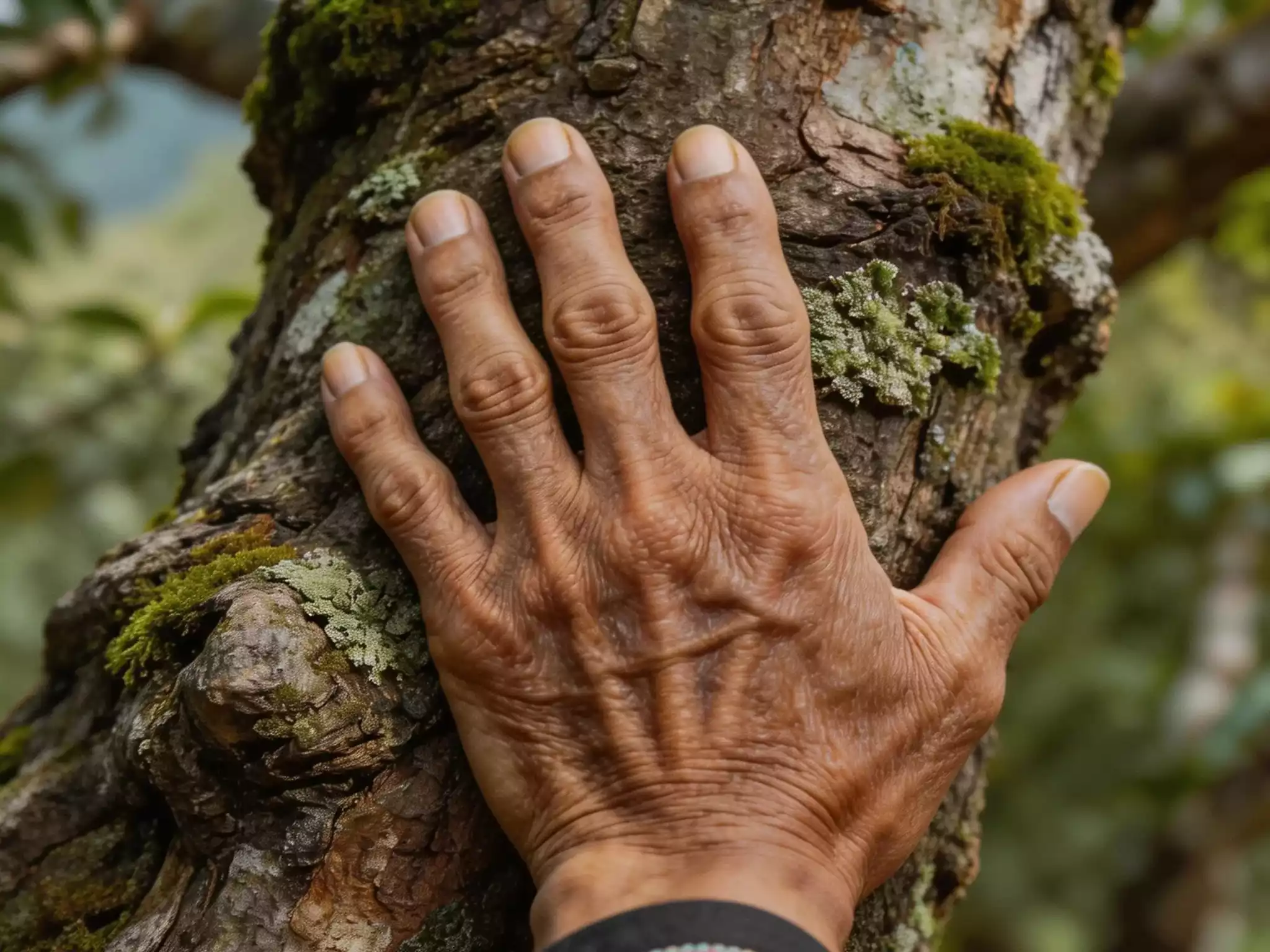
He stops at the forest edge, placing his palm against a massive tree trunk.
Bolong:
"This is Long Shan (龙山)—the Dragon Mountain. It's the village's lifeline. The water source. Where the spirits live. And it's protected by rules stricter than any government law."
Adrian:
"What kind of rules?"
Bolong:
"If someone cuts even one tree from the dragon mountain, the entire village will turn against them. It's not written law—it's our law. The forest at the mountaintop feeds the streams. The streams feed our terraces. The terraces feed our families. Break one link, and everything collapses."
Observer's Note
What Bolong describes isn't superstition—it's sophisticated watershed management expressed through cultural belief. The "dragon mountain" forests act as natural water towers, capturing moisture from clouds and releasing it gradually through springs. Modern hydrologists would call this "ecosystem services." The Hani call it the dragon's breath.
The forest behind his village is pristine—untouched primary forest in a region where most mountains have been logged or converted to monoculture. The reason? A cultural prohibition enforced more effectively than any government regulation.
The Three-Layer Architecture: Forest, Village, Tea
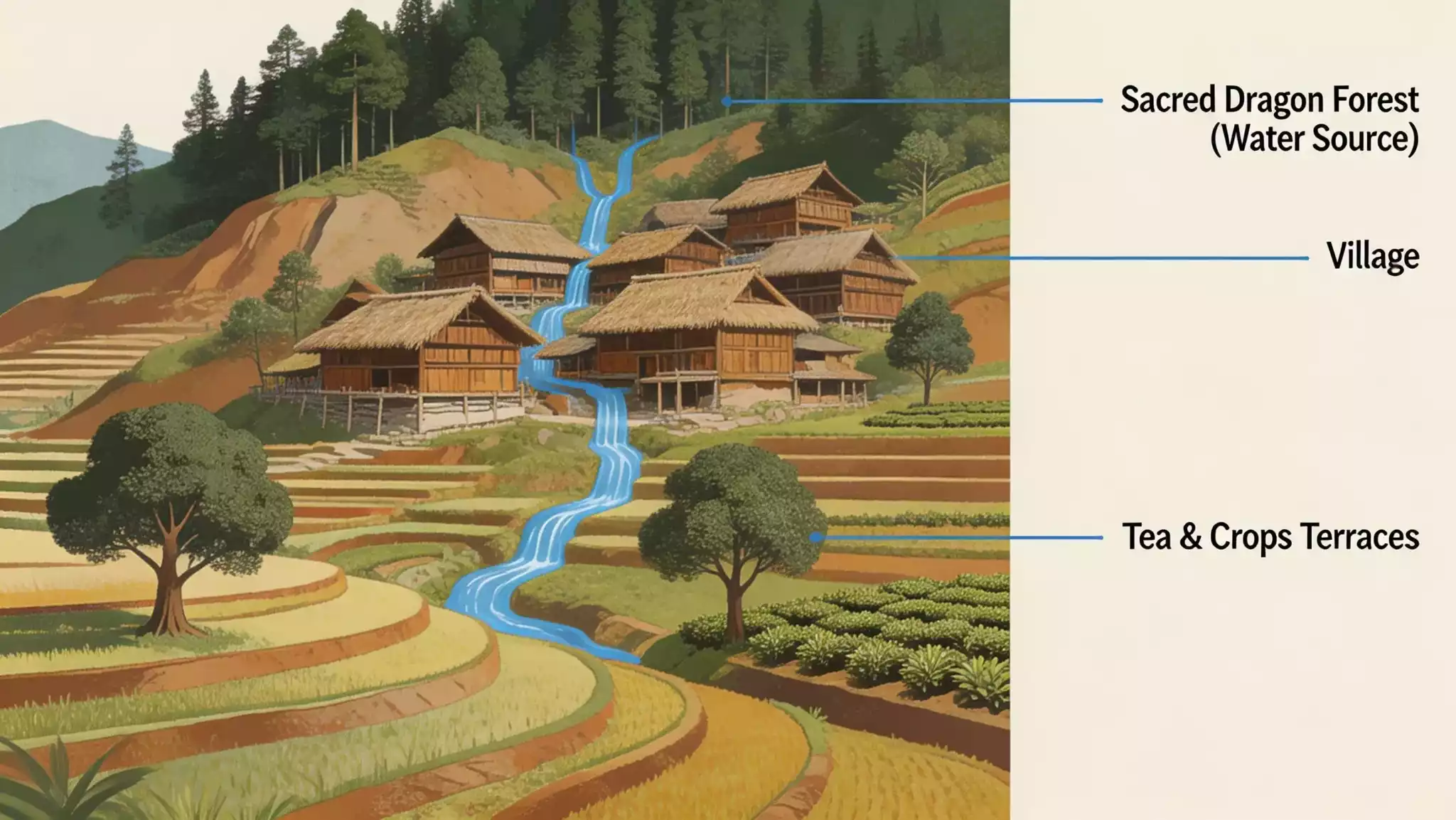
Bolong leads me to a vantage point overlooking the valley.
Bolong:
"Look at how we've arranged ourselves. Forest at the top—that's sacred, untouchable. Village in the middle—that's where we live, close to water. Tea and crops at the bottom—that's what feeds us. This pattern exists in every Hani village for over a thousand years."
Adrian:
"It's a vertical ecosystem. Like layers in a forest."
Bolong:
"Exactly. The top protects the middle. The middle manages the bottom. No one person owns the mountain or the water—it belongs to the village as a collective. Your children will drink from the same spring your grandparents did. That creates responsibility across generations."
He gestures toward the tea terraces below us, where ancient trees grow scattered among younger plants.
Bolong:
"The tea doesn't grow alone. It has companions—shade trees, ground cover, birds, insects. Everything works together. When businessmen come here wanting to cut down the big trees and plant dense rows of tea bushes, we refuse. They say we're losing money. We say we're keeping our contract with the mountain."
In the Tea Forest: Nayi's Lesson in Biodiversity
Later that afternoon, I meet Nayi (娜依), a young tea farmer in her thirties who represents the new generation of Hani agricultural knowledge keepers. She leads me into the tea forest—and "forest" is the right word. These aren't neat plantation rows. They're ecosystems.
Nayi:
"Tea trees can't grow alone like lonely children. They need to be cared for—but not in the way outsiders think."
She crouches beneath a particularly large ancient tree, pointing upward and downward in turn.
Nayi:
"See the layers? Banyan and camphor trees above—they're the umbrella, blocking the harsh sun. Our ancient tea trees drink the filtered light, slowly accumulating flavor. And down here..."
She lifts a handful of leaf litter and living groundcover.
Nayi:
"This is the earth's blanket. Locks in moisture. Feeds the soil. And look—"
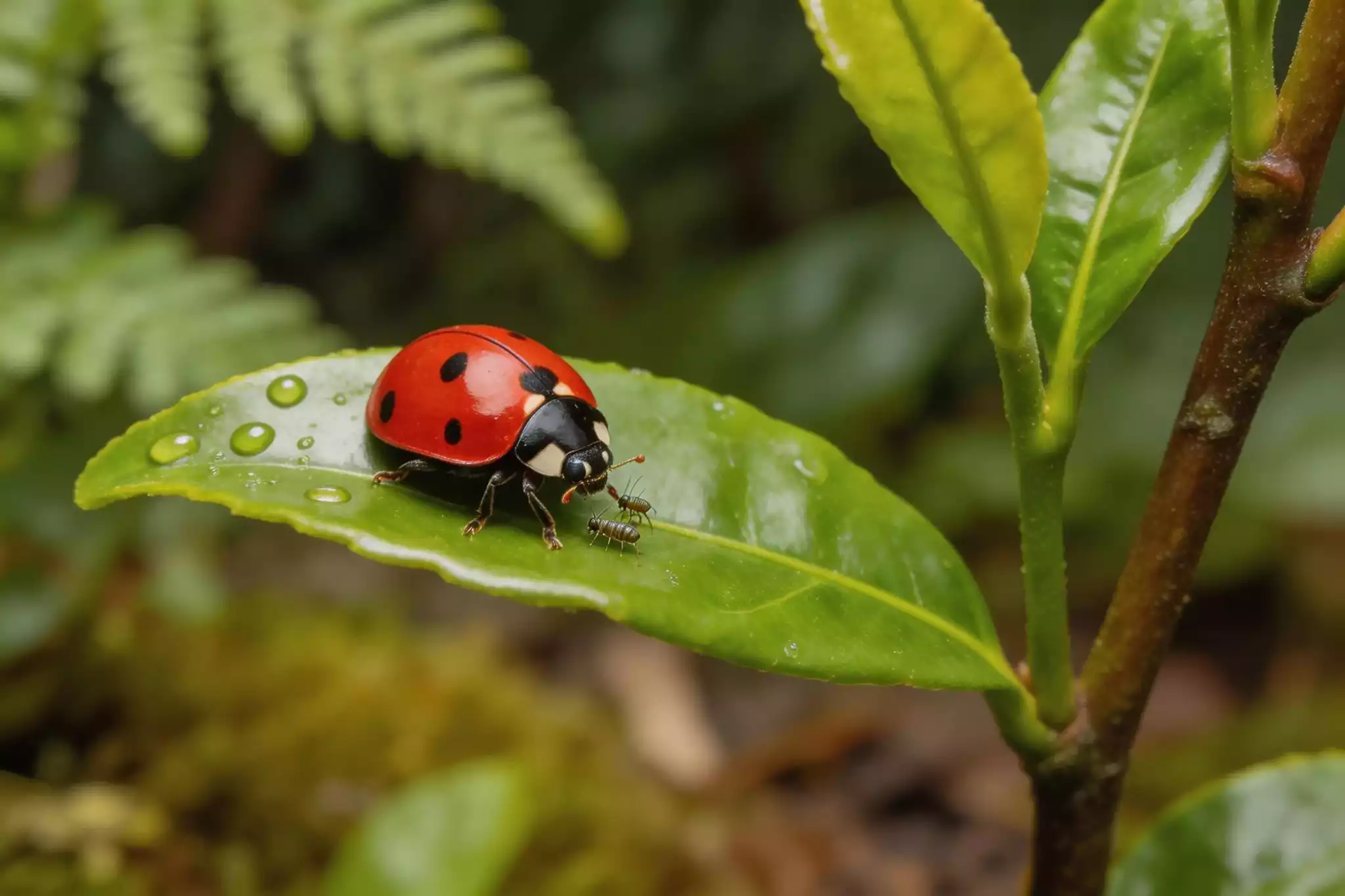
She flips a leaf over, revealing a small red ladybug devouring aphids.
Nayi:
"When pests come, we're not afraid. The forest is full of their natural predators. We never spray pesticides. The birds and insects hold their own meetings—they figure out how to protect the tea themselves."
Adrian:
"So the diversity itself is the protection?"
Nayi:
"Exactly. When disease or insects attack a monoculture plantation, everything dies. Here, with dozens of species, the system can defend itself. Diversity is strength. This is what our ancestors spent a thousand years teaching us."
The Three-Layer Agroforestry System
Upper Canopy (15-20m): Shade trees (banyan, camphor, Albizia) provide filtered light, reduce temperature extremes, and create habitat for insect-eating birds.
Middle Layer (3-8m): Ancient tea trees (Camellia sinensis var. assamica) grow in dappled shade, developing slowly and accumulating complex flavor compounds.
Ground Layer (0-0.5m): Native groundcover, nitrogen-fixing plants, leaf litter, and fungi create a living mulch that retains moisture and builds soil.
Result: A self-regulating ecosystem requiring zero external inputs—no fertilizer, no pesticides, no irrigation beyond natural rainfall.
The Unintentional ESG Model
Back at the village that evening, I sit with Bolong drinking freshly picked tea from bamboo cups. I mention ESG—Environmental, Social, Governance—the framework increasingly used to evaluate corporate sustainability.
Bolong:
"ESG? People from the city use that word. But we've been doing it for centuries—we just didn't call it that."
He counts on his fingers.
Bolong:
"Dragon mountain protection—that's your 'G' (governance). Rules passed down through generations, enforced by community consensus. Tea harvest shared among all village families, women picking, elders teaching—that's your 'S' (social equity). Three-layer planting creating healthy ecosystems—that's your 'E' (environment). We've been doing ESG since before anyone invented the acronym."
| Traditional Practice | Modern ESG Dimension | Measurable Impact |
|---|---|---|
| Dragon Mountain Protection | Environmental (E) | Watershed protection; carbon sequestration 3× higher than monoculture |
| Communal Forest Ownership | Social (S) | Prevents land grabbing; ensures indigenous rights and intergenerational equity |
| Customary Law (古规) | Governance (G) | Regulates harvest intensity; prohibits over-exploitation through cultural enforcement |
| Three-Layer Agroforestry | Environmental (E) | Maintains biodiversity; natural pest control; eliminates agrochemical dependence |
Adrian:
"The difference is that your system doesn't require external auditors or certifications. It's self-enforcing through belief and social pressure."
Bolong:
"When everyone in the village knows that cutting the dragon forest will anger the spirits and dry up the springs their children drink from, they don't need a paper certificate to behave responsibly. The enforcement is internal—in here."
He taps his chest.
The Contemporary Struggle: Capital Meets Tradition
The next morning, Nayi shows me the challenge facing her generation. We stand at the edge of a new cement road—built last year to facilitate tea trade.
Nayi:
"It's difficult now. Outside buyers come with money, wanting us to cut down the big trees and plant dense terrace tea. They say yields will triple. They offer cash upfront."
She grips a handful of dried tea twigs, her knuckles white.
Nayi:
"But we know what happens. Without shade trees, the tea plants die young. Insects explode because there are no birds. The soil washes away. Last year, the neighboring village cut their dragon forest to plant more tea. One heavy rainstorm, and their entire terrace system collapsed. All the tea trees died. Short-term greed cuts off your descendants' future."
Adrian:
"How do you resist that pressure?"
Nayi:
"We're learning to tell a different story. Foreigners love the taste of ancient tree tea, but they don't understand its soul. We don't want to just sell leaves—we want to sell the story of protecting the mountain. Show them why our tea tastes different. Why it matters that it grows in a forest, not a plantation."
She pulls out her phone, showing me photos she's taken—the three-layer ecosystem, the dragon mountain springs, the village's traditional practices.
Nayi:
"We're working with a university now. They're using science to prove what our ancestors knew—that traditional methods produce better tea and healthier ecosystems. For the first time, tradition is being heard."
Protecting Hani tea isn't just about saving trees; it's about respecting the sovereignty of their traditional management systems over industrial intervention.
The Market Paradox
There's a cruel irony here. Global demand for "ancient tree tea" has increased exponentially, driving prices up. But this same demand creates pressure to maximize short-term yields by converting diverse agroforests into monoculture plantations.
The villages that resist this pressure—that maintain traditional practices—produce genuinely superior tea but struggle to communicate why their product justifies premium prices. Meanwhile, unscrupulous sellers label plantation tea as "ancient tree" and pocket the markup.
What's needed is not just certification schemes, but cultural storytelling that helps consumers understand why traditional agroforestry produces tea worth protecting.
Looking Forward: The Contract Goes Global
On my final evening in the village, I ask Bolong and Nayi what they hope for the future.
Bolong:
"Our ancestors said: The mountain is borrowed from our children. We must return it in the same condition we received it. This isn't just a Hani principle—it should be a human principle."
Nayi:
"We don't just want to protect Menghai's tea mountains. We want the world to know: real ancient tree tea isn't grown with pesticides and fast profits. It's grown with faith and rules and patience. We want to bring the Hani contract to the world—not just sell tea leaves and leave, but teach people how to sign their own eternal agreements with the land."
She runs her hand over the carved marks ancestors left on an old tea tree—a kind of natural ledger, recording centuries of careful stewardship.
Nayi:
"When people in London or New York drink our tea, I want them to close their eyes and understand: this leaf saw a thousand years of clouds. It heard Hani songs. It carries the dragon mountain's breath and the village's warmth. By choosing brands that promise to protect the forest and respect Hani tradition, they're voting for the earth's resilience with every cup."
Tea is a gift from the mountain. Protecting the mountain is protecting ourselves. This truth lasts longer than any tea's fragrance.
Reflection: What I Learned from the Dragon Mountain
I came to Menghai County expecting to learn about tea cultivation techniques. Instead, I learned about social architecture—how a community's beliefs, enforced through cultural consensus rather than written law, can achieve what most government regulations cannot: genuine, multigenerational environmental stewardship.
The Hani people's "contract with the forest" isn't metaphorical. It's a functional governance system that has protected watersheds, maintained biodiversity, and sustained agriculture for over a millennium.
What makes it work?
- Integrated belief and practice: The dragon mountain isn't just "protected forest"—it's sacred space, water source, and collective heritage simultaneously
- Collective ownership: No individual can profit from degrading shared resources; benefits and costs are distributed across the community
- Intergenerational perspective: Rules are taught through stories and enforced through shame—powerful social tools that operate across time
- Functional alignment: The taboo against cutting dragon forest trees isn't arbitrary—it directly protects the hydrology that makes agriculture possible
Modern sustainability frameworks like ESG are trying to create, through corporate policy and external auditing, what the Hani achieved through cultural evolution: systems where environmental protection, social equity, and effective governance are inseparably linked.
The question isn't whether we can learn from indigenous practices. The question is whether we're humble enough to recognize that some of humanity's most sophisticated sustainability solutions don't look like technology—they look like faith.
What You Can Do
The next time you drink ancient tree tea, close your eyes. Listen to that leaf's story. It saw a thousand years of clouds. It heard Hani songs. It carries the dragon mountain's breath.
Choose brands that:
- Source from traditional Hani agroforestry systems (not converted plantations)
- Support community-based forestry management
- Pay fair prices that recognize stewardship, not just harvest volume
- Tell the story—help consumers understand why traditional methods matter
With every cup, you're casting a vote—for forests over plantations, for tradition over extraction, for the earth's resilience over short-term profit.
🌿 Explore More
- What is Pu-erh Tea? From Ancient Trees to Modern Cups
- The Legacy of Pu-erh: Ancient Trees and Living Culture
- Dian Hong vs. Global Black Teas: The Yunnan Difference
- The Ancient Tea Soul of Menghai: Bulang Culture & Pu-erh Legacy
- Characteristics of Ancient Tree Puerh Teas from Menghai’s Mountains and Villages