What Is Pu-erh Tea? The Complete Guide from Ancient Forests to Your Cup
Pu-erh tea is more than a beverage—it's a living tradition that connects you to Yunnan's misty mountains, centuries-old forests, and the patient hands of tea farmers who understand that great tea cannot be rushed. Unlike green, oolong, or black teas that are best consumed fresh, Pu-erh is a tea that evolves. It changes with time, transforms in storage, and reveals new dimensions with every passing year.
From the vibrant astringency of young raw Pu-erh to the smooth, chocolate-like depth of aged ripe Pu-erh, this tea offers a flavor spectrum unlike anything else in the tea world. But Pu-erh's complexity can be intimidating. What's the difference between raw and ripe? Why does some Pu-erh smell "fishy"? How do you know if you're tasting ancient tree tea or plantation tea? And most importantly—how do you brew it properly to unlock its full potential?
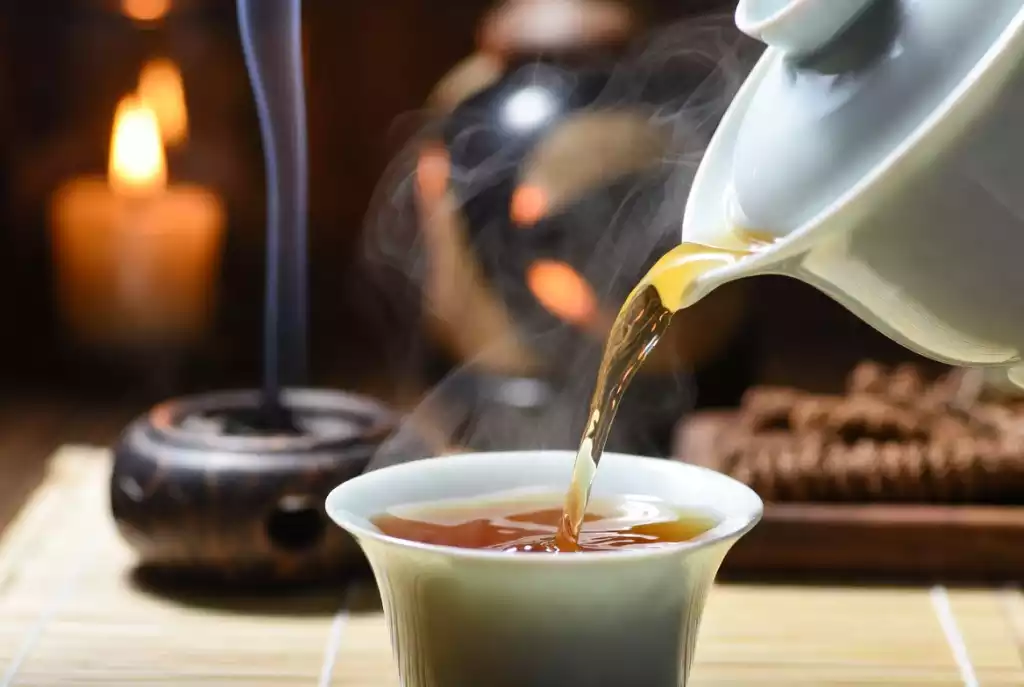
This comprehensive guide will take you from complete beginner to confident Pu-erh drinker. You'll understand the fundamental differences between raw and ripe Pu-erh, learn how terroir and tree age shape flavor, discover the science behind its unique fermentation process, and master the brewing techniques that professionals use. Whether you're exploring Pu-erh for the first time or looking to deepen your appreciation, this is your complete roadmap to Yunnan's most storied tea.
What Is Pu-erh Tea?
The Basics
Pu-erh tea (普洱茶, pronounced "poo-air") hails from Yunnan Province in southwestern China, one of the world's most biodiverse tea-growing regions. It is made exclusively from the big-leaf varietal (Camellia sinensis var. assamica), which produces larger, thicker leaves than the small-leaf plants used for green or oolong teas. These robust leaves are ideal for fermentation and aging, containing high concentrations of polyphenols, catechins, and amino acids that transform beautifully over time.
What sets Pu-erh apart from all other teas is its post-production fermentation. While most teas are processed to stop oxidation and preserve freshness, Pu-erh is designed to continue evolving after production. This can happen naturally over decades (raw Pu-erh) or through accelerated microbial fermentation (ripe Pu-erh). The result is a tea with earthy, mellow, sometimes medicinal notes that develop complexity the way wine does—through time, terroir, and careful stewardship.
"Pu-erh is not just aged tea. It is living tea—a dialogue between leaf, microbe, time, and storage conditions."
Geographic Origins & Terroir
Pu-erh is primarily produced in three major regions of Yunnan:
- Xishuangbanna: Home to legendary mountains like Yiwu (elegant, floral, sweet) and Laobanzhang (bold, powerful, mineral-rich)
- Lincang: Famous for Bingdao (icy-cool sweetness with orchid notes) and Daxueshan (wild, herbal character)
- Pu'er/Simao: Known for Jingmai (delicate orchid aroma) and reliable everyday teas
Similar wild tea trees exist in northern Laos, Myanmar, and Vietnam, but only teas from Yunnan Province can officially be called "Pu-erh" under Chinese protected designation rules. According to a 2021 study in Foods, Pu-erh's unique fermentation process and geographic origin create a tea that is prized worldwide for its cultural heritage, health benefits, and remarkable aging potential.
Big Leaf vs. Small Leaf Varieties
The soul of Pu-erh lies in its big leaf varietal (da ye zhong). These leaves are:
- Larger and thicker than small-leaf varietals used for green or oolong teas
- Higher in polyphenols, catechins, and other compounds that support fermentation
- Capable of withstanding multiple infusions (10-15+ steeps) without losing character
- Naturally suited to aging—young raw Pu-erh can be stored for 20, 30, even 60+ years
Small-leaf varietals (xiao ye zhong), by contrast, are finer and more delicate, lacking the robust depth needed for Pu-erh's signature transformation. This leaf distinction is fundamental—it shapes everything from mouthfeel to aging potential to how the tea responds to storage conditions.
Raw vs. Ripe Pu-erh: Two Paths, One Tea
The most fundamental distinction in Pu-erh is between raw (Sheng, 生) and ripe (Shu, 熟). Though both come from the same Yunnan tea trees, their processing creates dramatically different flavor experiences.

Raw Pu-erh (Sheng Cha, 生茶)
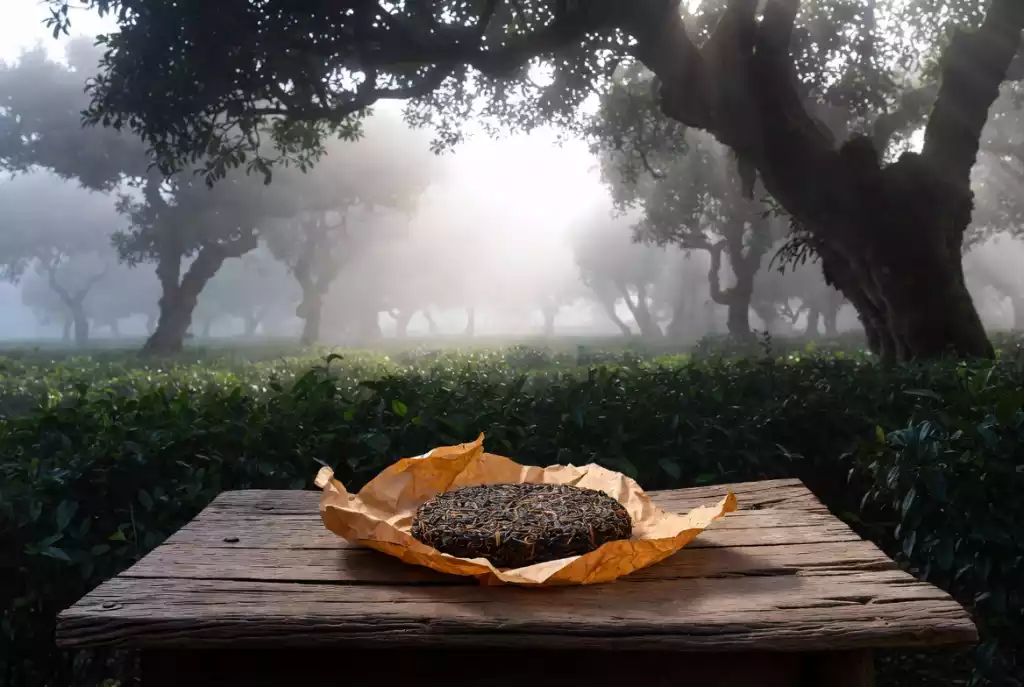
Processing: Traditional method dating back over 2,000 years. Hand-picked leaves are withered, pan-fried (Sha Qing) to halt oxidation, rolled, and sun-dried into maocha (raw material). The maocha is then steamed and pressed into cakes, bricks, or tuochas, and allowed to age naturally over years or decades.
Flavor Evolution:
- Young (1-3 years): Vibrant, grassy, herbaceous, with notes of apricot, green apple, or jasmine. Expect brisk astringency and sometimes aggressive bitterness that transforms into sweet hui gan (returning sweetness) on the finish.
- Mid-aged (4-7 years): Bitterness softens as complexity emerges. Floral and fruity notes meld with subtle honey-like sweetness, offering a glimpse of the tea's evolving depth.
- Mature (8-15 years): Woody, camphor, or dried fruit notes dominate, with a smoother, fuller body and reduced astringency. The tea reaches harmonious maturity.
- Fully aged (15+ years): Refined, earthy elegance with lingering hui gan. Notes of incense, aged wood, dried jujube, or dark honey create a hauntingly soft profile prized by collectors.
Best for: Collectors, patience-seekers, those who enjoy witnessing transformation. Raw Pu-erh is an investment—it gets better with time, like fine wine.
Ripe Pu-erh (Shu Cha, 熟茶)
Processing: Modern innovation developed in the 1970s. After producing maocha, the tea undergoes wo dui (wet-piling)—controlled microbial fermentation for 45-90 days with moisture and heat. This accelerates the aging process, mimicking decades of natural transformation in just weeks. The tea is then dried, sorted, and pressed.
Flavor Profile: Earthy, mellow, smooth from day one. Expect notes of forest soil, dark chocolate, leather, dried dates, woody undertones. Low astringency, almost no bitterness—just comforting, grounding depth. High-quality ripe Pu-erh should be clean and sweet, without muddiness or off-flavors.
Common Issue: Some young or low-quality ripe Pu-erh has a "fishy" odor caused by trimethylamine (TMA), a compound produced during fermentation. This is the same molecule responsible for fish smell. Chinese drinkers call it "fresh fermentation aroma," while Westerners often find it off-putting. The good news? High-quality, properly aged ripe Pu-erh has no pronounced fishiness, and the smell typically fades with airing or 1-2 years of storage.
Best for: Beginners, daily drinkers, those seeking immediate comfort without the wait. Ripe Pu-erh is approachable and forgiving.
| Aspect | Raw Pu-erh (Sheng) | Ripe Pu-erh (Shu) |
|---|---|---|
| Processing | Natural long-term aging | Accelerated Wo Dui fermentation (45-90 days) |
| Flavor (Young) | Bright, floral, fruity, grassy; bitter/astringent with sweet hui gan | Earthy, mellow, smooth; low bitterness |
| Flavor (Aged) | Honey, dried fruit, camphor, wood; highly evolving | Refined earth, chocolate, leather; consistent sweetness |
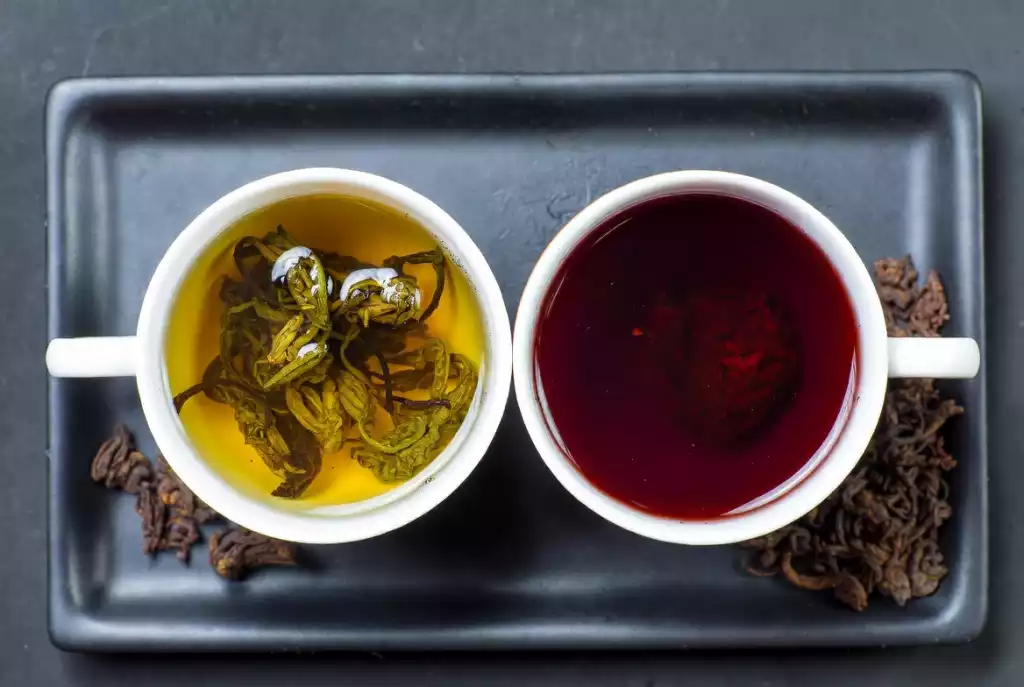
| Liquor Color | Young: green-gold → Aged: golden-orange/amber | Deep ruby-red/chestnut; clearer with age |
| Aging Potential | 20–60+ years, dramatic improvement | 10–20 years peak, smoother but less change |
| Common Issues | Excessive young bitterness | Fishy TMA smell in young/low-quality |
| Best For | Collectors, complexity seekers | Beginners, daily drinkers, comfort |
🐟 How to Fix "Fishy" Ripe Pu-erh (Step-by-Step)
- Rinse thoroughly: Use boiling water and rinse the leaves 2 times for 5-10 seconds each to wash away surface compounds.
- Let it breathe: Break the cake into chunks and air them out in a clean, dry space for several days or weeks.
- Age it: Store properly in breathable packaging. Fishy notes often vanish within 1-2 years.
- Brew carefully: Use 90-95°C water and shorter steeps initially to avoid extracting excess fermentation compounds.
Note: A strong, persistent fishy smell usually indicates low-quality processing. High-quality ripe Pu-erh should be clean, earthy, and sweet.
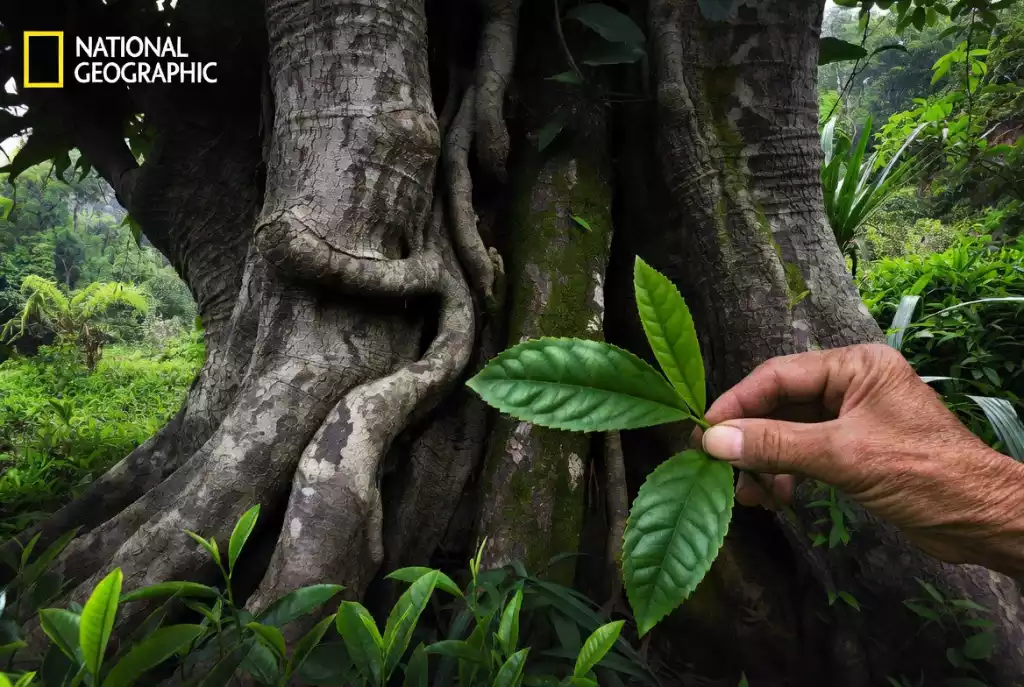
Ancient Tree vs. Terrace Tea: The Soul of Pu-erh
Beyond the raw vs. ripe distinction, the source of the leaves fundamentally shapes Pu-erh's character. This is where terroir, biodiversity, and tree age converge to create truly exceptional tea.
Terrace Tea (Taidi Cha, 台地茶)
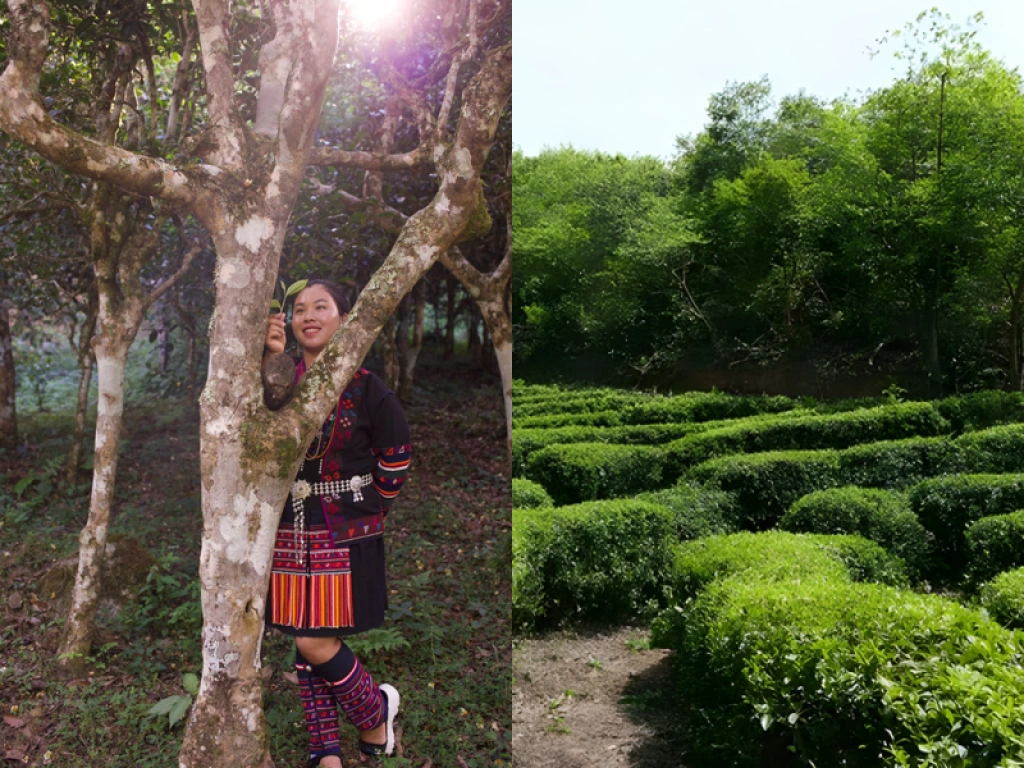
Terrace tea comes from modern, high-density plantations where tea bushes are cultivated like agricultural crops. These young bushes (often under 50 years old) are regularly trimmed, fertilized, and sometimes treated with pesticides to maximize yield and minimize pest damage.
Characteristics:
- High planting density allows for fast, frequent harvesting
- Clean, straightforward taste with batch-to-batch consistency
- Ideal for mass production and blended teas
- Sharp, high-pitched aroma that's intense but typically one-dimensional
- Limited aging potential—flavors don't evolve as dramatically
Best for: Everyday drinking, affordability, blending. Terrace tea is the workhorse of the Pu-erh industry and plays an important role in making Pu-erh accessible to a wide audience.
Ancient Tree Tea (Gushu Cha, 古树茶)
Ancient tree tea is harvested from wild or semi-wild trees typically over 100 years old—and in some cases, over 1,000 years old. These trees grow in remote mountain forests in Yunnan, often at high altitudes (1,400-2,000 meters), thriving without fertilizers, pesticides, or pruning.
Why ancient trees are special:
- Deep root systems: Often extending 5+ meters into mineral-rich, old-growth forest soil
- Biodiverse environment: Surrounded by other native plants, creating a complex microbial ecosystem
- Natural growth: No human interference—the trees set their own growth cycle and leaf production
- Chemical complexity: Higher concentrations of secondary metabolites, aromatic oils, and trace minerals
Flavor & Experience: Ancient tree tea offers layered, forest-like aromas and a rounded, silky texture that evolves across 10-15+ infusions. Each mountain has its own signature—Yiwu is soft and sweet, Laobanzhang is bold and powerful, Bingdao has a distinctive icy-cool orchid fragrance. These teas carry cha qi (茶气), a vital energy felt in the body—warmth, mental clarity, sometimes even sweating.
"The soul of ancient tree Pu-erh lies not in the factory—but in the forest. True gushu cannot be fertilized or sprayed. All it asks for is forest, time, and a quiet conversation."
Price & Authenticity: Because of their age, limited yield, and harvesting difficulty (often requiring climbing tall trees in remote areas), ancient tree teas command significantly higher prices. A single 357g cake can cost hundreds or thousands of dollars. However, the term "ancient tree" is often misused—many teas labeled as gushu are actually blends containing mostly terrace tea. Look for reputable vendors with transparent sourcing, traceability, and realistic pricing.
Myth debunked: Ancient tree tea's depth comes from nature's harmony, not just age alone. The combination of tree age, root depth, biodiversity, altitude, and forest microclimate creates complexity that terrace tea simply cannot replicate.
The Production Process: From Leaf to Cake
Raw Pu-erh (Sheng) Production
Raw Pu-erh follows the traditional method that has been refined over 2,000 years:
- Picking: Hand-harvest fresh leaves in the morning after dew dries, typically "one bud with two or three leaves"
- Withering: Spread leaves on bamboo mats for 4-12 hours to reduce moisture by 30-40%
- Kill-Green (Sha Qing): Pan-fry leaves at 200-300°C for 2-5 minutes to halt oxidation while preserving enzymes for future aging
- Rolling: Roll leaves by hand or machine for 20-40 minutes to break cell walls and shape the tea
- Sun-Drying: Dry rolled leaves in the sun for 1-2 days, creating maocha (raw material)
- Aging (optional at this stage): Maocha can be stored loose to age naturally
- Pressing: Steam maocha to soften, press into cakes/bricks/tuochas, wrap in breathable paper
- Long-term aging: Store for years or decades, allowing natural microbial fermentation to develop complexity
Ripe Pu-erh (Shu) Production
Ripe Pu-erh follows the same initial steps as raw, but then undergoes the unique wo dui process:
- Steps 1-5 (same as raw): Picking through sun-drying to create maocha
- Pile Fermentation (Wo Dui): The defining step
- Maocha is moistened and piled 1-1.5 meters high
- Covered with cloth to maintain 40-60°C temperature and 70-85% humidity
- Microorganisms (bacteria, fungi) break down polyphenols into theabrownins and other compounds
- Process lasts 45-90 days, with the pile turned every 7-10 days for even fermentation
- Temperature and humidity must be carefully monitored—poor control creates off-flavors or excessive earthiness
- Breaking and Drying: Loosen the pile, dry to 8-10% moisture to prevent mold
- Sorting & Grading: Remove stems and non-standard leaves
- Blending: Combine batches for consistent flavor profile
- Pressing & Packaging: Steam, press, and wrap like raw Pu-erh
The wo dui process was developed in the 1970s by Kunming Tea Factory and Menghai Tea Factory as a way to meet demand for aged Pu-erh without waiting decades. It accelerates natural aging, creating the signature smooth, earthy character of ripe Pu-erh.
How to Taste Pu-erh: A Sensory Guide
Tasting Pu-erh is not about memorizing flavor notes—it's about learning how to observe what the tea reveals. Here's a structured approach to develop your palate:
The Five Observation Points
- Dry Leaves: Examine shape, color, and aroma. Are they tightly compressed or loose? Dark brown (ripe) or green-olive (young raw)? Smell them—what do you notice? Earthy? Floral? Sweet?
- Liquor Color: Pour into a white porcelain cup. Young raw Pu-erh is light gold to yellow-green. Aged raw is amber to reddish-orange. Ripe Pu-erh is deep ruby-red or chestnut brown. Clarity matters—cloudiness may indicate over-steeping or quality issues.
- Aroma: Inhale deeply from the empty cup after pouring out the tea. What lingers? Fresh grass? Dried fruit? Forest floor? Camphor? Chocolate? The aroma's persistence reveals quality.
- Taste: Sip slowly. Notice the initial taste—bitter? Sweet? Astringent? Then observe how it transforms. Does hui gan (returning sweetness) emerge seconds after swallowing? Does it spark salivation? How does the flavor evolve across multiple infusions?
- Mouthfeel & Aftertaste: Pay attention to texture. Is it thick and velvety or light and crisp? Does it coat your mouth or feel clean? Notice the throat sensation—cooling? Warming? The aftertaste (yun) can linger for minutes, revealing the tea's true depth.
Understanding Age Through Taste
For raw Pu-erh, age dramatically transforms flavor:
- 1-3 years: Vibrant, bold, grassy, fruity (apricot, green apple), floral (jasmine, orchid). Brisk astringency, sometimes aggressive bitterness with sweet hui gan finish.
- 4-7 years: Bitterness softens, complexity emerges. Floral and fruity notes blend with honey-like sweetness. More approachable.
- 8-15 years: Woody, camphor, dried fruit notes dominate. Smoother body, reduced astringency. Harmonious maturity.
- 15+ years: Refined, earthy elegance. Notes of incense, aged wood, dried jujube, dark honey. Lingering hui gan. Hauntingly soft, prized by collectors.
Storage Effects: Dry vs. Wet
Storage conditions shape flavor as profoundly as age:
Dry Storage (low humidity, well-ventilated—e.g., Kunming):
- Preserves floral and fruity top notes
- Slower transformation—requires 10+ years for significant depth
- Clear, bright liquor with crisp clarity
- More pronounced bitterness in young teas, fading gradually
Wet Storage (high humidity—e.g., Hong Kong, Malaysia):
- Accelerates fermentation, yielding darker, richer flavors
- Earthy, leathery, sometimes musty notes (like forest floor)
- Thicker, velvety mouthfeel even in younger teas
- Dark, reddish-orange liquor, often opaque
- Pronounced aged aromas develop earlier
- Risk: requires careful monitoring to avoid mold
Most modern collectors aim for balanced "natural" storage—moderate humidity (60-70% RH) that allows pleasant aging without extremes.
🫖 Side-by-Side Tasting Exercise
The best way to develop your palate is through direct comparison:
- Select two Pu-erhs from the same region but different ages (e.g., 3-year vs. 10-year) or different storage (dry vs. wet)
- Use identical teaware, water temperature, steep time, and leaf ratio
- Observe liquor color, aroma, taste, mouthfeel, and aftertaste
- Note differences without over-analyzing—trust your senses
- Keep a tasting journal to track your observations over time
This practice trains your palate faster than any amount of reading.
Building Your Tasting Vocabulary
Start with everyday descriptors rather than tea jargon:
- Aromas: fresh grass, forest floor, ripe apricot, dried fruit, temple incense, aged leather, dark chocolate, camphor, honey
- Tastes: bitter, sweet, astringent, mineral, umami, fruity, earthy, woody
- Textures: silky, velvety, thick, thin, coating, clean, grippy, smooth
- Sensations: cooling throat, warming chest, returning sweetness (hui gan), salivation, drying
Don't force complex descriptions. If it tastes like "fresh hay" or "chocolate with leather," that's perfect. Your palate is your guide.
Brewing Pu-erh: The Art of Precision
While Pu-erh seems forgiving, proper brewing makes the difference between a bitter, flat liquor and a sweet, vibrant experience. Here's how professionals do it:
Essential Equipment
- Gaiwan (100-120ml): Preferred for most Pu-erh brewing—allows precise temperature and timing control
- Yixing teapot: Good for ripe Pu-erh or well-aged raw (but not recommended for young raw, which needs heat release)
- White porcelain cups: Reveal true liquor color and don't retain flavors
- Tea needle/pick: For breaking compressed cakes
- Kettle with temperature control: Essential for precision
- Quality water: Spring or filtered water with TDS 30-80 (low mineral content)
The Golden Rules
1. Water Temperature: 95–100°C Sweet Spot (Why Heat Usually Wins)
Pu-erh thrives on heat. Most experts brew with water between 95–100°C, and full boiling water (100°C) remains the default for unlocking maximum aroma, depth, and cha qi from high-quality material.
- Ripe Pu-erh (Shu) & aged raw (8+ years): Always use boiling water (100°C). High heat extracts smooth, layered notes—chocolate, wood, dates, leather—without risk of over-extraction.
- Young raw Pu-erh (1–5 years, especially fresh or bitter spring picks): 95–98°C is often ideal. It preserves vibrant florals, fruits, and high notes while taming aggressive bitterness and astringency. Many drinkers start at 92–95°C for the first 2–3 steeps, then gradually increase to 98–100°C as the tea opens and bitterness transforms into hui gan.
- Ancient tree / gushu material (regardless of age): Typically 98–100°C to fully release mountain qi, mineral depth, and lasting infusions. Exception: very tender young gushu spring teas may benefit from starting at 94–96°C to protect delicate sweetness.
Pro tips for temperature control:
- Always preheat your gaiwan, teapot, and cups rigorously—a cold vessel can drop the effective brewing temperature by 5–10°C instantly.
- For young raw Pu-erh, try a high pour (pouring from greater height) to slightly oxygenate and cool the water by 1–2°C if needed.
- Experimentation is key: start with the recommendations above, then adjust 2–3°C based on the specific tea and your palate preference.
While full boil is traditional and maximizes potential in most cases, using slightly cooler water on very young/bitter raw Pu-erh is a common and valid practice among both Chinese and Western tea enthusiasts—it often makes the tea more approachable for daily drinking or first tastings.
2. Water Quality: The Softness Factor
If your tea tastes metallic or overly astringent despite proper technique, check your water. Hard water (high in calcium and magnesium) bonds with tannins, creating muddy liquor and metallic aftertaste.
- Use spring or filtered water with TDS 30-80
- Avoid distilled water (too flat) or tap water (often too hard)
- This single factor dramatically impacts hui gan (returning sweetness)
3. Steeping Rhythm: Flash-Steep Method
For Raw Pu-erh:
- Rinse: 5 seconds with boiling water, discard (awakens leaves)
- First 3-4 steeps: 5-10 seconds (captures top notes without extracting heavy bitterness)
- Subsequent steeps: Gradually increase by 5-10 seconds per round
- Drain completely after each steep—residual tea ruins the next infusion
- A good raw Pu-erh should yield 10-15+ infusions
For Ripe Pu-erh:
- Rinse: 2 rinses of 5-10 seconds each (crucial for removing any fishy notes and awakening leaves)
- Steeps: 10-20 seconds initially, extending gradually
- Ripe is more forgiving—harder to over-extract than raw
- Expect 8-12 robust infusions from quality shu
4. Tea-to-Water Ratio
The golden ratio: 1g of tea per 15-20ml of water
- Small gaiwan (100ml): 5-7g of tea
- Medium gaiwan (120-140ml): 7-9g of tea
- Large gaiwan (150-170ml): 9-11g of tea
Pro tip: For precision without a scale, consider pre-portioned formats like SteepedRoots' 2g mini cakes—simply count cakes based on vessel size (3 cakes for 100ml, 4 for 120ml, 5 for 150ml).
5. Adjusting for Compression
- Loose leaf: High surface area, no wait needed after rinse
- Tightly compressed cakes/bricks: Allow 10-20 seconds rest after rinse to let heat penetrate the core
- Break compression carefully with a tea needle to avoid excessive leaf breakage
⚠️ Common Brewing Mistakes
- Using water that's too cool: Kills aroma extraction
- Not preheating the vessel: Drops temperature instantly
- Steeping too long in early rounds: Extracts harsh bitterness before developing sweetness
- Not rinsing ripe Pu-erh adequately: Leaves surface fermentation compounds that taste fishy
- Using hard tap water: Creates metallic, muddy taste
- Leaving residual tea in vessel: Over-extracts and ruins next steep
- Using water too cool on ripe, aged raw, or ancient tree Pu-erh: Misses out on depth, aroma, and cha qi—aim for near-boil (98–100°C) unless deliberately experimenting with very young/bitter sheng.
Storage & Aging: Time as an Ingredient
Pu-erh is one of the few teas designed to improve with age—but only if stored properly. Poor storage can ruin even the finest ancient tree tea, while good storage can transform ordinary tea into something remarkable.
The Four Pillars of Pu-erh Storage
- Temperature: Stable, moderate (60-75°F / 15-24°C). Avoid extreme heat or cold.
- Humidity: 60-70% RH is ideal. Too dry = slow aging. Too wet = risk of mold.
- Ventilation: Tea needs to breathe. Use breathable materials (bamboo, paper, cardboard), not plastic or airtight containers.
- Darkness & Odor-Free: Store away from direct sunlight and strong smells (tea absorbs odors easily).
Storage Methods
Home Storage (Dry Climate):
- Clay jars or cardboard boxes in a closet or dedicated cabinet
- Keep cakes wrapped in original paper
- Check periodically for mold (white fuzzy spots = bad; golden patina = good)
- Rotate cakes if stacking to ensure even air exposure
Traditional Wet Storage (High Humidity):
- Only attempt if you have experience and climate control
- Requires careful monitoring to avoid mold
- Results in faster, darker, earthier transformation
- Not recommended for beginners
Natural Storage (Recommended for Most):
- Store in your natural home climate without extreme manipulation
- Maintain moderate humidity with occasional ventilation
- Allows slow, clean aging that preserves tea character
How Long to Age?
- Young raw Pu-erh: Drinkable immediately but aggressive. Consider aging 5-10 years minimum for bitterness to soften. Optimal at 15-30 years for many teas.
- Ripe Pu-erh: Ready to drink immediately. Peaks around 5-15 years, when fermentation notes integrate and sweetness emerges. Can age longer, but less dramatic transformation than raw.
Remember: Aging is not mandatory. Some people love the vibrant intensity of young raw Pu-erh. Others prefer the immediate comfort of fresh ripe. There's no "wrong" way—only your preference.
Frequently Asked Questions
Pu-erh is primarily produced in Yunnan, China (Pu'er, Xishuangbanna, Lincang). Similar wild trees exist in northern Laos, Myanmar, and Vietnam, though only Yunnan teas are officially "Pu-erh." It's exported to Japan, Taiwan, South Korea, the U.S., Europe, and Southeast Asia, with growing international appreciation.
Pu-erh varies dramatically by type and age. Raw (sheng) is fresh, floral, fruity, sometimes bitter with sweet aftertaste when young; it develops honey, camphor, and woody notes with age. Ripe (shu) is earthy, smooth, with notes of chocolate, leather, dried dates, and forest floor. Think of raw as wine, ripe as dark chocolate.
Young or low-quality ripe Pu-erh can have a fishy odor from trimethylamine (TMA), produced during wo dui fermentation. It's the same compound in fish smell. High-quality, properly aged ripe Pu-erh should not have pronounced fishiness. Fix it by thorough rinsing, airing out the tea, or aging it 1-2 years.
Ripe (shu) is recommended for beginners—it's smooth, mellow, less bitter, and immediately enjoyable. Raw (sheng) is more challenging when young (bright, floral, but often quite bitter and astringent), though it rewards adventurous palates. Try both to discover your preference.
Some studies (like a 2019 study in the Journal of Food Science) suggest ripe Pu-erh may boost metabolism and fat oxidation due to microbial fermentation. Many people drink it after meals for digestive support. However, results vary individually, and a balanced diet is essential. Pu-erh is not a magic bullet—but it can be a helpful addition to a healthy lifestyle.
No—contrary to popular belief, ripe Pu-erh's liquor actually becomes brighter and clearer with age, shifting from opaque ruby-red to translucent chestnut-brown. The tea becomes smoother and more refined, but doesn't get blacker.
Young raw Pu-erh (1-5 years) naturally contains high levels of polyphenols and catechins, which taste bitter and astringent. This is normal and desirable—the bitterness transforms into returning sweetness (hui gan) and gradually mellows with age. Use soft water, shorter steeps, and slightly cooler temperature (95°C) if needed.
Look for: (1) larger, more varied leaf sizes; (2) tea that lasts 10+ infusions with evolving complexity; (3) strong cha qi (body energy); (4) transparent sourcing from reputable vendors; (5) realistic pricing (real gushu is expensive). Compare side-by-side with terrace tea to train your palate. If the price seems too good to be true, it probably is.
Keep it in a breathable, odor-free, dry place—like a clay jar, cardboard box, or dedicated tea cabinet. Maintain moderate humidity (60-70% RH) and stable temperature. Avoid plastic bags or airtight containers (tea needs to breathe). Keep away from strong odors, direct sunlight, and extreme temperatures. Check periodically and rotate cakes if stacking them.
Terrace tea offers sharp, high-pitched aroma that's intense but one-dimensional, fading quickly (3-5 steeps). Ancient tree tea is rich, layered, with full-bodied mouthfeel, forest-like aromas that unfold slowly, strong cha qi (energy), and longevity (10-15+ steeps). The difference is most noticeable in mouthfeel, complexity, and how the tea evolves across infusions.
Yes! Ripe Pu-erh is especially gentle on the stomach and often consumed daily in China. Raw Pu-erh contains more caffeine and can be more stimulating, so monitor your tolerance. Both types are rich in antioxidants and can be part of a healthy routine. Just avoid drinking on a completely empty stomach if you're sensitive.
🎥 Watch: What is Puerh Tea? Raw vs. Ripe, Ancient Trees & Yunnan's Living Tradition
Prefer watching? Explore the story of Pu-erh tea through Yunnan's ancient forests—from raw vs. ripe to the spirit of ancient trees. Part of our Tea Science Series: Unraveling Tea Mysteries from Beginner to Expert.
🍃 Watch Full Tea Science Series🌿 Continue Your Pu-erh Journey
- Ancient Tree vs Terrace Tea
- Raw vs Ripe Pu-erh: Complete Guide & Flavor Comparison Chart
- How Terroir Shapes Tea Flavor
- The Legacy of Pu-erh Tea: From Ancient Trees to Modern Cups
- High-Altitude Tea: How Elevation Reshapes Every Leaf and Bud
- Tea’s Genetic Code: The Story of Large-Leaf vs. Small-Leaf Varieties
- Mastering Water Temperature for Brewing Tea: The 2026 Guide
"Pu-erh is not just aged tea. It is living tea—a dialogue between leaf, forest, time, and the patient hands that steward it. Every cup is an invitation to slow down, to taste history, and to honor the journey from ancient mountain to modern teacup."