
Tracing the Soul and Roots of Pu-erh Tea Culture
Pu-erh tea originates from the southern and southwestern regions of Yunnan along the Lancang River. It is made from the fresh leaves of Yunnan’s large-leaf tea trees, either steam-compressed and aged or post-fermented into loose or compressed forms.
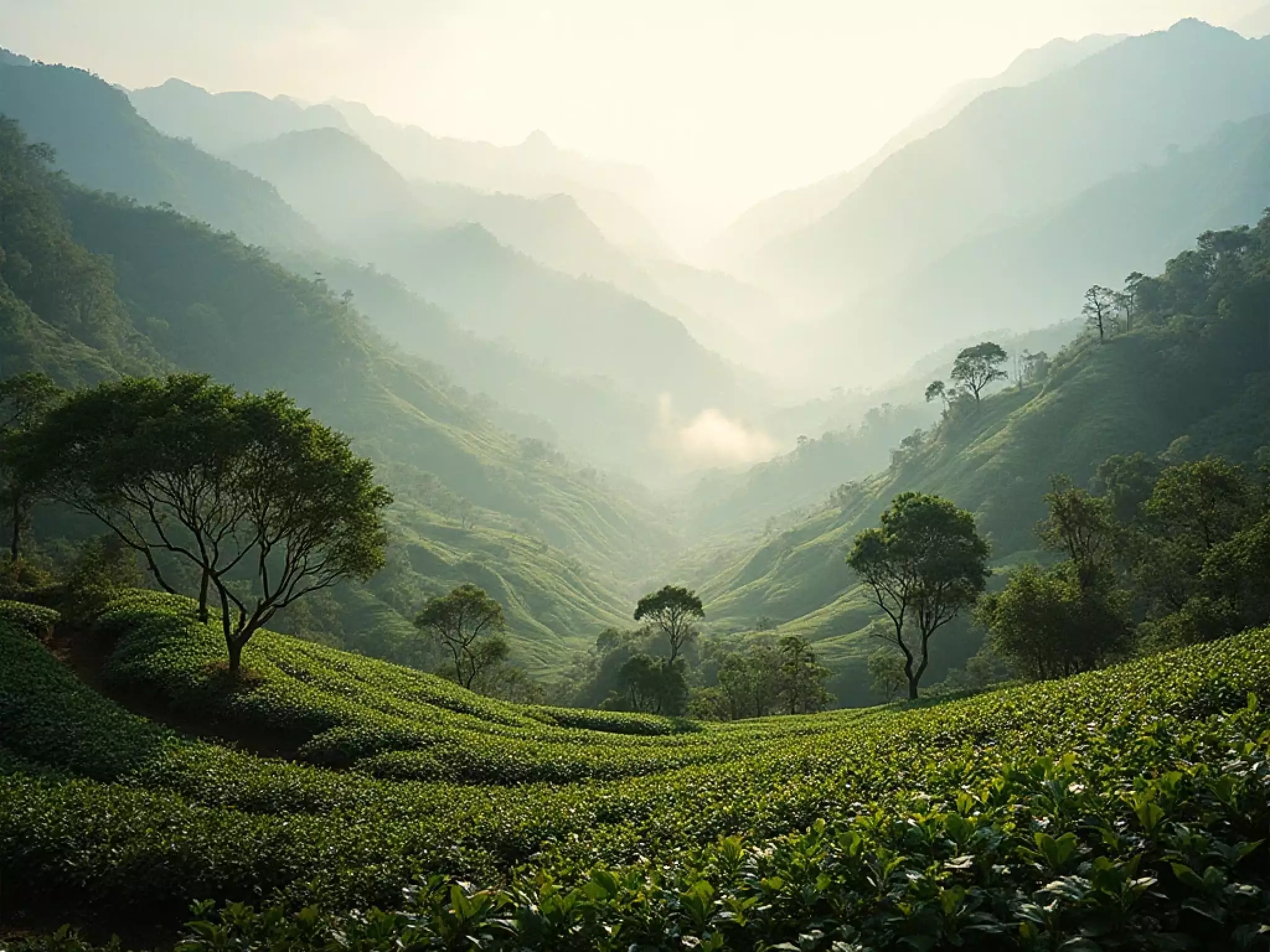
Rich in cultural and artistic character, Pu-erh tea once traveled ancient caravan routes and thrived in Yunnan’s mountain forests. It grew within the diverse customs of ethnic minorities. For more on this legacy, read The Legacy of Pu-erh Tea.
👉 Colorful Egg Festival on Bada Mountain
👉 Dialogue with a New Generation Tea Master – Ma Qing: A Tale of Heritage and Innovation
Tea-Horse Road
| The Soul of Pu-erh Culture |
Since the Tang (618–907) and Song (960–1279) dynasties, tea from the southwest was traded through the “Tea-Horse Market.” According to Liu Jian’s Ting Wen Lu, in 1661 Tibetan envoys came to Yongsheng to open a tea market and exchange horses for tea.
Later, the trade center moved to Lijiang, thanks to better transport and governance. Each year, Tibetan caravans traveled from autumn to spring, obtaining tea permits and heading to Pu’er for trade.
In 1729, the Qing government established Pu’er Prefecture in today’s Ning’er. By 1736, an official tea bureau opened in Simao, transforming the town into a thriving hub connecting Pu’er and Xishuangbanna. Merchants from India, Myanmar, Thailand, Vietnam, Laos, and Cambodia joined, making it a key “Tea Trade Road.”
Although war and corruption later weakened the tea trade, for over two centuries the Tea-Horse Road stood as a living testament to endurance and exchange — becoming the cultural soul of Pu-erh tea and inspiring new generations.
Today, in 2025, the Tea-Horse Road still lives on — not just in memory but in motion. Lijiang, one of its historic centers, now preserves restored sections of the ancient trail as cultural tourism routes. Travelers can hike or ride horses along portions of the original path, stopping at restored tea inns, caravan rest stations, and ethnic villages. These immersive experiences let visitors feel the rhythm of the ancient trade — “tea for horses, and the road as life.”
Learn more from the UNESCO Tentative List: Ancient Tea-Horse Road, an international recognition of this enduring cultural corridor.
Ecological Culture
| The Root of Pu-erh Culture |
Pu-erh culture is, at its heart, a “culture of return.” It seeks its roots in both history and nature. Unlike many tea traditions, Pu-erh’s foundation lies not only in trade routes or texts but also in its living customs and ancestral craftsmanship.
These visible “material roots” tell only part of the story. The deeper root lies in spirit — nurtured by the pristine land that gives Pu-erh life. Along the mid and lower reaches of the Lancang River, ancient tea trees grow within biodiverse forests, forming the ecological cradle of world tea culture.
Because of this, Pu-erh’s natural origin grants it unmatched cultural and geographic value. This living ecosystem remains the key to its cultural resilience and its global revival.
Pu-erh’s Transformation
| Cultural Ascendancy |
Pu-erh has been remarkably fortunate. Since the 1970s, rising global demand has linked Yunnan’s tea directly to the modern market. In Hong Kong, it became an everyday drink. Later, Western audiences embraced it as a wellness trend, while collectors in Taiwan elevated it to a symbol of refinement and investment.
After 2010, a new awakening began. Following the “Pu-erh boom” of the early 2000s, when capital rushed in and speculation rose, many tea farmers and principled merchants in Yunnan started to rethink their path. They refused to let Pu-erh be reduced to a commodity of hype. Instead, they returned to the mountains, to the old villages and tea forests, reviving authentic craftsmanship and reclaiming the cultural dignity of Pu-erh tea.
This quiet revival reconnected the tea to its human and ecological roots. Pu-erh is no longer defined by speculation, but by authenticity — a living expression of land, heritage, and people.
Curious What’s Next?
If you’re drawn to Pu-erh for its deep cultural legacy, congratulations — you’ve found a community equally captivated by its human stories.
If tea has led you toward culture, you’re not alone. Since 2014, I’ve been devoted to studying Pu-erh tea culture in depth — walking through tea villages, listening to the songs of tea farmers, and learning their warm, open-hearted traditions. Across Yunnan’s tea regions, the people are known for their hospitality, sincerity, and love of music and dance.
As China now offers a 144-hour visa-free transit policy (available to travelers from designated countries and ports of entry), I warmly invite tea friends worldwide to visit the birthplace of Pu-erh. Come experience the land, meet the farmers, and witness the living history of tea. I’ll be delighted to guide you through this timeless journey.
Or continue your exploration in our Tea Origins & Culture section.
Frequently Asked Questions About Raw Pu‑erh and Coffee
Travelers from eligible countries can enter China visa-free for up to 144 hours through certain cities and ports. Otherwise, apply for a tourist (L) visa via your local Chinese consulate, presenting your itinerary and accommodation details.
Yes. China is considered a safe country for travelers, including solo visitors. Yunnan’s tea regions such as Lijiang, Pu’er, and Xishuangbanna are well-developed for cultural and ecological tourism with welcoming local communities.
The Ancient Tea-Horse Road stretched across Yunnan, Sichuan, and Tibet, linking China’s tea-producing regions with South Asia. Today, you can explore preserved sections in Lijiang, Dali, and Pu’er as part of cultural tourism routes.

I represent the investment community. We help talented projects find funding and experts to help them grow. If you have an idea or a ready-made business model, let’s discuss the possibilities for cooperation.
Hello, everyone! My name is Julia. My team and I support early-stage startups. If you are looking for resources to launch or scale your project, tell us about your idea. We are open to considering interesting proposals.
Text me on Whatsapp for quick communication
Hello! My name is Julia. I invest in startups. If you have an interesting project.