Bada Mountain Tea Picker: My 10 Kilometers in Your Cup of Tea
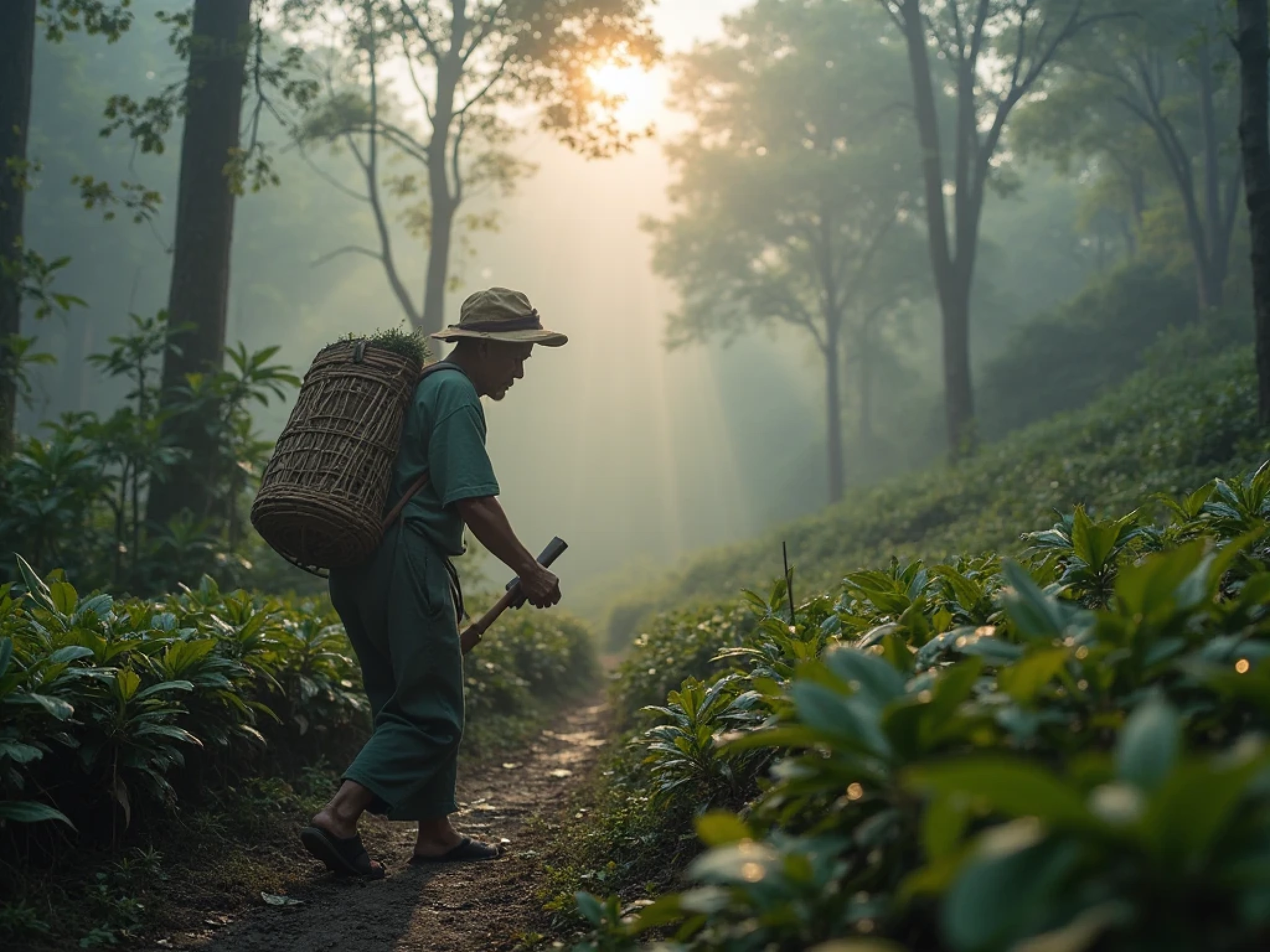
In the morning mist, Abu treads through dew-soaked paths into the dense forest. His bamboo basket clatters emptily, machete at his waist cutting through spider webs. He’s off to harvest the first spring buds from ancient tea trees—“The journey of fresh leaves down the mountain takes longer than the tea soup rolling down your throat.”
The Economics in the Basket: Weight of Leaves, Measure of Life
Abu (Bulang ethnic group, 52 years old) follows a strict tea-picking routine:
- 6:00 AM: Enter the mountain → Dew on the path serves as a timer.
- 9:00 AM: Set up ladder → Never break branches (ancient tree wounds never heal).
- 12:00 PM: Basket full → Carry 8 kg of fresh leaves 10 km down the mountain.
- 2:00 PM: Return → Eat a cold rice ball, then harvest a second basket.
Mathematics of the bamboo basket:
- 1 kg of fresh leaves = Climbing 23 ancient trees.
- One 7g tea serving = 1.2 km of Abu’s trek.
Abu pats his worn basket: “This basket’s been with me 30 years, its straps replaced seven times. I carry tea up the mountain and bring my life back home.”
Forest Timing: The Dignity of One Bud, Two Leaves
Unshakable picking rules:
| Standard | Technique | Consequence of Violation |
|---|---|---|
| One bud, two leaves | Pinch leaf stalk with fingertips for a clean snap | Fingernail marks cause oxidation and reddening |
| No dew-soaked leaves | Wait for sunlight to dry leaf surfaces | Excess water causes over-fermentation (spoilage) |
| Ladder ballet | Ladder leans only on main trunk, never thin branches | Broken branches reduce next year’s yield by 40% |
Abu demonstrates like he’s sculpting a treasure: “See this bud—tightly curled, leaf edges like tiger teeth. Mishandle it, and the tea loses its soul.”
Ten Kilometers of Life and Death: The Pilgrimage of Fresh Leaves
Risks on the descent:
- Basket overheating → 5°C rise triggers fermentation.
- Sudden rain → Waterlogged leaves turn red.
- Poisonous bees → Abandon basket to save life.
- Slipping and falling → Leaves scatter into rotting soil.
Abu’s survival tactics:
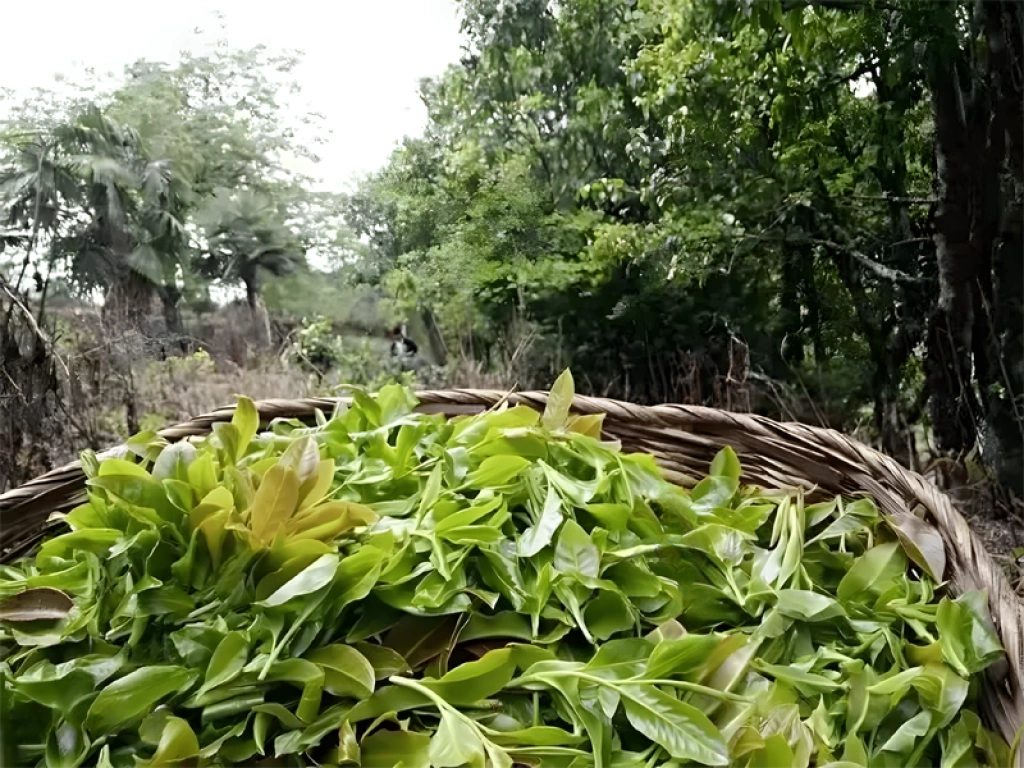
- Line basket with banana leaves for insulation.
- Predict rain by black-throated laughingthrush calls (90% accurate).
- Smear cow dung to mask scent from bee swarms.
- Protect basket with body during falls (two cracked ribs).
He lifts his pant leg, revealing scarred calves: “If the tea reaches the processing site still fresh, my legs have done their job.”
Dialogue: The Backbone of the Tea Mountain
Q: Why not use a motorcycle to transport tea?
“Tea seedlings hate oil fumes!” His eyes widen. “Ten years ago, a kid rode a motorcycle up the mountain. The tea trees didn’t sprout new leaves for three years. Oil-tainted leaves taste like rust.”
Q: What breaks your heart most?
“Seeing tea merchants claim ‘hand-picked ancient tree tea’ while buying plantation tea.” He grips the basket straps. “My shoulders, worn raw by this basket, can’t compete with their keyboard lies.”
Q: What would you say to tea drinkers?
“Drink slowly.” His gaze softens. “When you taste the bitterness of mountain winds and the sweetness of stream water—that’s my 10-kilometer gift to you.”
Footprints in the Tea Soup
Before heading down, Abu hands me a packet of tea: “Bada Mountain’s spirit is in there.”
Laboratory report:
- Polyphenol content: 214 mg/g (37% higher than plantation tea).
- Free amino acids: 4.8% (forged by sharp day-night temperature swings).
- Leaf toughness: Requires 500g of force to tear (a medal of deep roots).
As the tea steeps, steam rises with Abu’s silhouette—
A hunched figure with a basket, endlessly walking 10 kilometers in the tea soup.
The so-called “tea spirit” (Cha Qi) is:
The sting of basket straps cutting into shoulder bones,
The tumble in rotting leaves to protect the basket,
And the unyielding spine of a human bowing to the mountain.
(To protect the tea picker, Abu is a pseudonym. Support ethically certified tea and reject the romanticization of exploited labor.)
Frequently Asked Questions
Picking requires climbing 20–30m tall ancient trees using ladders, walking 10km+ daily with 8kg baskets, and strict rules like "one bud, two leaves" without damaging branches. This preserves tree health for future harvests but demands physical endurance and respect for nature.
It symbolizes the tea picker's physical journey: every 7g serving of tea represents about 1.2km of trekking down the mountain with fresh leaves. The labor, risks (rain, bees, falls), and care invested create the tea's unique depth and "Cha Qi" (tea energy).
Cha Qi ("tea energy") is the subtle, uplifting sensation many feel from high-quality Pu'er—often described as warmth, focus, or vitality. In ancient tree teas like Bada Mountain's, it's amplified by deep-rooted minerals, extreme day-night temperature swings, and the picker's careful handling that preserves freshness.
Rules include never breaking branches (wounds don't heal), avoiding dew-soaked leaves to prevent spoilage, using ladders only on trunks, and protecting baskets even at personal risk (e.g., shielding during falls). These practices ensure sustainability for centuries-old trees.
True ancient tree tea involves hard, low-volume labor from ethnic groups like the Bulang. Support ethical sourcing by choosing certified or transparent producers who pay fair wages, reject fake "gushu" claims, and prioritize sustainability over mass production.
Bada's ancient trees (often 100–1000+ years old) grow in biodiverse forests with rich soil, yielding higher polyphenols (up to 37% more), amino acids, and complex flavors. The manual, low-intervention picking preserves this terroir, unlike higher-yield plantations.
Continue Your Tea Journey
- If you're drawn to culture through tea, discover kindred spirits in the Tea Tasting Series.
- What Is Cha Qi?
- Understanding Mixed Harvest, Single Plant, and Blended Puerh Tea
- Colorful Egg Festival on Bada Mountain
- Brewing a Milk Tea Party with Authentic Tea: The Ultimate Tea Party Guide