Why Your Raw Pu-erh Tea Doesn't Taste as Good as Others'
Brewing raw Pu-erh (Sheng) is an art of precision. While the steps seem simple, the gap between a bitter, thin liquor and a sweet, vibrant brew lies in the details. Whether you are dealing with a 20-year-old cake or a fresh spring harvest, these four pillars will redefine your tea experience.
1. Water Temperature: The 100°C Requirement
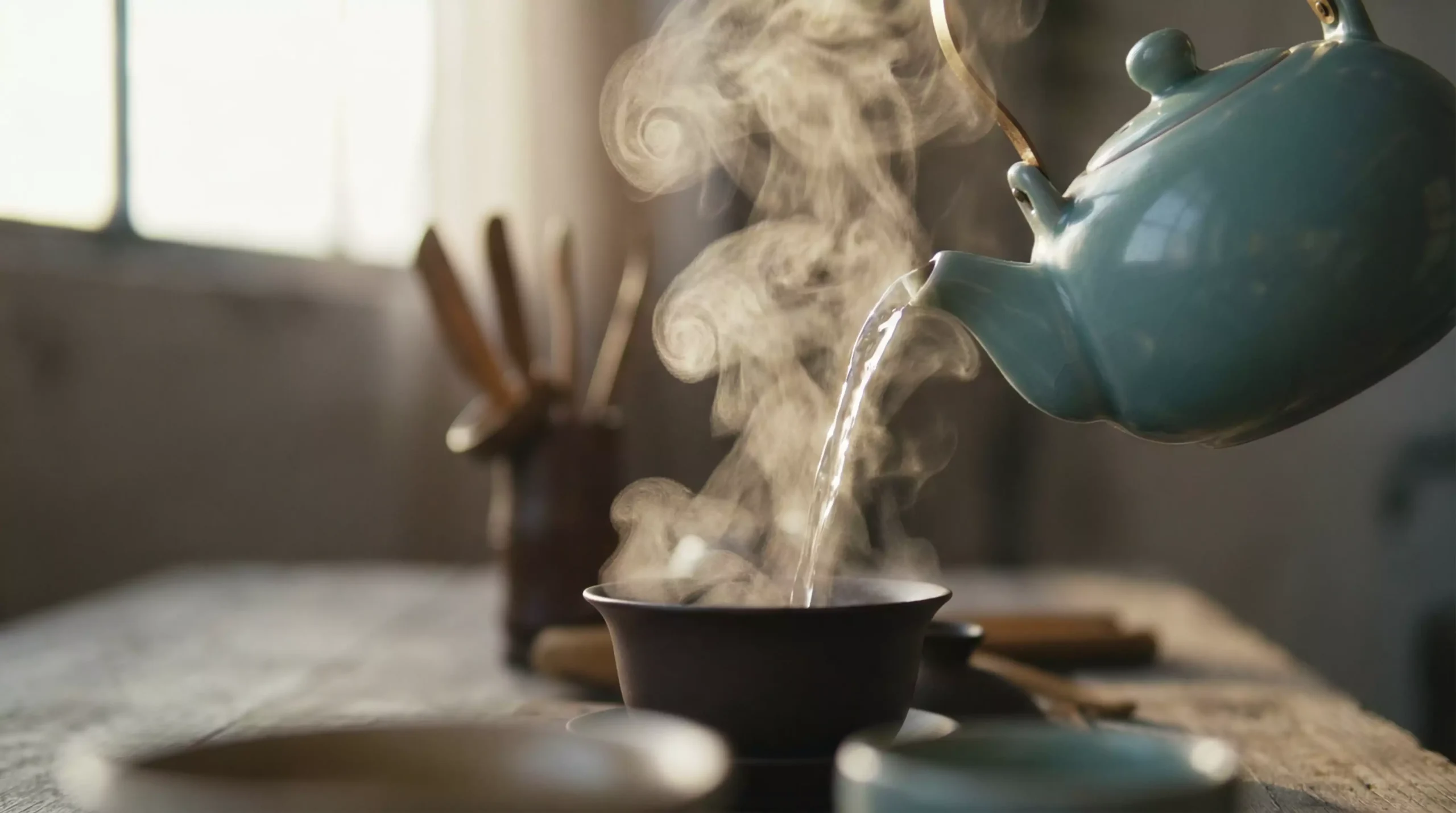
Many beginners fear that boiling water will "scald" raw Pu-erh leaves. This is a myth that leads to flat, aroma-less tea.
- The Aroma Threshold: High-altitude raw Pu-erh is rich in high-boiling-point aromatic oils. You need a true 100°C to "force" these oils into the liquor. If your kettle only hits 95°C, the floral and fruity notes remain trapped in the leaves.
- Pre-heat Your Vessel: Always rinse your Gaiwan with boiling water first. A cold vessel can drop the water temperature by 5-8°C instantly.
SteepedRoots Wisdom: High water temperature is the true litmus test for quality. Especially when dealing with Ancient Tree (Gushu) vs Terrace Tea, boiling water reveals the deep, multi-layered "Cha Qi" of old trees that lower temperatures simply cannot reach.
2. Water Quality: The "Softness" Factor
If your tea tastes astringent despite following all steps, check your water. Raw Pu-erh is highly sensitive to mineral content.
- pH and Minerals: Hard water containing high levels of calcium and magnesium will bond with the tea's tannins, creating a dark, muddy liquor and a metallic aftertaste.
- The Ideal Choice: Use spring water or filtered water with a TDS (Total Dissolved Solids) between 30-80. This allows the tea's natural sweetness (Huigan) to shine. Learn more about water science here.
3. Steeping Rhythm: Timing is Everything
The most common mistake is letting the tea sit too long in the first few rounds.
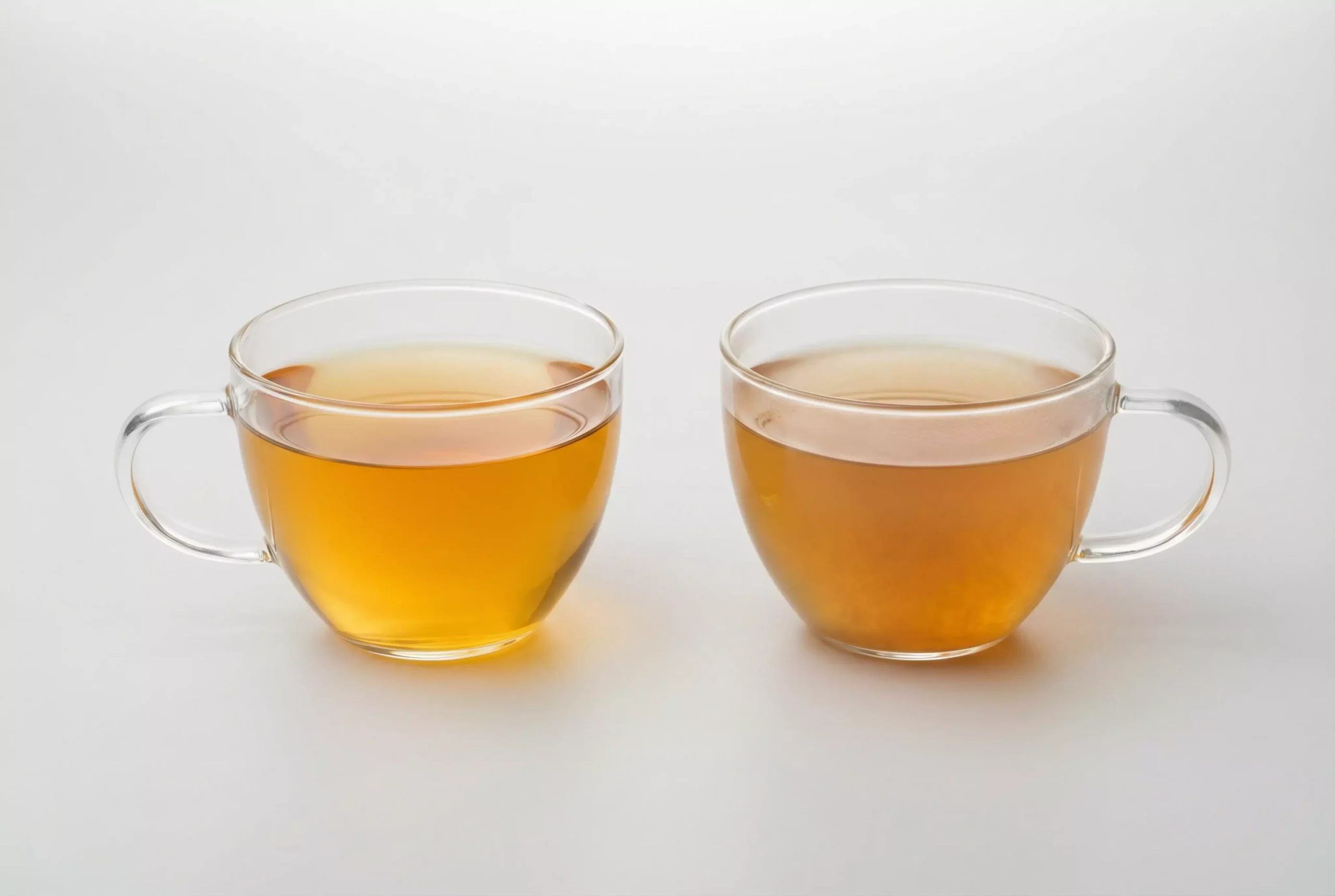
- The "Flash" Steep: For the first 3-4 infusions, aim for a 5-second steep. Pour the water in and immediately decant. This captures the "top notes" without extracting heavy bitterness.
- Drain Completely: Any residual tea left in the Gaiwan will continue to "stew" the leaves, ruining the flavor of the next infusion.
4. Adjusting for Shape: Compressed vs. Loose
The physical form of your Pu-erh dictates the "Awakening" (Wash) phase.
- Loose Leaf: High surface area. No need to wait. One quick rinse is enough.
- Tuocha & Bricks: These are tightly compressed. They require a 10-20 second "rest" after the initial rinse to allow the heat to penetrate the core of the tea. If the leaves haven't opened, the first drinking steep will be tasteless.
The 2-Gram Revolution: Precision Without a Scale
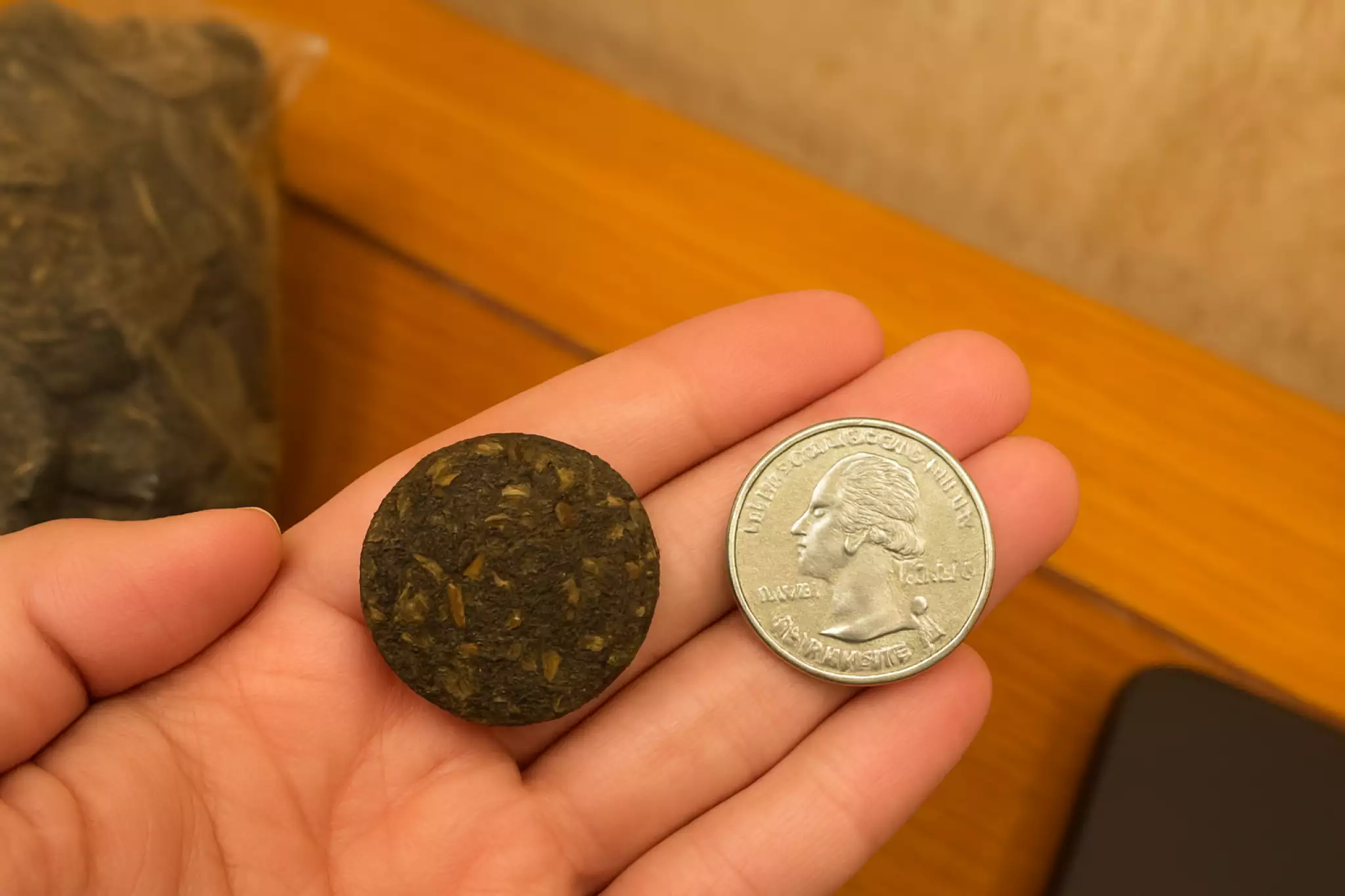
Traditionally, prying a 357g cake requires a tea needle and a scale to get the perfect 6g or 8g ratio. To simplify this, we’ve developed the 2-Gram Mini Cake—a versatile format designed for both the modern office and the traditional tea room.
How to use the 2g Mini Cake:
- Office Mug: Drop **one (2g)** cake into a 250ml mug. It offers a light, refreshing, and lingering sweetness that won't get too bitter during a meeting.
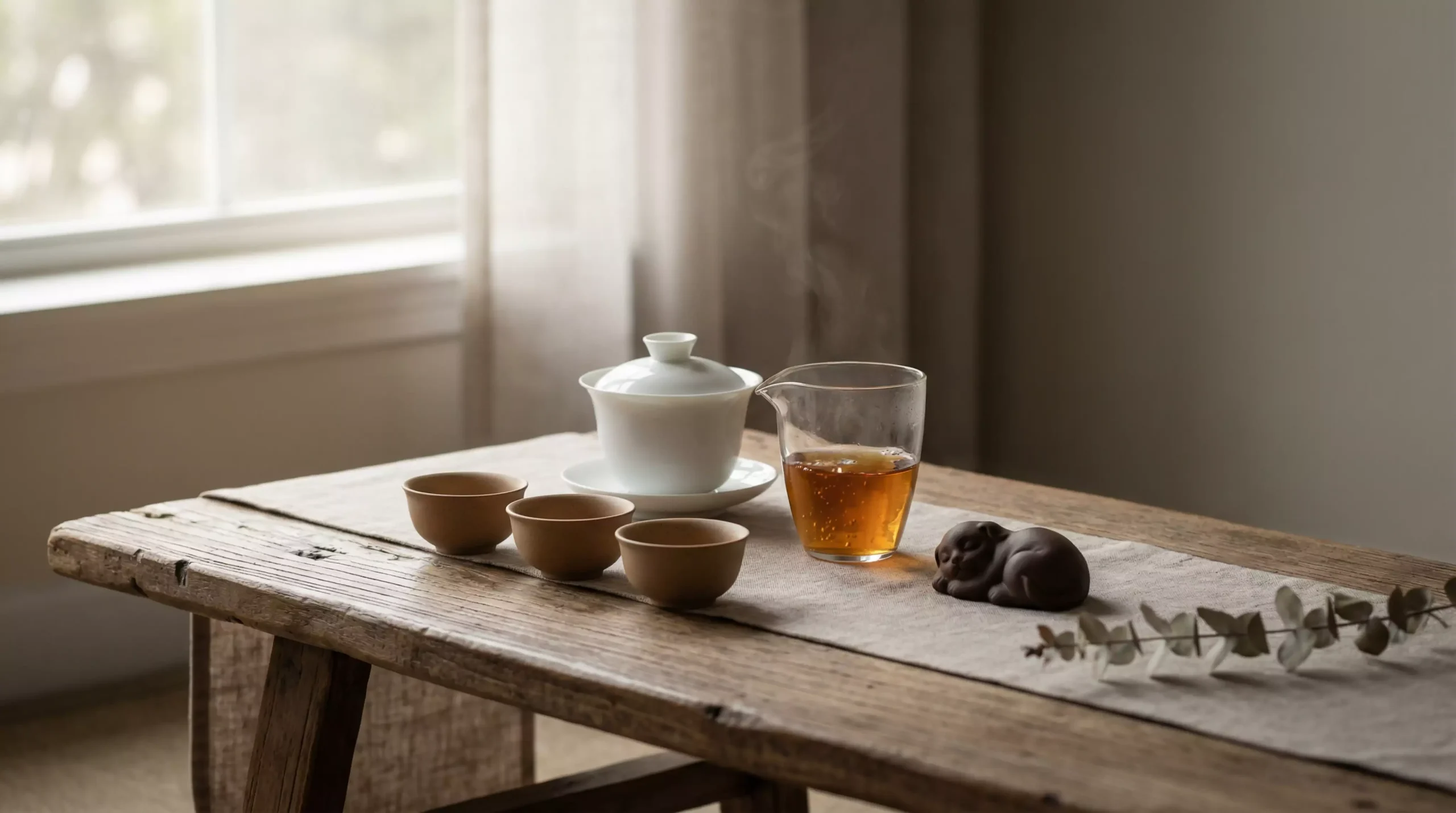
- Professional Gaiwan: Most professional Gaiwans are sized by capacity (e.g., 100ml, 120ml, 150ml).
- Use **3 cakes (6g)** for a standard 100ml Gaiwan.
- Use **4 cakes (8g)** for a medium 120-130ml Gaiwan.
- Use **5 cakes (10g)** for a large 150ml vessel.
This "modular" approach ensures that whether you are brewing a quick cup at work or hosting a formal Gongfu session, your water-to-tea ratio is always precise, ensuring the consistent flavor profile that Raw Pu-erh deserves.
The "Gaiwan Math": Why Size Matters
In the West, we measure cups by volume (ml/oz). However, in the world of professional Gongfu tea, Gaiwans are sized by their "Leaf Capacity." This ensures the golden ratio of tea-to-water is maintained for the perfect extraction.