
Rainy Season Reflections in the Pasha Tea Mountains
In mid-August 2025, with autumn’s first whisper, I stepped into the rainy season of the Pasha tea mountains. Unlike the bustling spring harvest, when time pressed me to count buds, assess leaf vigor, and note subtle differences across groves, this visit allowed me to step back from the role of “harvester” and wander as an observer. Freed from deadlines, my senses opened anew to the mountain breeze and mist.
In spring, I thought “good tea comes from a pristine environment” was merely a matter of coordinates—latitude, longitude, altitude. But this time, as a silver veil of drizzle draped the Pasha slopes, I turned my gaze to the roots of the ancient tea trees and discovered a universe I had overlooked.
The forest floor was a tapestry woven with slow intention. Mushrooms gleamed like polished jade in the rain—some creamy white, others amber-hued, a few speckled with crimson, as if splashed by a whimsical painter. Nameless wildflowers bloomed with brazen splendor: violet starbursts, saffron splashes, soft pinks glowing against mossy beds. Ferns unfurled, vines twisted, grasses swayed in the damp breeze—each leaf a quiet testament to Pasha’s abundance.
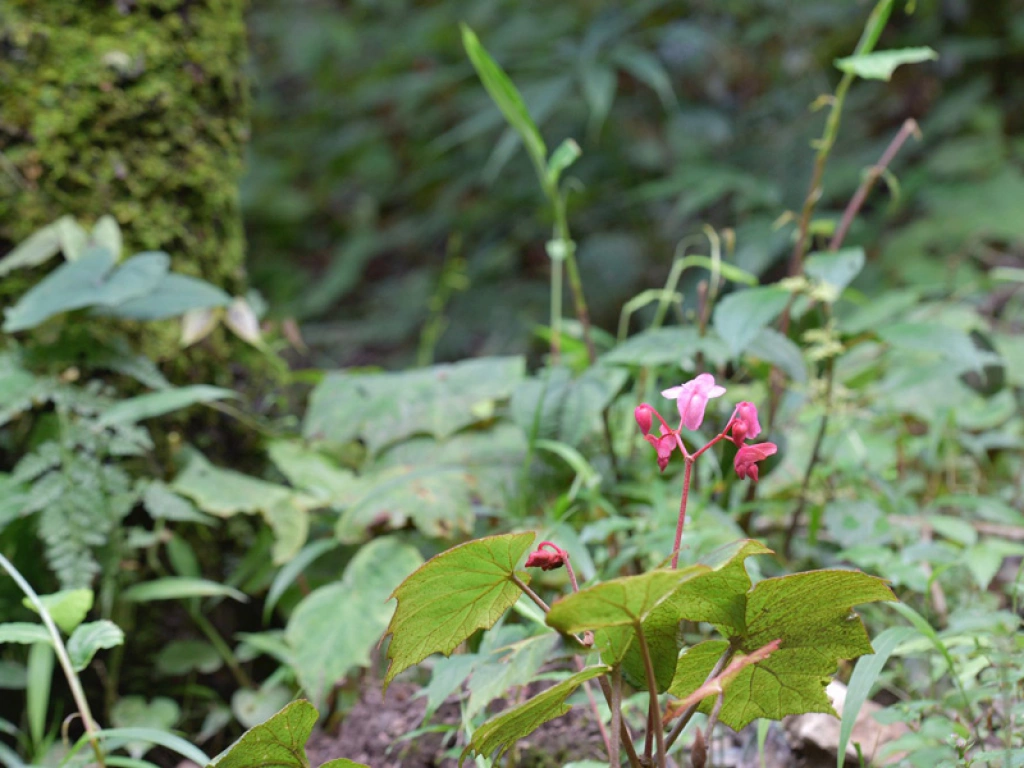
Vibrant wildflowers bloom among the tea trees in Pasha’s rainy season.
I tread lightly through this living mosaic, the air humming with whispers of life. A step stirred a grasshopper, its iridescent wings flashing in the dim light. A spider paused its delicate dance on a silken web strung between tea trees. Black-and-yellow caterpillars inched along bark, while honeybees droned, chasing wildflower nectar. There were insects I couldn’t name—translucent wings, armored bodies, spindly legs darting through leaves—each a small marvel of Pasha’s boundless creativity. They were not mere “background” but co-authors of the tea’s flavor.
My first realization was this: ecology is not scenery; it is craft. Flavor is not merely shaped by cultivar, latitude, or altitude—it is a silent collaboration. Fallen leaves turn to soil, where microbes and mycelium shuttle energy and signals through roots. The dance of flowers and insects shapes the leaves’ fate and resilience. The rhythm of rain and shifting light calibrates the balance of bitter and sweet. The “fragrance” and “qi” we taste in a cup come not only from the branches but from this vibrant, humming “underground earth” beneath our feet.
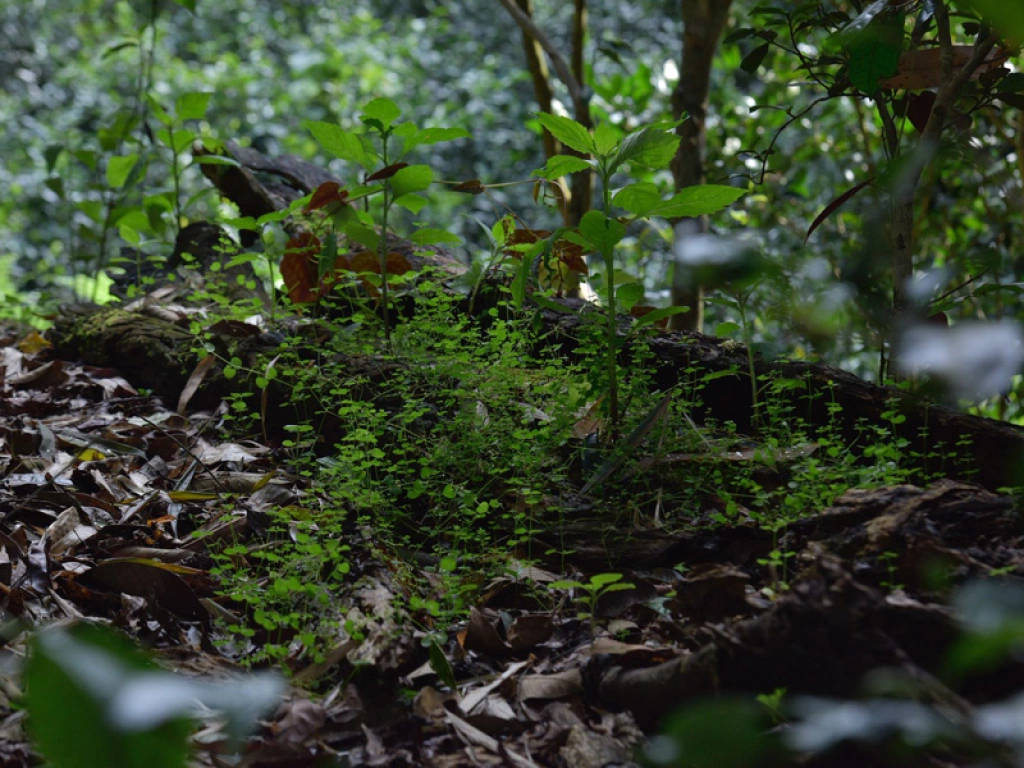
The rich soil of Pasha, alive with microbes, nurtures the tea’s flavor.
This led to a second understanding: the Hani tea farmers of Pasha practice not control, but surrender. Their minimal intervention, as documented by the Tea Research Institute, is not absence but a deliberate choice to step back—not clearing weeds with obsession, not banishing insects with haste, not pruning branches to a ruler’s edge. They allow wildness and order to coexist, letting “seemingly useless” creatures linger among the tea trees. They know a complex ecosystem brews robust, multifaceted flavors; a free ecology preserves each tree’s individuality and strength.
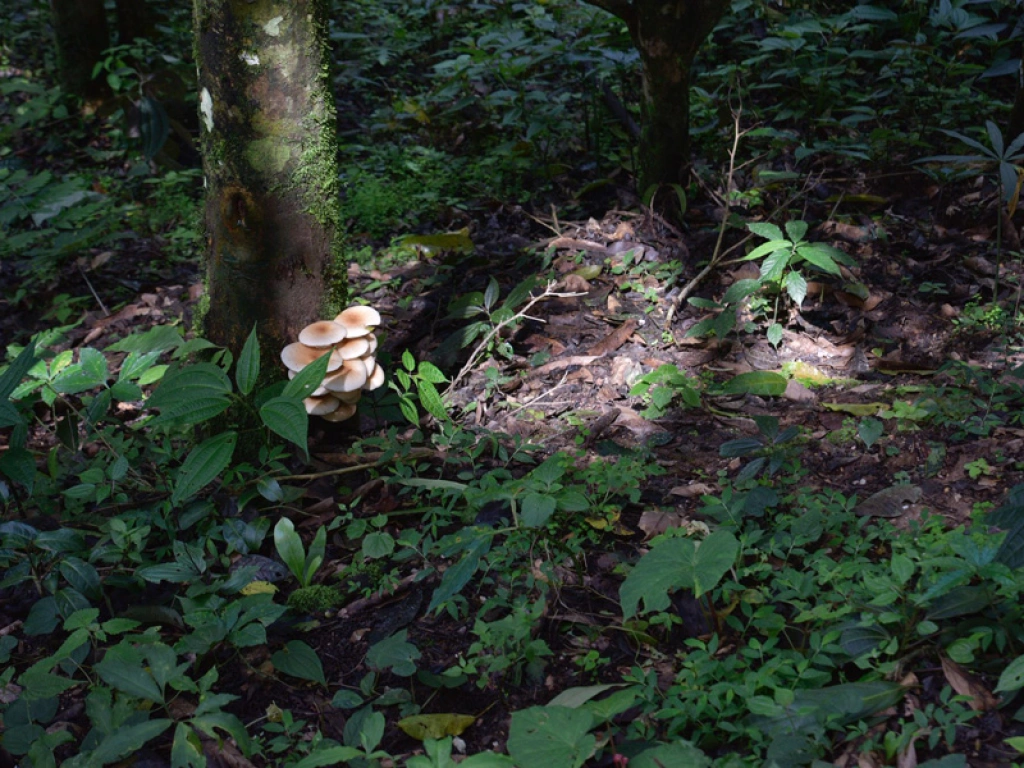
Mushrooms thrive in Pasha’s biodiverse ecosystem, contributing to the tea’s complexity.
A third reflection emerged: time’s scale shapes our stance. In spring, I fixated on “this year’s buds”; the rainy season reminded me that a cup of tea holds years of soil formation, seasonal cycles, and human rhythms. To harvest or not, to prune or not—these are choices made in dialogue with a greater timeline. True sustainability is not forcing nature into a process but fostering mutual flourishing over time: trees thrive, insects feed, fungi dance, and humans receive their tea, as championed by organizations like Slow Food International.
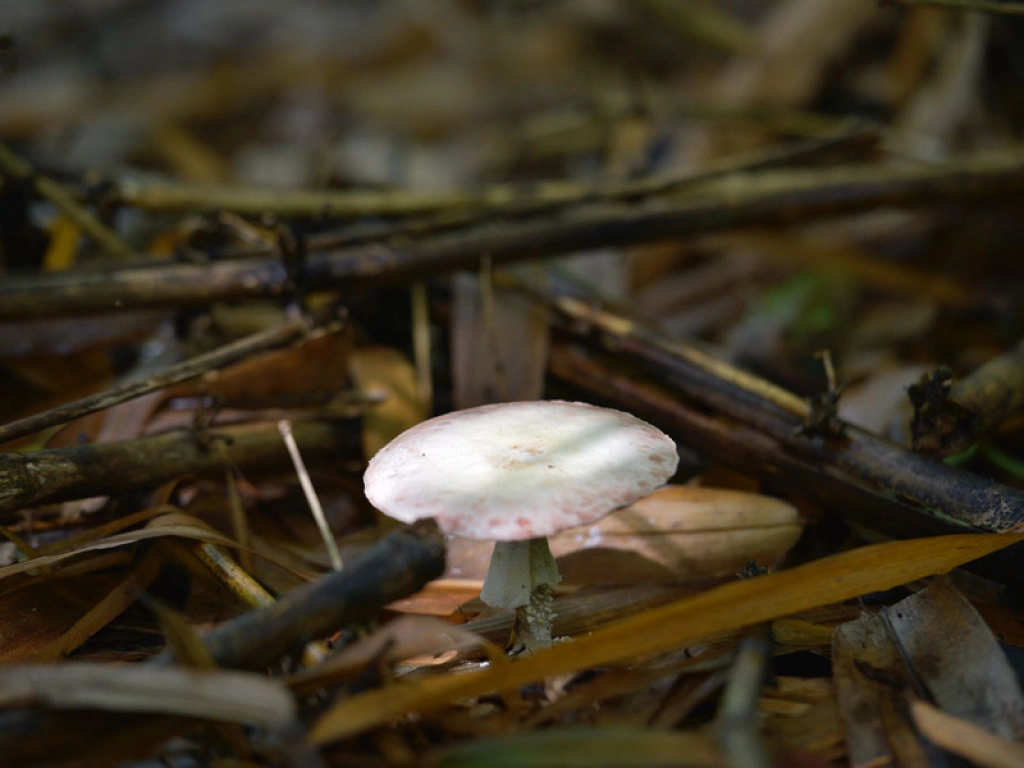
A solitary mushroom reflects the quiet rhythm of Pasha’s ecosystem.
Standing among ancient tea trees, their gnarled branches heavy with rain, a simpler awe rose within me. Pasha is not merely a source of leaves but a crucible of time and life, where soil, plants, and creatures brew a liquor as complex as the ecosystem itself. The fragrant, vibrant raw Pu-erh of Pasha, softening into gentle sweetness over time, is no accident—it is the dividend of this mountain’s diversity, the yield of a long collaboration, deeply rooted in Yunnan’s tea culture.
I offer this rainy season reflection to future drinkers and fellow travelers:
- Practice slowness in the cup: Slow enough to discern the echo of rain-soaked soil and wild orchids, to hear the faint rhythm of insects in the leaf’s veins.
- Practice retreat in the field: Step back to let flora and fauna find their place, shifting from “managers” to “caretakers.”
- Practice reverence in the heart: Honor the unseen yet vital web, the countless unnamed contributors behind the flavor.
This time, I didn’t rush to count buds, compare groves, or record notes. I simply lingered longer at the roots, listened closer to the rain. And so, I am certain: to protect ancient tea trees is to guard the wild, diverse world at their feet. Only in this harmony does Pasha’s tea reveal its soul—a flowing chapter in the mountain’s eternal story.
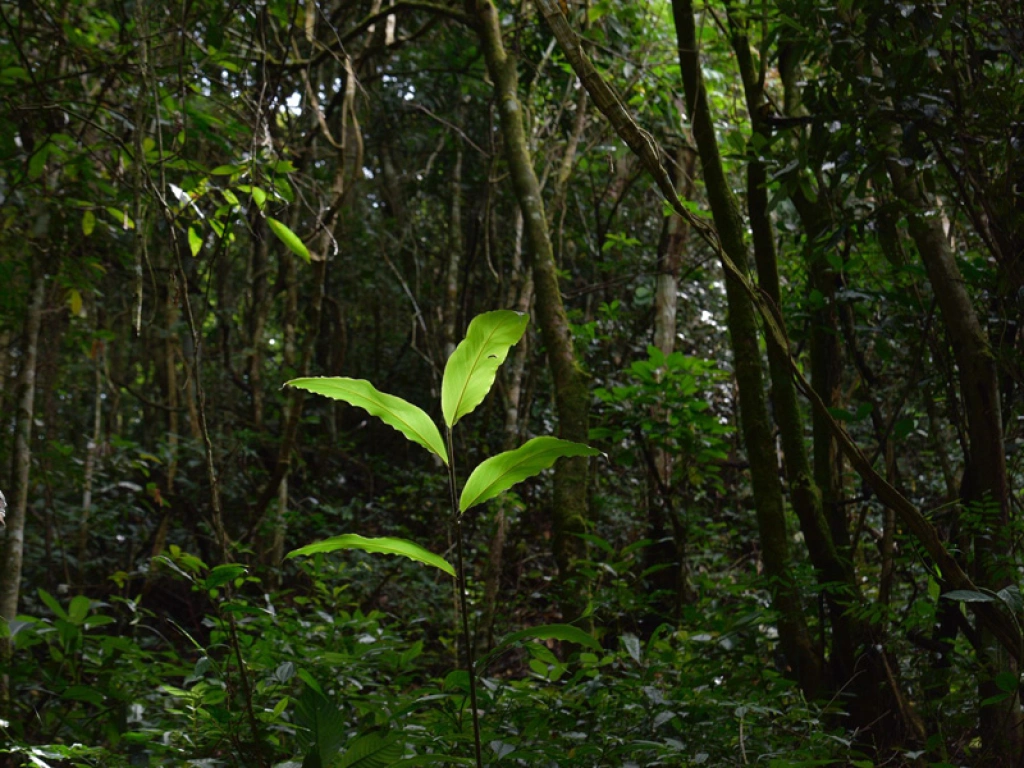
Grasses sway in Pasha’s rainy season, a testament to the Hani’s minimal intervention.

What eventually it is necessary to it?
Hi! If you’re asking what is ultimately needed to create great tea, it’s a combination of factors: a suitable climate, quality soil, and the skilled hands of the tea farmers. Each step, from planting to harvesting, plays an essential role in bringing out the best in the leaves. Let me know if you’d like more insights on any part of the tea-making process!
Certainly, certainly.
——
https://ssl.by/tags/%D0%B8%D0%B8-%D0%BC%D0%BE%D0%B4%D0%B5%D0%BB%D0%B8/
I can recommend.
——
https://www.babyclub.de/mybabyclub/forum/themen/19233088.erfahrungsaustausch-nach-der-buchung.html
And I have faced it. We can communicate on this theme. Here or in PM.
——
https://xsg.ru/tags/%D0%B2%D0%B8%D0%B4%D0%B5%D0%BE%D0%BA%D0%B0%D1%80%D1%82%D0%B0%20rtx%205090/
I am assured, what is it already was discussed, use search in a forum.
There was a mistake
——
https://the.hosting/cs/vps-hestia