What Is Cha Zui (茶醉)?
The Science & Soul of Tea's Buzz
"Unlike the heavy haze of alcohol or the jittery spike of coffee — Cha Zui is a meditative high. Your mind sharpens while your body floats. Understanding the chemistry transforms this mystery into mastery."
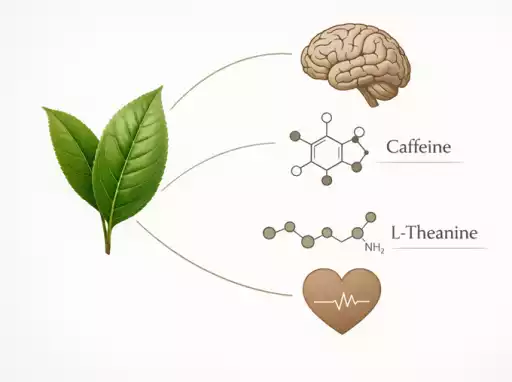
Cha Zui (茶醉, Tea Drunk) is caused by three interacting compounds: caffeine (20–80 mg/cup), L-theanine (8–30 mg/cup), and polyphenols (100–300 mg/cup). Together they create "relaxed alertness" — focus without anxiety. Young Raw Pu-erh carries the highest risk. To relieve it fast: eat sugar or starch within 5 minutes and drink warm water. Symptoms resolve in 15–45 minutes.
The Science: Three Compounds Behind Cha Zui (2026)
Cha Zui is not a single-compound effect — it is a pharmacological synergy. Remove any one of these three elements and the characteristic "tea drunk" state does not occur.
Caffeine
20–80 mg / cupBinds to adenosine receptors in the brain — blocking the signals that cause fatigue. Activates the sympathetic nervous system, increasing alertness, heart rate, and focus. The primary "energy" driver of Cha Zui.
Stimulant — AlertL-Theanine
8–30 mg / cupAn amino acid found almost exclusively in Camellia sinensis. Crosses the blood-brain barrier and increases GABA, dopamine, and serotonin. Boosts alpha brain waves (8–12 Hz) — the frequency of meditation and creative flow. The "calm" counterbalance to caffeine.
Relaxant — FocusPolyphenols
100–300 mg / cupCatechins and tannins that temporarily inhibit glucose absorption and stimulate insulin secretion — causing mild hypoglycemia when consumed on an empty stomach. Also stimulate gastric acid production, which creates the "churning" sensation some people experience.
Blood Sugar — GastricThe Alert-Calm Paradox — Why Tea Drunk Feels Different from Coffee
Caffeine alone (as in coffee) produces pure sympathetic activation — jitteriness, anxiety, racing thoughts. L-theanine alone produces pure parasympathetic relaxation — calm but unfocused. Together at the ratio found in tea, they create a state almost impossible to achieve with any other beverage: sharp mental focus with deep physical relaxation.
The alpha brain wave enhancement from L-theanine is the same frequency recorded during Zen meditation. This is not metaphor — it is measurable neuroscience. Researchers at Unilever R&D confirmed that a single 50 mg dose of L-theanine plus caffeine produces a statistically significant improvement in sustained attention compared to either compound alone.
Blood Sugar & Gastric Response — The Hidden Mechanism
This is the mechanism most Western sources ignore. Tea polyphenols — especially catechins — can temporarily inhibit glucose absorption and stimulate insulin secretion. On an empty stomach, this creates a mild transient hypoglycemia that produces dizziness, weakness, sweating, and nausea.
High concentrations of polyphenols also directly stimulate gastric acid production. The combination explains why young Sheng Pu-erh on an empty stomach is the most common trigger for discomforting Cha Zui: maximum polyphenols + no food buffer = maximum gastric and blood sugar impact.
Standardized Data Tables: Compounds & Potency
Active Compound Reference — Per 200 ml Cup
| Compound | Range / Cup | Primary Mechanism | Cha Zui Contribution | Highest in | Expert Note |
|---|---|---|---|---|---|
| Caffeine | 20–80 mg | Adenosine receptor blockade | Alertness, energy, increased heart rate | Matcha, Young Sheng Pu-erh, Wuyi Rock | Coffee contains 80–100 mg; tea's caffeine is modulated by L-theanine |
| L-Theanine | 8–30 mg | GABA / serotonin / alpha waves | Calm, focus, meditative clarity | Gyokuro, Matcha, shade-grown greens | The caffeine:L-theanine ratio is the most important quality indicator |
| Catechins (EGCG) | 50–200 mg | Glucose uptake inhibition | Blood sugar dip → dizziness on empty stomach | Young Raw Pu-erh, Green Tea, Matcha | Dramatically reduced by aging and fermentation (Shou Pu-erh) |
| Tannins | 50–150 mg | Gastric acid stimulation | Stomach churning, nausea (in excess) | Heavily-roasted oolongs, compressed Pu-erh | A 10-second rinse removes ~20–30% of surface tannins |
| Theobromine | 1–5 mg | Mild vasodilator | Warmth spreading through face and limbs | Dark roasted oolongs, black tea | Contributes to the characteristic "warm flush" of Cha Zui |
* Values per 200 ml cup brewed Western-style (2 g leaf, 3 min). Gongfu brewing with 5–7 g / 100 ml will extract 2–3× higher compound concentrations.
Cha Zui Potency Matrix by Tea Type
| Tea | Risk Level | Primary Cause | Caffeine (est.) | Empty Stomach Risk | Expert Advice |
|---|---|---|---|---|---|
| Young Raw Pu-erh (Sheng) | ⭐⭐⭐⭐⭐ Extreme | Max active polyphenols + high caffeine | ~60–80 mg/cup | 🔴 Very High | Always eat first; reduce leaf by 30%; rinse 10–15 s |
| Matcha (Ceremonial Grade) | ⭐⭐⭐⭐ High | Full-leaf consumption; concentrated L-theanine + caffeine | ~60–70 mg/bowl | 🟠 High | Never drink more than 2 bowls consecutive; always pair with food |
| Wuyi Rock Oolong (Yancha) | ⭐⭐⭐ Moderate | Intense minerals + heavy roasting compounds | ~40–60 mg/cup | 🟡 Moderate | Strong but well-rounded; respect Gongfu dose ratios |
| High Mountain Oolong | ⭐⭐ Low-Moderate | Moderate polyphenols; elevated L-theanine from altitude | ~30–50 mg/cup | 🟢 Low-Moderate | Excellent beginner Gongfu tea; pleasant Cha Qi without intensity |
| Ripe Pu-erh (Shou) | ⭐ Very Low | Fermentation breaks down harsh polyphenols | ~20–30 mg/cup | 🟢 Low | Safest for beginners and empty stomach; stomach-friendly |
| Yunnan Dian Hong (Black Tea) | ⭐ Very Low | Full oxidation reduces active catechins significantly | ~30–50 mg/cup | 🟢 Low | Warm, honey-sweet; pleasant mild alertness; low Cha Zui risk |
* "Empty Stomach Risk" refers to the likelihood of discomforting (rather than pleasurable) Cha Zui when consumed without prior food intake.
How to Relieve Tea Sickness Fast — 5-Step Method
If you feel dizzy, sweaty, shaky, or nauseous, stop drinking tea immediately. This is not toxicity — it is temporary chemical imbalance. Act within the first 5 minutes for fastest recovery.
Eat sugar immediately — fastest relief
A piece of candy,
1 tspof honey, or a sweet biscuit raises blood glucose within 2–3 minutes, directly counteracting the hypoglycemic mechanism. This is the single fastest intervention. Keep glucose candy at every tea session as standard practice.Drink warm water to dilute tea compounds
Plain warm water (not tea) dilutes the polyphenol concentration in your digestive tract and supports renal excretion. Drink
200–300 mlslowly. Avoid cold water — the temperature shock to a polyphenol-irritated stomach can worsen nausea.Eat starch or protein for sustained stabilization
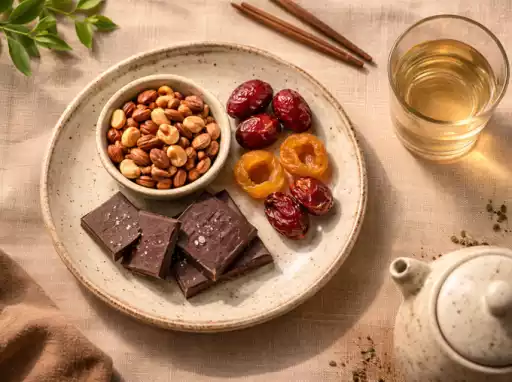
Rice, bread, crackers, or a small handful of nuts provide sustained glucose release and absorb residual polyphenols in the stomach lining. This prevents the "rebound dip" that can follow a fast sugar fix. Eat within 10 minutes of the initial symptoms appearing.
Stop all tea consumption immediately
Many people attempt to "drink through" additional cups — this only compounds the polyphenol load and delays recovery. Set down the tea completely. Even a small amount of residual tea compounds in a subsequent sip continues the hypoglycemic and gastric stimulation cycle.
Lie down if dizziness is severe
If standing feels unsafe, lie flat with feet slightly elevated. This restores normal cerebral blood flow within 2–3 minutes. Mild Cha Zui symptoms should resolve within
15–45 minuteswith steps 1–4. Intense sessions may persist up to1–2 hours, but there is no true "hangover" — unlike alcohol intoxication.
How to Prevent Tea Drunk — 6-Step Protocol
Prevention is far more pleasant than cure. Follow this protocol before and during any intensive Gongfu or Matcha session.
Eat a light meal at least 30 minutes before your session
Even a small snack — a handful of nuts, a piece of fruit, or a few crackers — creates a significant food buffer that slows polyphenol absorption and stabilizes blood glucose. This single step prevents the majority of uncomfortable Cha Zui episodes. Empty stomach + Young Sheng Pu-erh = highest risk combination.
Rinse Young Sheng Pu-erh for 10–15 seconds
The standard 5-second rinse removes surface dust. A longer
10–15 secondrinse also removes a meaningful proportion of the most astringent initial polyphenols from the compressed cake surface — reducing the intensity of early steeps without significantly diminishing flavor in later infusions.Reduce leaf dose by 30–50% when trying unfamiliar teas
Standard Gongfu ratios assume tolerance. For Young Raw Pu-erh or competition-grade oolong, start at
3–4 g / 100 mlrather than the full5–7 g / 100 ml. You can always increase in subsequent sessions once you know how your body responds to that specific leaf.Shorten steep times in early infusions
Instead of
20–30 secondfirst infusions, try10–15 seconds. The flavor is preserved — but polyphenol extraction is meaningfully reduced. Polyphenols are extracted faster than aromatic compounds, so shorter steeps affect the "comfort" chemistry more than the "flavor" chemistry.Keep traditional tea snacks nearby throughout the session
Chinese tea sessions traditionally include dried red dates, melon seeds, light pastries, or preserved plums — not for decoration, but for blood sugar regulation. Eating a small piece every 3–4 steeps is physiologically sound practice that extends a Gongfu session from 45 minutes to 2+ hours comfortably.
Pace Matcha sessions — never exceed 2 consecutive bowls
Matcha involves full leaf consumption — every compound is ingested, not filtered. Two ceremonial bowls (
3–4 g totalmatcha) represent approximately120–140 mg caffeinein 15 minutes — approaching the threshold where even moderate L-theanine cannot fully counterbalance the sympathetic activation. Space bowls by at least 30 minutes, and always pair with food.
Cha Qi (茶气): From Side Effect to Spiritual Practice
In traditional Chinese tea culture, Cha Zui is not a problem to solve — it is an experience to navigate. It is the visible manifestation of Cha Qi (茶气, Tea Energy): the vital force that different teas impart to different bodies in different moments.

Tea effects are managed, minimized, or avoided. Cha Zui is treated as a dosing error or product defect — something the manufacturer or brewer should prevent.
Experienced practitioners learn to "read" these sensations — does the energy rise to the head (mental clarity), sink to the abdomen (grounding), spread outward through the limbs (warmth), or gather inward (centeredness)?
These descriptions are not mystical abstractions — they map directly onto observable physiological phenomena. "Energy rising to the head" correlates with increased cerebral blood flow and elevated alpha wave activity. "Warmth spreading through limbs" correlates with the vasodilatory effect of theobromine and EGCG acting on peripheral blood vessels.
The Practitioner's View: Cha Zui as Calibration Tool
The most valued ancient-tree Pu-erh cakes are prized specifically for their ability to induce distinctive, powerful Cha Qi states. The temporary disorientation, the heightened sensory sensitivity, the sense of time dilating — these are not defects. They are information about the tea's quality, potency, and your body's current state of readiness.
Discomfort comes from mismatch: wrong tea, wrong timing, wrong preparation, wrong body state. When all elements align — tea chosen to match your energy, prepared mindfully, consumed with food and attention — Cha Zui transforms from something that happens to you into something you co-create with the leaf.
Expert FAQ — 2026 Edition
-
Is Cha Zui dangerous for healthy people?
No — for healthy individuals, Cha Zui is temporary and medically benign. Symptoms resolve within 15–45 minutes once tea is stopped and food is consumed. The mechanism (mild transient hypoglycemia + gastric stimulation) is self-limiting. However, three groups should exercise caution: people with caffeine sensitivity or cardiac arrhythmias, those with blood sugar regulation issues (pre-diabetes or hypoglycemia history), and pregnant individuals. If you are in any of these categories, start with Ripe Pu-erh or Dian Hong Black Tea at half dose, and consult your healthcare provider. -
Is Tea Drunk the same as a caffeine overdose?
No — they are distinct conditions. Caffeine overdose typically requires 400+ mg in a short period and causes: rapid heartbeat (tachycardia), severe anxiety or panic, muscle tremors, and in serious cases, cardiac arrhythmia. It is medically serious. Cha Zui occurs at much lower caffeine levels — typically 100–200 mg total — and results from the polyphenol-blood sugar interaction, not caffeine toxicity. The experience is meditative rather than agitated. The clearest distinguishing sign: Cha Zui makes you feel calm-yet-altered; caffeine overdose makes you feel acutely anxious and physically uncomfortable. -
How long does Cha Zui last — and is there a hangover?
Mild Cha Zui: 15–45 minutes after stopping tea and eating food. Intense sessions: 1–2 hours. The L-theanine's calming alpha-wave effects often outlast the initial intensity, leaving a pleasant focused calm for several hours — this is the "afterglow" that experienced practitioners actively seek. Unlike alcohol, there is no true hangover. Some practitioners report feeling unusually calm or slightly tired the following day after very intense ancient-tree Pu-erh sessions — this reflects deep parasympathetic nervous system activation, not toxicity. -
Can commercial tea bags cause Cha Zui?
Rarely. Commercial tea bags typically contain fannings and dust — the lowest-grade broken leaf material with significantly reduced concentrations of L-theanine, intact catechins, and complex polyphenols that trigger the full Cha Zui response. The processing, terroir, and leaf integrity all matter: ancient-tree Pu-erh, competition-grade oolong, and ceremonial matcha contain the highest concentrations of active compounds. A typical supermarket tea bag brewed for 3 minutes contains approximately 30–40 mg caffeine and minimal L-theanine — producing at most a mild caffeine buzz, not Cha Zui. -
Why do some people never experience Tea Drunk despite drinking the same teas?
Individual biochemistry creates enormous variation. Key factors include: body weight (affects compound concentration per kg); metabolic rate and CYP1A2 gene variants (some people metabolize caffeine 4× faster than others); gut microbiome composition (affects polyphenol bioavailability); and regular caffeine tolerance (habitual coffee drinkers have significantly upregulated adenosine receptors). Additionally, some people experience Cha Zui but misattribute the sensations — interpreting lightheadedness as hunger, warmth as stress, or focus as normal alertness rather than recognizing the tea as the cause.
🌿 Further Reading — Deepen Your Tea Knowledge
Scientific references: Tea Phytochemistry and Health Effects, Nutrients Journal (2020); L-Theanine and Caffeine Interaction Studies, Journal of Nutrition (2019); Unilever R&D L-Theanine + Caffeine Attention Study (2008, replicated 2021).