
Coffee vs. Tea: A Tale of Flavor and Aftertaste
Introduction
At Steeped Roots, we believe there’s no need to pit coffee against tea—neither is better, just different. Choose what suits your moment, whether it’s the convenience of a quick espresso or the ritual of brewing tea. Both bring joy to life, and that’s what matters. Here, we explore coffee’s bold bitterness and tea’s layered flavors, like shengjin (salivation), huigan (returning sweetness), and Cha Qi (Tea Vitality)—felt uniquely, like the author’s fine sweat on the forehead with ancient-tree teas. Rooted in science, this comparison celebrates both beverages’ distinct journeys.

Coffee: Direct and Bold
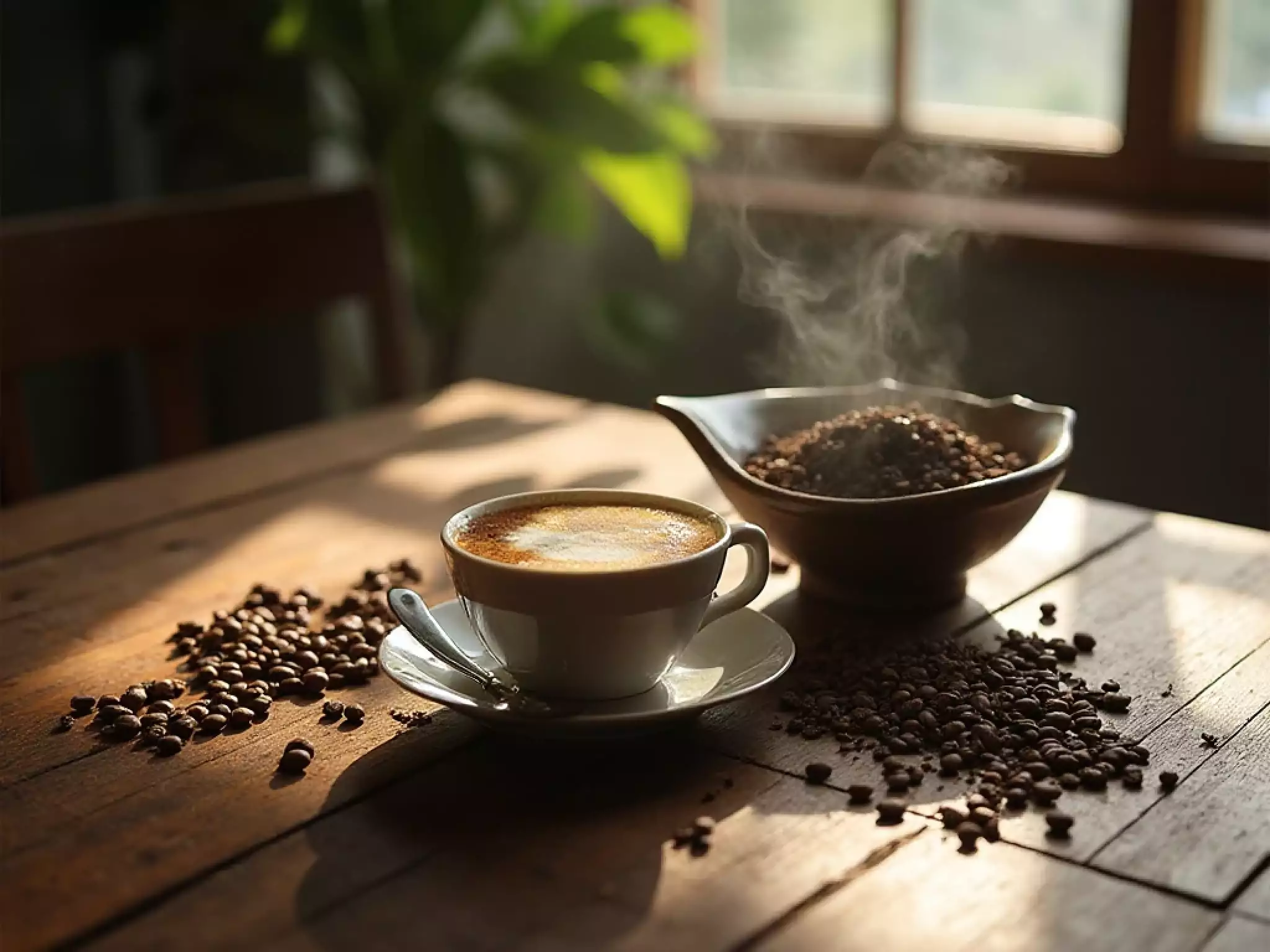
Coffee’s flavor is immediate, hitting the tongue with intensity and lingering primarily in the mouth’s front.
- Bitterness: Driven by caffeine (100–200 mg per cup) and chlorogenic acid derivatives, intensified by dark roasts, per Foods 2020.
- Acidity: Light to medium roasts offer citrus, berry, or wine-like notes from organic acids like citric and malic acid.
- Sweetness: Caramelization and Maillard reactions during roasting create chocolate or caramel notes, felt upfront.
- Body: Coffee oils and soluble solids provide a heavy, coating mouthfeel, per Food Chemistry 2020.
Did you know? Yunnan, China, boasts one of the world’s largest coffee-growing areas, offering unique flavor profiles that rival traditional coffee regions.
Summary: Coffee’s flavor is linear, stimulating the tongue’s tip and sides, with an aftertaste of roasted, nutty, or chocolatey notes that rarely extends to the throat.
Tea: Layered and Evolving
Tea’s flavor evolves from tongue to throat, driven by complex compounds, offering lingering sensations unique to each person.
- Astringency: Polyphenols (e.g., catechins, 50–100 mg per cup) create a slight puckering, triggering salivation (shengjin), per 2020 tea chemistry study.
- Huigan (Returning Sweetness): Bitter compounds and tea saponins transform into a sweet aftertaste in the throat seconds after swallowing, common in raw Pu-erh and oolong.
- Aromatic Complexity: Green tea’s fresh grassiness, oolong’s floral notes, raw Pu-erh’s bitter-to-sweet transition, or black tea’s malty sweetness.
- Cha Qi (Tea Vitality): Ancient-tree teas like Yiwu Pu-erh may spark warmth, mental clarity, or subtle sweat (e.g., the author’s forehead), driven by L-theanine (10–40 mg) and caffeine (20–70 mg).
Summary: Tea’s flavor is progressive, blending immediate tongue sensations with throat-based huigan and systemic Cha Qi, creating a multi-dimensional experience.
Coffee vs. Tea: Flavor & Mouthfeel Comparison
| Feature | Coffee | Tea |
|---|---|---|
| Dominant Taste | Bitter, acidic, caramelized sweetness | Bitterness, astringency, huigan (returning sweetness) |
| Flavor Progression | Front-loaded, stays on tongue | Progressive, extends to throat |
| Shengjin (Salivation) | ❌ Rare | ✅ Strongly present |
| Huigan (Returning Sweetness) | ❌ Rare | ✅ Common, throat sweetness |
| Aftertaste | Roasted, chocolate, nutty | Floral, fruity, lingering sweetness |
| Body Sensation | Heavy, bold | Light to persistent, Cha Qi effects |
| Aging Potential | Loses freshness after roasting | Some teas (e.g., Pu-erh, oolong) improve with aging |
The Science Behind the Sensations
Coffee’s flavor comes from caffeine (100–200 mg per cup) and chlorogenic acids, which stimulate bitter and acidic taste receptors, per Foods 2020. Its heavy mouthfeel stems from oils and solids, but lacks throat-based aftertaste due to minimal polyphenols.
Tea’s complexity arises from catechins (50–100 mg), L-theanine (10–40 mg), and caffeine (20–70 mg), per 2020 tea chemistry study. Astringency triggers salivation (shengjin), while saponins and polyphenols create huigan in the throat. Cha Qi, a physiological response, emerges from L-theanine’s calming effect on alpha brain waves, often felt as warmth or clarity, unique to each person (e.g., the author’s forehead sweat).

Frequently Asked Questions
What is huigan in tea?
Huigan (returning sweetness) is a lingering sweet aftertaste in the throat, driven by tea polyphenols and saponins, common in raw Pu-erh and oolong, per What Is Cha Qi?.
Why doesn’t coffee have huigan?
Coffee’s flavor, driven by caffeine and chlorogenic acids, is front-loaded and lacks the polyphenols that create tea’s throat-based aftertaste, per Foods 2020.
What is Cha Qi in tea?
Cha Qi (Tea Vitality) is the physiological response to tea’s compounds, like L-theanine and caffeine, felt as warmth or mental clarity, unique to each person, per 2020 tea chemistry study.
Which teas are best for experiencing Cha Qi and huigan?
Raw Pu-erh from Yiwu and high-mountain oolong offer vibrant Cha Qi and pronounced huigan, ideal for mindful tasting, per How to Experience Cha Qi.
Conclusion
Coffee and tea are not rivals but vibrant expressions of life’s pleasures. Coffee delivers bold, immediate satisfaction, while tea unfolds with layered shengjin, huigan, and Cha Qi, engaging the tongue, throat, and body. At Steeped Roots, we don’t belittle other drinks—that’s not our way. Rooted in tea mountains, we focus on connecting ethnic minority tea farmers with enthusiasts, offering quality teas like raw Pu-erh or high-mountain oolong for those seeking lingering sweetness and vitality. Sip what brings you joy, and let every cup enrich your life!
🌿 Further Reading
Data sources: 2020 Tea Chemistry Study, Foods 2020, Food Chemistry 2020.

