
How to Experience Cha Qi (Tea Vitality)? A Guide with Ancient-Tree Raw Pu’er
What Is Cha Qi (Tea Vitality)?
Cha Qi (Tea Vitality), the subtle breath of tea, flows uniquely in each person—a warm current up the spine for one, a cooling throat glow for another, or, as the author experiences, fine sweat on the forehead when drinking ancient-tree tea. At Steeped Roots, we view Cha Qi as a tangible, personal response to the rich compounds in ancient-tree raw Pu’er, not a mystical force. Learn more in our What Is Cha Qi? Guide/.
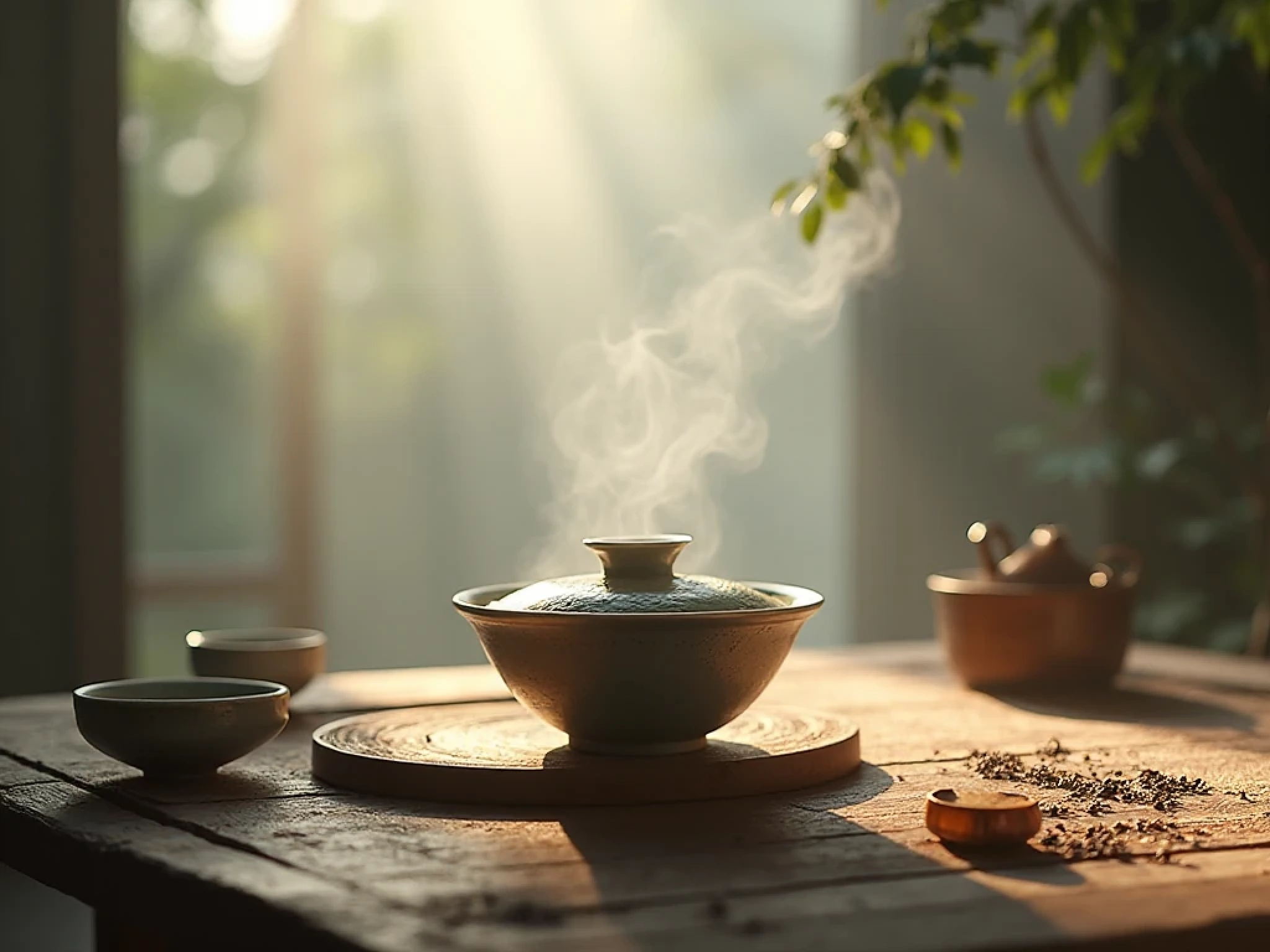
Watch: Real-time Cha Qi experience with 15-year Yiwu ancient-tree raw Pu’er
Choosing the Right Tea
Recommended Tea: Ancient-tree raw Pu’er (100+ years preferred).
Why It Works: Ancient trees, with deep roots, absorb rich minerals and organic compounds, yielding a robust tea soup that amplifies Cha Qi, per a 2020 tea chemistry study. Terrace teas, over-roasted, or poorly stored teas often lack this depth.
Key Point: Ancient-tree raw Pu’er’s potency sparks Cha Qi, manifesting uniquely in your body—perhaps as warmth, tingling, or clarity.
Brewing for Cha Qi
- Teaware: Use a 100–120ml gaiwan or Yixing teapot for precision, per Choosing the Right Teaware/.
- Water Temperature: Boil water to 100°C for full extraction.
- Tea Amount: Use 7g for a standard gaiwan.
- Brewing Tip: Keep early infusions strong (10–15 seconds) to enhance Cha Qi’s presence.
Key Point: A concentrated tea soup highlights compounds that trigger Cha Qi’s unique bodily effects.
Drinking with Awareness
Sip slowly, then pause. Close your mouth, breathe gently, and stay present for 10–20 seconds, avoiding distractions like phones. Notice subtle shifts—from throat to chest, spine to limbs—as Cha Qi unfolds uniquely in your body.
Cha Qi is personal: one may feel a warm glow in the chest, another a tingling crown, but it always stirs the body.
Key Point: Quiet awareness lets you tune into Cha Qi’s distinct path through your body.
Common Cha Qi Sensations
Cha Qi manifests uniquely but often follows these paths:
- Throat: Cooling, expansive, or sweet aftertaste (huigan).
- Chest: Warmth or coolness pooling near the heart.
- Forehead: Light sweating, signaling Cha Qi’s upward rise.
- Spine: A warm current rippling from tailbone to neck or crown.
- Limbs: Sweaty palms or soles, indicating Cha Qi’s downward flow.
- Mind: Clarity, mild exhilaration, or a dreamy “tea drunk” state.
Key Point: Your Cha Qi experience—whether a spinal glow or mental clarity—is a personal dialogue with the tea.
Practicing Cha Qi Awareness
- Record Sensations: Note where Cha Qi flows (e.g., throat to spine) after each session to build awareness.
- Compare Teas: Try different vintages or regions (e.g., Yiwu vs. Menghai) to observe Cha Qi variations.
- Stay Relaxed: Don’t chase Cha Qi; let breathing and body signals guide you naturally.
Key Point: Consistent practice reveals Cha Qi’s unique imprint on your body, deepening your tea journey.
Enhancing Cha Qi with Mindfulness
Amplify Cha Qi by pairing your session with mindfulness:
- Calm Environment: Dim lights, play soft music, and avoid screens.
- Focused Breathing: Inhale deeply while brewing, exhale slowly while sipping to anchor sensations.
- Sensory Focus: Notice the tea’s aroma, warmth, and texture to heighten Cha Qi awareness.
Key Point: Mindfulness deepens Cha Qi’s personal, physical impact, making each session a meditative journey.
Frequently Asked Questions
Why does Cha Qi feel different for everyone?
Cha Qi interacts uniquely with each body, sparking varied sensations like chest warmth or spinal tingles due to individual physiology and sensitivity, as explored in our Intro to Cha Qi/.
Why is ancient-tree raw Pu’er best for Cha Qi?
Ancient trees possess extensive root systems that draw deep minerals, creating a complex chemical profile that triggers stronger physical responses than terrace teas.
How do I know if I’m feeling Cha Qi?
Common signs include a distinct cooling sensation in the throat, a warm sensation in the torso, or a sudden sense of mental clarity and calm focus.
Can I feel Cha Qi as a beginner?
Yes. While sensitivity builds over time, using high-quality ancient-tree tea and drinking in a distraction-free environment makes it accessible to everyone.
🌿 Further Reading
Data source: 2020 Tea Chemistry Study.

