Pu-erh Tea
Pu-erh Tea – The Art of Aging & Fermentation
Authentic Yunnan Pu-erh crafted from ancient tea trees and shaped by time. Naturally aged or traditionally fermented, Pu-erh deepens in flavor, complexity, and character with every year.
Explore Pu-erh Tea: Aging, Fermentation & Craft ▼
What is Pu-erh Tea?
Pu-erh is a post-fermented tea from Yunnan, China, made from large-leaf Camellia sinensis var. assamica. Unlike green or black tea, Pu-erh undergoes microbial transformation after processing, allowing it to age and evolve over time.
This transformation is what gives Pu-erh its layered depth, smooth texture, and long aging potential.
Raw (Sheng) vs Ripe (Shou) Pu-erh
There are two primary styles of Pu-erh tea:
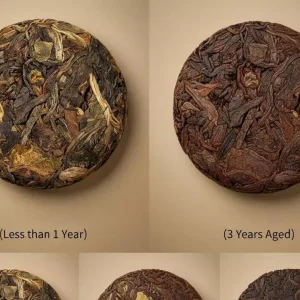
- Raw Pu-erh (Sheng) – Sun-dried and naturally aged over years. Starts bright and grassy, gradually becoming smoother, sweeter, and more complex.
- Ripe Pu-erh (Shou) – Undergoes controlled fermentation (wo dui process) to accelerate aging. Dark, earthy, and mellow from the beginning.
Both styles originate from Yunnan’s ancient tea mountains and reflect the region’s terroir and microbial ecology.
The Science of Fermentation
Pu-erh’s uniqueness comes from post-oxidation microbial activity. Beneficial microbes gradually transform polyphenols and catechins, reducing bitterness and increasing smoothness. Over time, this creates:
- Deeper sweetness
- Smoother mouthfeel
- Lower perceived astringency
- Improved digestive comfort
This living transformation is why Pu-erh is often compared to wine — shaped by storage conditions, climate, and time.
Aging Pu-erh Tea
Well-stored Raw Pu-erh can age for decades. Proper storage requires:
- Stable humidity
- Airflow without strong odors
- Protection from direct sunlight
Smaller formats such as Micro Tea Cakes offer an accessible way to experience Pu-erh aging without committing to large traditional cakes.
Flavor Profile
Depending on age and style, Pu-erh can express:
- Fresh herbs and floral brightness (young Sheng)
- Honeyed smoothness (mid-aged Sheng)
- Earth, cacao, and wood (Shou)
- Mineral sweetness and long finish
Brewing Pu-erh
Use near-boiling water (95–100°C / 203–212°F). Rinse briefly before steeping. Pu-erh performs best with multiple short infusions in a gaiwan or teapot.
Explore our Gaiwans and Tea Accessories for traditional Gongfu brewing.
Why Pu-erh Matters
Pu-erh is not simply tea — it is time captured in leaf form. From ancient tree harvest to slow fermentation, it represents the deepest tradition of Yunnan tea culture.
At Steeped Roots, our Pu-erh selection honors both natural aging and careful fermentation, preserving authenticity while embracing modern accessibility.
Showing all 2 results
Raw Pu-erh Tea (Sheng Pu-erh) – Small-Batch Pressed Mini Cakes
Raw Pu-erh (Sheng Pu-erh) Price range: $50.00 through $199.00Clear25 Mini Cakes (50g total)50 Mini Cakes (100g total)100 Mini Cakes (200g total)Ripe Pu-erh Tea (Shu Pu-erh) – 2g Mini Cakes
Ripe Pu-erh (Shou Pu-erh) Price range: $35.00 through $140.00Clear25 Mini Cakes (50g total)50 Mini Cakes (100g total)100 Mini Cakes (200g total)