What Is Tai Chi? The Resonance with Tea
Tai Chi (太极), often called Tai Chi Chuan (Taijiquan), is a centuries-old Chinese internal martial art that blends gentle movement, mindfulness, breathing, and energy (qi) cultivation. Originally developed for self-defense, its practice today focuses on health, balance, stress relief, and spiritual growth.
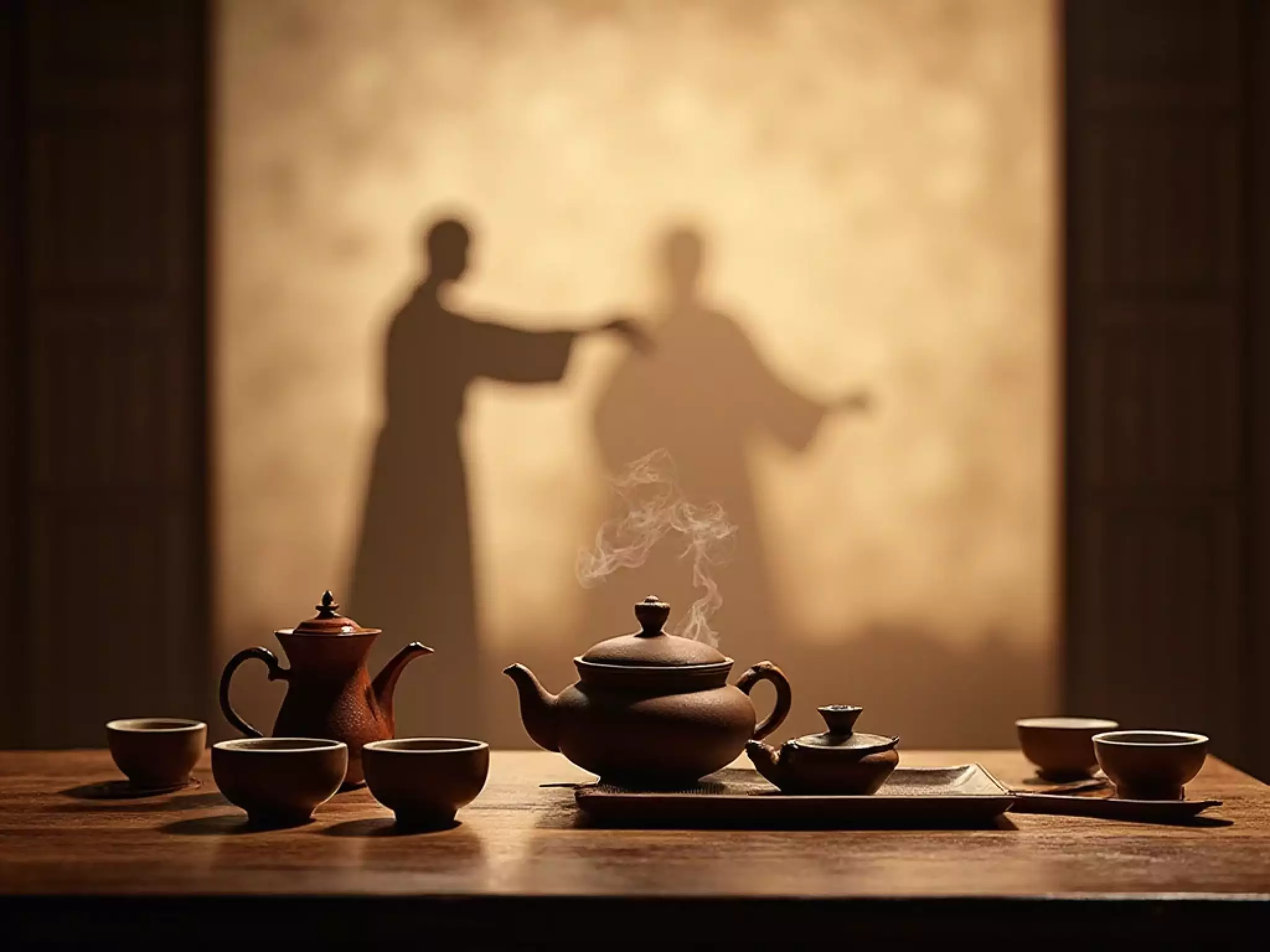
Here are some key characteristics:
- Slow, flowing motion: Movements are performed slowly, smoothly, and continuously. Transitions between postures are seamless.
- Mind-body unity: Tai Chi emphasizes awareness—how you move, where your weight shifts, how your breath flows, how intention (yi) guides action.
- Balance & grounding: Central is the interplay of Yin and Yang—light vs heavy, stillness vs motion; maintaining root (grounded feet) while moving weight.
- Breathing & internal focus: Deep abdominal breathing synchronized with movement; not forcing, but allowing breath, focus, and energy to flow.
- Health & longevity: It is known for improving flexibility, reducing stress, increasing balance, aiding circulation, calming the mind.
The Resonance Between Tai Chi and Tea
Tai Chi and the art of tea share surprisingly deep affinities. If you’ve ever read Tea Ceremony Through the Lens of Chinese Philosophy on SteepedRoots, you’ll recognize many parallels: both are rituals, both are slow, and both are deeply rooted in philosophy.
Here are a few similarities and how they relate:

Philosophical Underpinnings
In Chinese philosophy (Daoism, Confucianism, traditional cosmology), a few ideas help frame both Tai Chi and Tea:
- Dao (道): The Way. Both are paths—not destinations—through practice, harmony, balance.
- Wu Wei (无为): Effortless action / non-forcing. In Tai Chi, you don’t force strength but allow movement to emerge naturally. In tea, you don’t force boiling, you don’t rush infusion—optimal flavor comes from letting things unfold.
- The Five Phases (五行, Wuxing): As in the tea ceremony (SteepedRoots article), the Five Phases include Fire, Water, Wood, Earth, Metal. Tai Chi also can be approached in phases or cycles, emphasizing transformation, balance, harmony.
- Three Talents (三才, Heaven-Humanity-Earth): Tea ritual uses the bowl/lid/saucer metaphor; in Tai Chi, you often feel the relation among cosmos (Heaven), human being, and earth—standing, walking, moving with respect to ground and sky.
Bringing Them Together: Practice Ideas
Here are some suggestions for integrating Tai Chi and Tea to deepen the experience (and perfect for a themed party):
- Tea Before or After Tai Chi Session: Start a gathering with a brief Tai Chi warm-up (5-10 min), then sit for tea. Notice how your body feels more receptive, your senses more alive.
- Mindful Tea Brews: Use the slow principles of Tai Chi in brewing: heating water, watching leaves open, inhaling aroma. Each step done with awareness and calm.
- Using Tai Chi Movement in Tea Service: When pouring water, lifting the teapot, pouring into cups, do so with the same attention to footwork, posture, weight shift as in Tai Chi.
- Shared Rhythm: Let the breath of Tai Chi inform the rhythm of tea drinking: inhale while lifting the cup, exhale while sipping; pause between sips as between forms.
Conclusion
Tai Chi is far more than exercise—it’s a way of being. Tea is more than a beverage—it’s a ritual, a philosophy, an embodiment of nature, culture, and sense. Together, Tai Chi and Tea offer a profound pathway for cultivating awareness, balance, wellness, and connection.
If tea teaches us to taste slowly, Tai Chi teaches us to move slowly. If tea gifts us stillness, Tai Chi gifts us flow. Together, they form a dance of serenity. For a deeper dive into tea’s energy, explore What Is Cha Qi? or How to Experience Cha Qi (Tea Vitality)?
Frequently Asked Questions
The combination enhances mindfulness. Tai Chi prepares the body and energy (Qi) to be more receptive, while the tea ritual sustains that meditative state through sensory engagement.
Not at all. The resonance lies in the principles of slowness and awareness. Even simple breathing exercises or basic flowing movements can deepen your tea experience.
Both are rooted in concepts like Yin and Yang (balance), Wu Wei (effortless action), and the cultivation of Qi. They are considered physical and sensory manifestations of the Dao.
🌿 Deepen Your Journey
Explore more about the philosophy and energy that connect the body and the leaf:
- Tea & Philosophy: Tea Ceremony Through the Lens of Chinese Philosophy
- The Flow of Energy: What Is Cha Qi? Feeling the Energy in Tea
- Experience Vitality: Step-by-Step: How to Experience Tea Vitality
- The Source: Discover the Ancient Roots of Chinese Tea Culture