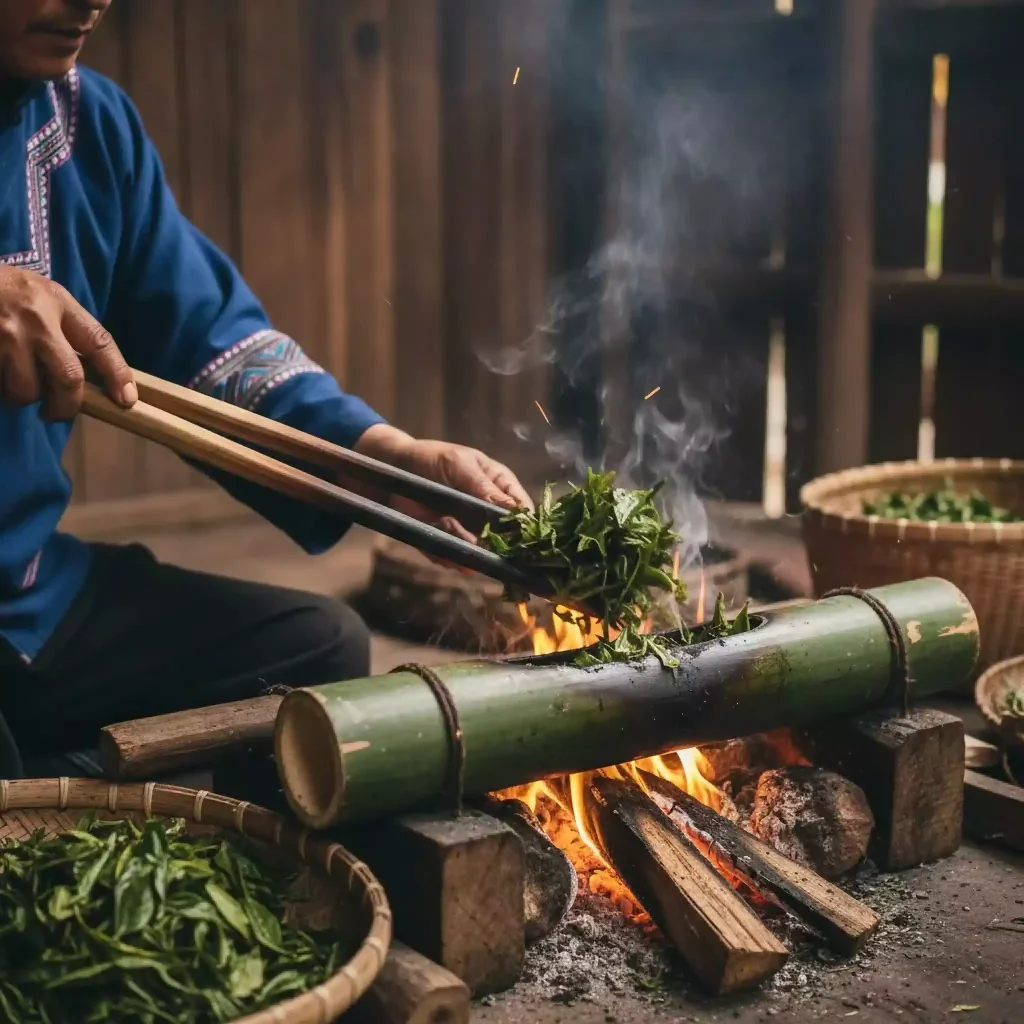
Why We Drink Tea
Standing Between Heaven and Earth
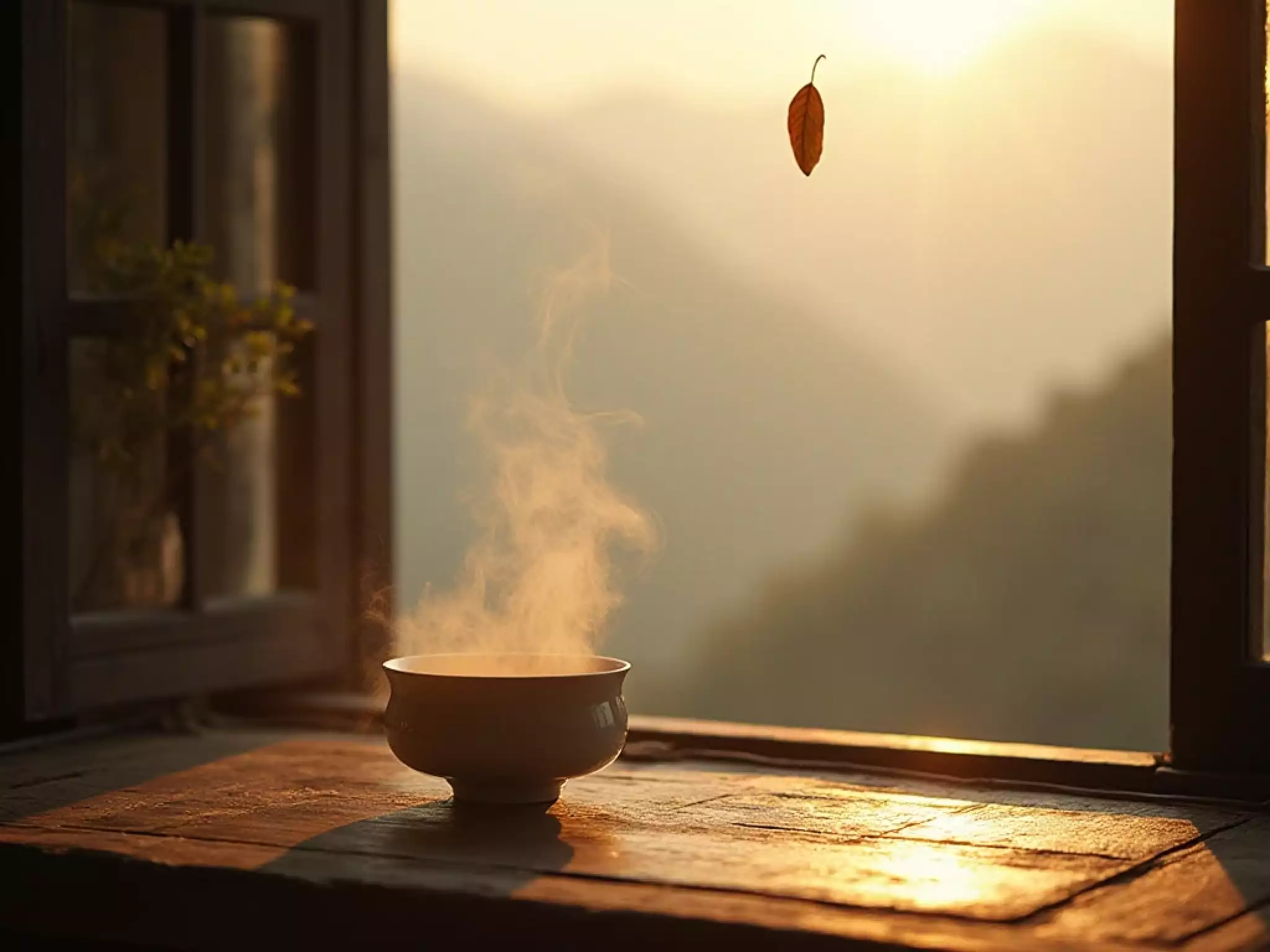
We drink tea because we have always needed something to place between heaven and earth, and the leaf was willing.
In the beginning there was only hot water and silence. Then a leaf fell—some say from the hand of Shennong, some say from the wind—and the water blushed. That blush has never stopped traveling: across the Himalayas on yak-back, across oceans in porcelain holds, across deserts in copper kettles, and across centuries in the memories of grandmothers. Wherever it went, it carried the same quiet promise: drink me, and you will remember who you are.
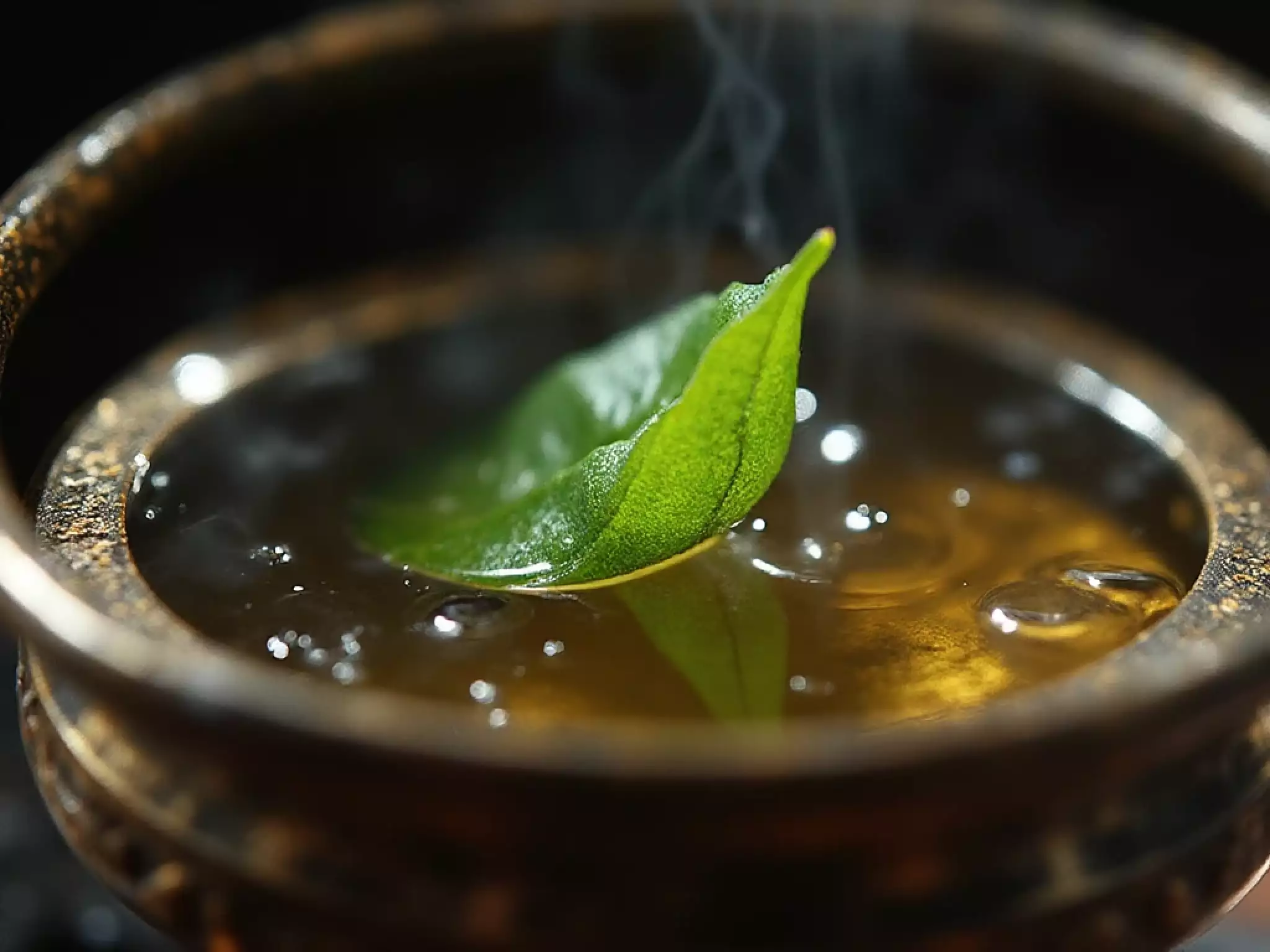
Legend says the first cup was born when a leaf drifted into Shennong’s boiling water.
Look at the Chinese character 茶
It is not an accident of calligraphy. Above is 草 (Grass)—the tender herb that drinks the sky. Below is 木 (Wood)—the ancient tree that drinks the earth. Between them stands 人 (Human)—the being, small, momentary, and upright. The oracle bones already knew: to drink tea is to stand in the only place we have ever truly belonged—exactly in the middle.
Heaven pours light and rain. Earth answers with root and resin. The human hand gathers, withers, fires, rolls, and waits. Then the circle closes: water rises again as steam, carrying the mountain’s memory into our chest. With every sip, we complete a minor ceremony of return.
We drink tea because the heart grows loud and the world grows fast, and three minutes is the smallest pagoda we can still build against the noise. We drink tea because bitterness is the first honest thing the mouth ever learns, and the after-sweet (Huigan) that follows is mercy.
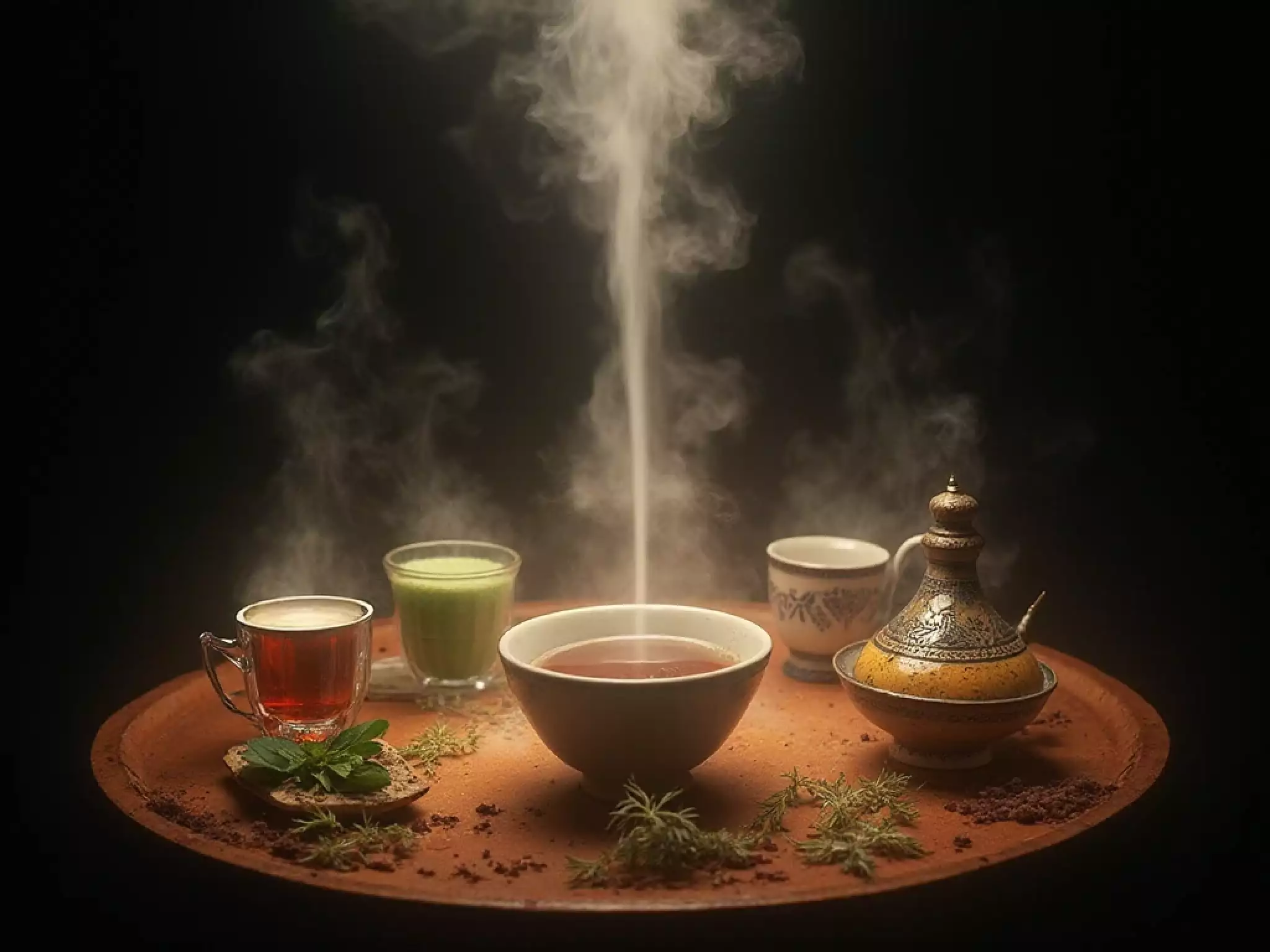
From Moroccan mint to Japanese matcha, the steam rises the same everywhere.
We drink tea because once, in the Tang dynasty, Lu Yu wrote that “tea tempers the spirit, calms the mind, and harmonizes the body,” and thirteen centuries later we still nod, slowly, as if we have just heard our own name spoken correctly for the first time.
We drink tea because a high-mountain Oolong can taste like the cloud it grew inside of; because a twenty-year-old Pu-erh can taste like the forest floor forgiving the axe; because even the cheapest tea bag, steeped in a cracked mug at 3 a.m., still says: you are not alone.
This is why Steeped Roots exists in English, in Spanish, in every tongue that will take it. The leaf does not care what passport you hold. The water does not ask your politics. The steam rises the same in Shanghai and Santiago, in Marrakesh and Montreal.
We translate not to colonize the tradition, but to complete the oldest instruction written inside the character itself: let the person stand between heaven and earth, and let no border prevent the standing.
So tonight, wherever you are, boil water. Choose any leaf that calls itself tea. Watch the color bloom like a slow sunrise. Lift the cup with both hands—the way monks do, the way grandmothers do, the way strangers will do when they become friends.
Inhale. Sip. Feel the small body you were given become, for one breath, the exact center of everything.
Now it is your turn. What leaf is in your cup tonight, and what is it quietly teaching you about the distance between heaven and earth? Leave a comment below — we read every single one.
Reflections on Tea Philosophy
What does the Chinese character for tea (茶) represent?
The character is composed of three parts: 'Grass' (sky/nature) at the top, 'Wood' (earth/roots) at the bottom, and 'Human' in the center. It symbolizes the human being's harmonious position between heaven and earth.
What is 'Huigan' and why is it important?
Huigan refers to the 'returning sweetness' that emerges after the initial bitterness of the tea. In philosophy, it represents the mercy and reward that follows honest experience and patience.
How does tea help with modern mindfulness?
Tea acts as a 'three-minute pagoda'—a small ritual of silence and preparation that allows us to disconnect from the fast-paced world and reconnect with our own rhythm.
Continue Your Journey
👉 What Is Tea Tasting? A beginner-friendly guide
Further reading & References:
• Lu Yu, The Classic of Tea (Cha Jing), 760 CE.
• UNESCO: Traditional tea processing techniques and associated social practices in China (2022).
• L-theanine and Caffeine: The science of calm alertness in tea.