Beyond Lipton: A Beginner's Map to
Sourcing High-Quality Tea Online
2026 Upgrade Guide
To buy high-quality tea online, verify three things before checkout: (1) Harvest Date (month + year, not just "spring"), (2) Specific Origin (region, estate, or village — not just "China" or "Japan"), and (3) Leaf Integrity (whole or gently broken leaves, not dust or fannings). Beginners: start with a sampler set of Japanese greens or Taiwanese Oolongs — high quality, forgiving to brew, and easy to compare side-by-side.
Honestly, you can probably skip this guide—your local high street likely has better Black tea than 90% of what’s available in the US ☕.
Looking for our unique 2g tea coins (mini cakes) for precision brewing? 🍃 Explore our 2g collection here →
🍵 First, a Brutally Honest Observation: Why Good Tea Is So Hard to Find in America
I've been sourcing tea online for years, and there's something I keep noticing that almost nobody talks about: in the vast majority of American cities, it is genuinely difficult to walk into a store and buy a good cup's worth of real tea.
Yes, even the "nice" grocery stores. Yes, even those boutique wellness shops with wooden shelves and ambient lighting and tins that cost $22.
The American retail tea supply chain is built for shelf stability and margin, not flavor. By the time a green tea from Fujian Province reaches a store in Kansas City or Charlotte, it has typically passed through:
- A broker in the origin country
- An import distributor stateside
- A regional wholesaler or co-packer
- A retail buyer with a 6–12 month restocking cycle
What arrives on the shelf is often 12–18 months past harvest — which, for a green tea, is like buying "fresh" bread baked last year. The result is tea that is:
- Flat and astringent: the aromatics have oxidized, leaving only bitterness and a vague woody dryness
- Aggressively overpriced: $20 for a tin of fannings-grade broken leaf that wouldn't clear quality standards in its country of origin
- Dressed up to distract: beautiful tin, vague story about "ancient traditions," no harvest date anywhere on the label
This is not an indictment of every American tea retailer. It is an accurate description of most American retail tea. The solution — and the entire premise of this guide — is to step entirely outside that supply chain.
In 2026, direct-to-consumer specialty tea importers have made it possible for someone in Boise or Tulsa to receive tea that was harvested in a specific mountain village 8–12 weeks ago. That's the same access a tea drinker in Shanghai or Tokyo has always had. Skipping the middlemen isn't a power move reserved for connoisseurs. It's just the sensible thing to do.
The Upgrade You Didn't Know You Needed
Let's be fair to Lipton for a moment. It's consistent. It's cheap. It works in a pinch.
But buying a Lipton tea bag for flavor is like using instant coffee to understand what coffee actually tastes like. You'll get caffeine. You won't get the experience.
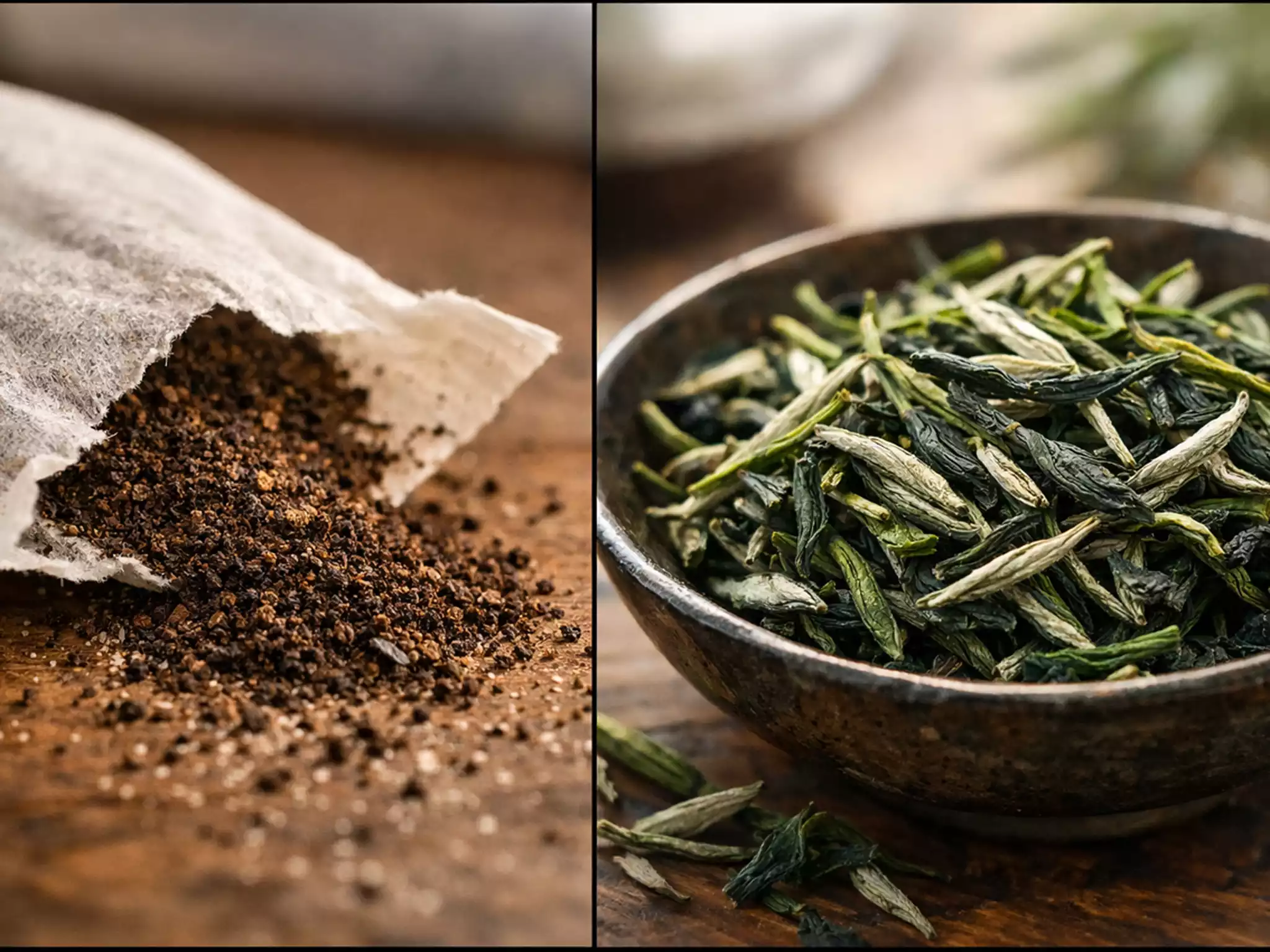
Here's what a supermarket tea bag actually contains: fannings and dust — the lowest-grade fragments left over after whole leaves are sorted out for specialty markets. They brew fast (because surface area is maximized) and taste sharp, flat, and uniform — by design. Consistency, not complexity, is the product.
Tea Leaf Grade Hierarchy — What's Actually in Your Cup
The world beyond that yellow box is genuinely different. A First Flush Darjeeling from a specific estate, harvested in April at 2,000m elevation, brewed at 85°C for 2.5 minutes — that's a different category of experience. Same plant (Camellia sinensis). Completely different outcome.
The upgrade from supermarket teabags to quality loose leaf is the same cognitive jump as switching from Folgers instant to a single-origin pour-over. The process requires a tiny bit more knowledge. The payoff is proportional.
Your Decision Map: From "I Want Better Tea" to "I Received Good Tea"
Green / Oolong / White / Black / Puerh
Check green flags ✅ below
Scan for red flags ❌
Skip it.
→ Step 4: Order a Sampler
Buy full quantities of your favorites
Part 1: What NOT to Buy — The Red Flags Checklist
Before you learn what to look for, learn what to avoid. These are non-negotiable dealbreakers when evaluating any tea product page.
A product page that says "Green Tea — China" is telling you nothing. China has hundreds of distinct tea-growing regions, each producing dramatically different flavor profiles. "China" as an origin label is the tea equivalent of a wine bottle that says "Grapes — Europe."
Minimum acceptable: Country + Region (e.g., "Fujian Province, China"). Ideally: County or Township. Premium: Named estate or village. If a retailer can't tell you beyond the country level, they either don't know — or don't want you to know.
Tea is an agricultural product. Freshness is not a nice-to-have — it is the primary quality variable for green teas, white teas, and light Oolongs. "Spring harvest" without a year is marketing, not information.
The gold standard: Month + Year (e.g., "April 2025 First Flush").
At Steeped Roots, we operate by a simple rule: if we can't tell you the month the leaf was plucked, we shouldn't be selling it. That standard filters out the majority of commodity-grade tea before it reaches our shelves.
Flavored teas are not inherently bad. A properly made Earl Grey uses base tea quality as a foundation, not a liability. The red flag: aggressive artificial flavoring used to mask a low-quality base.
If the primary descriptor is "blueberry lavender honey vanilla" and the product page can't answer what cultivar, what region, or when it was harvested — the flavoring is covering for fannings-grade tea. The calibration test: check the same retailer's unflavored offerings. If those have no harvest date, the flavored teas are built on the same foundation.
Puerh is a unique category with its own set of red flags, especially in the American market where most buyers can't tell the real thing from a convincing copy.
Watch for these specifically:
- "Ancient tree (古树)" with no named mountain: If a cake costs $30 and claims to be from Bingdao or Yiwu old-growth trees, it isn't. Genuine traceable old-growth puerh will name the specific mountain — Bulang Shan, Nannuo, Jingmai — and will be priced accordingly ($60–150+ for a 357g cake is a realistic floor).
- No storage disclosure: Puerh is a living product. A reputable seller will tell you whether the tea has been stored in Kunming dry-storage (干仓) or Guangdong traditional storage (湿仓). No storage info means the seller is treating it as commodity inventory, not understanding what they're selling.
- Year without production lot: Serious puerh listings include production batch (批次) or pressing date, not just the year on the wrapper.
Part 2: What to Look For — The Green Flags Checklist
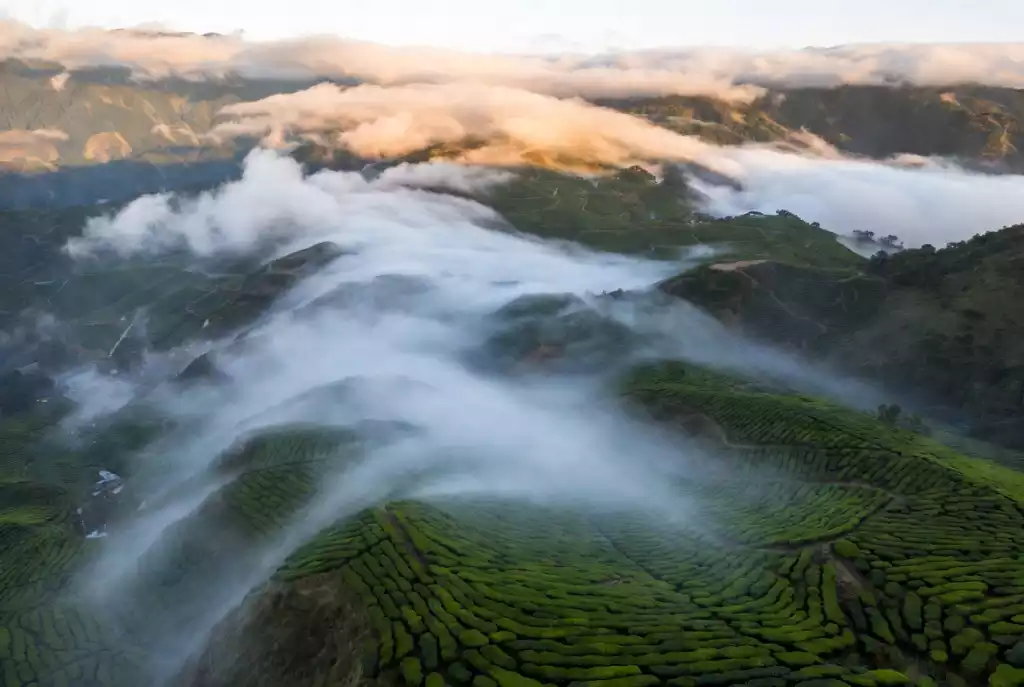
High-altitude tea (generally 800m+) grows more slowly, accumulating more complex amino acids (L-Theanine) and polyphenols. This is objective chemistry, not marketing. A retailer who lists elevation sourced specifically — not just bought from a bulk importer.
What good origin info looks like: "Elevation: 1,200–1,400m" · "Shade-grown for 25 days pre-harvest" · "Old-growth trees, 80–120 years"
The tea plant has hundreds of named cultivars — similar to grape varieties in wine. A retailer who names the cultivar knows their supply chain.
- Yabukita — Japan's most common; clean, grassy, reliable
- Okumidori — Japanese; sweeter, more umami
- Qingxin Oolong — Taiwan; floral, high-mountain elegance
- Da Hong Pao — Wuyi rock Oolong; mineral, roasted complexity
A surprisingly reliable quality proxy. High-quality teas come with precise guidance because the producer knows the leaf. What specific looks like: "Water temperature: 78°C" · "4g per 150ml" · "First infusion: 60 seconds; Second: 45s; Third: 90s" · "Porcelain or glass preferred."
If a product page gives you that level of detail, someone on the team actually brewed this tea carefully and cares that you do too.
The DTC tea revolution has produced importers who work directly with farmers, bypassing commodity brokers. The best in 2026 provide: farmer or cooperative name · farm photos · harvest and processing dates · and in some cases, blockchain traceability — an immutable digital record linking the physical tea lot to verified farm data and lab test results (heavy metals, pesticide residues).
If a retailer offers QR-code lot-level verification, consider it a strong trust signal. It's the emerging standard, not a novelty.
Sourcing Channel Reality Check: Where You Buy Matters
Here's the uncomfortable comparison that most tea retailers don't want you to see laid out this plainly.
| Channel | Quality Control | Price Value | Best For |
|---|---|---|---|
| American Supermarket | 🛑 Very Low Mostly fannings, 12–18mo from harvest | Poor High markup on low quality | Emergency only |
| Brick-and-Mortar Tea Chain | ⚠️ Low–Mid Often blended, flavored, dated stock | Poor Retail overhead baked in | Gift packaging |
| Online Specialty Importer (DTC) | ✅ High Direct from farm, dated, traceable | Excellent Middlemen removed; same access as Asia | Anyone who actually wants to taste tea |
Part 3: Decoding the Label — Terminology Quick Reference
| Label Term | What It Actually Means | Quality Signal | Expert Advice |
|---|---|---|---|
| First Flush | First harvest of the season (spring) | ★★★★★ | Best for greens and Darjeeling; prioritize current year |
| Second Flush | Second harvest (early summer); fuller body | ★★★★ | Excellent for Darjeeling muscatel; often better value |
| Single Estate | All leaf from one named farm or garden | ★★★★★ | Full traceability; taste reflects one terroir |
| Single Origin | One geographic region (may blend farms within) | ★★★★ | Strong quality signal; less specific than Single Estate |
| Hand-picked | Leaves selected and plucked by hand | ★★★★★ | More selective than machine harvest; verifiable in photos |
| Orthodox | Traditional rolling/processing method | ★★★★ | Preserves leaf integrity; opposite of CTC |
| CTC (Cut-Tear-Curl) | Machine-processed into small pellets | ★★ | Designed for teabags; fast extraction, flat flavor |
| Ceremonial Grade | Highest-grade matcha; shade-grown, stone-milled | ★★★★★ | Verify harvest date; "ceremonial" has no legal definition |
| Culinary Grade | Lower matcha; for cooking and lattes | ★★★ | Fine for blending; not ideal for straight drinking |
| FBOP / BOP | "Broken Orange Pekoe" — graded broken leaf fragments | ★★ | Common in budget black teas; avoid for sipping quality |
| SFTGFOP1 | Highest Darjeeling designation | ★★★★★ | Verify with a current harvest date |
| Tippy | High proportion of golden/silver leaf tips (young buds) | ★★★★ | More L-Theanine, more delicate; reliable quality signal |
| Natural / Organic | Grown without synthetic pesticides | ★★★ | Verify certification; "natural" has no legal standard |
| Flavored / Blended | Base tea + added botanicals, fruits, or oils | ★ Variable | Quality depends entirely on the base; check separately |
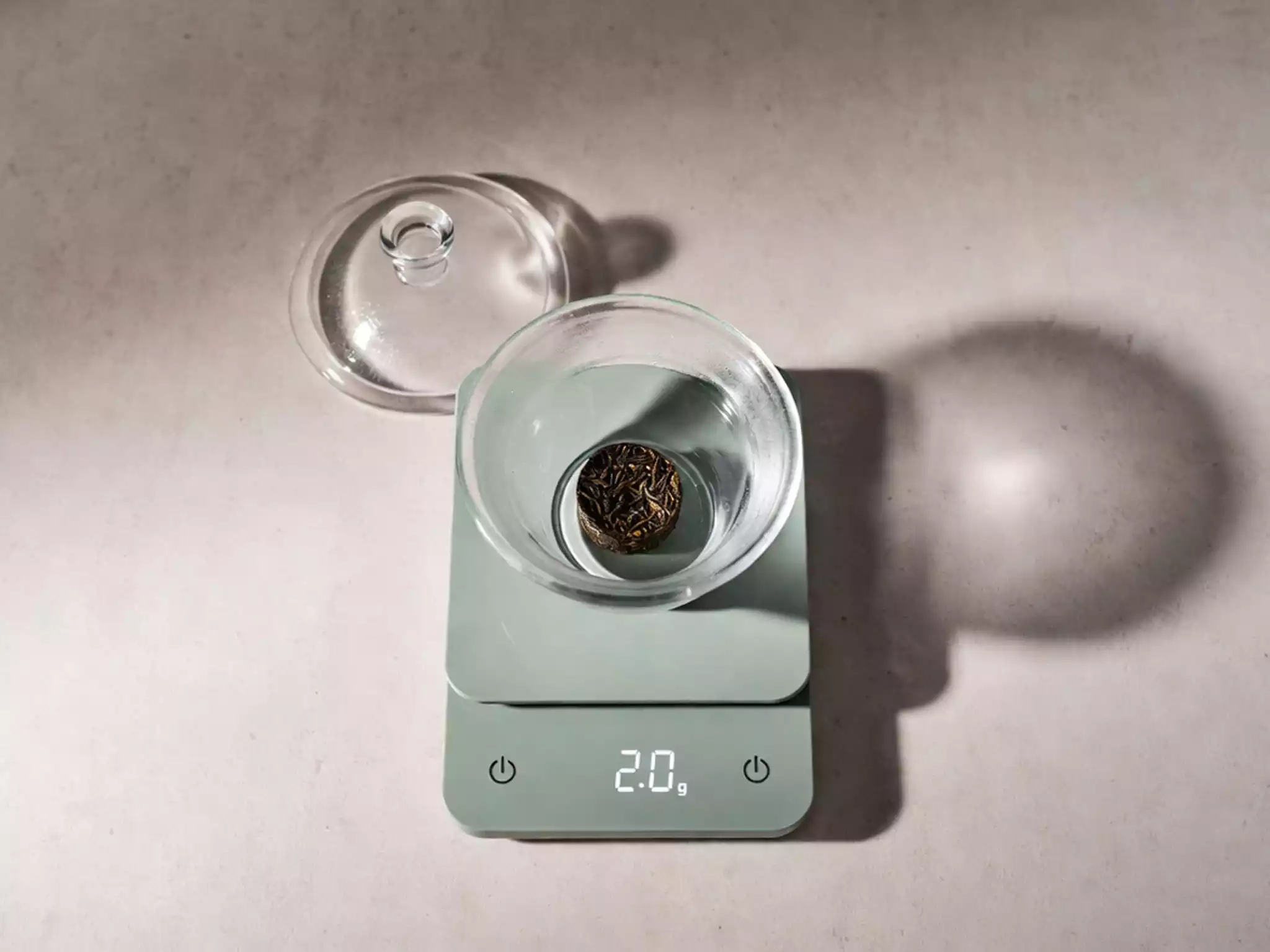
Precision matters. Our 2g tea coins remove the guesswork for a perfect cup every time.
Part 4: The 5-Minute Online Tea Vetting Protocol
Apply this to any tea product page before adding to cart. Total time: under 5 minutes.
Part 5: The Beginner's Smart Strategy — Start Small, Learn Fast
Here's the most common beginner mistake: buying 100g of a single tea before knowing if you like that style.
The smarter approach: sampler sets first, always. A 5-tea sampler at $25–35 exposes you to five distinct flavor profiles for the price of one full-size tin. Side-by-side comparison is how you actually learn what "grassy," "floral," "mineral," and "umami" mean to your specific palate.
| Category | Why Start Here | Beginner Pick | Approx. Cost |
|---|---|---|---|
| Japanese Greens (Sencha, Gyokuro) | Clean, consistent, well-documented flavor profiles; forgiving water temperature range | Sencha from Shizuoka or Kagoshima | $15–25 / 50g |
| Taiwanese High Mountain Oolong | Forgiving brew parameters; clearly distinct quality tiers that are easy to detect | Alishan or Li Shan Oolong | $20–35 / 50g |
| Darjeeling First Flush | Best gateway to understanding terroir and harvest timing | Named estate, current year only | $20–40 / 50g |
| Chinese White Tea | Low caffeine, minimal processing, approachable and easy to enjoy on first cup | Bai Mu Dan (White Peony) | $12–20 / 50g |
What to avoid as a beginner: heavily roasted or aged teas (acquired taste), compressed Puerh cakes (require specific storage and long-term commitment), and expensive single-serving teas until you have baseline knowledge of the category.
Where to Actually Buy: A Shortlist of Specialty Online Retailers
These are not affiliates or paid placements — they're retailers I've personally encountered that meet the sourcing transparency standards described above. Consider this a starting point for your own exploration, not an exhaustive list.
Sazen Tea
One of the most rigorous matcha-focused importers operating in English. Harvest-dated, cultivar-named, with detailed farm sourcing. The benchmark for what matcha transparency looks like.
sazentea.com →Eco-Cha Teas
Direct-relationship importer with a deep focus on Taiwan's high-mountain and traditional Oolong regions. Named farmers, harvest dates, and genuinely thoughtful sourcing stories.
eco-cha.com →Beautiful Taiwan Tea Co.
Specializes in the full breadth of Taiwanese tea culture — from high-mountain Oolongs to Oriental Beauty to artisan-processed blacks. Good transparency on origin and processing method.
beautifultaiwantea.com →Tea Repertoire
A curated multi-origin collection with a consistent emphasis on sourcing specificity. Good for exploring across categories — Japanese, Taiwanese, and Chinese teas with reliable quality signals.
tearepertoire.com →The specialty tea community on r/tea (Reddit) maintains candid, peer-reviewed assessments of most significant online retailers. Search "[retailer name] + Reddit" or "[retailer name] + review 2026" before your first purchase. Trust community reviews over marketing copy every time — these are people spending their own money on the same teas you're considering.
Expert FAQ
No — but there's a real correlation at the mid-range that's worth understanding. Price in specialty tea is driven by labor intensity, yield scarcity, processing complexity, and origin prestige. At the $15–40/50g range, price tracks quality reasonably well.
Beyond that, you enter rarity and collector territory. A $200/50g aged Dancong is not 10× better to drink than a $20/50g one — it is rarer and beloved by connoisseurs. For beginners, the sweet spot is $15–35/50g. This range reliably delivers whole-leaf, harvest-dated, origin-specific tea without requiring premium collector pricing.
It means all leaves in that product came from one defined geographic area — but "area" varies significantly. In the most rigorous use: a single named farm or garden (equivalent to "Single Estate"). In looser use: a regional cooperative of nearby farms.
It does not mean: a specific harvest date, organic certification, or hand-processing. How to tell how "single" the origin actually is: look for a named estate, a named farmer, or a specific village. "Single Origin — Taiwan" is marketing. "Single Origin — Shan Lin Xi, Nantou County, Taiwan, Farmer Chen Jia-Lin, October 2025" is traceable.
Use this 5-point trust checklist: (1) harvest dates on individual products — not just a category page; (2) named origins at region or estate level; (3) a real "About" story with named people and specific sourcing relationships; (4) a physical business address or verifiable registration; (5) customer reviews that mention specific teas by name.
2026 bonus trust signal: Retailers offering blockchain traceability QR codes linking to verifiable farm-level data. This is the emerging standard among premium DTC importers and signals genuine supply chain transparency.
Yes — and honestly, this guide was written for you. Online specialty tea importers ship nationwide with flat-rate or free shipping above modest thresholds ($35–50 in most cases). The logistics have fully caught up. Someone in rural Idaho now has access to the same tea that a collector in San Francisco or New York can source — provided they know where to look.
The tyranny of geography only applies if you limit yourself to local shelves. Don't limit yourself to local shelves.
TL;DR — The Essential Checklist
- 3 non-negotiable checks: Harvest Date (month + year) · Specific Origin (region or estate) · Leaf Integrity (whole/unbroken)
- Biggest beginner mistake: Buying 100g of one tea before sampling the category
- Best first purchase: A sampler set of Japanese greens or Taiwanese Oolongs ($25–35)
- Price sweet spot: $15–35 per 50g for genuinely excellent everyday drinking tea
- Top red flags: Missing harvest date · country-only origin · heavy artificial flavoring · "ancient tree" claims without named mountain
- Top green flags: Named cultivar · altitude info · specific brewing parameters · blockchain traceability
- American retail reality: Most brick-and-mortar tea is overpriced, stale, and built for shelf stability — not flavor. Online DTC importers are the solution, not the exception.
Don't Accept Mediocre Tea. You Don't Have To.
In America, getting a genuinely great cup of tea is harder than getting a great cup of coffee. The infrastructure, the culture, and the retail shelf space just aren't there yet for most of the country.
But here's what that means in practice: when you take the time to source well — when you order from an importer who named the farmer, dated the harvest, and ships it to your door weeks after it left the mountain — you're getting an experience that's genuinely rare on this side of the Pacific.
When that package arrives, carrying the fog of a Taiwanese high mountain or the mineral edge of a Wuyi cliff — you'll understand immediately that what you were drinking before wasn't tea. It was colored hot water with marketing.
Your palate will thank you for making the switch. Start with one sampler. Go from there.
Continue Reading
Why Your $50 Tea Tastes Bad: It's Not the Leaf, It's the Storage (2026 Guide) Caffeine Ranking: Which Teas Wake You Up the Most?Pricing ranges are approximate estimates based on market surveys as of early 2026 and will vary by retailer, origin, and market conditions. Retailer mentions are based on editorial assessment of sourcing transparency standards and do not constitute paid endorsements. Quality assessments reflect general industry standards in the specialty tea trade. Always verify harvest dates and origin information directly with your chosen retailer. References: Specialty Tea Institute Buyer's Standards (2025) · World Tea Expo DTC Market Report (2025) · r/tea Community Retailer Review Archive (2026) · Tea Research Association Japan Cultivar Database (2025).