Iced Tea Isn't Just Sugar Water:
The Science of Cold Brew
That Actually Tastes Like Tea
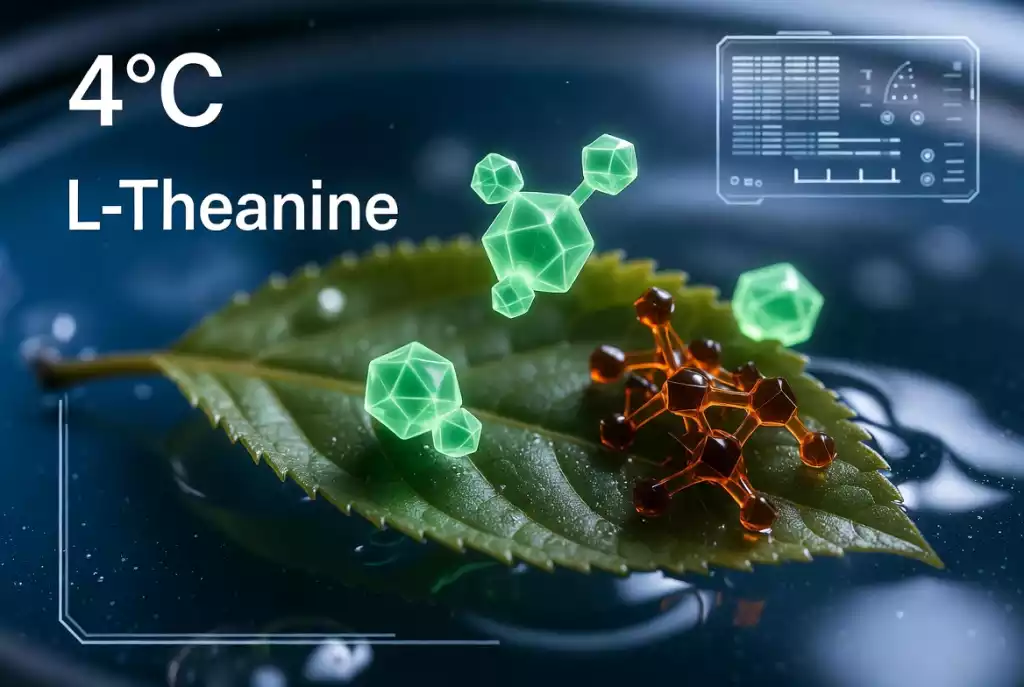
Cold brew is not refrigerated hot tea. It is a selective solvent process: at 4°C, tannin extraction drops 80–90%, L-Theanine sweetness becomes the dominant flavour, and volatile aromatics that evaporate in hot brewing are preserved entirely. The result is a floral, crystalline botanical clarity that no hot method — and certainly no gallon jug — can produce.
The correct cold brew tea ratio is 1g of loose leaf per 100ml of filtered water, steeped at 4°C (39°F) in the refrigerator. Average extraction time: 8–12 hours (varies by type: green tea 5–7 hours, white tea 8–10 hours, high-mountain Oolong 12–14 hours, Yunnan Dian Hong 8–10 hours). Cold brewing reduces bitterness by up to 80–90% vs. hot brewing by minimising tannin release — tannins require thermal energy to cleave from the leaf matrix and are barely extracted at refrigerator temperature. No sugar needed: L-Theanine (C7H14N2O3) is water-soluble, extracts readily in cold water, and provides natural sweetness unmasked by bitterness. Caffeine is approximately 50–65% lower than hot-brewed equivalent — making cold brew the correct protocol for afternoon and evening nootropic tea use.
An Intervention for American Iced Tea
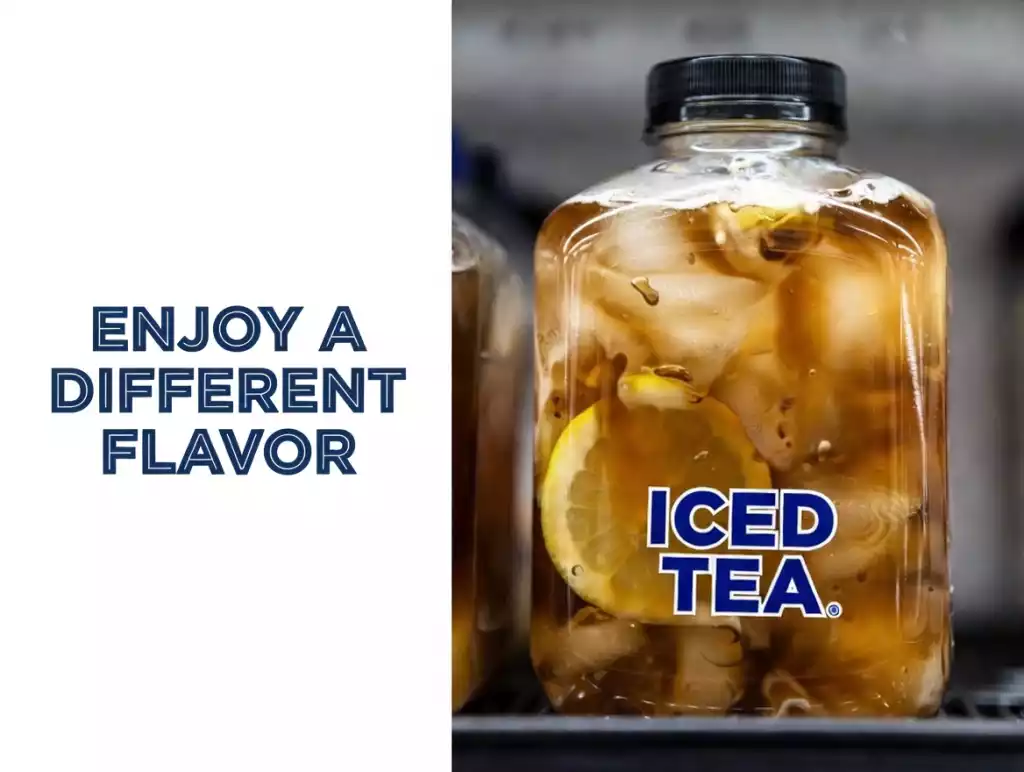
Flip over the gallon jug from the grocery store. Ingredients: water, high-fructose corn syrup, tea concentrate (0.2%), citric acid, natural flavors, caramel color. There is more citric acid than tea in that bottle. The caramel color is there because the actual tea content is so dilute it would look like pale yellow water without artificial darkening. The natural flavors are there because the tea extract used has no discernible flavor of its own.
This is tea-flavored sugar water. It shares the name "iced tea" with what you're about to make the same way fruit punch shares the name "juice" with freshly pressed apple.
Cold-brewed tea from quality whole leaf is something categorically different — a floral, mineral, crystalline expression of an actual plant, with zero added sugar, zero bitterness, and a flavour complexity that shifts depending on the cultivar, the altitude, the harvest season. Something that looks like light through stained glass in a mason jar on a summer afternoon. The ingredient choice — whole loose leaf vs. fannings and dust — is the most important decision before you touch the water.
The Zero-Sugar Movement of 2026 is not about deprivation. It is about rediscovering what things actually taste like. Cold brew tea is where that principle is most immediately rewarding — and most chemically precise.
The Physics of Cold Extraction — Why 4°C Changes Everything
Understanding why cold brewing works transforms it from a technique into a tool you can control with precision. The mechanism is thermal selectivity: different compounds in tea have different thermal energy requirements for extraction. Cold water exploits this difference.
Hot water extraction above 70°C is aggressive. It opens the leaf rapidly and pulls everything — aromatic compounds, L-Theanine, EGCG catechins, and the bitter, astringent tannins that create the dry, sharp finish most people associate with over-brewed tea. Cold water extraction at 4°C is different in kind, not just degree:
Bars represent relative extraction/retention at standard steep parameters for each method.
The result: cold brew's naturally sweet character is L-Theanine unmasked by bitterness. You are tasting the amino acid profile of the leaf in isolation — something hot brewing never allows. And the volatile aromatic compounds that give a High Mountain Oolong its orchid character, or a Yunnan Dian Hong its cocoa-honey top note — they simply evaporate in the steam of hot brewing. Cold holds them in suspension for the entire steep.
24-Hour Cold Brew Roadmap by Tea Category
Not all teas cold brew the same way. Leaf density, surface area, and compound profile all differ. These are calibrated starting points — your scale and your fridge confirm the rest.
Time: 8–10 hours · Fridge temp: 3–5°C
Serve: plain, no ice · chilled glass only, 8–10°C
Shelf life: 48 hours sealed
Time: 5–7 hours maximum · Fridge temp: 3–5°C
Gyokuro concentrate diluted 1:1 with sparkling: extraordinary
Shelf life: 24–36 hours (oxidizes fastest)
Time: 12–14 hours (ball-rolled must fully open)
Do not pull before 10 hours — center hasn't extracted
Serve: 10–12°C, no ice · shelf life: 48 hours
Time: 10–12 hours · Fridge temp: 3–5°C
One of few cold brews that accepts ice well
Shelf life: 48 hours
Time: 8–10 hours · Fridge temp: 3–5°C
Add lemon slice final 2 hours: +EGCG bioavailability
Shelf life: 48 hours sealed
Time: 8–10 hours (Assam: 8 hours max)
Darjeeling + mint (last 1 hr): zero-sugar sweet tea converter
Shelf life: 48 hours (Assam: 36 hours)
Complete Cold Extraction Parameters — 2026 Reference Matrix
| Tea | Ratio (g/100ml) | Steep Time (3–5°C) | Flavour Profile | Best Vessel | Shelf Life |
|---|---|---|---|---|---|
| Silver Needle (White) | 1.2g | 8–10 h | Honeydew, white flowers, morning dew | Clear glass bottle | 48 h |
| White Peony (Bai Mu Dan) | 1g | 8–12 h | Honey, light fruit, subtle floral | Mason jar or glass pitcher | 48 h |
| Dragonwell (Longjing) | 1g | 5–6 h | Fresh cucumber, sweet grass, clean | Mason jar | 24 h |
| Sencha | 1g | 6–7 h | Vegetal sweetness, oceanic, crisp | Mason jar or glass bottle | 36 h |
| Gyokuro (concentrate) | 2g | 5 h | Intense umami, sweet seaweed, dashi depth | Small glass jar; dilute 1:1 sparkling to serve | 36 h |
| High Mountain Oolong (Ali Shan) | 1g | 12–14 h | Orchid, osmanthus, mineral clarity | Clear glass bottle — show the unfurl | 48 h |
| Roasted Oolong (Da Hong Pao) | 1g | 10–12 h | Roasted nut, stone fruit, mineral | Glass pitcher | 48 h |
| Yunnan Dian Hong (Gold Tips) | 0.8–1g | 8–10 h | Cocoa-honey-malt, dark fruit, silky | Clear glass — luminous amber | 48 h |
| Darjeeling First Flush | 0.8g | 8–10 h | Muscatel grape, light floral, clean | Clear glass bottle | 48 h |
| Assam (whole leaf) | 0.8g | 8 h | Bold malt, dark fruit, structured | Glass pitcher (opaque fine) | 36 h |
| Keemun Black | 0.8g | 8–10 h | Wine-like, rose, chocolate undertone | Mason jar | 48 h |
| Shou Pu-erh (ripe, 2g mini cake) | 1.5g | 10–12 h | Earthy, dark dried fruit, aged warmth | Glass pitcher | 36 h |
| Hibiscus / Roselle Herbal | 1.5g | 8–10 h | Tart cranberry, vivid crimson, floral | Clear glass — stunning colour display | 48–72 h |
All times assume 3–5°C refrigerator temperature. Increase by 20–30% if cold brewing at 10–15°C (cool room or basement). Using a metal infuser ball? Pre-weigh leaf on a scale before loading — infuser volume marks are estimates, not mass readings.
3-Step Professional Cold Brew Protocol
- 01Measure — Precision Ratio Control Is the Primary Variable
Use a digital scale, not a spoon. Leaf density varies wildly by style: 1 teaspoon of Silver Needle (large, fluffy needles) weighs approximately 0.6g; 1 teaspoon of tightly rolled High Mountain Oolong weighs approximately 2.5g. The same "one teaspoon" instruction produces completely different ratios across different teas.
In cold brew, where you are extracting slowly over 8–14 hours with no real-time taste adjustment possible, the initial ratio is the single most important variable. Get it right at the start.
White tea: 1.2g / 100ml (fluffy leaf, lower density)
Green, Oolong: 1g / 100ml · Gyokuro concentrate: 2g / 100ml
Black tea, Yunnan Dian Hong: 0.8–1g / 100ml
Shou Pu-erh / Hibiscus: 1.5g / 100ml - 02Combine — Filtered Room-Temperature Water, Sealed Immediately
Add your measured leaves to the vessel, then pour filtered water at approximately 20°C — room temperature, not cold refrigerator water. The room-temperature start matters: pouring cold water over dry leaves can cause slight thermal shock that reduces initial extraction, particularly for white tea and high-mountain Oolongs.
Use filtered or spring water. Cold brew's flavour clarity is unforgiving: there is no thermal masking of chlorine, sulfur notes, or mineral heaviness. Whatever is in your water is in your cold brew, unmasked. Seal the vessel immediately after pouring — a lid or plastic wrap flush against the surface — to prevent refrigerator odour absorption during the long steep.
Water quality: filtered (activated carbon) or spring water · avoid hard tap water without pre-filtering
Starting temp: room temperature (~20°C) — not cold refrigerator water
Seal: critical for delicate teas (white, green, High Mountain Oolong) — refrigerator odours absorb into these profilesFor Shou Pu-erh mini cakes: lightly crush before adding to allow water access to the compressed interior. Whole cakes take 12–14 hours to fully open cold. The 2g mini cake format is sized precisely for a 200ml single-serve cold brew — 1.5g per 100ml, full 200ml water, sealed jar in the fridge overnight.
- 03Chill, Strain, and Serve — Stop Precisely, Never Squeeze
Refrigerate at 3–5°C for the target time for your tea (see matrix above). When the time is reached: strain immediately and completely through a fine mesh strainer. Do not press or squeeze the leaves. Pressing extracts the residual bitter tannin compounds you specifically avoided by cold brewing — everything built over the last 12 hours is partially undone by squeezing. Discard gently.
Transfer the strained liquid to a clean sealed bottle. Label with the strain time, not the start time. Consume within 48 hours for most teas (36 hours for green teas; 72 hours for herbal). Serve at 8–12°C without ice in the glass — pre-chill your glasses instead. Ice dilutes the clarity you spent 12 hours developing.
Green tea: strain at 6–7 hours maximum — longer risks oxidative flatness
White, Oolong, Black: flavour stable 1–2 hours past ideal before noticeable decline
Serving: 8–12°C, no ice in glass · pre-chill glasses for 10 min in freezer
Storage: sealed, back of fridge (most stable temperature zone), labelled with strain timeSigns your cold brew has turned: new cloudiness (not the natural opalescence of white tea — true murky opacity), flat/papery aroma where there was something fresh and floral, off-flavours including sourness or staleness. When in doubt, discard. Never return wet used leaves to the finished brew — this accelerates oxidation and introduces microbial risk.
Level Up: Botanical Combinations Worth Making
Cold brew's clean, gentle extraction makes it the ideal base for botanical infusions. Unlike hot brewing — where added botanicals can turn harsh or medicinal — cold brewing integrates flavours softly and precisely.
- Silver Needle + fresh cucumber slices — add during the final 2 hours of steep. The white tea floral and fresh green pairing is technically effortless and visually striking in clear glass. One of the cleanest zero-sugar summer drinks in any category.
- High Mountain Oolong + dried osmanthus flowers — ¼ tsp per 500ml, added with the leaves at the start. Osmanthus amplifies the Oolong's native floral character into something almost perfume-like. This combination directly references the traditional Chinese pairing of osmanthus and high-mountain cultivars.
- Gyokuro concentrate + sparkling water 1:1 — brew at 2g / 100ml for 5 hours; dilute to serve with high-quality sparkling mineral water. The intense umami-sweetness of gyokuro cold brew with effervescence is one of the most interesting non-alcoholic drinks available anywhere. The carbonation opens the aromatic profile noticeably.
- Yunnan Dian Hong + lemon slice — add during the final 2 hours. Lemon's ascorbic acid also increases EGCG (C22H18O11) bioavailability by shifting pH. The cocoa-honey notes of Dian Hong with citrus brightness is the zero-sugar iced tea archetype.
- Darjeeling First Flush + fresh mint — 5–6 leaves added during the final 1 hour. The muscatel grape notes of cold-brewed Darjeeling and fresh mint create a combination that converts committed sweet tea drinkers on first sip. No sugar. No sweetener. No apology.
- Hibiscus + fresh ginger — one 1-inch piece per 500ml, added with hibiscus at the start. Vivid crimson, tart, warming with a clean ginger lift. The most visually arresting cold brew on this list. Summer in a jar.
Expert FAQ
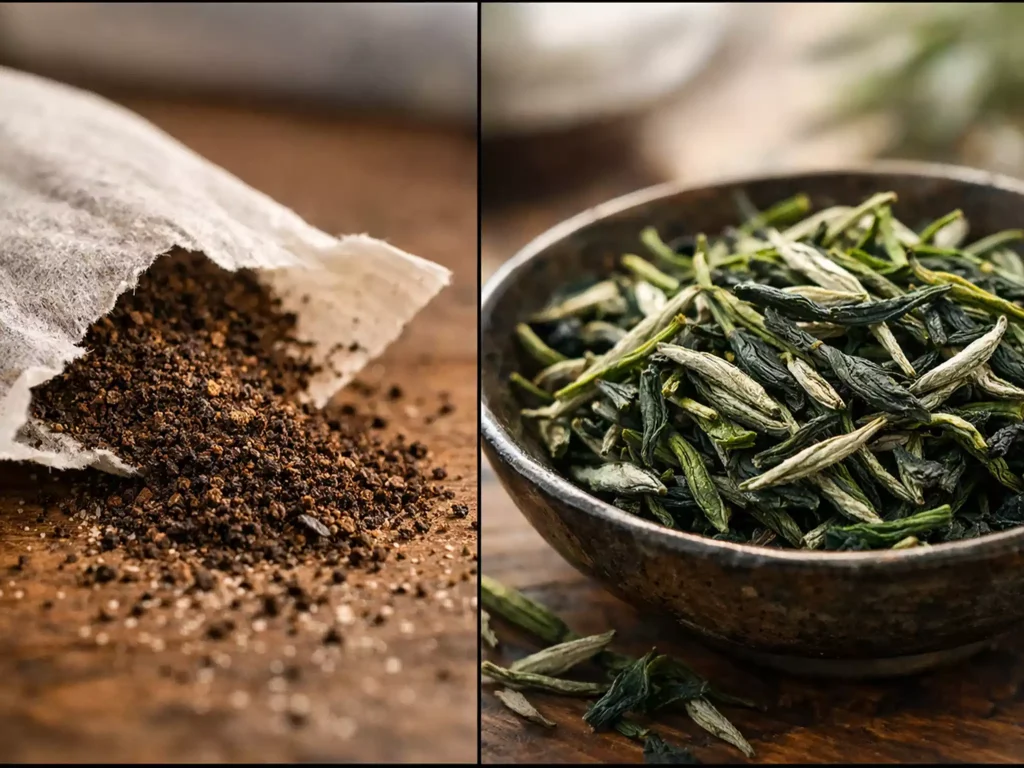
Standard tea bags contain fannings and dust — the lowest-grade fragments of the leaf left after whole-leaf sorting. In hot brewing, their maximum surface area enables fast, aggressive extraction: the design purpose. In cold brewing, the opposite dynamic plays out.
- Fannings over-extract rapidly even at low temperature, becoming sharp and hollow-tasting before the steep is complete
- Particle residue: Fine dust passes through most tea bag paper during a 12-hour cold steep, creating cloudiness — exactly opposite the crystalline clarity that makes cold brew visually compelling
- Aromatic deficit: Fannings-grade tea has already lost most of its volatile aromatic compounds during processing. Cold brew excels at preserving those compounds — but there are none left to preserve
The honest verdict: a cold-brewed tea bag produces a weak, slightly muddy version of the bag tea you already know. The technique doesn't rescue the ingredient. A single 50g bag of decent loose leaf Oolong (~$15–20) will produce 25–30 servings of genuinely excellent cold brew — a better cost-per-cup than most specialty coffee formats.
Brew double-strength concentrate at 2g per 100ml, standard steep time, still filtered water. Strain, chill. Dilute 1:1 with high-quality sparkling water at serving time. The carbonation opens the aromatic profile — floral notes become more vivid, mineral finish more distinct. Best teas: Gyokuro concentrate, High Mountain Oolong, Darjeeling First Flush, Dian Hong.
Directly cold brewing in sparkling water for the full 8–12 hour steep: CO₂ creates a slightly acidic pH (~4.5–5) that accelerates tannin extraction even at cold temperatures — partially defeating the bitterness reduction. Carbonation also dissipates entirely over 12 hours, leaving flat mineral water with a sharp tea.
Rule: still water for the steep, sparkling at dilution for serving. Full chemistry benefit of cold extraction plus the carbonation benefit at the moment it actually matters.
Herbal teas (hibiscus, roselle blends): Up to 72 hours. The acidic pH acts as a natural preservative — a genuine shelf-life advantage over any tea-based cold brew.
White tea, black tea, Oolong: 48 hours at peak flavour. Still safe to drink at 72 hours, but top aromatic notes flatten noticeably after the 48-hour mark.
Green tea: 24–36 hours maximum. Green tea oxidizes faster than other categories once the leaves are removed. The fresh, clean, vegetal-sweet character starts to dull around 30 hours even in sealed refrigerator storage.
Matcha cold brew (possible but uncommon): 12–18 hours only — the powder suspension oxidizes rapidly. Matcha cold brew is more experiment than daily protocol.
Storage best practices: Sealed vessel, back of the refrigerator (most stable temperature — not the door), labelled with strain date and time. Signs of decline: new cloudiness (not the natural gentle opalescence of white tea — true murky opacity), flat/papery aroma, off-flavours including sourness or staleness. When in doubt, discard.
Iced tea (conventional): Hot-brewed at 80–95°C, then cooled. The hot extraction stage extracts the full tannin load, full caffeine, and full bitterness profile — identical to a hot cup. Cooling preserves all those extracted compounds. The resulting cold liquid requires sugar and acid to be palatable.
Cold brew: No heat at any stage. Water extracts at 3–5°C for 8–14 hours. Thermal selectivity applies throughout — tannins are never freed from the leaf matrix in the first place. The resulting liquid has a fundamentally different chemical composition, not just a different temperature.
The practical consequence: cold brew can be drunk plain, without sugar, without acid — because the compounds that require masking were never extracted. Vessel material matters less for cold brew than for hot brewing — the low extraction temperature minimises metallic or mineral transfer from equipment, so glass, stainless, and ceramic all perform similarly.
L-Theanine (C7H14N2O3): As a highly water-soluble amino acid, L-Theanine extracts readily at any temperature including 4°C. Cold brew recovers approximately 85–90% of the L-Theanine that hot brewing would extract. The practical result: cold brew's natural sweetness is L-Theanine dominant — unmasked by bitterness — making it one of the most direct delivery formats for this compound.
EGCG (C22H18O11): Cold extraction recovers approximately 65–75% of available EGCG vs hot brewing. However, EGCG from cold brew has not experienced thermal degradation that reduces bioavailability in hot extracts. Some researchers suggest cold-extracted EGCG may have marginally better intestinal stability — the evidence base is developing as of 2026.
Caffeine: Approximately 35–50% of hot-brew caffeine at equivalent ratios. This is a feature, not a limitation. Cold brew's lower caffeine ceiling, combined with near-full L-Theanine delivery, produces a favourable L-Theanine:caffeine ratio — higher than hot-brewed equivalents. For afternoon and evening performance tea use, cold brew is the optimal format. See our office tea brewing guide for all-day cognitive protocol integration.
Gear — What You Actually Need (And What You Don't)
The 2026 Craft Cold Brew aesthetic is not about specialised equipment. It is about clarity — literal and conceptual. Clear glass, a fine strainer, a scale.
Further Reading
- Loose Leaf Tea vs. Tea Bags — understand the ingredient gap before you cold brew; why fannings ruin the technique
- Summer, Ice, and Dian Hong: A Collision of Cool and Aroma — extended cold brew recipes using Yunnan Assamica
- Gaiwan vs. Yixing Teapot vs. Metal Tea Ball — the vessel comparison that also informs your cold brew equipment choice
- How to Brew Tea with a Metal Infuser Ball — applicable to infuser-based cold brew vessels; scale usage before loading
- Office Tea Brewing Guide: 2g Cakes in a Mug — when you want the simpler hot alternative at your desk
- Office Tea Brewing Guide — complete desk protocol from gaiwan to travel bottle, including cold brew integration
References: Tea Research Association Japan — Cold Extraction Chemistry Study (2025) · Journal of Food Chemistry: Tannin and Caffeine Thermal Dependency Analysis (2024) · Specialty Tea Institute Cold Brew Standards Working Group (2025) · Zero-Sugar Beverage Consumer Trends Report, Mintel (2026).