Breaking the "Feminine" Stereotype:
A Man's Guide to Robust
Black & Pu'er Teas
Four thousand years of warriors, monks, and mountain herdsmen can't be wrong. It's time to meet tea on its own terms.
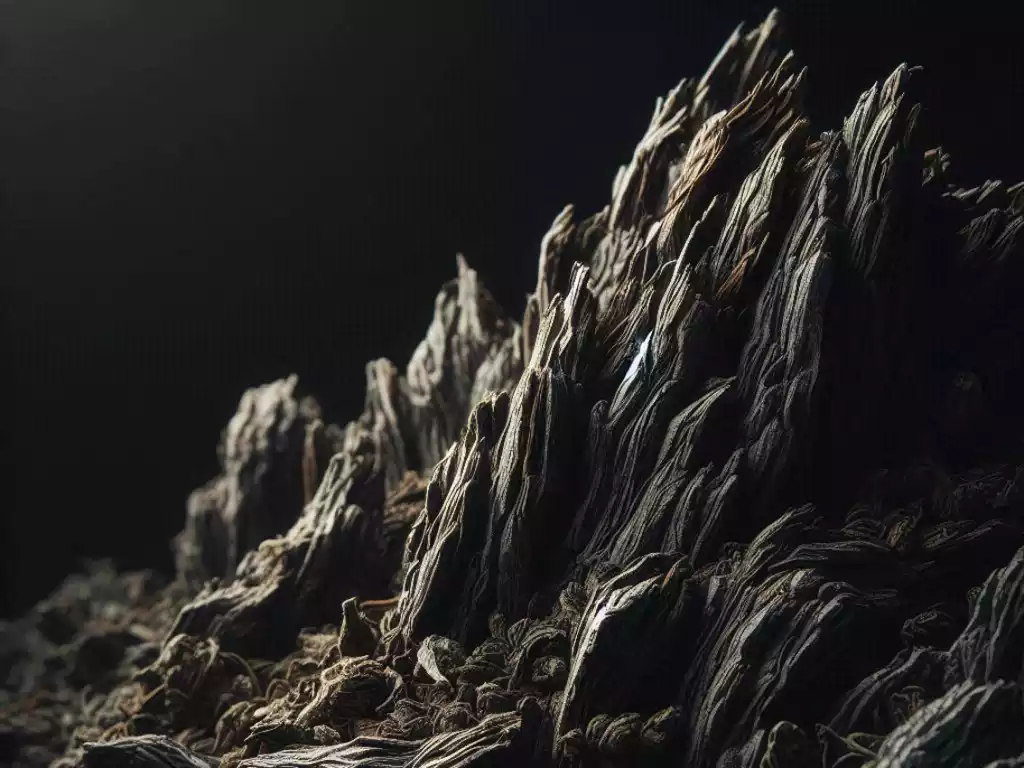
The boldest, most complex teas for coffee drinkers seeking an upgrade are Shu Pu'er (earthy, leather, aged — Body: 9/10) and Lapsang Souchong (smoky, peat, pine — the whisky of teas). Both deliver robust body and caffeine comparable to espresso, plus L-Theanine for sustained, jitter-free focus that coffee cannot replicate. Best entry point for men switching from coffee: aged Shu Pu'er or Assam whole-leaf black tea.
Tea Has a Masculinity Problem. Let's Fix It.
In American culture, tea got boxed into a narrow corner: bone china, pinky-extended, cucumber sandwiches, garden parties. Something delicate. Something passive.
That framing missed about four thousand years of reality.
The Tibetan herdsman who drank brick pu'er blended with yak butter to sustain multi-day mountain crossings wasn't sipping from a floral teacup. The Japanese samurai class adopted tea ceremony not as a leisure activity but as a discipline of focus and mental control. The Scottish Highlands that inspired the world's most celebrated peated whiskies share terroir DNA with the smoked black teas of Fujian's Wuyi mountains.
Real tea — not the bleached dust in a paper bag, not the sweetened iced slush in a 32oz fast food cup — has the structure, the depth, and the sensory complexity of a 15-year aged bourbon. It just never got the marketing budget.
In 2026, modern masculinity is being redefined around performance, longevity, and deliberate consumption. Men who've traded their third espresso for a carefully brewed Shu Pu'er aren't softening their edge. They're sharpening it.
This guide is for the coffee drinker ready to step up. The whisky drinker curious what tea can actually taste like. The biohacker who wants the focus without the crash.
The Robust Spectrum: Your Flavor Map
Not all tea is delicate. Here's the end of the spectrum that nobody puts in the lifestyle magazine.
Lapsang Souchong
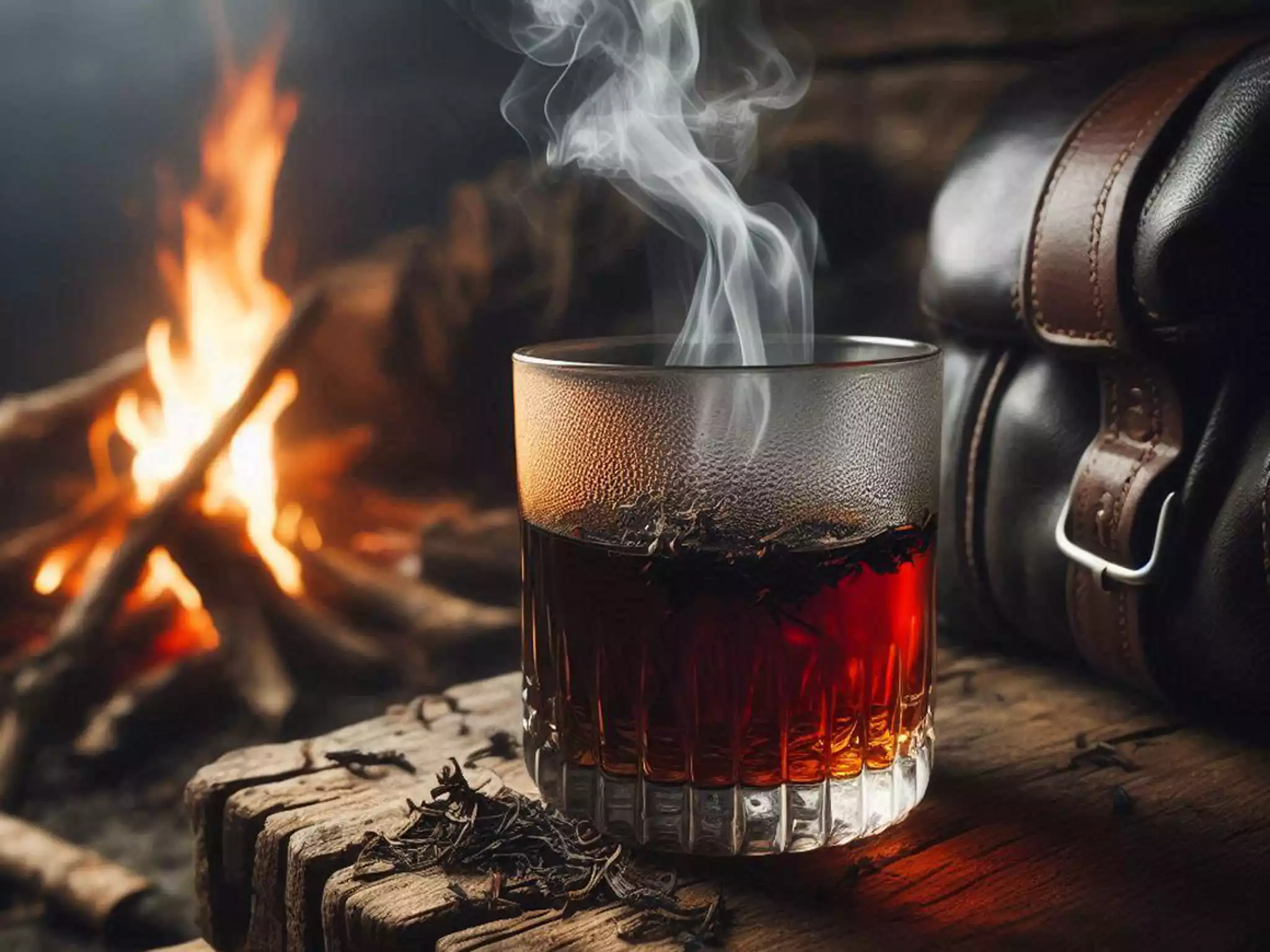
Imagine the smoke of a campfire absorbed directly into the leaf. That's Lapsang Souchong (Zhengshan Xiaozhong) from the Wuyi Mountains of Fujian — dried and smoked over pine wood fires until the leaf carries a deep, resinous, peat-adjacent character that has no parallel in the tea world.
If Islay Scotch speaks to you — Lagavulin, Ardbeg, Laphroaig — Lapsang Souchong is your direct translation into tea. The smokiness is not subtle and it is not accidental. It is the entire point.
- PrimaryPine smoke, campfire, charcoal
- SecondaryDark dried fruit (plum, raisin), roasted wood
- FinishLong, warming, slightly sweet — the "peat" analogy holds because the finish genuinely lingers
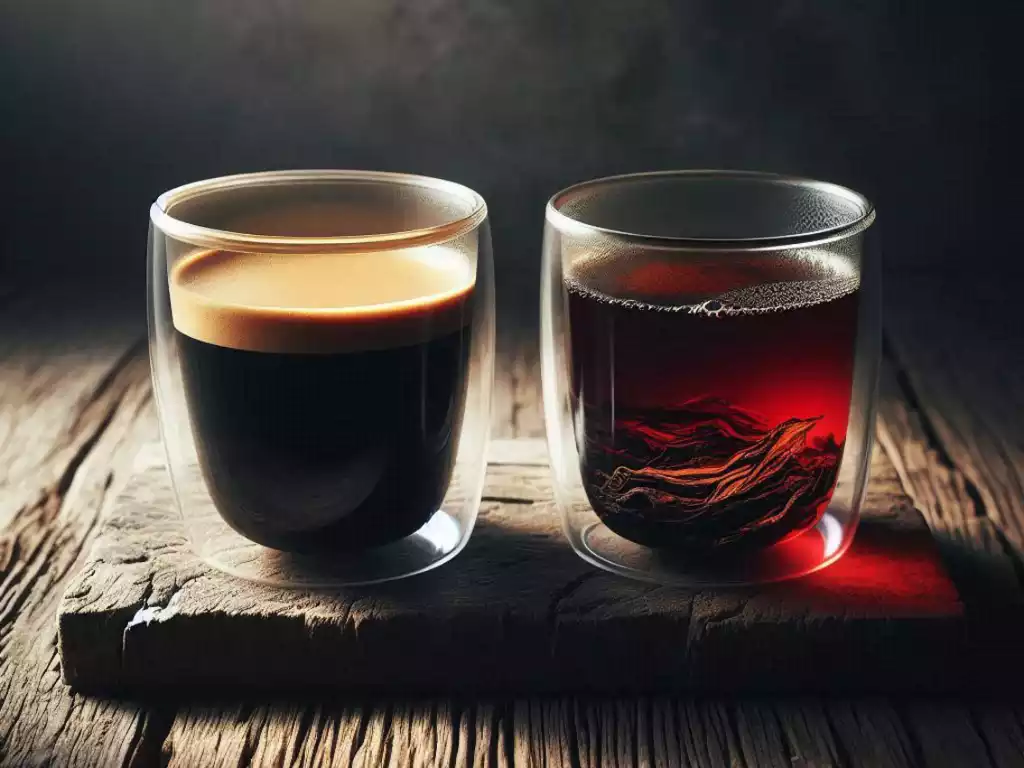
Left: Espresso. Right: Shu Pu'er. The visual rebuttal to 'weak' tea.
Shu Pu'er (Ripe Pu-erh)
Dark as black coffee. Complex as a 20-year barrel-aged spirit. And — if you buy the right one — with a flavor depth that coffee cannot achieve because it doesn't have the same aging chemistry.
Shu Pu'er undergoes an accelerated microbial fermentation process before aging. Brew it alongside a cup of black drip coffee: the Pu'er is darker — deep reddish-mahogany, not medium brown. That's your first rebuttal to every "tea is too light" objection.
- PrimaryDark earth, forest floor, composted oak
- SecondaryLeather, dried mushroom, dark chocolate, dates
- FinishSmooth, rounded, long — tannin integrated, not sharp
Dianhong & Assam
These are not collector teas. They are workhorses — high-tannin, high-caffeine, malt-forward black teas built for people who need to function at a high level every day.
- DianhongDark malt, cocoa, warm spice, honey undertone. Smoother tannin — the "gentleman's bruiser." Body 8/10.
- AssamBrisk, assertive malt, dark bread, muscular tannin. The engine behind British breakfast blends. Body 9/10. The one style where a splash of whole milk is structurally justified — fat binds tannin, rounds the body into something extraordinary.
The Bold Tea Power Matrix — 2026 Reference
| Tea Variety | Flavor Profile | Body | Caffeine | Best For |
|---|---|---|---|---|
| Shu Pu'er (5–10yr) | Dark earth, leather, cocoa, forest floor | ~60–80mg | Deep focus, recovery | |
| Assam Whole Leaf | Bold malt, dark bread, muscular tannin | ~70–90mg | Morning kick, pre-meeting | |
| Lapsang Souchong | Pine smoke, peat, dark dried fruit | ~50–60mg | Slow mornings, whisky alt | |
| Dianhong (Yunnan Gold) | Cocoa malt, warm spice, honey | ~60–75mg | Daily driver, workout | |
| Wuyi Rock Oolong (Yancha) | Mineral, roasted nut, dark stone fruit | ~40–60mg | Strategy sessions, long drives | |
| Sheng Pu'er (10yr+) | Smoke, dried apricot, forest, evolving | ~50–70mg | Connoisseur sessions | |
| Keemun (Qimen Black) | Wine-like, rose, smoke, dark chocolate | ~50–60mg | Evening transition | |
| Irish Breakfast Blend | Malt-forward, brisk, robust | ~75–90mg | Blunt-force morning fuel | |
| Yunnan Wild Arbor Black | Eucalyptus, dark berry, camphor | ~65–80mg | Pre-workout, focus on demand |
Caffeine estimates per 300ml at standard brew parameters. Actual levels vary with leaf grade, temperature, and steep time.

Tea as a Productivity Weapon: The Neuroscience
The L-Theanine + Caffeine Stack
Here's the performance edge that no energy drink marketing team will tell you about, because it can't be trademarked. The L-Theanine and caffeine combination — naturally occurring in every cup of real tea — produces a neurochemical state with no direct equivalent in coffee, energy drinks, or pre-workout stimulants.
Where This Matters in Practice
Shu Pu'er specifically contains a higher proportion of theabrownins — fermentation-derived compounds with demonstrated anti-inflammatory and lipid-regulating effects in clinical research. Quality Pu'er ages into medicinal complexity. Your coffee does not.
The Gear: Simple, Functional, No Nonsense
You don't need a tea ceremony. You don't need bamboo whisks and silk robes. You need equipment that works and gets out of the way.
What to Skip
- Fancy tea sets with matching saucers — not the point here
- Paper filters — unnecessary for whole-leaf; adds a papery taste note
- Fine mesh tea balls — insufficient leaf expansion, kills body
- Cold brew bags — valid method, but cold brew reduces tannin and caffeine extraction; the opposite of what this guide is about
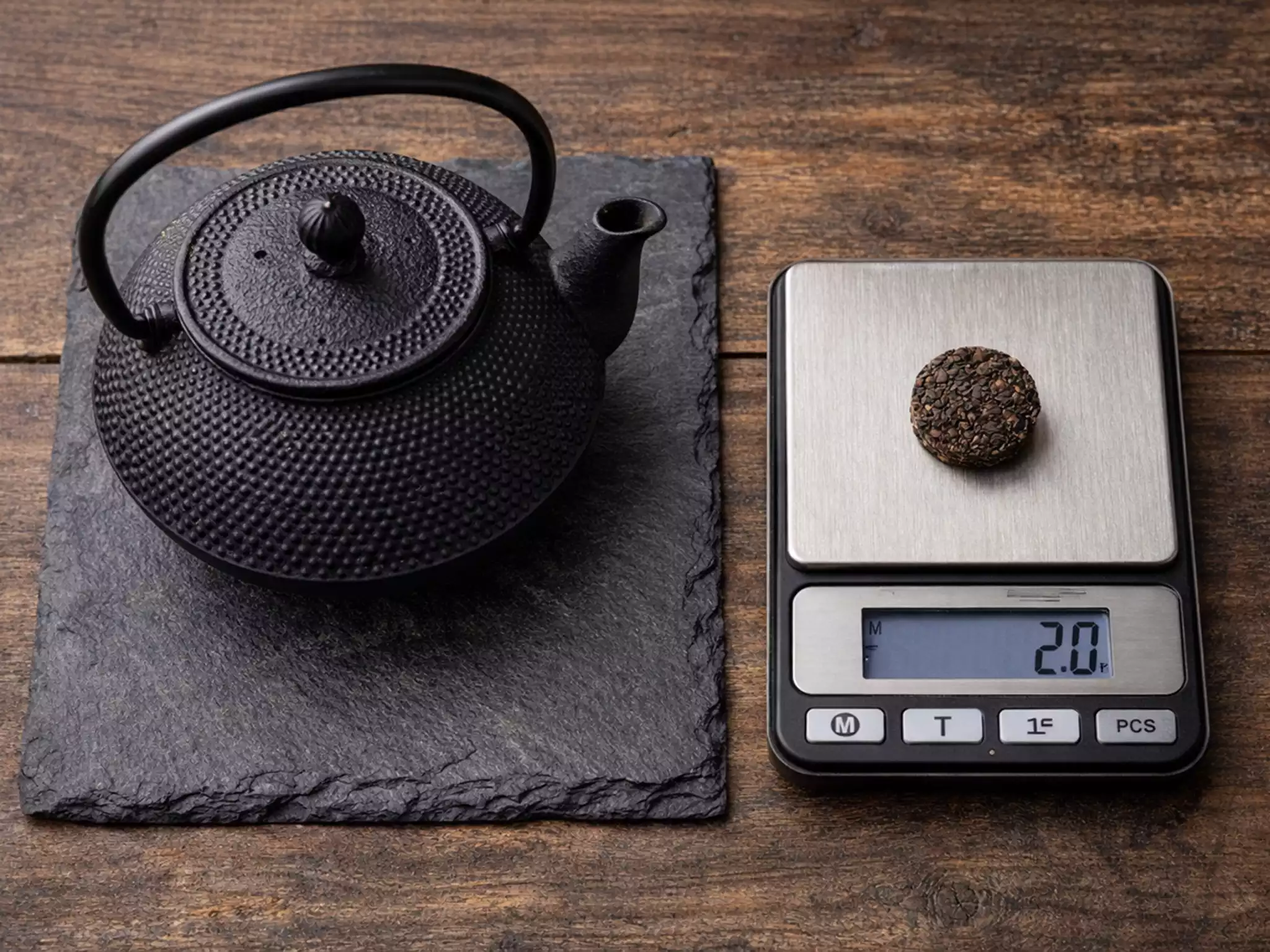
BUILT FOR PERFORMANCE. BUILT FOR HEAT.
The 3-Step Bold Brew Protocol
Goal: Maximum body, controlled bitterness, full flavor extraction.
- 01Heat the Engine: Pre-heat Your Vessel
Rinse your cast iron pot or ceramic mug with boiling water for 30 seconds, then discard. This is not ceremony — it's physics. A room-temperature vessel drops your water temperature by 8–12°C the moment contact is made. That drop matters for full tannin and flavor compound extraction from robust teas. Pour, swirl, dump, proceed.
Particularly important for Pu'er and Assam, which need sustained heat to open fully.
- 02Overdose (The Good Way): Dose 5–7g of Leaves
This is the parameter most people underdo. Standard Western guidance calls for 2–3g per cup — a number calibrated for light teas and risk-averse palates. For robust black teas and Pu'er, 5g minimum per 300ml is where the flavor actually lives. Use a digital scale for the first few sessions until you develop an eye for volume.
For Pu'er from a compressed cake: break off a 6–8g chunk and give it a 5-second rinse steep before your first real brew. This wakes the leaf and clears any warehouse dust from the aging process.
- 03Steep with Full-Boiling Water & Let It Work
100°C for Pu'er and Lapsang; 95°C for Assam and Dianhong. Steep 3–4 minutes for a Western single steep, or 30–45 seconds for gongfu multiple steeps. The second gongfu steep is typically peak complexity. The third through sixth evolve in a direction coffee can never go — each cup a distinct chapter, not a diluted repeat.
Drink it black for the first session. Understand what you're actually tasting before you modify it.
Expert FAQ
Entry-level Shu Pu'er (ripe, ~5 years aged) from a reputable Yunnan importer runs $15–25 per 100g — accessible by any standard. The flavor is immediately distinctive: earthy, smooth, dark. No technical knowledge required.
Connoisseurship enters with aged single-estate cakes and raw Sheng vintages from the 1990s — the equivalent of moving from standard bourbon to small-batch single-cask releases. That rabbit hole exists if you want it.
The beginner move: Buy a 7g "tuo cha" (mini compressed cake, $3–5 each) from two different producers. Brew both Western style in a large mug. Find out if the flavor speaks to you before committing to a full 357g cake.
- Shu Pu'er: Always black. Milk mutes the earthy complexity. Like putting orange juice in a 15-year Scotch.
- Lapsang Souchong: Always black. Milk competes with and suppresses the smoke — you'd lose the entire reason you're drinking it.
- Dianhong / Yunnan Gold: Black, or with a minimal amount of whole milk. The golden tip sweetness holds up straight.
- Assam: The one style where whole milk is genuinely structural — fat binds the high tannins and rounds the body. Still excellent black; milk is an upgrade, not a correction.
- Keemun: Black. Its wine-like, floral-smoke complexity disappears under dairy.
If you need milk to make it palatable, you're either oversteeping (reduce by 30 seconds), using too-hot water, or brewing lower-quality leaf that needs dairy to cover its roughness. Quality loose leaf at correct parameters tastes complete on its own.
Caffeine: Fully oxidized black teas and fermented Pu'ers generally contain 50–90mg/cup vs. 25–50mg/cup for unoxidized green teas. Brewing parameters affect the final number significantly.
Tannins: The muscular "grip" you feel — particularly in Assam — is primarily tannin: the same family of compounds that creates the dry, structured finish in a young red wine or barrel-aged whisky. Tannins bind with saliva proteins, creating a tactile sensation of weight and dryness.
Body and density: Fully oxidized black teas and aged Pu'ers have a liquid density and color depth that registers cognitively as strength before you even taste it. This is partly perceptual — the dark color signals intensity — and partly real: oxidation and fermentation chemistry produce a broader range of flavor compounds that register as complexity and weight on the palate.
The bottom line: These teas feel stronger because, in the relevant sensory dimensions, they are. That's the entire point of this guide.
Further Reading
- The "Alert Calm" Advantage: Why Silicon Valley CEOs Are Choosing Tea Over Coffee
- Pricey Loose Leaf vs. Dollar Store Bags: The Cost Math That Actually Makes Sense
- Why Your $50 Tea Tastes Bad: It's Not the Leaf, It's the Storage
- The Biohacker's Tea Stack: Morning, Afternoon & Evening Protocols for Peak Performance
- Pu'er Aging Guide: How to Build a Home Collection That Appreciates Over Time
References: Tea Research Association Japan — Caffeine & Tannin Database (2025) · Journal of Nutritional Biochemistry — L-Theanine Cognitive Effects Meta-analysis (2025) · Yunnan Tea Industry Association Pu'er Classification Standards (2025) · Specialty Tea Institute Flavor Profiling Framework (2025).