
Office Tea Brewing Guide: How to Brew Tea Directly in a Mug
No infuser. No ceremony. No compromise on quality.
By Adrian · Steeped Roots · Updated 2026
Not every workday allows space for a gaiwan, a teapot, or a full gongfu setup. In offices, meeting rooms, coworking spaces, and shared kitchens, what most tea drinkers actually have is a single mug and a kettle.
And that's enough. This guide is the definitive pillar resource for office tea brewing — written for professionals who want real tea at their desk without turning tea into a performance. The method we've refined over years of field testing is called "Office Grandpa Style": leave the leaves in the mug, manage the concentration, refill when ready.
If you're already familiar with how sustained focus on small rituals can buffer the cognitive drain of modern office work, you may have encountered the idea that consistent low-effort rituals — rather than elaborate ones — are what actually stick. That's the philosophy behind this guide. If you're curious how others have built that kind of rhythm, our piece on managing career energy with a 2g tea rhythm is a good companion read.
TL;DR — The Office Grandpa Style System
- 1 Mug
No infuser needed - 2g Tea
One mini cake = one session - 0 Filters
Leaves sink, you sip - 3× Refills
Optimal flavor window
Tea should serve your work, not distract from it. This system is designed to disappear into your day.
Who This Method Is For
- ☕ Professionals who want real tea at their desk, not tea bags
- 🏢 Office workers in shared or formal environments where a tea tray would draw looks
- 📊 Anyone who has ever abandoned a cup because a meeting ran long
- 🕰️ People who want consistent tea throughout the day, not a single ceremony
- 🌿 Tea lovers ready to move beyond sachets but not yet ready for full gongfu equipment
For all of these situations, pairing a 2g portion of quality Yunnan tea with a standard office mug creates a balanced system: controlled strength, clean flavor, and zero extra equipment to explain to a confused colleague.
Why Yunnan Teas Behave Well in a Mug
Not all teas tolerate open-mug brewing. Sencha, white teas, and most Taiwanese high-mountain oolongs are too delicate — they over-extract within minutes and turn bitter or grassy if the leaves stay in contact with hot water without precision timing.
Yunnan teas are built differently. The large-leaf varietals used for Dian Hong, Shai Hong, Sheng Pu-erh, and Shou Pu-erh have a physical structure and compositional depth that makes them naturally forgiving. Their leaves sink quickly, extract slowly, and remain stable even when steeping time is inconsistent — which is, let's be honest, most of the time in an office.
Water quality matters here too. Hard water or acidic tap water will dull the brightness of even a well-sourced Dian Hong. For a full breakdown of how water chemistry affects Yunnan tea extraction, see our guide on mastering water temperature for tea (2026) and the companion piece on water as the essential element in every cup.
Aroma, Flavor & the Third Refill: Tea by Tea
Understanding how each tea performs across a full office session — including at the third refill — helps you choose the right tea for the right kind of workday.
Dian Hong (Yunnan Black Tea) Morning Desk Brew
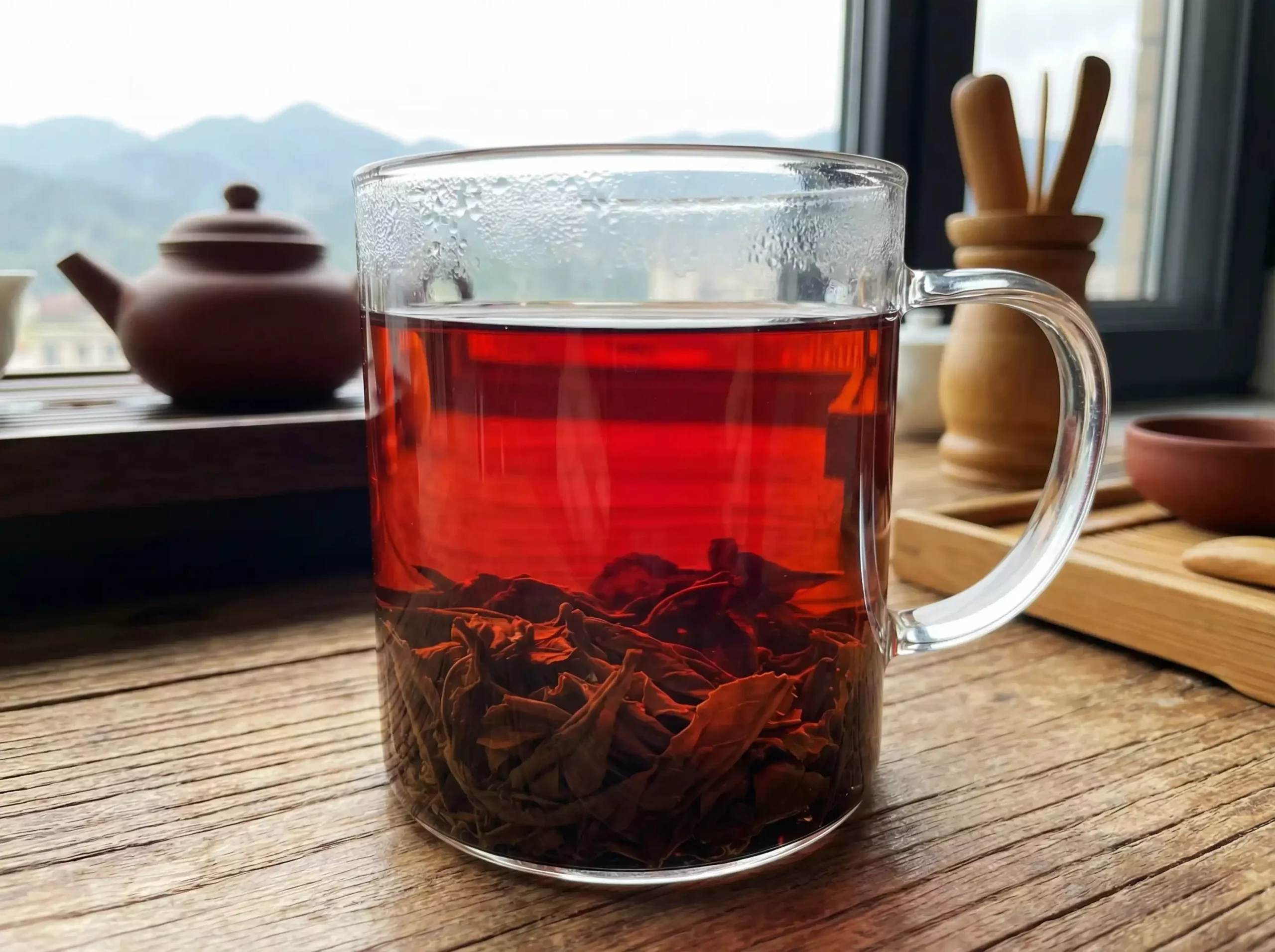
In a mug, Dian Hong opens quickly: cocoa, warm grain, and honeyed sweetness within the first two minutes. The liquor is smooth and rounded, low in astringency. By the third refill, the bold malt notes have softened into a gentle caramel warmth — still pleasant, but definitely quieter. A good choice for morning focus sessions when you want something grounding without complexity.
Shai Hong (Sun-Dried Black Tea) Long Work Sessions
Shai Hong is the endurance specialist. Early refills carry dried fruit and soft florals; by the second refill, a calm sweetness dominates. At the third refill, Shai Hong's sun-dried character — slightly wild, slightly woody — holds on longer than other black teas. It's the best choice for a full six-hour workday where you want the same tea to carry through morning and afternoon.
Sheng Pu-erh (Raw Pu-erh) Sharp Focus
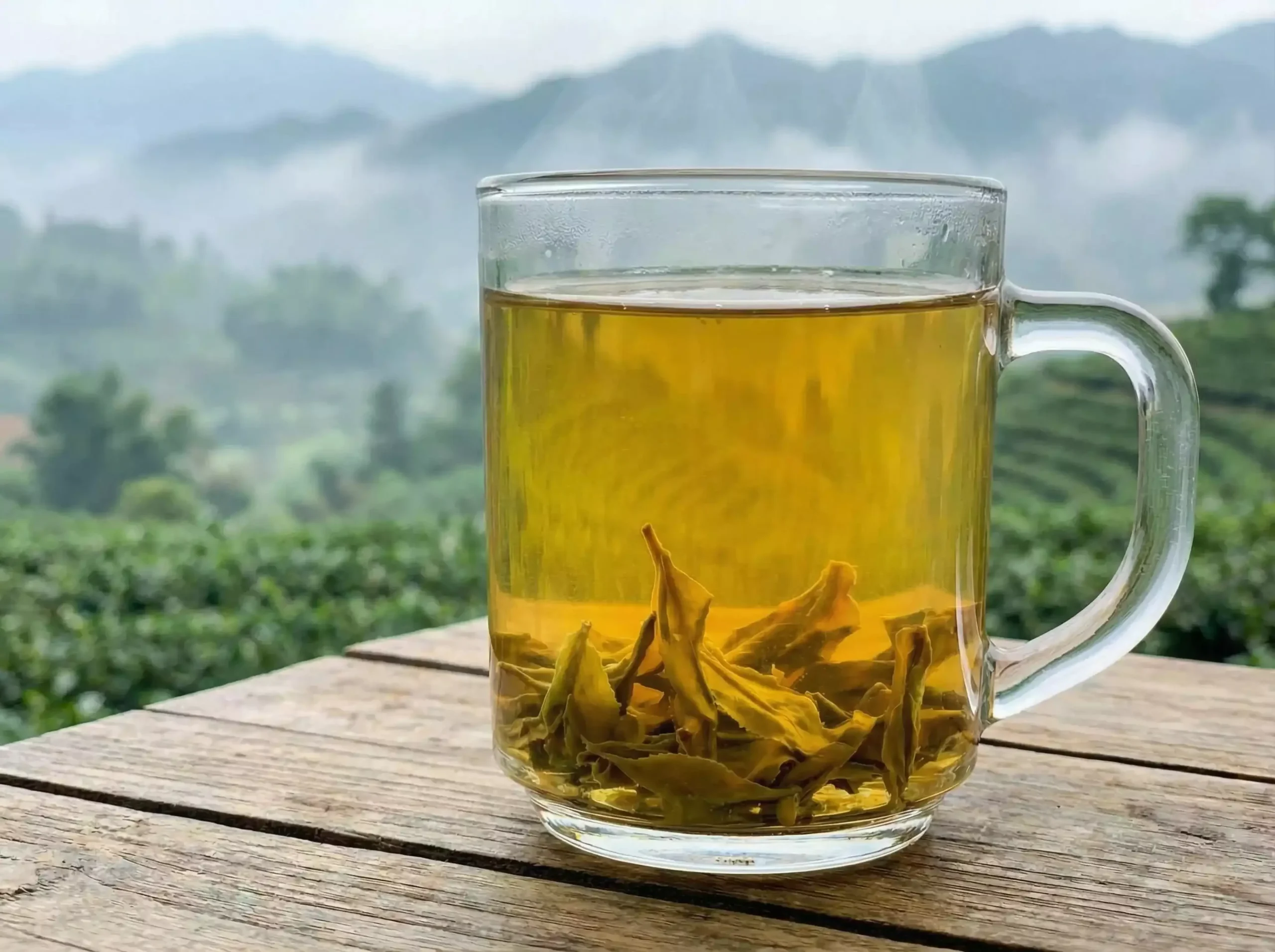
Young sheng delivers lift and clarity in the first two refills — there's a brightness to it that pairs well with analytical work. By the third refill, bitterness fades and a lasting sweetness (the hui gan) settles in. Beyond three refills, aroma softens significantly and it's worth starting a new session. For a deeper explanation of hui gan and other tea sensations, see our guide on hui gan, throat yun, and the sensory language of pu-erh.
Shou Pu-erh (Ripe Pu-erh) Most Forgiving
Shou Pu-erh is the most tolerant mug tea by a significant margin. Earthy, grounding, warm — it tolerates long steeps, distracted sipping, and cold-to-warm temperature cycles better than any other style. At the third refill, it's still producing a full, dark cup rather than fading out. The definitive choice when you know the afternoon will be chaotic.
The Three-Refill Cycle: Setting Realistic Expectations
In real office conditions, mug-brewed Yunnan tea delivers its best aroma and structure within three refills. This is a practical limit to plan around, not a failure of the method.
Defined structure
Softened edges
Reduced aroma
Leaf exhausted
Understanding this cycle helps calibrate expectations — and helps you choose which tea to reach for. If you need a tea that holds up through the third refill, Shai Hong and Shou Pu-erh are your best options. If you're brewing specifically for the first cup of the morning, even young Sheng Pu-erh will deliver.
If the Tea Gets Too Strong: The Half-Pour Method
In any real office, tea sits longer than intended. A call runs over. A colleague drops by. You look down and the mug has been steeping for ninety minutes.
The Half-Pour Rescue: When your mug has over-steeped, don't discard it — dilute it deliberately.
- Pour out approximately half of the overly concentrated tea.
- Refill immediately with fresh hot water.
- The retained leaves — still in the mug — continue to contribute flavor, but the concentration resets.
The key insight is that you're using the "留根" (retained root) principle: by keeping the spent liquid in the mug during the refill, you're not starting from zero. The residual tea blends with fresh water to create a gentler, balanced concentration rather than a blank slate. It's the same logic used in continuous-brew fermentation — the culture carries forward, the excess is removed.
For more systematic approaches to rescuing difficult brews, see our full guide on how to fix over-steeped tea (5 proven rescue methods).
This method is especially effective with Pu-erh and Shai Hong. It is less effective with young Sheng Pu-erh, which becomes significantly more bitter once over-extracted — prevention (shorter steeps) is more reliable than rescue.
The 2g Standard: Why This Specific Weight Matters
The biggest friction point for brewing loose-leaf tea at work is measurement. Carry a digital scale to a coworking space and you've already made the ritual conspicuous.
We arrived at 2 grams as the optimal single-serve weight through years of office brewing tests — and it happens to align with the dosage used in most of the clinical research on pu-erh theabrownins. That's not accidental. For the full engineering story behind why 2g was chosen over 3g, 5g, or individual sachets, see why we compressed tea into 2g cakes and the industry context in our micro-compressed tea industry definition (2026 edition).
How to Use Our 2g Mini Cakes at Your Desk
- Standard Mug (8–10 oz / 250–300ml): 1 mini cake. Produces a balanced brew that won't turn bitter if a call runs ten minutes over.
- Large Office Tumbler (12–16 oz / 450ml+): 2 mini cakes. The larger water volume would dilute a single cake into something too light to be satisfying.
- Travel Flask (350–500ml, sealed): 1–2 cakes + 20-minute passive steep. The sealed environment slows extraction — effectively "Grandpa Style" in slow motion.
2g Mini Cakes vs. Standard Tea Bags: An Honest Comparison
Tea bags and mini cakes are both portable, individually portioned, and require no extra equipment. The similarities end there.
| Factor | Standard Tea Bag | 2g Mini Cake (Steeped Roots) |
|---|---|---|
| Leaf Quality | CTC-processed fannings; surface area maximized for single fast steep | Whole or large-broken leaf; compressed for controlled slow extraction |
| Refill Capacity | Typically 1 steep; bitter after 2 minutes | 3+ quality refills; flavor evolves across the session |
| Over-Steeping Risk | High — bitter within 3–4 minutes | Low — large Yunnan leaf tolerates variable contact time |
| Flavor Complexity | One-dimensional; designed for milk and sugar addition | Layered — aroma, mouthfeel, and aftertaste all distinct |
| Eco-Footprint | Nylon or paper bag + staple + overwrap packaging per cup | Single compostable corn-fiber wrap per session; leaf fully biodegradable |
| Traceability | Blend of origins; often undisclosed | Single-origin or declared blend; harvest season labeled |
| Portability | Thin, flat; fits any wallet or pocket | Coin-sized disk; fits a small tin or ziplock pouch |
| Price per cup | ~$0.05–0.20 | ~$0.40–0.80 (varies by tea) |
In 2026, with workplace sustainability reporting becoming increasingly standard, the zero-filter, compostable-wrapper format of the 2g mini cake also addresses the low-carbon and transparent-sourcing concerns that modern procurement teams — and increasingly, individual professionals — are beginning to factor into everyday purchasing decisions.
How to Brew: The Office Grandpa Style Method
Step 1 — Add the Tea. Place one 2g mini cake (or 2g of loose leaf) directly into your empty mug. No infuser. No filter. The leaf will open and sink on its own.
Step 2 — Optional Rinse for Pu-erh. For compressed pu-erh cakes, a five-second hot-water rinse followed by a quick pour into a waste bin "wakes" the compressed leaf and removes surface dust. Not mandatory — but it noticeably improves the first pour.
Step 3 — First Fill. Add hot water at the right temperature: 90–95°C / 195–203°F for Dian Hong and Shai Hong; 95–100°C / 203–212°F for Sheng Pu-erh; 100°C / 212°F for Shou Pu-erh. Wait 90–120 seconds for the leaves to sink, then begin drinking from the top of the cup. For precision temperature guidance, see our water temperature guide.
Step 4 — The Half-Pour Refill. When the mug is approximately half empty, add fresh hot water. You don't need to wait for the cup to empty — refilling at the halfway point keeps the concentration consistent and the temperature stable. This is the core of the Grandpa Style discipline.
Step 5 — Repeat Up to Three Rounds. After the third refill, the leaf has given its best. The liquor will still be drinkable, but aroma and depth fall off quickly. Start fresh rather than chasing a fourth round.
Office Brewing FAQ
Will the tea get too bitter if the leaves stay in the mug all morning?
Yunnan large-leaf teas — Dian Hong, Shai Hong, and Pu-erh — are naturally resilient to over-steeping compared to most other tea types. If the concentration does become too heavy, use the Half-Pour method: pour out half the liquor, refill with fresh water, and continue. The retained leaves soften the refill with residual complexity rather than starting from plain water.
Is this the same as "Grandpa Style" brewing?
Yes — and it's one of the oldest brewing traditions in China, not a shortcut. High-quality tea has nothing to hide without an infuser. Brewing without a filter allows the leaves to fully expand, release their aromatic oils, and express a complete flavor profile. The method only works poorly with low-quality tea or teas (like sencha) that are designed for short, controlled infusion windows.
Do I need to rinse the tea before the first infusion?
For our 2g mini cakes, a rinse is optional but recommended for compressed pu-erh. A five-second pour and discard softens the compressed leaf and opens it more evenly for the first real infusion. For loose-leaf Dian Hong or Shai Hong, the rinse is generally unnecessary — the leaves are already open and simply need hot water.
Does tea brewed this way have significant calories?
Plain, unflavored loose-leaf tea — including all Yunnan black teas and pu-erh — contains essentially zero calories per cup (typically 2–5 kcal based on trace amounts of amino acids and carbohydrates that pass into the liquor). This holds regardless of how many refills you take. Calories become a factor only when milk, sugar, honey, or other additions are used.
Can drinking pu-erh at work help with weight management?
The theabrownins in ripe pu-erh have shown promising effects on LDL cholesterol and gut microbiome composition in recent research, including a 2025 study published in Nature Metabolism. However, tea is not a weight-loss tool in isolation. What it can do is support a consistent, low-sugar hydration habit throughout the workday — replacing sugary drinks and snacks with a satisfying hot beverage is where the practical benefit lies. If that's a topic you want to explore further, our piece on how to actually incorporate Chinese tea drinking habits into modern daily life covers this honestly.
What temperature should I use at the office if I don't have a variable kettle?
A standard office kettle boils to approximately 100°C / 212°F — which is actually ideal for ripe pu-erh and fine for Sheng Pu-erh. For Dian Hong or Shai Hong, let the boiled water sit in the mug for 60–90 seconds before adding the tea; it will drop to roughly 90–93°C / 194–199°F, which is the better range. This is an imperfect but entirely workable solution for most office setups.

