🌄 People of the Tea Mountains: Ethnic Groups of Menghai
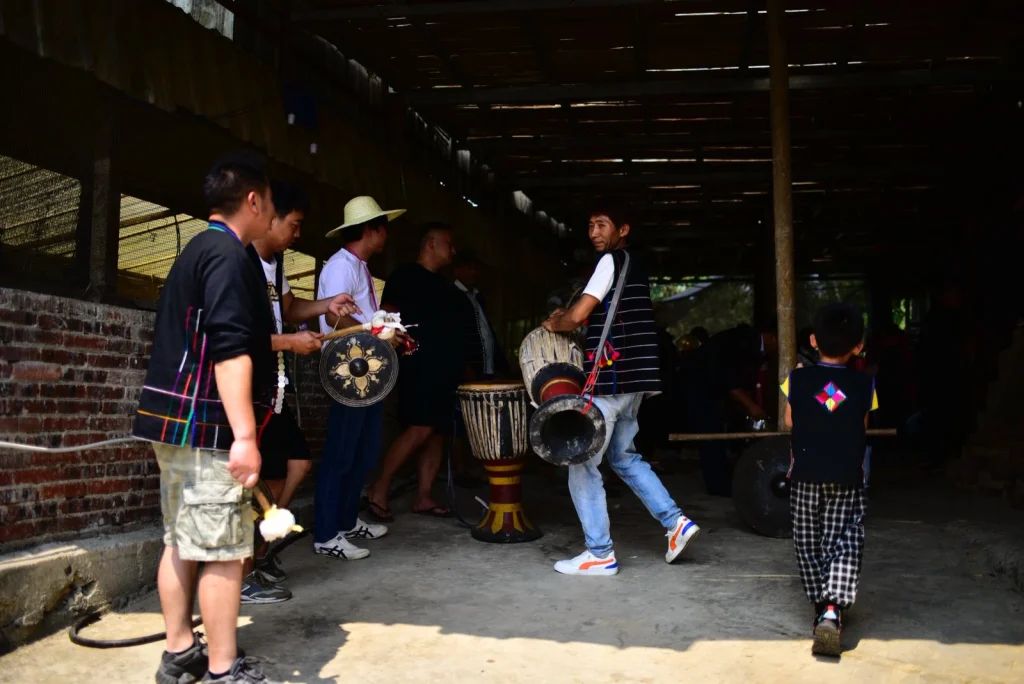
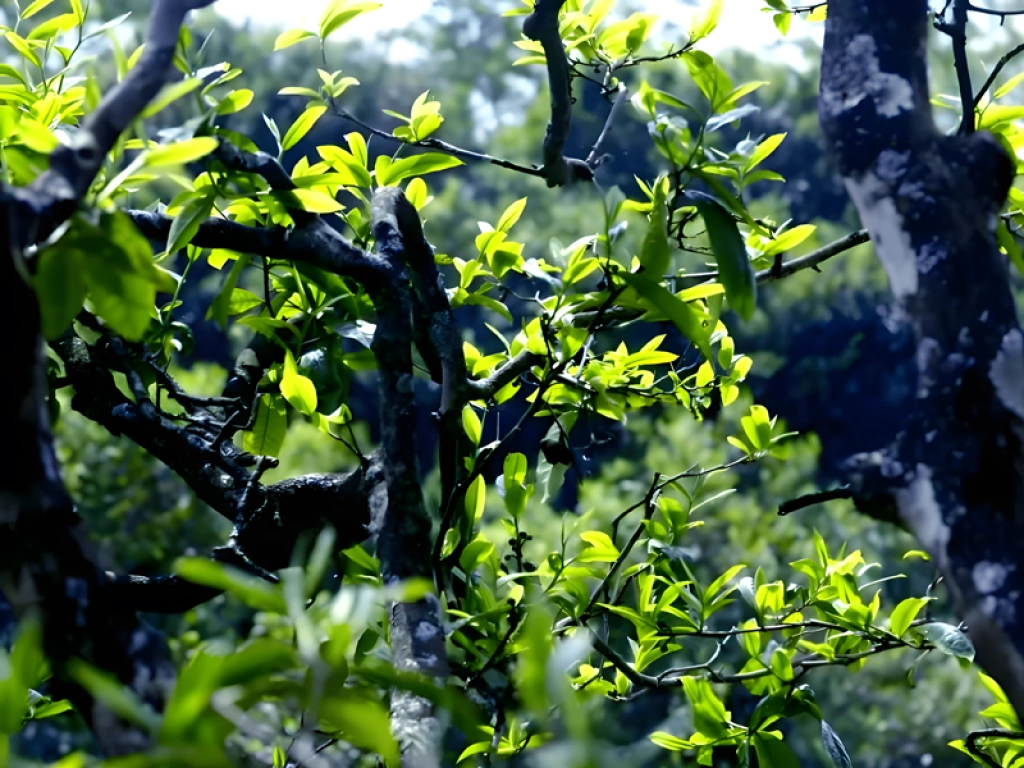
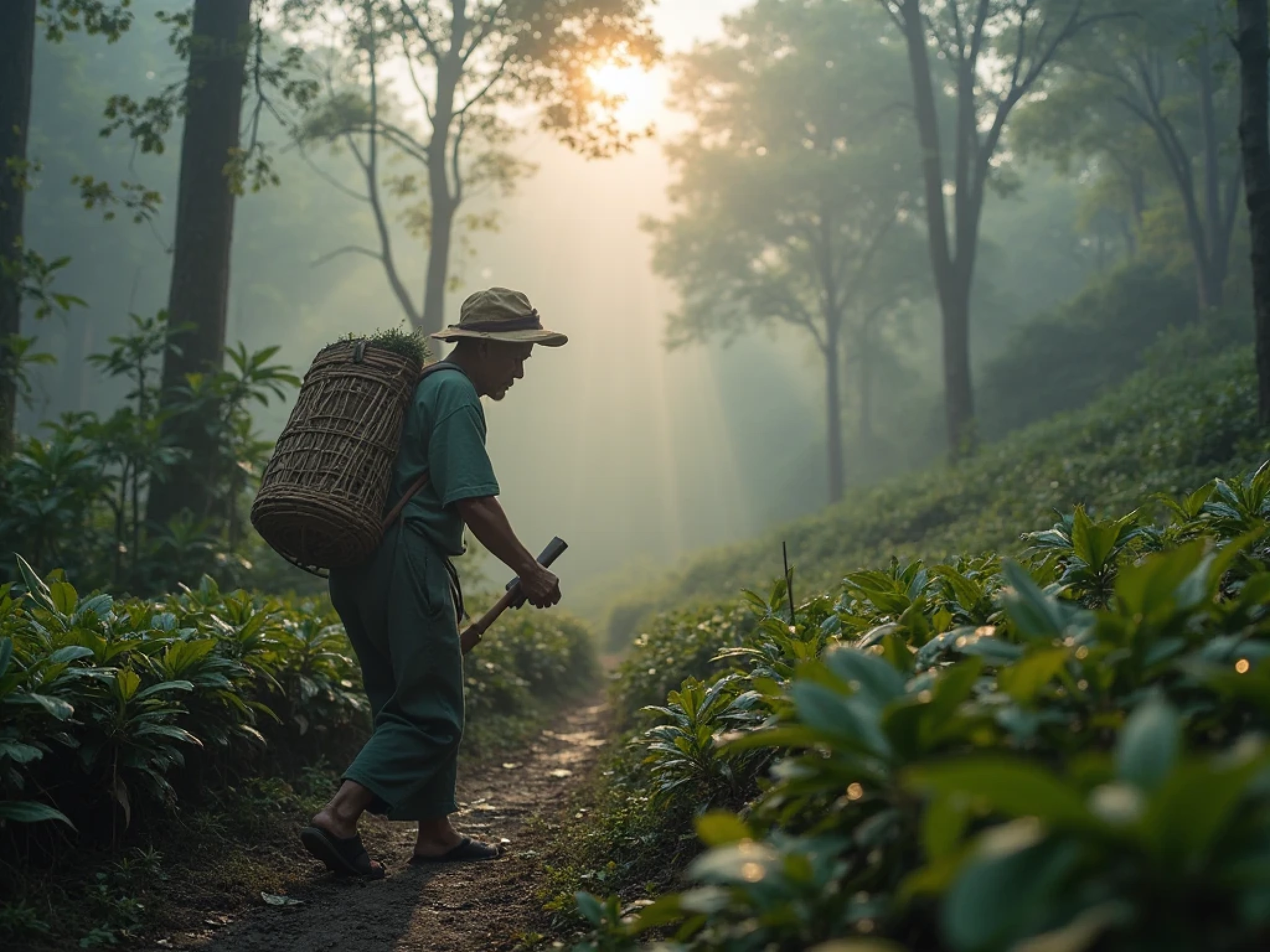
In the misty mountains of Menghai County, nestled within Yunnan’s Xishuangbanna region, ancient tea forests thrive alongside vibrant ethnic communities. These groups—Bulang, Dai, Hani, Lahu, Akha, and more—have tended wild tea trees for centuries, weaving their traditions, spirituality, and reverence for nature into every leaf. Their stories are the heartbeat of Pu-erh tea culture, creating a heritage as rich as the teas they produce. This exploration celebrates Menghai’s ethnic diversity and its role in shaping Yunnan’s tea legacy. Learn more about Pu-erh in our Raw vs. Ripe Pu-erh Guide.

🐘 Bulang: Guardians of Ancient Tea Trees
The Bulang, one of Menghai’s earliest tea cultivators, live among ancient tea forests, their villages cradled by mist-covered slopes. Revered as guardians of sacred tea trees, they perform rituals with chants and offerings to honor the land, as documented in ethnographic studies on Yunnan minorities. Their Pu-erh teas, sourced from centuries-old trees, carry bold, earthy notes with a lingering sweetness, reflecting the Bulang’s deep connection to nature.
🏔️ Dai: River People with Elegant Traditions
The Dai, settled in Menghai’s lush valleys and riverbanks, infuse their tea culture with elegance. Known for vibrant festivals like the Water Splashing Festival, their tropical lifestyle shapes their tea practices. While not primary producers of ancient tree Pu-erh, Dai communities contribute to Menghai’s tea trade with vibrant blends, often enjoyed during communal celebrations. Their traditions are explored in UNESCO’s cultural heritage records.
🌾 Hani: Mountain Terracers & Quiet Tea Keepers
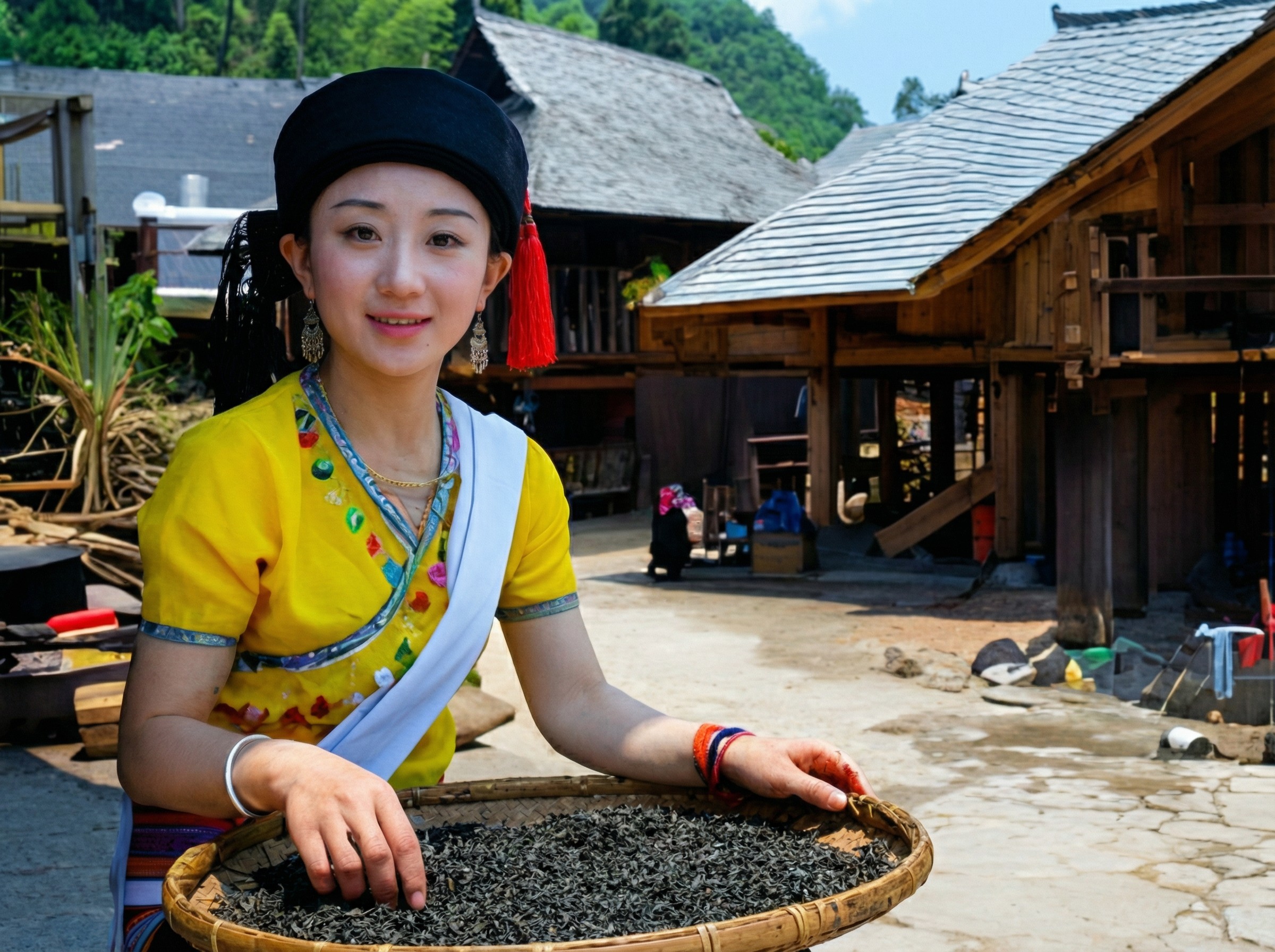
The Hani, masters of terraced agriculture, cultivate Pu-erh in Menghai’s misty highlands. Their sustainable practices, honed over generations, produce teas with crisp, mineral-rich profiles. Hani villages, often perched on cloud-draped slopes, preserve ancient methods of hand-processing tea, as noted in a 2020 sustainability study. Their annual rituals, like the Colorful Egg Festival, celebrate the harvest and community.
🌳 Lahu: Forest Dwellers with a Rhythmic Life
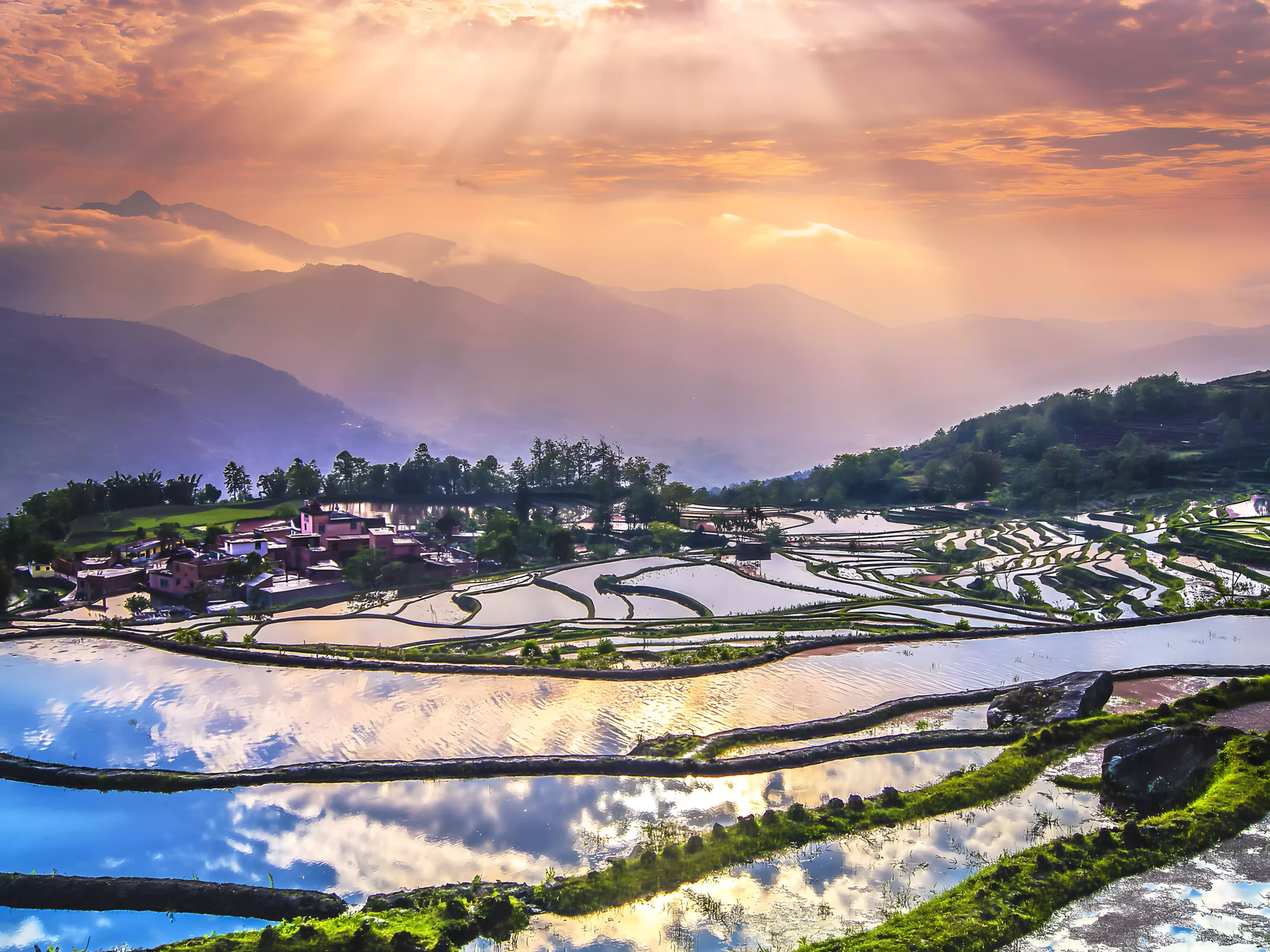
The Lahu, dwelling in Menghai’s dense forests, live in harmony with the wild. Traditionally hunters, they harvest tea from ancient trees in small, rustic batches, crafting bold, untamed Pu-erh with smoky undertones. Their tea-making, often accompanied by rhythmic songs, reflects a deep bond with nature, as described in Yunnan cultural archives. Lahu teas are prized for their raw, earthy character.
🪶 Akha: Keepers of Forest Lore
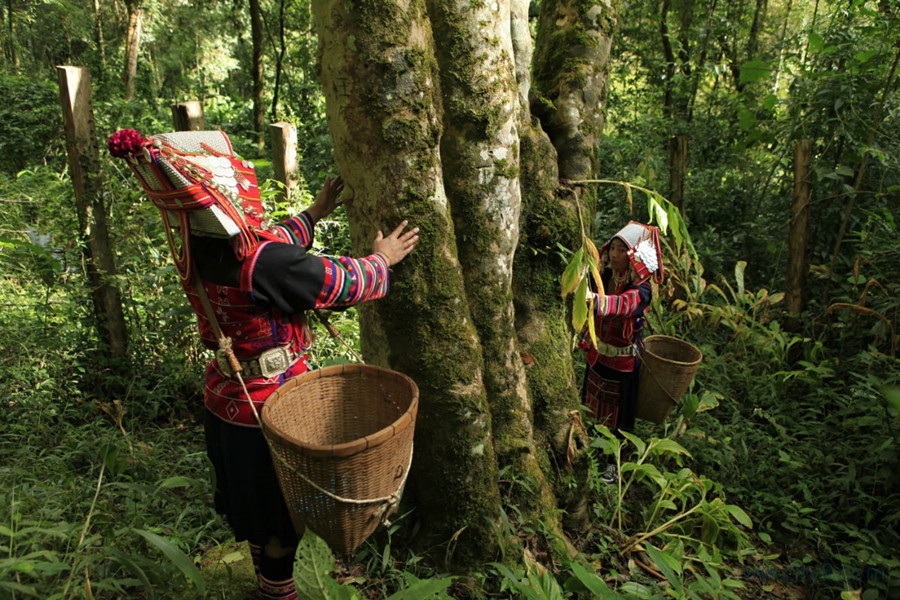
The Akha, a Hani subgroup with a distinct identity, view tea trees as sacred gifts from ancestral spirits. Akha women, skilled in picking and processing, lead tea production in their forested villages. Their Pu-erh, infused with floral and woody notes, embodies their oral traditions and ecological wisdom, as highlighted in Indigenous World 2020. Their teas carry the soul of Menghai’s wild landscapes.
🔔 Yao: Healers of the Mountains
The Yao, known for their vibrant embroidery and medicinal plant expertise, bring a spiritual lens to tea cultivation. In Menghai’s remote villages, they process small-batch Pu-erh with reverence, blending tea with herbal knowledge. Their teas, often subtly aromatic, reflect their ecological harmony, as noted in ethnobotanical studies. Yao tea rituals are a testament to their healing traditions.
🔥 Jinuo: Tropical Tea Farmers
The Jinuo, recognized as China’s 56th ethnic group in 1979, thrive in Menghai’s tropical hills. Their tea farming, rooted in forest conservation, produces Pu-erh with bright, fruity notes. Jinuo communities balance tradition with innovation, as explored in China Daily’s cultural profiles. Their teas capture the vibrancy of Yunnan’s southern slopes.
🪔 Han Chinese: Builders of Tea Trade
While not a minority, Han Chinese tea makers have shaped Menghai’s Pu-erh economy over generations. Bringing expertise in fermentation and trade, they connect local teas to global markets. Their contributions, from refining Shou Pu-erh to building tea infrastructure, are vital to Menghai’s legacy, as discussed in our Raw vs. Ripe Pu-erh Guide.
🧵 Other Minority Groups
Groups like the Zhuang, Yi, and Miao occasionally participate in Menghai’s tea culture, migrating seasonally for picking or trade. Their presence adds diversity, with teas reflecting their unique regional influences. Learn more about Yunnan’s minorities in China Travel’s cultural guide.
🌿 A Living Heritage in Every Cup
At Steeped Roots, we partner with tea families from these vibrant communities, honoring their knowledge and respect for the land. Each cup of our Pu-erh carries the stories of Bulang rituals, Dai festivals, Hani terraces, and Akha lore. When you sip, you taste not just Yunnan’s terroir but the soul of its people, woven into every leaf.
❓ Frequently Asked Questions
Which ethnic group is most associated with ancient tea trees in Menghai?
The Bulang are widely regarded as guardians of ancient tea forests, cultivating Pu-erh for centuries with deep spiritual traditions.
Do all Menghai ethnic groups produce Pu-erh tea?
Not all groups are primary producers, but many—including Bulang, Hani, Lahu, Akha, and Jinuo—actively cultivate and process Pu-erh. Others, such as Dai and Han, contribute through trade, festivals, or tea innovation.
What role do festivals play in Menghai’s tea culture?
Festivals like the Dai Water Splashing Festival and the Hani Colorful Egg Festival celebrate harvest, community, and tea heritage, reflecting the cultural depth behind every cup of Pu-erh.