Tea’s Genetic Code: The Story of Large‑Leaf vs. Small‑Leaf Varieties
Have you ever noticed the difference in leaf size when sipping a rich Dianhong or a delicate Longjing? In the worlds of red tea and raw Pu‑erh, the terms “large-leaf” and “small-leaf” varieties function as the genetic codes of tea—fundamentally shaping flavor and character. Let’s lift the mist and explore the natural story and sensory secrets behind these two tea‑tree types.

1. Definition: “Large” vs. “Small” from a Botanical Perspective
In the tea family (Camellia sinensis), “large‑leaf” and “small‑leaf” are practical categories based on leaf size—not strict botanical taxonomy. They reflect evolutionary adaptations to different environments:
Large Leaf Variety (Camellia sinensis var. assamica)
- Representative taxon: Assamica variant.
- Leaf traits: Massive leaves (15–30 cm or more long, 6–15 cm wide); thick, glossy, leathery, with large sparse serrations.
- Tree form: Tree or small tree, tall structure, open branches, long lifespan; ancient tea trees commonly observed.
Small Leaf Variety (Camellia sinensis var. sinensis)
- Representative taxon: Sinensis variant.
- Leaf traits: Smaller leaves (5–15 cm long, 2–6 cm wide); softer, thinner, flatter surface with fine serrations.
- Tree form: Shrub or small tree, dense branching, upright or semi‑open, highly cold‑tolerant, prune‑friendly.
Notes: Leaf size lies along a continuum—transitional or mid‑leaf types exist. Even within Assamica or Sinensis variants, regional cultivars vary (e.g. Mengku large‑leaf vs. Longjing 43 small‑leaf).
By national standard, Pu‑erh tea must be made from Yunnan large‑leaf sun‑dried leaves. Small‑leaf teas made in similar fashion cannot be called “Pu‑erh tea.”

2. Historical Imprint: Glacial Legacies and Migration Paths
The divergence between large- and small-leaf varieties is an epic tale of Earth’s climatic upheavals and tea tree resilience:
- Ancient lineage: Large-leaf Assamica likely originated in China’s southwestern rainforest zones (Yunnan, southern Sichuan), as well as in Assam (India) and northern Myanmar. It remains the primal form of tea.
- Ice age refuge: During the Quaternary glaciations (2–3 million years ago), Yunnan’s uplifted terrain—especially the Hengduan Mountains—offered refuges where ancient, cold-sensitive large-leaf trees survived. Today’s wild and ancient tea trees in Yunnan attest to that.
- Small-leaf evolution & dispersal: As ice advanced, some tea populations migrated east and north (Yangtze Basin, coastal China), adapting to cold: leaves became smaller and thicker; tree forms shrank; physiology shifted—yielding the sinensis variant, prized for cold hardiness and refined flavor.
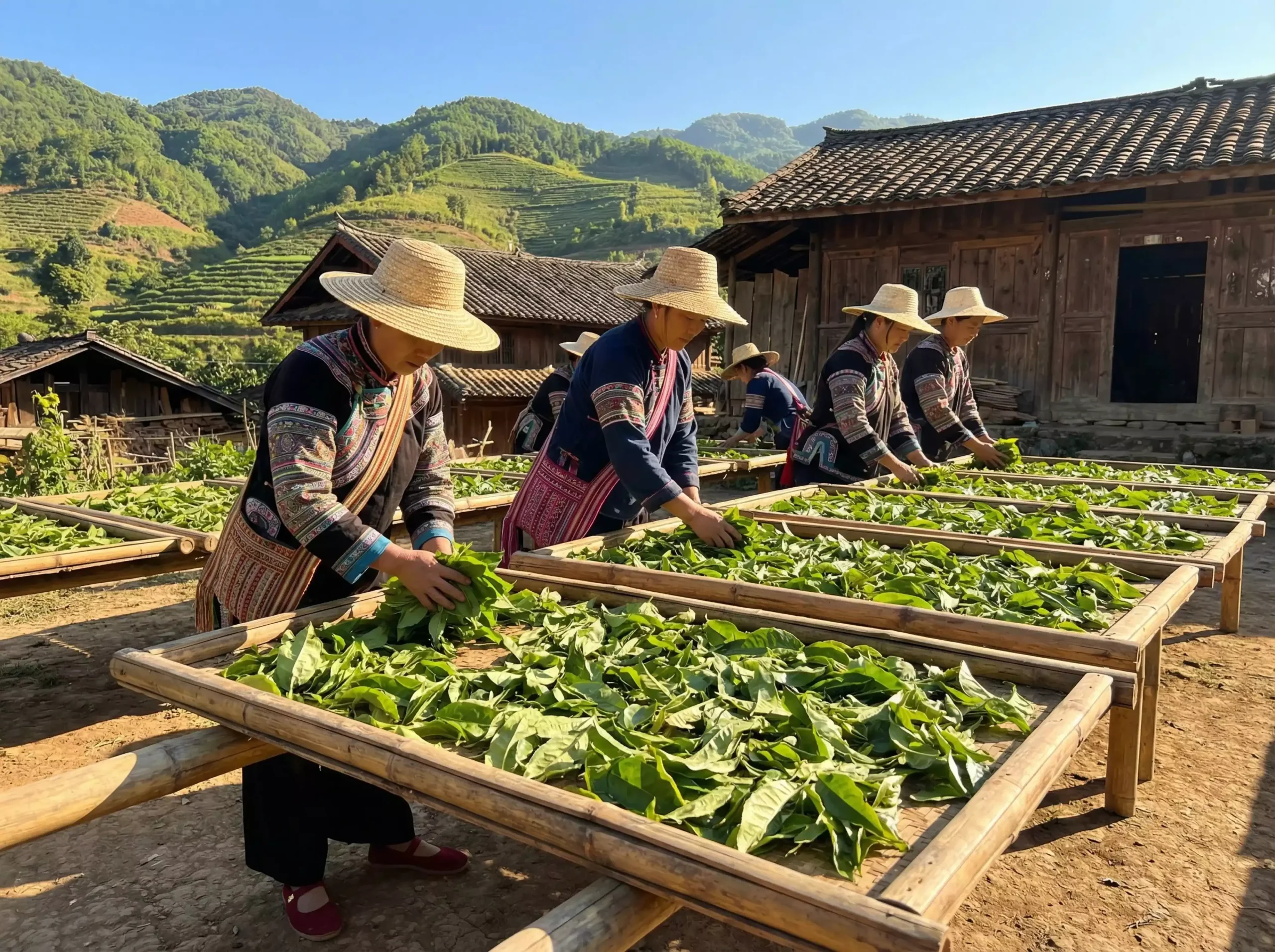
- Human cultivation: Early peoples in Southwest China discovered large‑leaf wild tea, while small‑leaf types gained prominence in regions like Jiangnan, due to their environmental resilience and refined flavor. Large‑leaf varieties persist mainly in Pu‑erh and strong-style red teas; small‑leaf prevail in Longjing, Qihong, oolong teas, etc.
3. Fundamental Differences: Gene Expression from Leaf to Liquor
| Characteristic | Large‑Leaf (Assamica) | Small‑Leaf (Sinensis) |
|---|---|---|
| Origin & Distribution | Ancient, tropical-subtropical rainforests (Yunnan, Assam); warm-humid zones | Derived by migration adaptation; distributed Jiangnan northward & coastal China; cold-resistant |
| Leaf Size & Tree Form | Very large (15–30 cm+), thick and leathery; tall tree form | Smaller (5–15 cm), softer; shrub-like or smaller tree |
| Chemical Profile | Very high polyphenols (30–40%), rich ester catechins; high caffeine; high extractables | Moderate polyphenols (20–30%), higher amino acids (especially theanine); moderate caffeine and extractables |
| Flavor Profile | Dianhong & Pu‑erh: bold, brisk, intense, honey and floral notes; excellent re-steepability | Green teas & refined reds: delicate, sweet, elegant; fresh, floral, umami-toned, high clarity |
| Processing Match | Perfect for Pu‑erh aging and strong-style black teas | Ideal for top-tier green teas, light red teas, oolongs, and jasmine teas |
Deep Insight: Ingredients That Determine Style
- Polyphenols: Large‑leaf teas contain significantly more catechins, the foundation of oxidation (Pu‑erh aging or red fermentation). They yield depth, strength, and storage potential.
- Amino acids (Theanine): Small‑leaf teas often lead in theanine content, giving standout sweetness, umami, and freshness—critical in green and refined historical teas.
- Caffeine: Usually higher in large‑leaf teas, contributing bitterness, stimulation, and cloudiness in cold brews.
- Extractables: Higher in large‑leaf types, meaning richer, longer-lasting infusion properties.
Extended Insight: Beyond Chemistry—Leaf Shape, Buds, and Tree Age
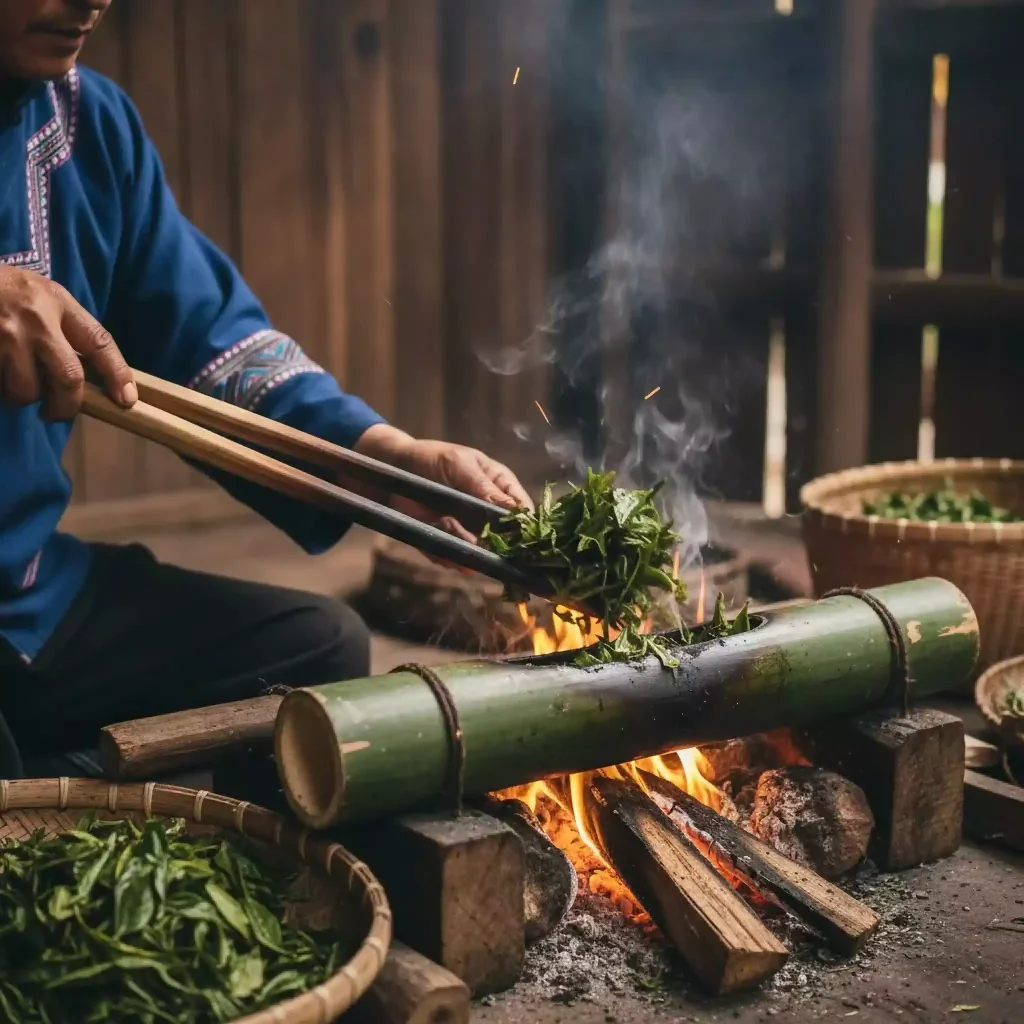
Large-leaf teas have coarse veins, thick leaf texture, and often noticeable fuzz on buds. This structure helps form tight strips during rolling, promotes thorough oxidation, and makes them ideal for long steeps and multiple infusions.
Small-leaf teas have delicate veins and softer bud fuzz. Their flat or needle-like appearance (e.g., Longjing "sparrow tongue") allows flavors to release quickly, producing a more explosive aroma, though they are slightly less durable across multiple brews.
Tree age is also a critical factor. Many ancient large-leaf trees in Yunnan (100+ years) have deep roots reaching mineral-rich layers, resulting in thicker body, longer-lasting sweetness, and even a hint of "rocky" character. In contrast, small-leaf plantation trees are often young or medium-aged, offering higher freshness but relatively limited depth and aging potential.
These subtle differences—“from leaf to liquor”—manifest in your cup as: the grand and persistent character of large-leaf teas vs the delicate and transparent style of small-leaf teas, like broad brushstrokes versus fine-detail painting, each with its own charm.
4. Tasting Comparisons & Classic Examples: The Genetic Code on Your Palate
Theory ultimately meets tea in the cup. Here are classic comparisons to experience the contrast:
Dianhong (Yunnan Large-Leaf) vs Qihong (Anhui Small-Leaf) — The “Power & Elegance” Duel in Black Tea
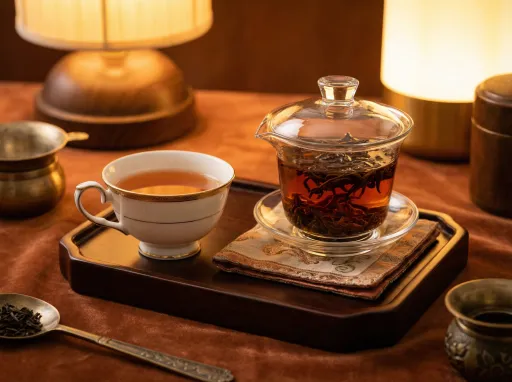
- Dianhong (Yunnan, Large-Leaf): Bright golden-red liquor, rich honey, malt, and dried fruit aroma, full-bodied, sweet, mild astringency, long-lasting aftertaste. "Golden Bud Dianhong" adds luxury and elegance. Style: bold, warm, enduring; suitable for milk or long sipping.
- Qihong (Anhui, Small-Leaf): Bright red liquor, floral-fruity-smoky aroma, smooth and delicate entry, refreshing sweetness, subtle but layered astringency. Style: elegant, refined, clean; best enjoyed plain to highlight freshness.
Ancient Raw Pu-erh (Yunnan Large-Leaf) vs West Lake Longjing (Small-Leaf) — From Wild to Poetic Extremes
- Ancient Raw Pu-erh (Large-Leaf, Yunnan): Young liquor is sharp and strong, with wild floral notes and intense post-bitter sweetness; after aging several years, it softens into honeyed, woody character, thick body, long-lasting sweetness, and durable over 10+ infusions. Reflects time and forest depth.
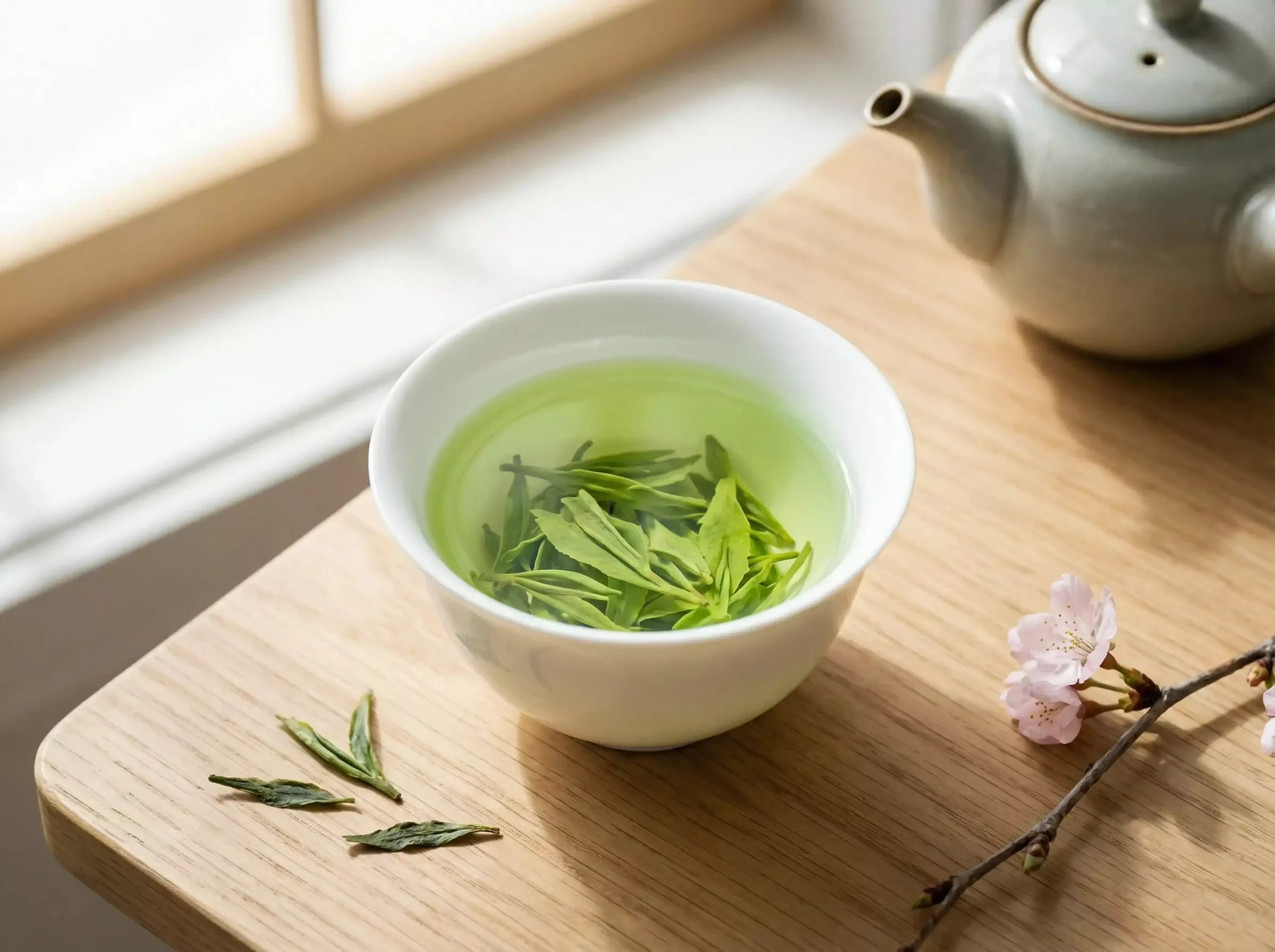
- West Lake Longjing (Small-Leaf, premium early flush): Tender green liquor, chestnut and fresh herb aroma, smooth and sweet, with subtle bean-like fragrance and orchid undertones. Style: lively, delicate, fleeting; best enjoyed in short steeps to capture spring freshness.
Through these comparisons, you’ll notice: large-leaf teas excel at telling “long stories”—layered and unfolding over time; small-leaf teas master the “short poem”—instant brilliance with lingering aftertaste. Regardless, tea’s charm is never just in leaf size, but in how it tells the story of mountains and time on your palate.
5. Conclusion: Different Gifts, Equal Legacy
Large‑leaf and small‑leaf varieties represent divergent survival strategies written across millennia: one preserving ancient forest strength and aging depth, the other crafting elegance and clarity for refined taste.
Neither is inherently superior—just differently gifted. Large‑leaf’s richness fuels Pu‑erh’s legend and Dianhong’s amber charisma. Small‑leaf’s freshness gives Longjing its springtime poetry and Qihong its elegant crown.
As tea lovers, understanding this hidden genetic code deepens our appreciation. Whether you’re savoring a wild ancient Pu‑erh or a first‑flush Longjing, you’re tasting nature’s legacy shaped by time and terrain.
Cup and leaf may be small, but within lies a wide world—and a genetic map. Next time you sip, ask yourself: is it the ancient power of a glacial survivor, or the refined verses of a northern migrator?
Frequently Asked Questions
Yes. By official Chinese national standards, Pu-erh tea must be produced from Yunnan large-leaf tea varieties (Camellia sinensis var. assamica) using sun-dried processing. Teas made from small-leaf varieties cannot legally or traditionally be classified as Pu-erh.
Absolutely. Large-leaf teas typically contain higher levels of polyphenols and caffeine, producing bolder structure, stronger bitterness, and better aging potential. Small-leaf teas are richer in amino acids like theanine, resulting in sweeter, softer, and more aromatic profiles.
Generally no. Small-leaf teas lack the high polyphenol content and structural density required for long-term microbial aging. While some small-leaf teas may mellow over time, they do not undergo the same transformative aging process seen in large-leaf Pu-erh teas.
In most cases, yes. Large-leaf tea varieties tend to contain higher caffeine and extractable content, contributing to stronger body, greater bitterness, and higher stamina across multiple infusions. However, processing and brewing style also play significant roles.