How to Properly Store Your Tea: A Simple Guide for Black Tea, Raw Pu-erh, and Ripe Pu-erh
At Steeped Roots, we specialize in high-quality black teas (including Dianhong and sun-dried red tea), raw Pu-erh, and ripe Pu-erh. When stored correctly, these teas not only maintain their fresh flavors but can also age gracefully, improving in taste over time—especially sun-dried red tea, raw Pu-erh, and ripe Pu-erh. Storage doesn’t require complicated or expensive equipment—we always advocate for a “minimal tools” approach, allowing teas to breathe naturally in their environment.
Basic Storage Principles (Applicable to All Teas)
No matter how much tea you're storing, these core principles apply:
- Avoid direct light: Sunlight accelerates oxidation, causing flavors to fade or turn bitter. Choose a cool, dark place like inside a cabinet or wardrobe.
- Avoid odors: Tea easily absorbs smells—keep away from kitchens, spices, cleaners, or smoky areas.
- Allow slight ventilation: Tea needs minor air circulation but not direct drafts from windows or AC vents.
- Stable temperature: Ideal range is 68-86°F (20-30°C). Avoid extreme fluctuations (e.g., no refrigerator in/out).
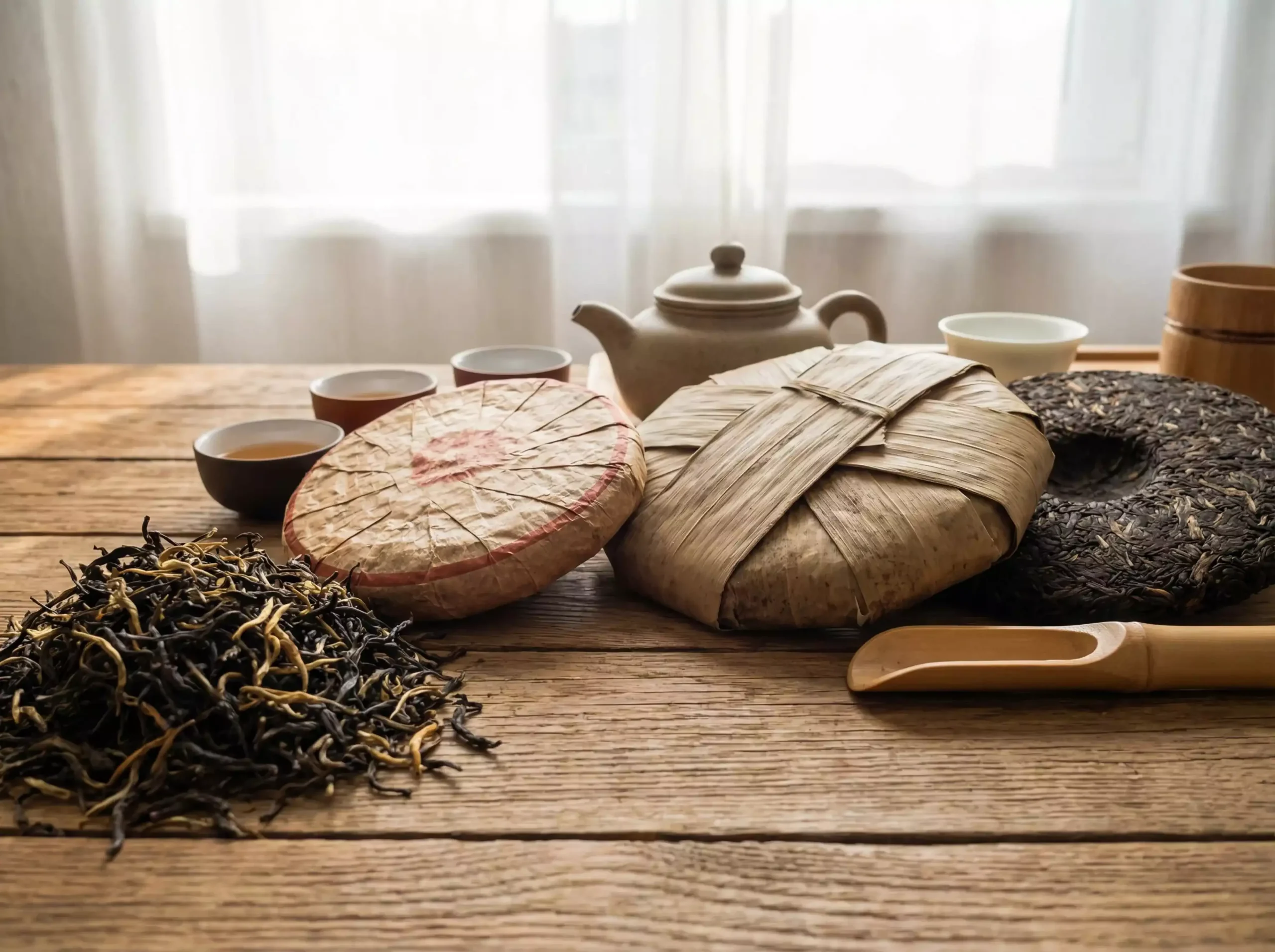
- Keep original packaging: Most teas come wrapped in cotton paper or foil—these provide basic protection and allow micro-breathing.
For small quantities (a few cakes or loose ounces), simply keep in original packaging inside a cardboard box or ceramic jar in a cool, ventilated spot. This requires virtually no extra tools.
For Larger Quantities: Recommended Yixing Purple Clay Jar + Plastic Film Method
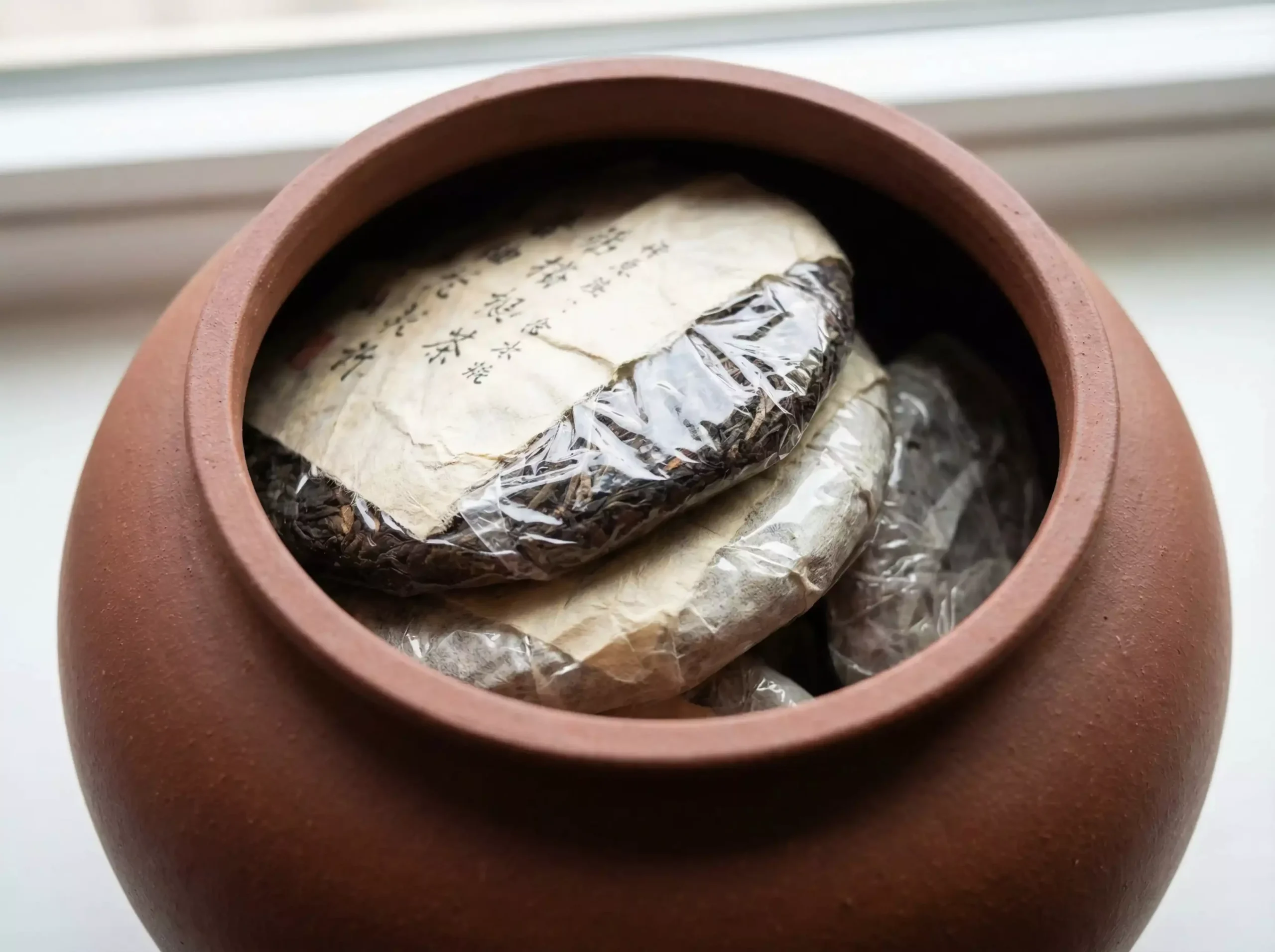
If you've purchased a larger amount of tea (especially sun-dried red, raw Pu-erh, or ripe Pu-erh), we strongly recommend the classic Yixing purple clay jar (Zisha or similar) combined with food-grade plastic film. This is an effective, low-tool method:
- Wrap each cake or loose tea in its original cotton paper, then lightly wrap with 1-2 layers of clean food-grade plastic film (cling wrap)—do not seal completely airtight; leave slight breathability.
- Place the wrapped teas inside the purple clay jar. The jar’s microporous structure regulates humidity, allows trace air exchange, and blocks excess moisture/odors.
- Close the lid but not fully sealed (leave a small gap or pad with cotton cloth).
- Store the jar in a cool, dark place.
This method is ideal for bulk storage: the jar creates a stable micro-environment, allowing sun-dried red and raw Pu-erh to age slowly, ripe Pu-erh to remain mellow, and Dianhong to retain aroma longer.

Detailed Tea Aging Guide
Aging behavior and speed vary greatly between tea types. Here's a detailed breakdown for our main categories:
Dianhong (Kongfu Black Tea)
Dianhong is fully fermented. New tea has bright aroma, prominent sweetness, vibrant red liquor, and fresh, strong taste. Aging potential is limited—best consumed within 2-5 years. With proper dry/sealed storage, aroma and sweetness mellow slightly and liquor deepens, but changes are minor. Beyond 5-8 years, aroma may fade with mild aged notes—not recommended for long-term aging.
Sun-Dried Red Tea
Made with traditional sun-drying, medium-heavy fermentation similar to raw Pu-erh—excellent aging potential. New tea: bright red liquor, strong taste with astringency, sunshine and floral-fruit notes.
Aging process:
- 1-3 years: Astringency fades, liquor turns deep red, sweetness rises, floral-fruit more pronounced.
- 3-8 years: Taste becomes mellow and smooth, mild aged aroma with jujube or medicinal notes, deep red and clear liquor.
- 8+ years: Prominent aged aroma, thick sweet mellow taste—similar to aged raw Pu-erh but retains black tea sweetness.
In natural dry warehouse conditions, sun-dried red becomes increasingly smooth with strong sweet aftertaste—great for long-term collection.
Raw Pu-erh
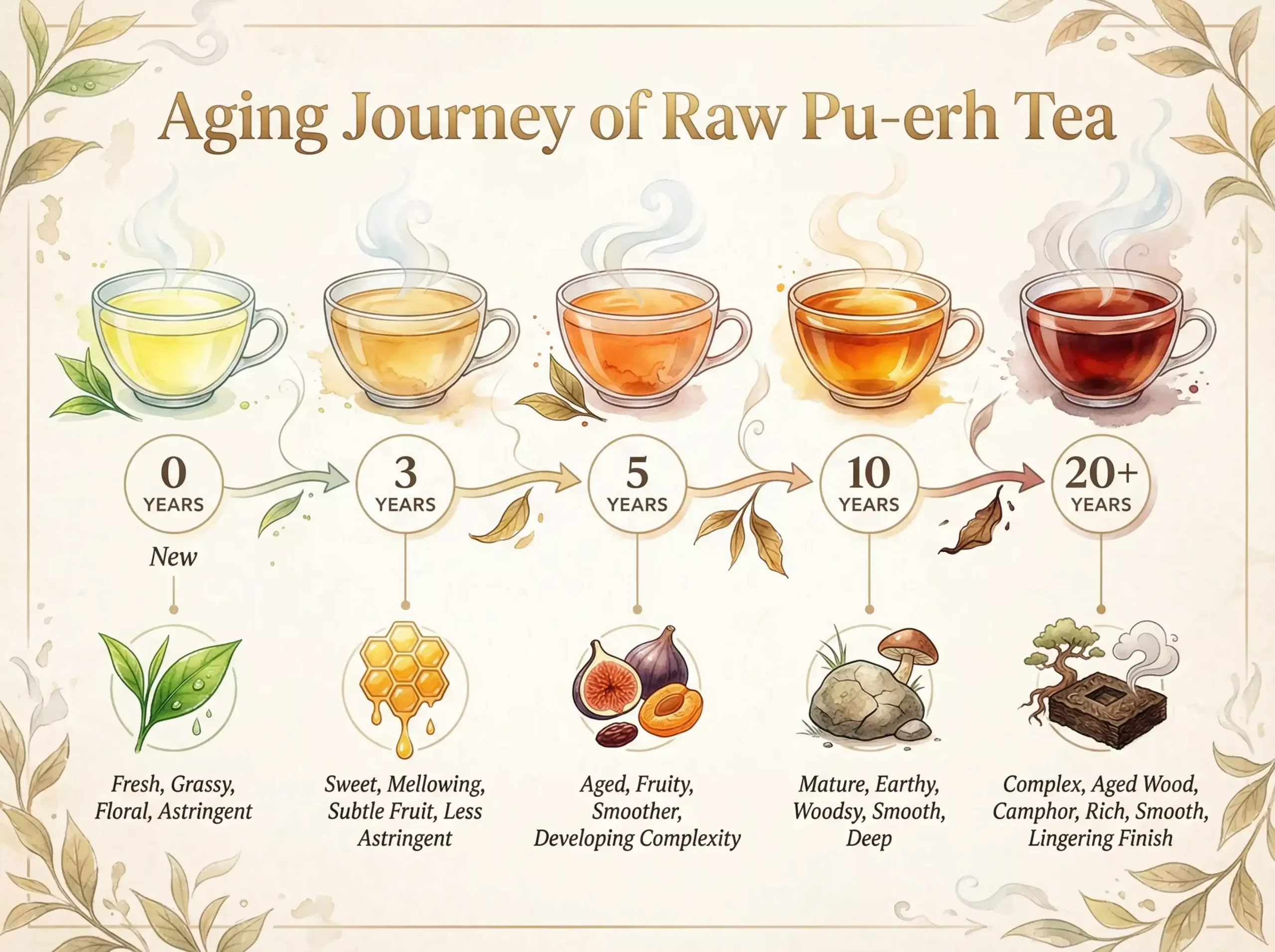
New raw Pu-erh: green-yellow to yellow liquor, strong taste with obvious astringency, deep throat feel, high floral/mountain aroma.
Aging process (natural dry warehouse):
- 1-5 years: Astringency slowly recedes, liquor shifts orange-yellow, aroma becomes steady with camphor/lotus notes.
- 5-10 years: Taste mellows, liquor orange-red, sweetness markedly increases, strong sweet aftertaste, initial aged aroma.
- 10-20 years: Deep red liquor, thick smooth taste, prominent ginseng/woody/aged aromas, bitterness fully converted to sweetness.
- 20+ years: Premium aged raw shows jujube, medicinal, woody depth—thick liquor, long throat resonance.
Dry warehouse raw ages slowly and cleanly—“the older, the better” classic.
Ripe Pu-erh
Ripe Pu-erh is post-fermented via piling—deep red liquor, mellow taste, new tea often has “pile flavor.”
Aging process:
- 1-3 years: Pile flavor dissipates, liquor clearer, taste cleaner.
- 3-10 years: Aged, woody, or ginseng aroma emerges, thicker smoother taste, increased sweetness.
- 10+ years: Rich aged aroma, thick liquor like aged medicine or rice soup.
Ripe ages forgivingly—dry warehouse cleaner, wet may develop “wet warehouse” notes faster.
Storage Recommendations for Western Regions: “Dry Warehouse” vs “Wet Warehouse”
Western climates vary widely—we classify like China's Kunming (dry) vs Guangdong (humid). Humidity drives aging speed: dry = slow/clean; humid = fast but mold risk.
Dry Warehouse Regions (Annual average humidity ~60-70% or below, like Kunming)
Examples: US—Los Angeles, Denver, Phoenix, Las Vegas; inland areas like Chicago. Europe—London (outdoor high but indoor often dry), Paris, Berlin (indoor typically <60%).
Storage & Aging: Focus on sealing + avoiding light. Use jar+film or original packaging in boxes. No extra tools—slow, clean, layered aging.
- Dianhong: Aroma preserved well, minimal change.
- Sun-dried red & raw Pu-erh: Slow conversion (10-20 years for peak), clean no off-flavors—ideal for pure dry warehouse fans.
- Ripe Pu-erh: Stable, aged aroma emerges slowly.
Wet Warehouse Regions (Annual average humidity 75%+, like Guangdong)
Examples: US—Miami, Houston, New Orleans, Jacksonville; Seattle (rainy, indoor damp). Some coastal European areas or humid summers.
Storage & Aging: Beyond sealing/light avoidance, extra moisture control needed.
- Choose mid-high floors (3+), avoid basement/ground level.
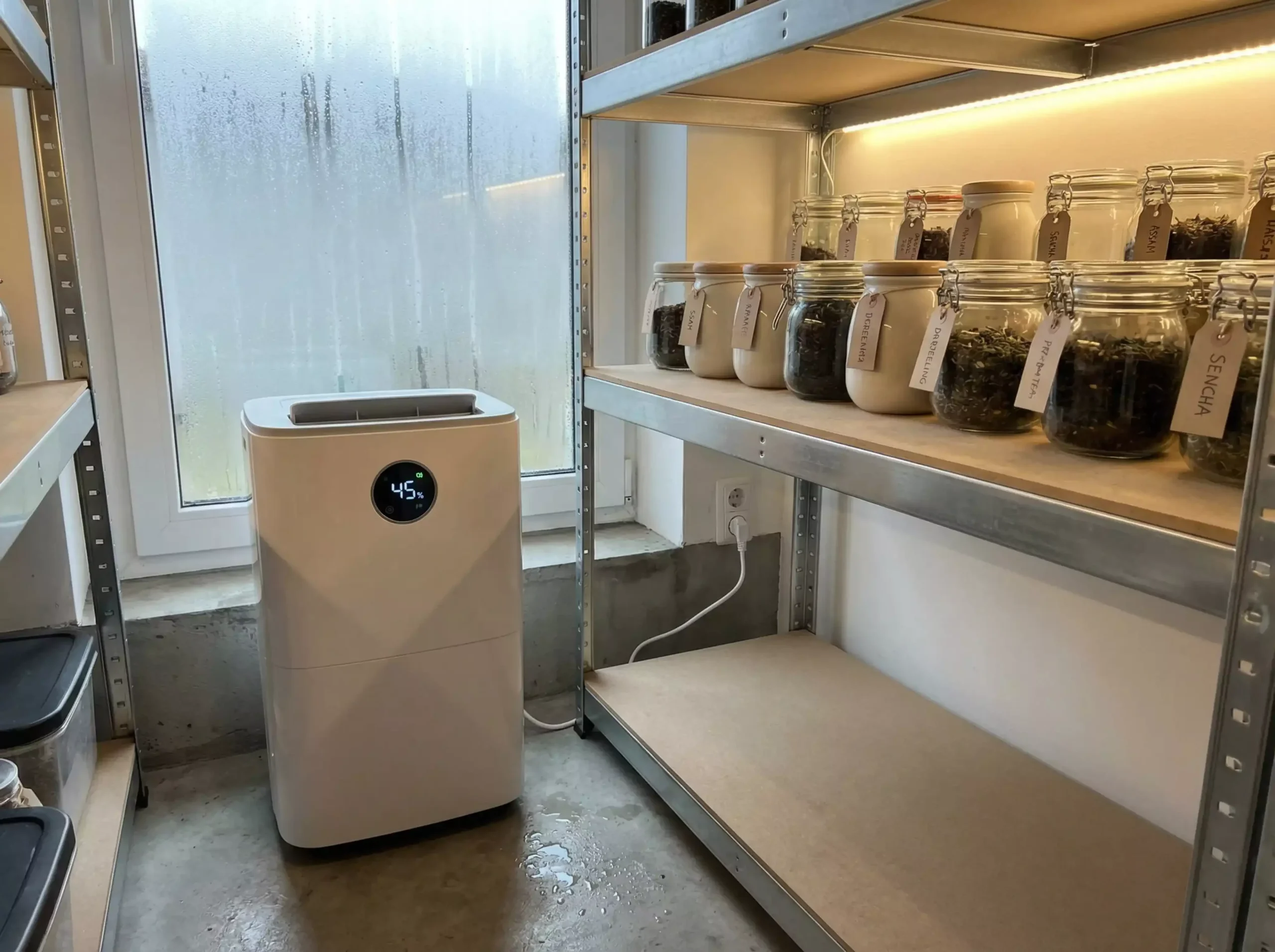
- In very humid seasons, use a dehumidifier to keep room 60-70%—only potential tool needed.
- For extreme humidity, add cardboard box around jar or food-grade silica gel (not touching tea).
Aging faster (like traditional wet warehouse)—sun-dried red/raw may show aged notes in 5-10 years, but monitor mold risk closely.
Final Tips
- Use an inexpensive hygrometer if unsure of local humidity.
- Aging is personal—some love fresh vibrancy, others deep maturity. Start small to find your preference.
Proper storage lets your tea become more fragrant over time. Every tea from Steeped Roots deserves your care—if you have questions, feel free to contact us! Enjoy your tea journey~
Frequently Asked Questions (FAQ)
What is the ideal temperature for tea storage?
The ideal temperature range is 68-86°F (20-30°C). It is crucial to avoid extreme fluctuations, such as moving tea in and out of a refrigerator, as this causes condensation and ruins the leaves.
Can I store different types of tea in the same jar?
No. Tea leaves are highly absorbent. Storing Dianhong (black tea) with Ripe Pu-erh will cause the aromas to cross-contaminate, ruining the distinct profile of both. Always use separate jars for different categories.
Is plastic film safe for long-term aging?
Yes, provided you use food-grade plastic wrap and do not seal it 100% airtight. The film helps maintain a stable micro-environment within the jar, protecting the tea from sudden spikes in humidity while still allowing the tea to "breathe" through the porous Yixing clay.
How do I know if my tea has gone bad?
Check for a musty or "damp basement" smell that doesn't go away after the tea is aired out. If you see white or green fuzzy spots (mold), the tea should be discarded. A "stale" taste usually just means the tea was stored too dry and lost its aroma.
Continue Your Tea Journey
Proper storage is the final step in a tea's journey from the mountain to your cup. If you have specific questions about your local climate, contact us anytime. Enjoy the evolution of your leaves!