
How to Fix Over-Steeped Tea (5 Proven Rescue Methods)

I've been running Steeped Roots for three years now, and I've over-steeped more tea than I'd like to admit. Just last Tuesday, I got pulled into an emergency Zoom call while my Dian Hong was steeping. Fifteen minutes later, I came back to what looked like motor oil in my mug.
Here's what I've learned from hundreds of these moments: over-steeped tea is almost never ruined. You just need the right rescue method for the situation.
In this guide, I'll share the five methods I actually use at my desk—not theoretical advice, but techniques I've tested while writing blog posts, responding to customer emails, and getting interrupted mid-steep more times than I can count.
Quick Answer: Can You Fix Over-Steeped Tea?
Yes. The fastest fix is the Half-Pour Method: pour out 50% of the over-steeped tea and refill with fresh hot water. This dilutes concentrated bitterness while allowing the leaves to release their remaining sugars. Works in under 30 seconds with no special equipment.
When to use other methods: If the tea is extremely bitter (10+ minute steep), use the Progressive Dilution Method. If you need to save the entire volume, try the Sugar/Honey Rescue or the Second Vessel technique.
Is Bitter Tea Ruined? Understanding What Over-Steeping Actually Does
Before we dive into fixes, let's clear up a common misconception: bitterness doesn't mean the tea is destroyed.
When tea over-steeps, three things happen:
- Tannins over-extract: These create the dry, puckering sensation in your mouth
- Bitter compounds concentrate: Caffeine and certain polyphenols become more prominent
- Delicate aromatics evaporate: The tea loses its top notes and brightness
But here's the key insight I learned from years of Gongfu brewing: tea leaves still have more to give. Even after a 15-minute steep, there are sweeter, mellower compounds that haven't fully extracted yet. The rescue methods below work by either diluting the over-extracted bitterness or re-balancing the tea by extracting these remaining compounds.
Personal example: Last month, I left a mug of young Sheng Pu-erh steeping for 20 minutes (I got deep into writing a product description and completely forgot about it). The tea was so astringent it made my tongue feel like sandpaper. I used Method #2 below—Progressive Dilution—and by the third adjustment, it was actually quite pleasant. Not as good as a properly-steeped cup, but far from ruined.
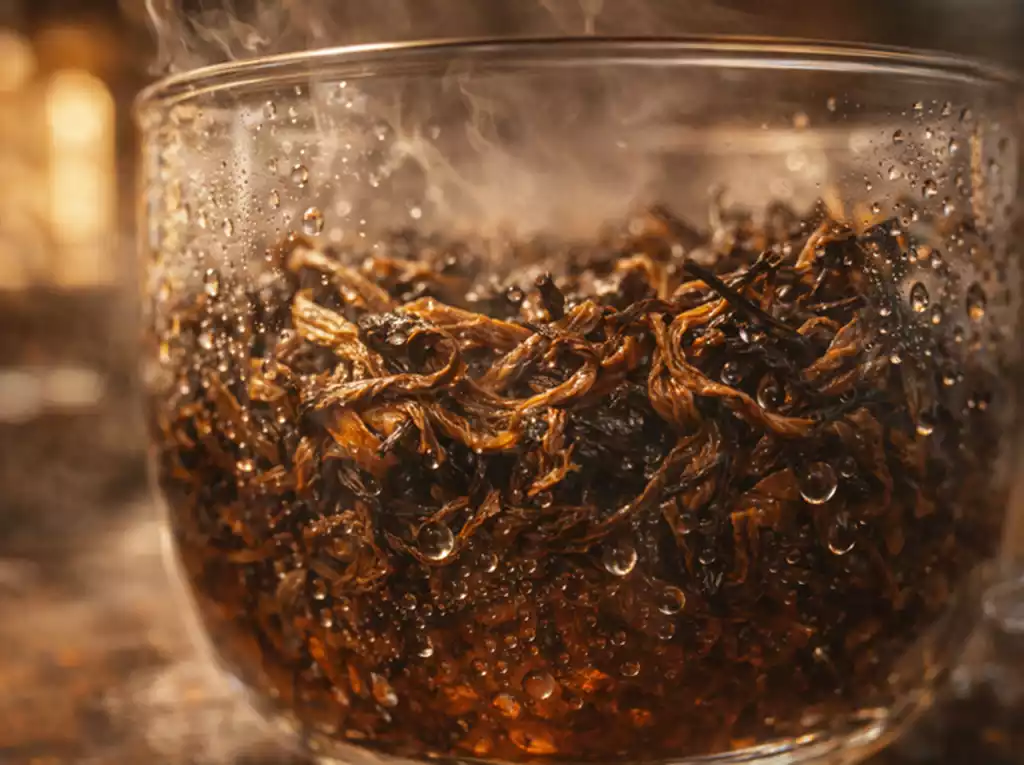
5 Proven Methods to Fix Over-Steeped Tea
I've arranged these from fastest to most involved. Start with Method 1 for most situations.
1The Half-Pour Method (My Go-To)
Best for: Moderately over-steeped tea (5-10 minutes), office/desk brewing, when you need a quick fix
Time required: 30 seconds
How to do it:
- Pour out approximately half of the over-steeped tea into your sink or a waste cup
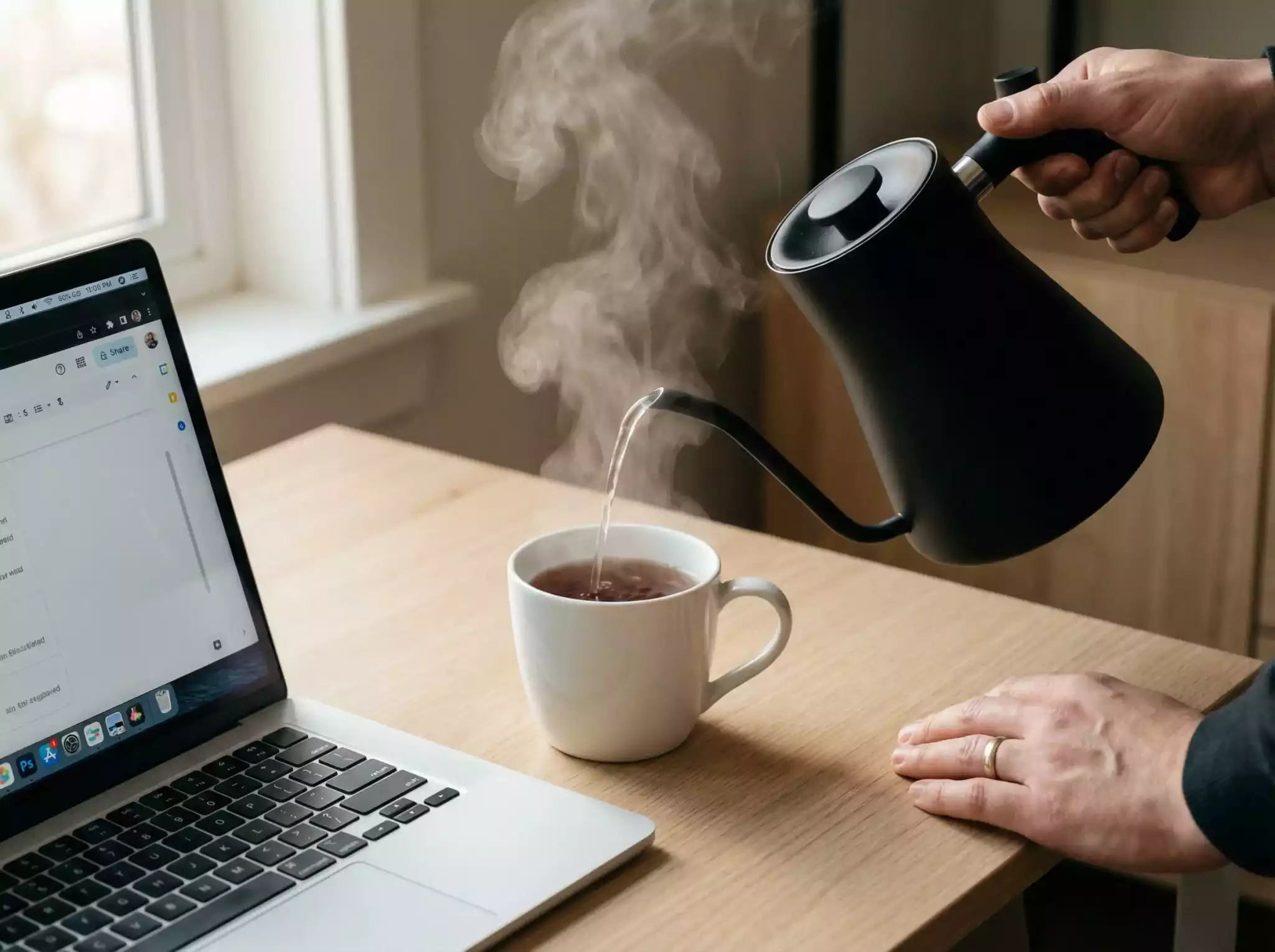
- Refill the mug with fresh hot water (same temperature as your original brew)
- Wait 10-15 seconds for the temperature to stabilize
- Taste and repeat if still too bitter
Why this works for me: I use this method 3-4 times a week. It's quiet (important when I'm on calls), requires no extra equipment, and works especially well with forgiving teas like Dian Hong, Shou Pu-erh, and most oolongs. The key is that you're not just diluting—you're giving the leaves a chance to release their sweeter compounds into fresh water.
Teas that respond best: Dian Hong (bitterness softens, cocoa notes return), Shai Hong (sweetness becomes clearer), Shou Pu-erh (structure stabilizes quickly), Aged White Tea (mellowness emerges)
2Progressive Dilution Method
Best for: Extremely bitter tea (10+ minutes), delicate green teas, when Method 1 didn't work
Time required: 2-3 minutes
How to do it:
- Pour out one-third of the over-steeped tea
- Add fresh hot water to replace what you poured out
- Wait 30 seconds and taste
- If still bitter, pour out another quarter and repeat
- Continue until balanced (usually 2-3 cycles maximum)
Why this works: Instead of one big dilution, you're gradually stepping down the concentration. This gives you more control and prevents over-diluting, which can make the tea taste watery and flat.
When I use this: Mainly for expensive teas I've accidentally ruined—like that time I over-steeped a $40 aged white tea while answering customer emails. The progressive approach helped me salvage what would have been a $2 cup of wasted tea.
3The Sugar/Honey Rescue
Best for: Black teas, when you can't dilute (limited hot water), afternoon tea that needs sweetness anyway
Time required: 15 seconds
How to do it:
- Add 1/4 to 1/2 teaspoon of sugar or honey
- Stir well until dissolved
- Taste and add more if needed
- Optional: add a splash of milk for extra mellowness
Why this works: Sugar doesn't remove bitterness, but it masks it by activating sweet receptors on your tongue. The contrast makes the bitter compounds less perceptible. Honey adds complexity with its own flavor notes.
Controversial take: Some tea purists hate this method, but I keep a small jar of honey at my desk specifically for rescue situations. It's saved many cups of over-steeped Assam and English Breakfast. Plus, if you're going to drink sweetened tea anyway, why throw away a slightly bitter cup?
Pro tip: Local honey works better than white sugar because it adds flavor dimension rather than just sweetness. I use a clover honey from a local farmer's market.
4The Second Vessel Technique
Best for: When you want to preserve the full volume, entertaining guests, when you have two cups available
Time required: 1 minute
How to do it:
- Pour the over-steeped tea into a second cup, leaving the leaves in the original vessel
- Add fresh hot water to the leaves for a new, lighter steep (15-30 seconds)
- Mix portions of the bitter tea with the new light tea until balanced
- Adjust ratio based on taste preference
Why this works: You're essentially creating a blending situation—combining one over-extracted steep with one under-extracted steep to find middle ground.
When I use this: Rarely at my desk (requires two mugs), but frequently when doing Gongfu sessions where I've let one steep go too long. The technique gives you precise control over the final flavor.
5The Ice Cube Method
Best for: Summer months, when you want iced tea anyway, green and white teas
Time required: 2-5 minutes
How to do it:
- Remove tea leaves if possible (or pour tea into new vessel)
- Add 3-5 ice cubes directly to the over-steeped tea
- Stir gently as ice melts
- Taste and add more ice if still too strong
- Drink as iced tea or let it warm to room temperature
Why this works: Cold dilution is gentler than hot water dilution. The gradual temperature drop also changes how you perceive bitterness—cold tea tastes less bitter than the same tea served hot.
Happy accident: I discovered this method by mistake last July during a heat wave. I'd over-steeped a Longjing green tea and had no patience for hot drinks. Added ice out of desperation, and it turned into one of the best iced green teas I've ever had. Now I sometimes over-steep green tea on purpose when I want strong iced tea.
Quick Reference: Which Method to Use
| Situation | Best Method | Time | Success Rate |
|---|---|---|---|
| 5-10 min over-steep, at desk | Half-Pour (#1) | 30 sec | 90% |
| 10+ min, very bitter | Progressive Dilution (#2) | 2-3 min | 85% |
| Black tea, prefer sweet | Sugar/Honey (#3) | 15 sec | 95% |
| Want full volume preserved | Second Vessel (#4) | 1 min | 80% |
| Summer, want cold tea | Ice Cube (#5) | 2-5 min | 85% |
Can You Dilute Tea? (And Should You?)
This is a question I get surprisingly often, and the answer is more nuanced than "yes" or "no."
Yes, you can dilute tea—but timing matters.
Diluting tea works best when:
- The leaves are still in the water (they can continue extracting sweeter compounds)
- The tea is over-steeped but not over-leafed (you used a normal amount of tea, just steeped too long)
- You dilute by no more than 50% at a time (prevents the watery/flat taste)
- You use water at the same temperature (cold water can shock the leaves and stop extraction)
Diluting doesn't work well when:
- You used too much leaf to begin with (the problem is concentration, not just time)
- The tea has been steeping for hours (the leaves have nothing left to give)
- You dilute by more than 75% (you'll just get colored water)
The Science Behind Dilution
Tea compounds extract at different rates. Caffeine and bitter polyphenols extract quickly (first 2-3 minutes), while sweeter compounds and amino acids extract more slowly. When you dilute over-steeped tea with fresh water, you're creating a lower-concentration environment that allows these slower compounds to continue extracting without adding more bitterness.
This is why the Half-Pour Method works so well—you're not just watering down the tea, you're giving it a second chance to extract balanced flavor.
How to Prevent Bitterness (Long-Term Solutions)
While rescue methods are useful, prevention is better. Here's what I've implemented in my own workflow:
1. Use a Timer—But Make It Visible
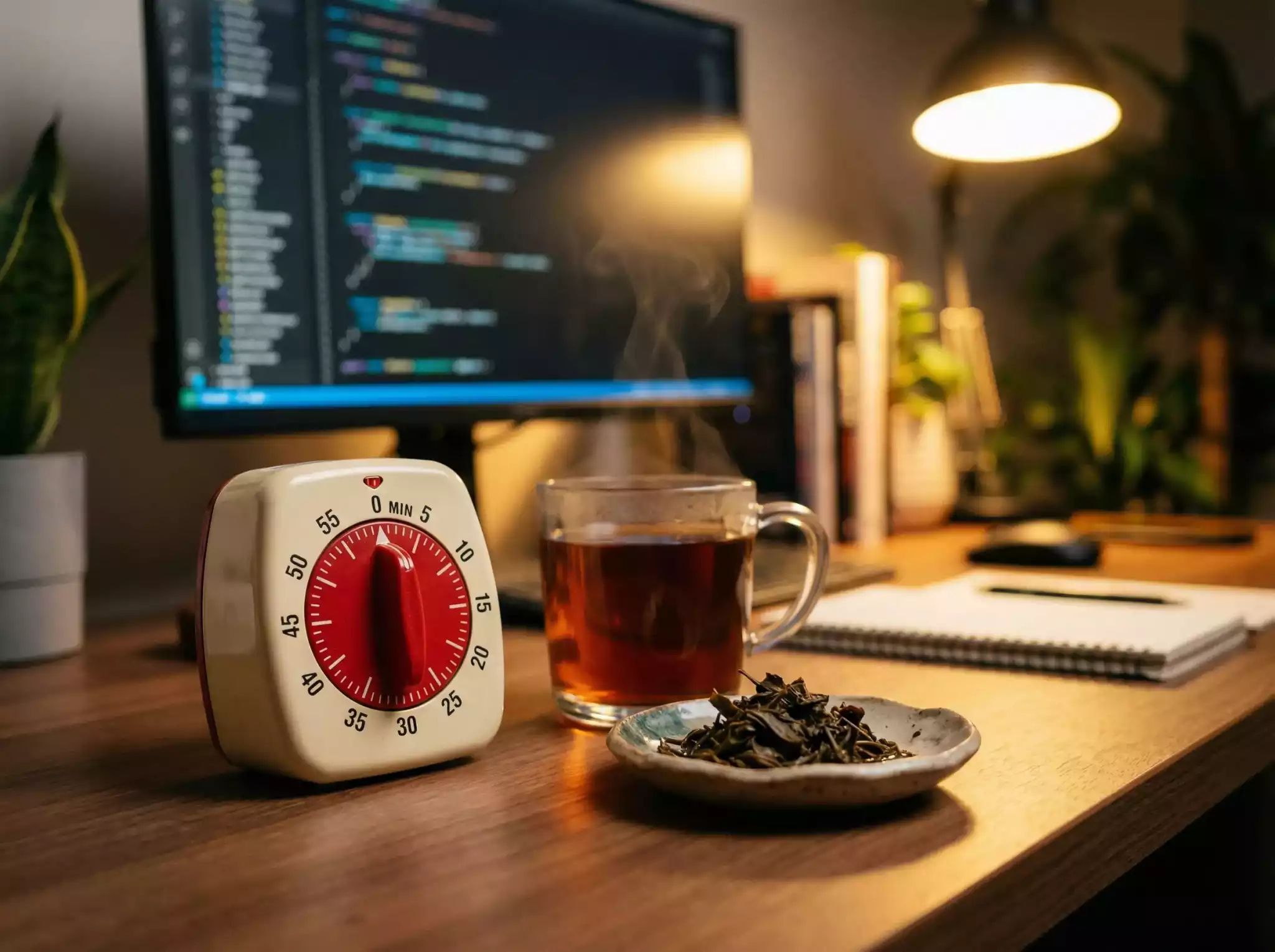
I tried phone timers for years and kept missing them. Now I use a small mechanical timer that sits on my desk where I can see it. The physical presence makes all the difference.
My setup: A $12 kitchen timer with a loud ring, positioned next to my monitor. When it goes off, I can't ignore it like I can a phone notification buried under other apps.
2. Control Your Dosage
Most over-steeping problems start with using too much leaf. I switched to pre-portioned 2-gram tea sachets for office brewing, which eliminated 90% of my bitterness issues.
Recommended starting doses for office mugs (350ml):
- Black tea: 2-2.5 grams
- Oolong: 2.5-3 grams
- Green/White: 2 grams
- Pu-erh: 2-3 grams (young Sheng on lower end)
3. Choose Forgiving Teas for Desk Brewing
Some teas are naturally more tolerant of timing mistakes. After three years of testing, here are my most forgiving teas for office work:
- Shou (Ripe) Pu-erh: Can steep 15+ minutes without major problems
- Shai Hong (Sun-Dried Black): Gets sweeter with longer steeping, up to a point
- Aged White Tea: Mellowness prevents harsh bitterness
- Medium-Roast Oolong: Roasting softens harsh edges
Teas to avoid at your desk:
- Young Sheng Pu-erh (unforgiving of timing)
- Japanese green teas (turn bitter quickly)
- High-end competition oolongs (too expensive to risk ruining)
4. The "Remove and Reserve" Technique
This is my single best prevention habit: when the timer goes off, I immediately remove the tea leaves even if I'm in the middle of something. It takes 5 seconds, and I can always return to whatever I was doing.
I keep a small dish on my desk specifically for temporarily holding used tea leaves. This way I don't need to get up and walk to the trash—just lift the infuser, drop it on the dish, and continue working.
5. Invest in a Variable Temperature Kettle
Different teas need different temperatures. Using boiling water on green tea guarantees bitterness, even with perfect timing. I use a kettle with preset temperatures:
- Green tea: 160-170°F (71-77°C)
- White tea: 175-185°F (79-85°C)
- Oolong: 185-195°F (85-91°C)
- Black tea: 200-212°F (93-100°C)
- Pu-erh: 200-212°F (93-100°C)
Which Teas Respond Best to Rescue Methods?
Not all teas are equally salvageable. Here's what I've learned from countless rescue attempts:
Most Forgiving (Easy to Rescue)
- Shou Pu-erh: The fermentation process creates mellower compounds that resist bitterness. Even a 20-minute steep can be rescued with basic dilution.
- Dian Hong (Yunnan Black): Natural sweetness returns quickly when diluted. The malty, cocoa notes reemerge within seconds.
- Aged Oolong (10+ years): Aging has already mellowed harsh edges. Over-steeping just makes them stronger, not bitter.
- Shai Hong: Sun-drying creates fruity compounds that persist even through over-extraction.
Moderately Rescuable (Requires More Effort)
- Young Oolong: Can be rescued but needs Progressive Dilution method. One-step dilution often leaves residual harshness.
- Ceylon Black Tea: Responds well to sugar/honey method but poorly to water dilution alone.
- White Tea (aged less than 3 years): Delicate flavor means you need gentle rescue—Ice Cube method works best.
Difficult to Rescue (Sometimes Better to Start Over)
- Young Sheng Pu-erh: High astringency compounds are hard to balance once over-extracted. Success rate under 50% in my experience.
- Japanese Green Tea (Sencha, Gyokuro): Umami turns to harsh bitterness that's nearly impossible to mask.
- First Flush Darjeeling: Delicate floral notes disappear entirely, leaving only bitterness behind.
The Real Lesson: Office Tea Is About Adaptability
After three years of running an online tea business while juggling customer service, content creation, and product development, I've accepted this truth: perfect tea brewing at a desk is impossible.
Meetings interrupt. Emails distract. Deadlines loom. The goal isn't perfection—it's having good-enough tea that makes your workday better, not worse.
These rescue methods aren't elegant. They're not what I do during a weekend Gongfu session with friends. But they're what works when real life interferes with tea time, and they've saved hundreds of cups from going down the drain.
Learn the techniques, practice them a few times, and suddenly over-steeped tea stops being a crisis. It just becomes a minor adjustment in your routine.
Frequently Asked Questions
Can over-steeped tea make you sick?
No, over-steeped tea won't make you sick. It may taste unpleasant and contain higher levels of tannins (which can cause stomach upset in sensitive individuals if consumed in large quantities), but it's not harmful. The main issue is taste, not safety. However, if you have acid reflux or sensitive stomach, the higher tannin content might cause mild discomfort.
Does over-steeped tea have more caffeine?
Yes, slightly. Caffeine extracts quickly (within the first 2-3 minutes), but longer steeping can extract a bit more—perhaps 10-20% more than a properly-steeped cup. However, the increased bitterness is usually more noticeable than the caffeine boost. If you want more caffeine, using more tea leaves is more effective than over-steeping.
Is it better to fix over-steeped tea or start fresh?
It depends on the tea and how badly it's over-steeped. For moderately over-steeped forgiving teas (Shou Pu-erh, Dian Hong, Shai Hong), rescue methods work great—I'd say 85%+ success rate. For expensive or delicate teas over-steeped by 10+ minutes, starting fresh might give you better results. My rule: if the rescue method takes less than 1 minute and costs nothing, try it first. You can always start over if it doesn't work.
Can you save over-steeped tea for later?
Yes, but with limitations. Refrigerate over-steeped tea within 2 hours and consume within 24 hours. When you're ready to drink it, use the Ice Cube Method or Progressive Dilution Method to rebalance the flavor. I do this with over-steeped black tea—chill it, then mix with fresh brew the next day for iced tea. Works surprisingly well.
Why does my tea still taste bitter after diluting?
Two common reasons: (1) You used too much leaf to begin with—dilution can't fix over-leafing, only over-steeping. (2) The tea has astringent tannins, not just bitterness. Tannins create a dry, puckering sensation that dilution won't remove. Try adding a tiny bit of sugar or honey to counteract the astringency. If that doesn't work, the tea might be too far gone.
Which rescue method works fastest?
The Sugar/Honey Rescue (#3) is the absolute fastest—literally 15 seconds. However, the Half-Pour Method (#1) is the fastest method that doesn't change the tea's fundamental character. It takes 30 seconds and works for about 90% of over-steeping situations I encounter at my desk.
Can I prevent tea from over-steeping without a timer?
Yes, but it requires building a habit. The technique I use: immediately after pouring hot water, I set my phone face-down on top of the mug lid. When I reach for my phone (which I do constantly), I'm physically reminded that tea is steeping. It's not foolproof, but it's reduced my over-steeping incidents by about 60%. For 100% reliability, you really do need some kind of timer though.
Explore More About Tea Culture
🍵 Tea Heritage & Science
- The Legacy of Pu-erh Tea: From Ancient Trees to Modern Cups
- What Is Cha Qi? Feeling the Energy
- What is Puerh Tea? (Complete Guide)

