
Ancient Tree vs Terrace Tea: What’s Really in Your Puerh?
Published on July 19, 2025 • by Adrian Peng
Puerh Tea Is Not All the Same
When people think of Puerh, the first thing that comes to mind is often "the older, the better." But in truth, the soul of Puerh tea lies deeper—in the origin of the leaves themselves: terrace tea versus ancient tree tea. For a broader look at Puerh’s heritage, explore The Legacy of Pu-erh Tea.
This article offers a simple breakdown of their key differences, common misconceptions, and why true ancient tree tea is considered a gift from nature.
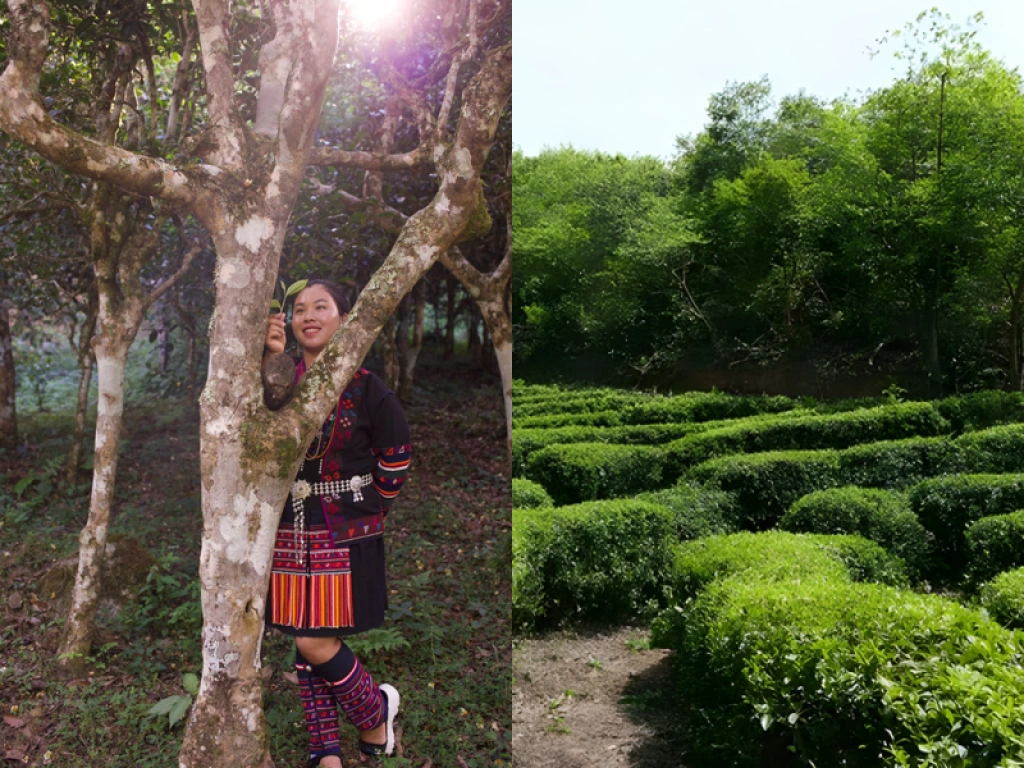
What Is Terrace Tea?
Terrace tea (also known as plantation tea) comes from modern, high-density tea farms. These tea bushes are regularly trimmed, harvested for efficiency, and grown using fertilizers or pesticides to maximize output and minimize pest risks.
Terrace tea is widely available and plays an important role in commercial Puerh production, especially in blended teas.
- High planting density, fast harvesting
- Clean, straightforward taste with consistency
- Ideal for mass production and blending purposes
What Is Ancient Tree Tea?
Ancient tree tea (古树茶, Gushu) refers to tea leaves picked from wild or semi-wild trees typically over 100 years old. These trees are found in remote forests in Yunnan and grow without fertilizers, pesticides, or pruning.
A common misconception: Some believe ancient tree tea can be managed like terrace tea. But in reality, Gushu cannot be fertilized or sprayed; its unique flavor and aroma rely solely on its natural ecosystem.
- High-altitude environments with large day-night temperature differences
- Deep root systems embedded in old forest soil
- Self-sustained growth without human interference
As a result, Gushu offers a more layered, forest-like aroma and a rounded, silky texture that evolves in the cup. It's not just tea—it's a sensory experience shaped by mountains and time.
Tasting Differences: A Sip Tells All
The flavor profiles of terrace and ancient tree teas are unmistakably distinct:
- Terrace Tea: Offers a sharp, high-pitched aroma that’s intense but typically one-dimensional. It shines in the early steeps but tends to flatten out quickly. Often used as a base for blended teas, it provides the upfront "scent" but lacks lingering depth or energy.
- Ancient Tree Tea: Rich and smooth with a full-bodied mouthfeel. Each mountain has its own signature—Yiwu is soft and sweet, Banzhang is bold and powerful, and Bingdao has a distinctive icy-cool orchid fragrance. Its aromas are not just "loud" but profound, unfolding gently with each steep. Best enjoyed slowly, with attention to the aftertaste and transformation.
In short: terrace tea is for a quick aroma hit, while ancient tree tea offers soul in the soup.
Price & Market Awareness
Because of their age, limited yield, and harvesting difficulty, Gushu teas command significantly higher prices than terrace tea. However, the term “ancient tree” is often misused in the market.
Tips for making sure you're getting the real deal:
- Know the region, harvest time, and dry leaf appearance
- Assess the strength and endurance of the tea soup
- Choose brands that offer traceability and transparent sourcing
Closing Thoughts: Mountain Shapes Flavor
Whether you prefer the crisp brightness of terrace tea or the soulful complexity of ancient tree brews, every cup of real Puerh connects you to soil, altitude, and culture.
“True ancient tree tea needs no fertilizer or pesticide. All it asks for is forest, time, and a quiet conversation.”
Next time you brew a cup, ask yourself: Did this leaf come from a farm—or a forest?
The True Soul of Pu-erh 🍵
Discover the true essence of Pu-erh tea, comparing ancient tree and terrace teas, and learn what really influences flavor, aroma, and quality. Part of the Tea Science Series: Unraveling Tea Mysteries from Beginner to Expert.
Frequently Asked Questions
Q: Is ancient tree tea always better than terrace tea?
A: Generally, yes. Ancient tree tea offers more complexity, a thicker mouthfeel, and is naturally organic. However, a high-quality terrace tea can sometimes outperform a poorly processed ancient tree tea.
Q: How can I identify real Gushu (Ancient Tree Tea)?
A: Look for "stamina" in the brew—Gushu can typically be steeped 15-20 times. The bitterness should transform quickly into sweetness (Hui Gan), and the flavor should feel deep in the throat.
Q: Why is ancient tree tea more expensive?
A: It is a matter of scarcity and labor. Ancient trees have limited yields and are often located in remote mountains, requiring manual climbing and hand-picking, which increases production costs.