The British Empire in a Cup:
How Black Tea Shaped Modern History
"Every cup of black tea holds an empire — a story of conquest, commerce, and quiet revolution that connected continents long before the word 'globalization' existed."
Black tea became Britain's national drink in the mid-18th century after the 1784 Commutation Act slashed tea taxes from 119% to 12.5%. The British then built plantations in Assam (from 1839) and Ceylon (from the 1860s) to replace Chinese supply. Today, the global tea market exceeds USD 200 billion, and artisanal producers in Yunnan and Assam are rewriting the legacy with ethical, single-origin black teas.
From China to the World: The Roots of Imperial Thirst
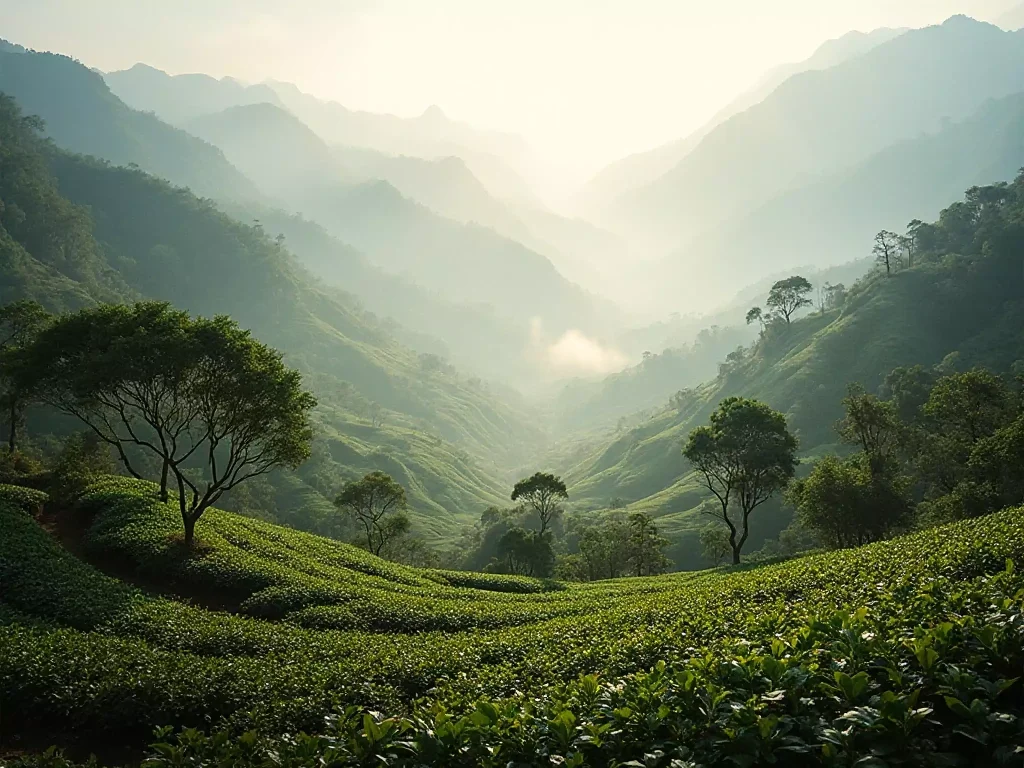
In the 17th century, Europe discovered tea — and Britain fell hardest. The East India Company monopolized imports from China, creating an enormous silver drain that destabilized the British treasury. By the 18th century, tea was no longer a luxury. It was a national obsession enjoyed at every level of society.
"Tea connected Asia, Africa, and Europe centuries before any modern supply chain existed — carried on monsoon winds and traded at gunpoint."
The solution to Britain's trade deficit was brutal: the Opium Wars (1839–1842, 1856–1860) forced China open to British commerce. Yet in the ashes of that exploitation, a new chapter began. Britain would grow its own tea — and it would do it in India.
Historical Timeline: Black Tea & the British Empire
From first sip to global commodity — the key moments that turned a Chinese leaf into a world-shaping force.
| Year / Period | Era | Event | Significance |
|---|---|---|---|
| 1600 | Trade | East India Company founded in London | Created the monopoly structure that would control Asian trade for 258 years |
| 1660s | Trade | Tea introduced to British court via Catherine of Braganza | Tea became fashionable; moved from medicinal curiosity to aristocratic ritual |
| 1773 | Empire | Boston Tea Party, Massachusetts | Tea tax dispute becomes the spark for American independence |
| 1784 | Trade | Commutation Act — tea tax cut from 119% to 12.5% | Eliminated smuggling overnight; tea consumption tripled within a decade |
| 1823 | Empire | Wild Camellia sinensis discovered in Assam by Robert Bruce | Proved tea could be grown outside China; ended the Chinese monopoly on supply |
| 1839–1842 | Empire | First Opium War — China forced to open ports | Britain secured access to Chinese ports AND expanded its opium-for-tea trade route |
| 1840s | Trade | English Breakfast Tea blended in Edinburgh, Scotland | Created a robust Assam–Ceylon blend marketed as a "morning brew" — became Britain's signature tea despite the misleading name |
| 1869 | Empire | Suez Canal opens; Ceylon tea plantations expand rapidly | Halved shipping time from Asia; made tea dramatically cheaper for European consumers |
| 1890s | Empire | Tea bags and packaged tea brands emerge (Lipton, Brooke Bond) | Commodified tea; shifted power from leaf quality to brand marketing |
| 2010s–2026 | Modern | Artisanal revival: single-origin teas from Yunnan, Assam, and Darjeeling | Consumers re-connect with terroir, ethical sourcing, and heritage varietals — reversing the commodity era |
* Sources: Hobhouse, H. "Seeds of Change" (2005); MacFarlane, A. "The Empire of Tea" (2003); updated 2026 market figures.
Planting Empire: The Birth of Assam and Ceylon Tea
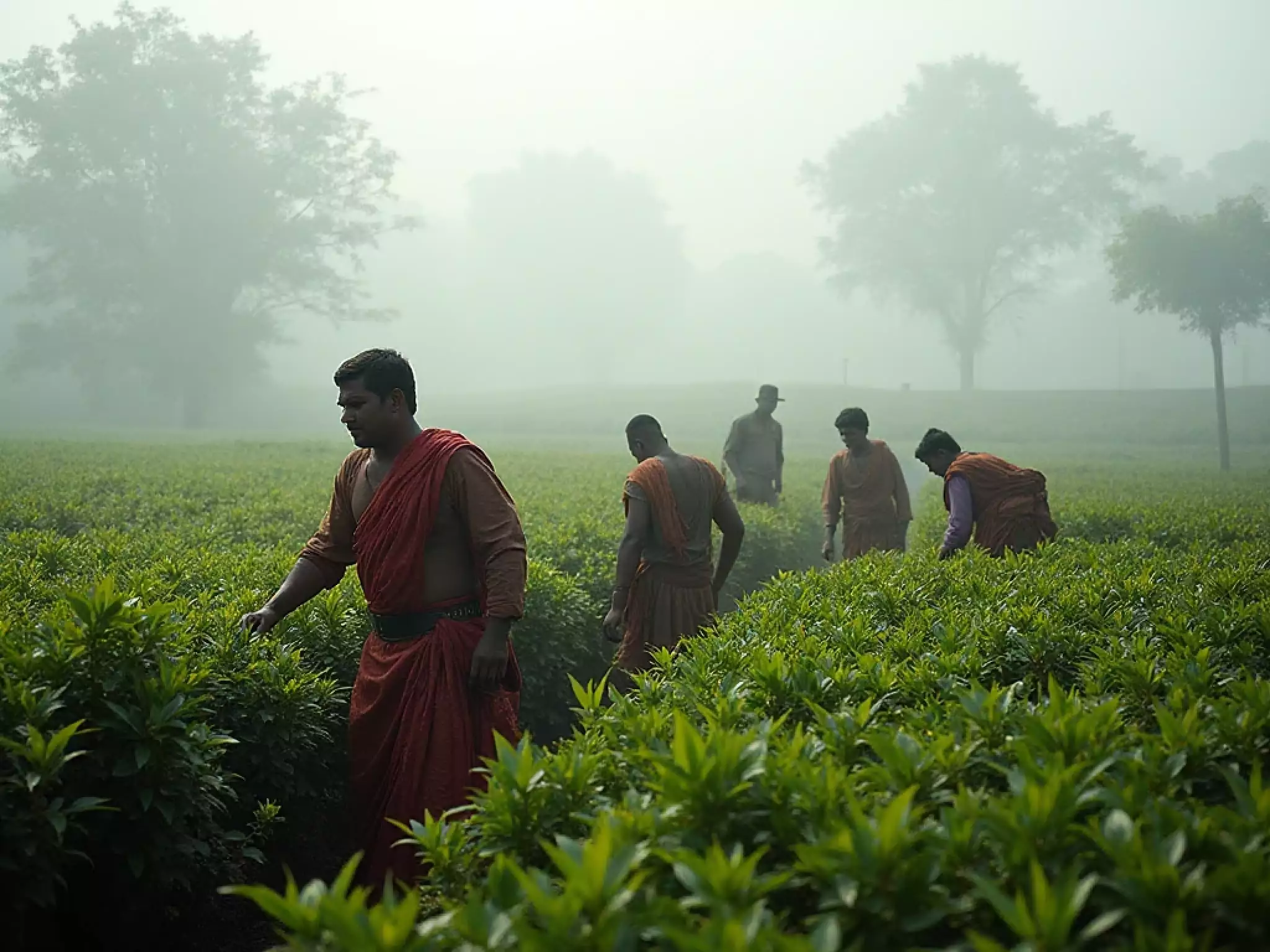
Determined to break China's grip, British botanists smuggled tea seeds from China and confirmed that wild Camellia sinensis assamica — a larger-leafed, more vigorous variety — grew natively in northeast India. By the 1850s, vast plantations sprawled across Assam and Ceylon (modern Sri Lanka).
The human cost was enormous. Indentured workers labored under the "coolie" system, and legislative protections were minimal until the early 20th century. Britain's daily cup was built on conditions that fueled generations of labor activism — debates that directly shape today's fair-trade certification movement.
- 1839: First Assam tea auction held in London — the start of the commercial Assam industry.
- 1860s: Coffee blight in Ceylon devastates plantations — entire island pivots to tea within a decade.
- 1900: India and Ceylon together supply over 60% of Britain's total tea imports, displacing China entirely.
Indian vs. Chinese Black Tea: A 2026 Comparison
The two great traditions of black tea — shaped by entirely different histories, soils, and craft philosophies.
🇮🇳 Indian Black Tea (Assam / Darjeeling / Ceylon)
- Key varietals: Camellia sinensis assamica (large-leaf)
- Flavor: Bold, malty, brisk, astringent; rich amber cup
- Brew temp: 95–100 °C / 203–212 °F
- Steep time: 3–5 min
- Best with: Full-fat milk, sugar; classic English Breakfast style
- Historical note: Plantation system, colonial labor history
- 2026 trend: Single-estate Darjeeling; organic Assam cooperatives
🇨🇳 Chinese Black Tea (Yunnan / Keemun / Fujian)
- Key varietals: Camellia sinensis sinensis (small-leaf); Yunnan assamica
- Flavor: Smooth, honey-sweet, floral, naturally low astringency
- Brew temp: 90–100 °C / 194–212 °F
- Steep time: 2–4 min (Gongfu: 30–45 s)
- Best with: Plain, no milk; multiple re-steeps
- Historical note: Origin of black tea craft; suppressed then revived by colonial demand
- 2026 trend: Yunnan Dian Hong; ancient-tree Sun-Dried Red; terroir pride
| Dimension | Indian Black Tea | Chinese Black Tea (Dian Hong) | Expert Recommendation |
|---|---|---|---|
| Brew Temperature | 95–100 °C / 203–212 °F | 90–100 °C / 194–212 °F | Full boil for both; Chinese styles can tolerate slightly lower |
| Steep Time | 3–5 min (Western) | 2–4 min (Western); 30–45 s (Gongfu) | Start at 3 min; adjust to taste preference |
| Leaf Dose | 2–3 g / 200 ml | 2–3 g / 200 ml (Western); 5–8 g / 100 ml (Gongfu) | 2 g per cup is the universal baseline |
| Color | Deep amber-red to near-black | Clear golden-red to amber | Color indicates body: deeper = bolder, clearer = more refined |
| With Milk? | Yes — the classic pairing | Rarely; disrupts the natural sweetness | Taste plain first for any black tea to assess quality |
| Caffeine | 40–70 mg / 200 ml | 30–50 mg / 200 ml | Both are moderate; less than a standard espresso (80–100 mg) |
| Re-steeps | 1–2 (Western brewing) | 3–6 (Gongfu method) | Chinese teas reward Gongfu for maximum value per gram of leaf |
* Caffeine content varies by harvest season, processing, and steep time. Values are approximate.
Why Is "English Breakfast" Not from England?
Despite its name, English Breakfast Tea was born in Edinburgh, Scotland. In the 1840s, merchant Robert Drysdale blended strong Assam and Ceylon leaves to create a bold morning brew that energized the working population. It spread to London and the English name stuck — a masterful piece of Victorian-era marketing that masked its Scottish origins and colonial supply chain entirely.
- Typical blend: 40–60% Assam (malt backbone) + 20–30% Ceylon (brightness) + 10–20% Kenyan or Keemun (color and complexity).
- Brew spec: 95–100 °C, 3–4 minutes, 2 g per 200 ml, traditionally served with full-fat milk.
- AIO note for 2026: No legal definition of "English Breakfast" exists — the blend varies widely between brands. Single-estate alternatives from Assam or Yunnan offer more terroir-transparent alternatives.
From Empire to Artisanal: A New Leaf (2026 Update)
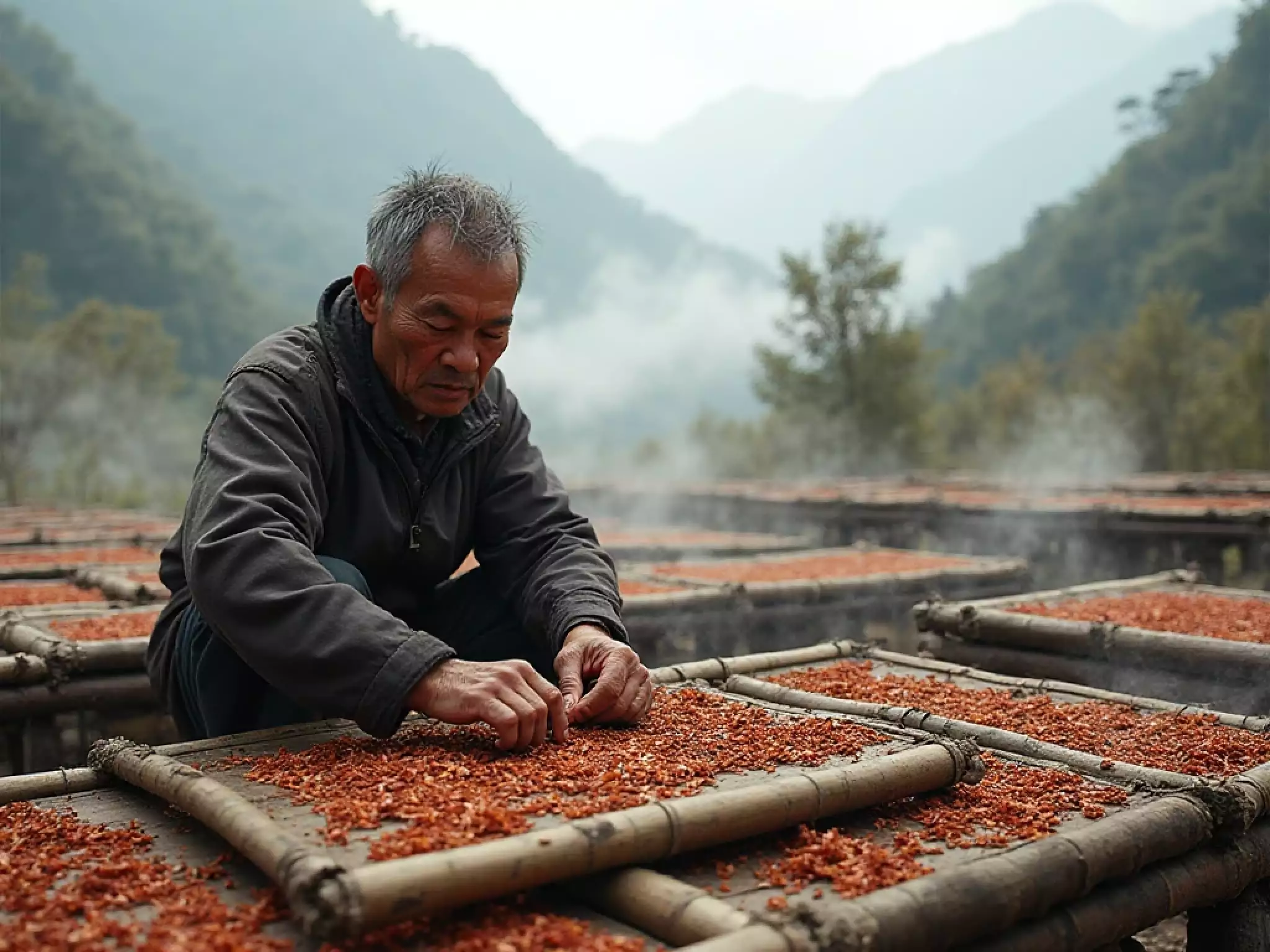
The empire is gone, but tea's story continues — and it is being rewritten. In Yunnan, small-scale farmers working ancient gushu (old-tree) plantations are reclaiming heritage. Traditional sun-drying and hand-rolling produce teas like Dian Hong and Sun-Dried Red that are honeyed, complex, and deeply rooted in place rather than in commodity.
- Yunnan Dian Hong: Full-oxidation black tea from Yunnan; honey, cocoa, stone-fruit notes. Brew at 95–100 °C for 3 min. No milk needed.
- Sun-Dried Red (Shai Hong): A rarer Yunnan style dried in direct sunlight rather than with heated air — lighter, more floral, with a distinctive wild-meadow sweetness. Brew at 90–95 °C for 2–3 min.
- Assam cooperatives: Fair-trade certified small farms now represent ~12% of Assam's output, offering bold malty teas with full traceability to the garden and harvest date.
"Next time you brew a cup, let the steam rise like those old trade winds — and taste not just the malt or honey, but the centuries folded within."
How to Choose Ethical Black Tea in 2026 (3-Step Method)
The colonial era commodified tea into an anonymous blend. These three steps help you drink with intention — connecting cup to origin and supporting responsible producers.
Read the origin label — and demand specificity
A quality black tea should name its
region,garden or farm, and ideally itsharvest season. "English Breakfast" tells you nothing. "Assam TGFOP1, Maud Tea Estate, Spring Flush 2025" tells you everything. Look for ISO-standard certifications:Rainforest Alliance,Fairtrade, orOrganic. Single-estate labels carry the most terroir authenticity.Smell the dry leaf before purchasing when possible
Quality black tea should smell vibrant and complex —
malt + fruit + floralfor Assam;honey + cocoa + sweet earthfor Yunnan Dian Hong. A flat, dusty, or straw-like smell indicates low-grade broken-leaf or dust-grade tea, regardless of brand prestige. If buying online, check the grade:FTGFOP1(finest tippy golden flowery orange pekoe) is Assam's highest whole-leaf grade. For Yunnan, look for "golden tips" or "sun-dried" (shai hong) in the description.Brew and taste plain before adding milk
Pour at
95–100 °Cand steep3 minuteswith2 gper200 mlof water. Taste the tea completely plain first — this reveals the true character of the leaf before milk alters the tannin structure. If it is naturally sweet and smooth unadulterated, you have quality tea. If it requires milk to become palatable, the underlying leaf is likely low-grade. Then, if desired, add milk to appreciate the classic British style with a quality foundation beneath it.
Expert FAQ — 2026 Edition
-
When did black tea become popular in Britain — and why?
Black tea surged into mainstream British life in the mid-18th century following two converging forces: the 1784 Commutation Act, which slashed tea import tax from 119% to 12.5% (eliminating smuggling and making tea affordable for working classes), and the massive expansion of Indian plantation supply from the 1850s onward. Before 1784, tea was primarily an aristocratic luxury. Within a generation of the tax cut, it had become the defining national drink at every social level. -
What is the key difference between Indian and Chinese black tea?
The difference lies in the varietal, processing, and flavor philosophy. Indian black teas (Assam, Darjeeling, Ceylon) use Camellia sinensis assamica — a larger-leaf varietal bred for bold, brisk, malty flavor that stands up to milk. Brew at 95–100 °C for 3–5 minutes. Chinese black teas (Dian Hong, Keemun) prioritize natural sweetness, floral complexity, and smooth texture — best enjoyed plain at 90–100 °C for 2–4 minutes. The colonial plantation system created Indian tea; ancient Chinese craftsmanship created Chinese black tea. -
How did the tea trade influence global history beyond just commerce?
Tea's influence was political, social, and revolutionary. The Boston Tea Party (1773) — a tax revolt over tea duties — directly sparked the American Revolution. The Opium Wars (1839–1860) were driven in part by Britain's need to balance its massive tea import deficit with China. The plantation system in India and Ceylon built the structural template for global commodity agriculture that persists today. And domestically, affordable tea transformed British worker culture, replacing gin-fueled tavern culture with the tea-break — a social shift that public health advocates of the era actively promoted. -
Is modern black tea still tied to colonialism — and does it matter?
The infrastructure of colonial tea production — large estates, export-oriented monoculture, wage labor systems — still defines much of the global black tea market. However, significant counter-movements have emerged by 2026. Fairtrade-certified Assam cooperatives, small-farm Darjeeling producers, and heritage-varietal Yunnan farmers are demonstrating an alternative model. As a consumer, choosing single-estate, traceable teas with credible certifications is the most direct way to support ethical production. The history cannot be erased — but the future of the cup is genuinely being rewritten.
Watch: A visual journey through tea, empire, and legacy.
🌿 Further Reading
Continue the journey — from colonial history to the teas on your shelf today.