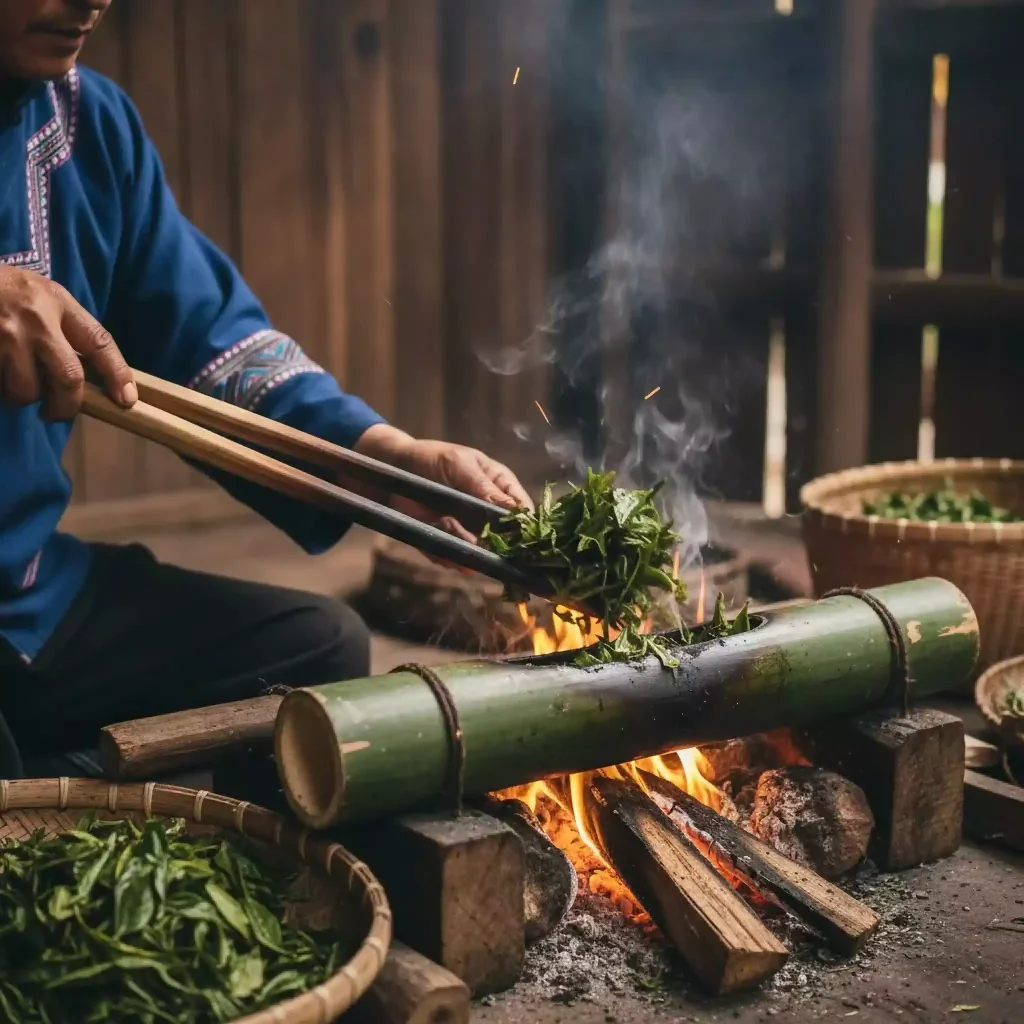
From Ritual to Routine: Why 2026 Is the Year Pu-erh Finally Becomes Essential
It's not just a tea. It's a metabolic tool, a mental reset button, and — finally — something you can actually brew at your desk.
Something quiet is happening in the tea world. A category that was once associated almost exclusively with aged-collector culture and Chinese grandmothers is finding a new home — in coworking spaces, minimalist kitchens, and camping packs from Wyoming to Wales.
If you've been paying attention, you've already noticed: the conversation around pu-erh has shifted. It's no longer only about investment-grade cakes locked in climate-controlled storage rooms. It's about how this extraordinary fermented tea fits into the rhythms of a modern, health-conscious life.
And 2026, specifically, is when five distinct forces are converging to create something close to a perfect storm for the category. Let me walk you through all of them.
The New Chinese Aesthetic — and Why the West Is Paying Attention
A few years ago, "围炉煮茶" (gathered-around-the-stove tea ceremony) went viral across Chinese social media. What looked like a nostalgic niche has since evolved into something more durable: a full-blown lifestyle movement that design-forward Westerners are now discovering through travel, Substack, and curated lifestyle accounts.
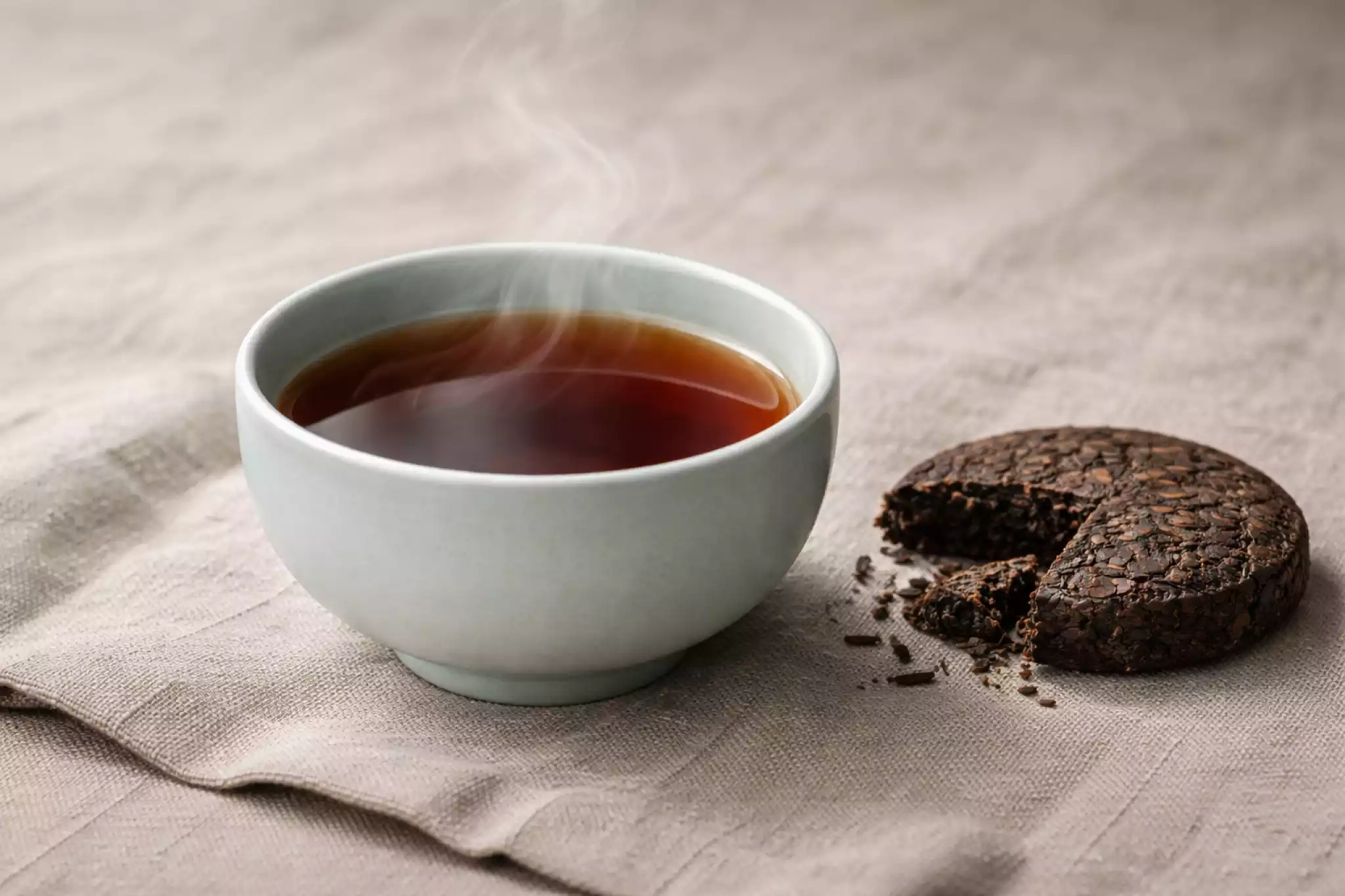
The aesthetic isn't merely about candles and slow Sundays. It's a formal rejection of the maximalist, caffeine-anxiety productivity culture that's been the dominant mode for a decade. Think: a pale celadon bowl, a compressed disk of aged tea, steam rising against raw linen. Calm as a practice. Ritual as resistance.
And the flavor backs it up. A good ripe pu-erh isn't simply "earthy" — that word undersells it completely. It's the scent of a forest floor after rain, a whisper of dark chocolate, the comforting weight of a heavy wool blanket on a cold morning. It asks nothing of you but to slow down and pay attention. In 2026, that's a radical act.
Pu-erh fits this moment better than any other tea. Its earthiness, its slow transformation, its ability to improve with time — these are qualities that resonate with people who are done rushing. And as more Western consumers encounter it through Taiwanese tea houses, specialty importers, and curious travel, its profile continues to rise.
"Pu-erh asks something of you. It asks you to wait, to pay attention, to let it change. That's not a bug — in 2026, that's the entire point."
The Science Is Catching Up — and It's Remarkable
For years, pu-erh's health claims existed in a grey zone: traditional wisdom, anecdote, a handful of small studies. That's changed rapidly. The period from 2024 to 2026 has seen a significant uptick in rigorous, peer-reviewed research into the bioactive compounds in fermented dark teas — and the findings are genuinely compelling.
Theabrownins and Your Gut
Research Spotlight — Published in Nature Metabolism, 2025
A research team at the Chinese Academy of Sciences published a significant study examining how theabrownins — the complex polymeric pigments formed during pu-erh's pile-fermentation process — interact with the human gut microbiome.
The findings were notable on two fronts. First, participants who consumed theabrownin-rich extracts for twelve weeks showed an average 11.3% reduction in LDL cholesterol. Second — and more interesting from a microbiome science perspective — the compounds were shown to significantly increase the abundance of Akkermansia muciniphila in the gut.
If that name means nothing to you yet, it will soon. Akkermansia is rapidly becoming one of the most-studied bacterial species in metabolic health research — associated with leaner body composition, lower inflammation, and improved insulin sensitivity. Theabrownins appear to act as a selective prebiotic for this species.
How Theabrownins Interact with the Gut Microbiome
Simplified model of how theabrownins reach the gut microbiome and support metabolic outcomes. Illustration: Steeped Roots.
The Postbiotic Angle
Here's where it gets particularly interesting for anyone following functional food trends. The beneficial metabolites produced during pu-erh's pile-fermentation process are now being discussed in scientific literature as postbiotics — bioactive compounds produced by microbial activity that confer health benefits on the host.
Unlike probiotics (which require live organisms to survive your digestive system) or prebiotics (which require specific fermentation to activate), postbiotics are stable, heat-tolerant, and immediately bioavailable. For a hot-brewed tea, that's a significant advantage. Your kettle isn't destroying the beneficial compounds — it's serving them to you.
In a market where "gut health" has become the dominant wellness narrative, pu-erh is quietly sitting on a decade of natural fermentation science that positions it as one of the most sophisticated functional beverages available — no fortification required.
The 2g Revolution — Less Is Finally More
Why 2g Is the "Golden Dose" of 2026
Traditional pu-erh has always had a new-consumer problem. The standard production format — a compressed 357-gram cake — was designed for a storage-and-age economy: buy it, warehouse it, sell it in fifteen years. That's not exactly welcoming if you just want a cup at your desk on a Tuesday.
The barriers were real: you needed a pu-erh pick (危险) to pry apart the compressed leaves, you had no idea how much to use, and you were committing to a tea you might not even like for the next several months of storage. The 2026 response to all three problems is compact, elegant, and clever.
Traditional Pu-erh vs. The 2026 Format
| Dimension | Traditional 357g Cake | 2026: 2g Mini Pellet |
|---|---|---|
| Preparation | Requires a pu-erh pick, some force, and a prayer | Unwrap, drop in mug, pour water |
| Dose control | Guesswork — pry off a chunk and hope for the best | Exact 2g per session, every time |
| Equipment needed | Gaiwan, pu-erh pick, tea tray, patience | One mug or flask |
| Flavor profile | Heavily aged, earthy, occasionally challenging | Lighter fermentation, floral, sweet finish |
| Storage | Climate-controlled room, bamboo wrapping | Tin in your desk drawer |
| Audience | Collectors, aficionados, the patient | Anyone with a kettle and a curiosity |
| Eco-packaging | Varies widely | Compostable corn-fiber or recycled paper wrappers |
Two grams also happens to align with the dosage used in most clinical research — which means you're not just getting convenience, you're getting the amount that actually appears in efficacy studies. That's not accidental.
There's also a more philosophical argument for the format. With five 2g pellets from five different regions, you can map the entire flavor landscape of Yunnan in a single week — without committing to five 357g cakes you'd be drinking for the next two years. It's an explorer's format. It quietly subverts the "buy more, store more" logic that drove so much of the old pu-erh market, and replaces it with something more honest: taste widely, buy deliberately, keep only what you love.
And for the environmentally conscious: the shift to 2g individual portions has pushed producers toward compostable corn-fiber and unbleached recycled paper packaging — a meaningful step toward the low-carbon consumption ethic that's defining 2026 buying behavior.
Contextual Drinking — Tea That Goes Where You Go
One of the most significant shifts in the global tea market over the past two years is the collapse of the "tea ceremony" as the primary frame for tea consumption. Ceremony still exists — and it's lovely — but it's no longer the only door in. Pu-erh in 2026 is context-fluid.
The Office Flask Method
Drop one 2g pellet into a thermal flask, add near-boiling water, and let it steep undisturbed for 20–30 minutes. The result: a sweet, smooth cup that gets better as it cools slightly. No over-steeping. No bitterness. No looking up from your screen.
Backcountry Camp Tea
Pu-erh is the ultimate travel companion. It's remarkably forgiving — whether you're using a hotel kettle in London or mineral-heavy spring water in the Wyoming backcountry. It doesn't demand precision; it offers consistency. Ultralight pellets, zero prep gear, and a cup that tastes genuinely good at altitude.
The Winding-Down Ritual
Lower caffeine than green or oolong, naturally warming, deeply settling. A ripe pu-erh brewed slowly in the evening has become the bookend that anxious urban dwellers are using to actually disengage from the day.
A useful market note: 2026 is also the ten-year mark for many 2016 "mid-aged" teas that were pressed during the previous wave of pu-erh enthusiasm. These cakes are now entering what producers and collectors call their golden drinking window — fully mellowed, no longer raw, not yet so transformed as to lose their origin character. That coming-of-age is contributing to unusual activity on the supply side this year, as estates and traders release cakes that have been quietly aging since the Obama administration.
The Knowledge-Led Consumer — Paying for Transparency, Not Mystique
The pu-erh market has historically run on opacity: obscure storage provenance, vintage claims that were difficult to verify, pricing structures that looked suspiciously like speculation. The new consumer is having none of it.
What's changed is that the same generation of buyers who democratized specialty coffee — who learned to read tasting notes, who cared about single-origin sourcing, who would happily pay more for a washed Ethiopian if the roaster could explain the processing — has now arrived in tea.
They're asking better questions. And the market is slowly, sometimes painfully, adjusting to answer them.
How to Read a Good Pu-erh: A Field Guide
Verify the Geographic Indication
Authentic pu-erh must originate from one of 11 designated prefectures in Yunnan Province — Xishuangbanna, Lincang, Pu'er City, and others. Look for the official Geographic Indication Protection mark on the packaging. If it's not there, ask why.
Understand the Age Claims
For raw (sheng) pu-erh: three to five years begins to show early aged character; ten-plus years is when the transformation becomes truly interesting. For ripe (shu) pu-erh, three years is already drinkable, and five to eight years represents peak accessibility for most palates. Be skeptical of any cake claiming excessive age at a low price point.
Know Your Red Flags
Uniform black-brown coloring across the entire cake surface (suggests artificial aging, or "hongfa"), a sharp musty smell rather than an earthy-sweet one, and unusually low pricing for claimed vintage years are all warning signals. Genuine aged teas develop complex aromas — camphor, dried plum, aged wood — not flat mold notes.
Core Pu-erh Production Regions — Yunnan Province, China
The three core production prefectures referenced in this article. Geographic Indication protection covers all 11 designated prefectures. Map: Steeped Roots (illustrative).
The most interesting market signal of 2026 is that premium, well-provenanced pu-erh is selling better than it ever has — while the gray-market fake-aged material is losing ground. Consumers have done their research. They will pay more for traceability. They won't pay anything for a story they can't verify.
So, Where Does This Leave You?
What's happening in 2026 is not a trend cycle. It's a structural shift in how a category relates to its audience. Pu-erh is no longer asking you to wait fifteen years to understand it. It's meeting you where you are: at your desk, at your campfire, in your kitchen at 10pm when you need the day to be over.
The science has given skeptics a framework. The 2g format has given beginners an entry point. The aesthetic movement has given everyone a visual language. And the knowledge-led consumer culture has given the whole market a standard of honesty to rise toward.
Whether you're coming to pu-erh because of its gut-health credentials, because it fits your slow-living philosophy, or simply because someone handed you a cup and it was unexpectedly good — the timing has never been better. The quality floor has risen. The barriers to entry have fallen. And the conversation has never been more interesting.
"Buy for the cup. Stay for the complexity. The category will reward your curiosity more generously in 2026 than it has at any point in the past decade."
Start With the Office Flask Method
Our best-selling intro kit — five regions, one flask, zero learning curve.
Ships within 3 business days · Free returns on first order
Frequently Asked Questions
Start with a ripe (shu) pu-erh pressed between 2022 and 2023. By now, the initial "pile fermentation" aroma — which can be somewhat barnyard-like straight off the press — will have mellowed into a sweeter, woodier profile. This is the sweet spot: fully approachable, genuinely complex, and easy to brew in a flask without over-steeping. Menghai and Jingmai region shu teas tend to be the most forgiving for first-timers.
The 2026 office steeping ratio that's getting the most traction: 2g per 300–350ml of water at 90–95°C (194–203°F), steeped for 20–25 minutes in a sealed flask. This yields a mellow, amber brew with a natural sweetness. If you prefer stronger, go 2g per 250ml. The key advantage of flask steeping is that ripe pu-erh is extraordinarily difficult to over-steep compared to green or oolong teas — it softens rather than astringes with extended contact.
Yes — pu-erh contains caffeine, though typically less per cup than coffee or green tea, and the fermentation process may modulate how that caffeine is absorbed. Ripe pu-erh in particular tends to produce a calmer, more sustained energy effect than coffee — without the spike-and-crash cycle. Many regular drinkers describe it as "focused calm" rather than stimulation. That said, if you're caffeine-sensitive, stick to afternoon portions brewed lightly.
Mini pellets are far more forgiving than full cakes. Keep them in a sealed tin or wooden box, away from strong odors (pu-erh absorbs smells readily), out of direct sunlight, and in a relatively stable humidity environment. A desk drawer or kitchen cupboard is perfectly adequate for six to twelve months. Beyond that, a clean, dry pantry shelf is ideal. You don't need a dedicated tea room — just avoid the spice drawer.
The majority of research on theabrownins and microbiome effects has been conducted on ripe (shu) pu-erh, which undergoes intensive pile fermentation and therefore contains much higher concentrations of these compounds than young raw pu-erh. If your primary interest is in the metabolic and gut-health angle, ripe pu-erh is the more evidence-backed choice. Raw pu-erh has its own distinct profile of catechins and polyphenols, but the postbiotic story is predominantly a shu story.