The Molecular Teacup: Why Ceramic Science Defines Your Tea Flavor
Beyond Aesthetics—The Physics of Porosity, Glaze Chemistry, and Mineral Interaction
Published February 20, 2026
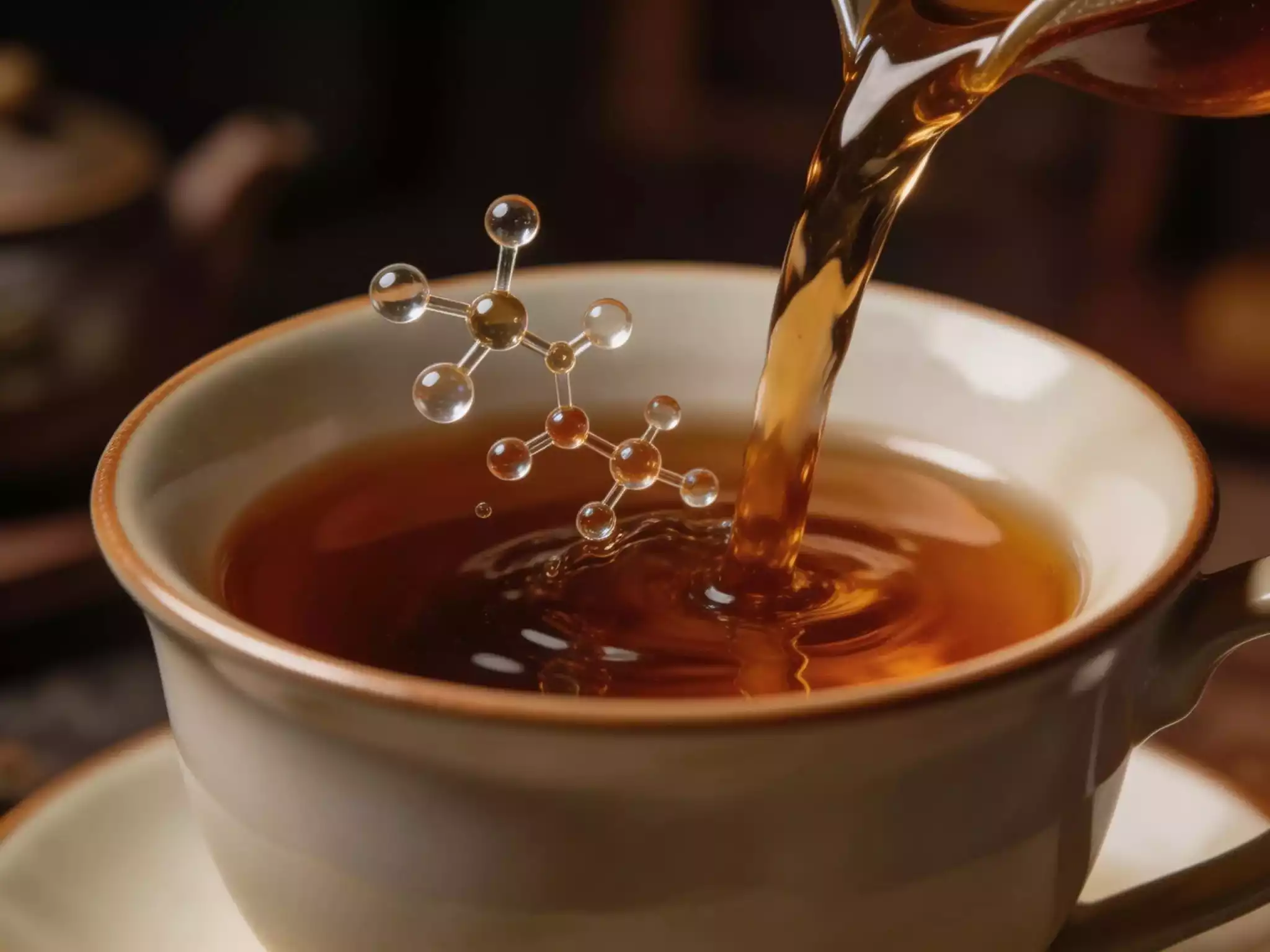
The Invisible Reactor
Walk into any tea shop, and you'll see customers tapping cups to hear their ring or admiring glaze patterns under the light. Aesthetics dominate the decision-making process. But while the artist sees a vessel, the scientist sees a reactor.
For the modern tea enthusiast, the interaction between water and leaf is only the first stage of extraction. The second, often overlooked stage, is the interaction between the liquor and the vessel. This is where the "invisible reactor" comes into play.
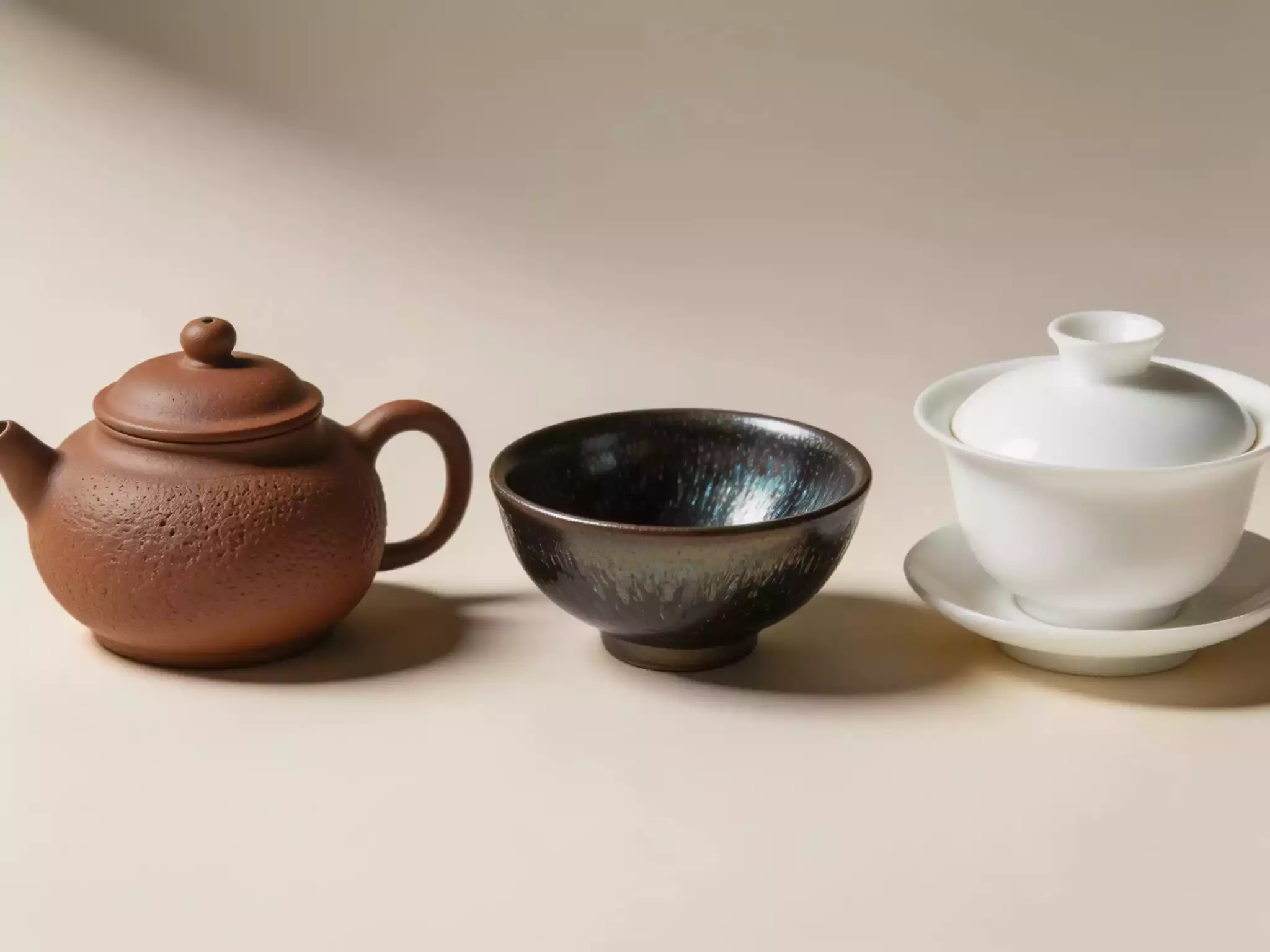
Have you ever wondered why the same Pu-erh tastes sweeter in a Jian Zhan cup, smoother in a Yixing (Zisha) pot, and sharper in a white porcelain gaiwan? It isn't placebo. It's materials science.
The chemical composition, thermal conductivity, and surface porosity of your teaware actively modify the organoleptic properties—the sensory characteristics—of your tea. Temperature retention affects extraction kinetics. Surface interactions alter dissolved compounds. Mineral content changes water chemistry.
The Tea Vessel as Chemical Reactor
In chemical engineering, a reactor is any vessel where substances undergo transformation. Your teacup qualifies:
- Temperature control: Thermal mass and conductivity determine heat retention
- Surface chemistry: Vessel walls interact with dissolved tea compounds
- Catalytic effects: Minerals in clay/glaze can facilitate chemical reactions
- Adsorption: Porous surfaces capture volatile aromatics and flavor compounds
Understanding these mechanisms transforms you from a passive consumer into an active director of your tea experience.
It is time to move beyond blind collection. By understanding the physics of your teaware, you can stop buying randomly and start engineering your perfect cup.
Zisha (Yixing Clay): The Physics of Porosity
In the world of functional ceramics for tea, Zisha (紫砂, "purple sand") is the most debated and revered material. Collectors pay thousands of dollars for antique Yixing pots. But what makes them functionally distinct? The answer lies in their unique mineralogical structure.

The Dual-Pore Structure: Open and Closed Porosity
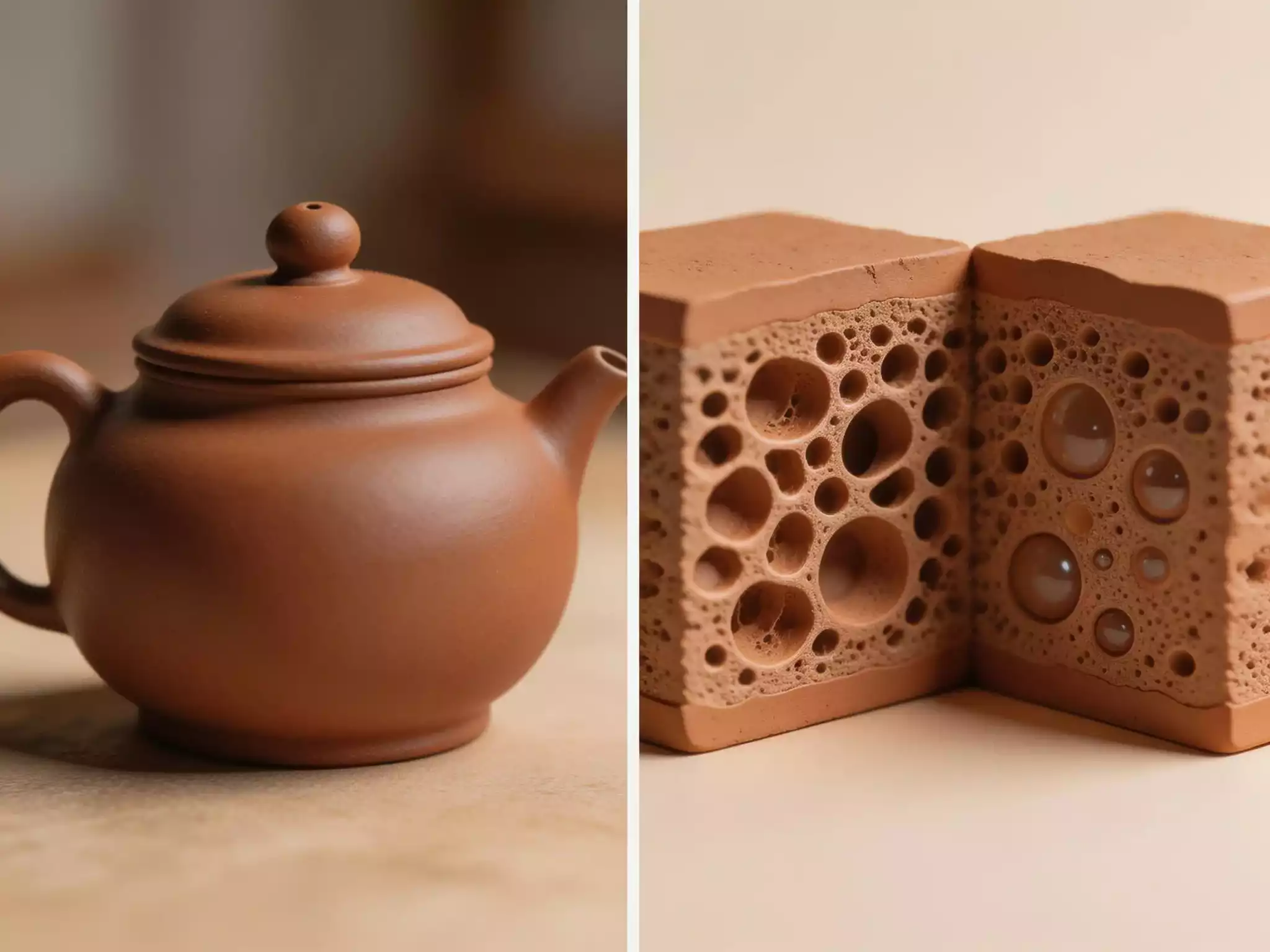
Under electron microscopy, high-quality Yixing clay reveals a complex network of interconnected pores that exist in two forms:
Pore Classification in Zisha
Open Pores (Open Porosity):
- Connect to the surface and allow gas/liquid exchange
- Typical diameter: 1-10 micrometers
- Enable the pot to "breathe"—allowing controlled moisture and oxygen exchange
- Prevent tea from developing "stuffy" off-flavors during extended steeping
Closed Pores (Sealed Porosity):
- Trapped within the clay matrix with no surface connection
- Create tiny air pockets that act as thermal insulation
- Contribute to Zisha's renowned heat retention capacity
Source: Studies on ceramic microstructure show that Yixing clay contains 10-15% total porosity, with approximately 60-70% being open porosity—a balance unique among tea vessels.¹
The Logic of "Removing Impurities": Adsorption Chemistry
Experienced tea drinkers claim Yixing pots "fix" mediocre tea—reducing harsh notes, smoothing rough edges. This isn't mystical thinking. It's adsorption, the same principle used in activated carbon filters.
The porous surface of Zisha acts like a selective filter. It captures specific volatile organic compounds (VOCs) responsible for undesirable characteristics:
- Warehouse smell (cang wei, 仓味) in aged Pu-erh—musty, damp notes from improper storage
- Excessive smokiness in over-roasted oolongs—acrid phenolic compounds
- Metallic or chemical notes from low-quality processing
Why This Works
Adsorption occurs when molecules adhere to a surface through weak intermolecular forces (van der Waals interactions, hydrogen bonding). Porous materials with high surface area are highly effective adsorbents.
Clay surfaces carry a slight negative charge that attracts positively charged or polar organic molecules—precisely the volatile compounds that cause off-flavors. Over time, a well-used Yixing pot develops a patina of adsorbed tea oils that can actually improve subsequent brews by contributing pleasant background aromatics.
Thermal Catalysis: Why Heat Retention Matters
Zisha has significantly lower thermal conductivity than porcelain—approximately 0.6-1.0 W/(m·K) compared to porcelain's 2-3 W/(m·K). This means:
- Slower heat loss: Water stays hot longer after pouring
- Sustained extraction: Complex molecules continue breaking down between infusions
- Enhanced mellowness: Aged teas release deeper, richer base notes (醇厚, chun hou) that might remain locked in a cooler vessel
This thermal property makes Zisha particularly suited to aged Pu-erh and heavily roasted oolongs—teas where prolonged heat exposure reveals hidden complexity rather than extracting bitterness.
⚠️ Debunking a Common Myth
Myth: "You must dedicate one Yixing pot to one tea type forever, or it will ruin the flavor."
Reality: While seasoning a pot with one tea category (e.g., ripe Pu-erh) creates a flavor-enhancing patina, the adsorbed oils represent only a tiny fraction of what's in your fresh brew. You can clean and reassign pots, though some cross-contamination of subtle aromatics may persist. The "one pot, one tea" rule is cultural tradition more than chemical necessity.
Jian Zhan (Tenmoku): Iron Alchemy
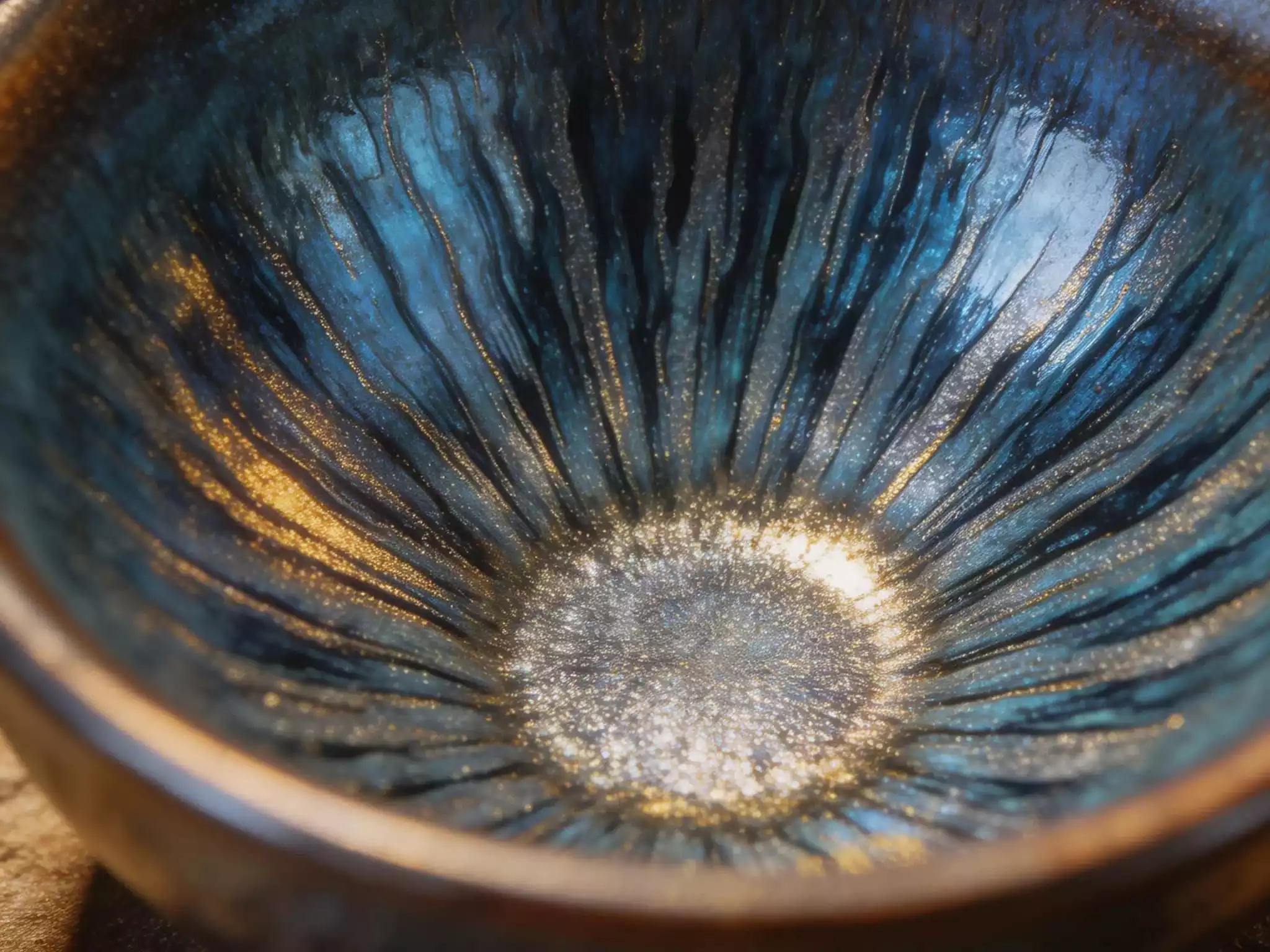
Originating from the Song Dynasty (960-1279 CE), Jian Zhan (建盏) bowls are famous for their "hare's fur" and "oil spot" glazes—mesmerizing patterns formed during firing. But beyond visual beauty lies specific mineral interaction that alters taste perception.
The Chemistry of Iron Oxides
The clay body and glaze of Jian Zhan are rich in iron, containing high levels of:
- Fe₂O₃ (Hematite) – red iron oxide
- Fe₃O₄ (Magnetite) – black iron oxide
During high-temperature firing (1300°C+), these minerals undergo complex crystallization, forming metallic crystals that create the distinctive glaze patterns. More importantly for flavor, iron remains partially reactive at the surface.
The Water-Softening Mechanism
Claims about Jian Zhan "magnetizing water" are often exaggerated. However, the chemical interaction is real, just more subtle than advertised.
Chelation Chemistry: The iron-rich surface can interact with hardness minerals in water—specifically calcium (Ca²⁺) and magnesium (Mg²⁺) ions—through a process called chelation, where metal ions bind to the iron-oxide surface.
Practical Effect: This doesn't eliminate water hardness entirely, but it can moderately reduce the activity of these ions in solution, effectively "softening" the water profile. The effect is most noticeable with moderately hard water (100-200 ppm TDS).
Reference: Research on ceramic-water interactions confirms that iron oxide surfaces can sequester calcium ions through surface complexation.²
Reshaping Mouthfeel: The Polyphenol-Iron Interaction
Why does tea taste sweeter in a Jian Zhan? The answer lies in iron's affinity for polyphenols—the tannin compounds responsible for astringency.
Iron ions (Fe²⁺ and Fe³⁺) form coordination complexes with polyphenolic hydroxyl groups. This binding:
- Reduces astringency perception: Bound tannins interact less with salivary proteins, causing less "dry mouth" sensation
- Enhances sweetness perception: With bitterness/astringency muted, underlying sweet amino acids and sugars become more prominent
- Rounds out body: The liquor feels fuller, smoother, with heightened hui gan (回甘, sweet aftertaste)
This makes Jian Zhan ideal for robust black teas and aged Pu-erh—teas where tannin management is key to achieving balance.
Practical Pairing Guide: Jian Zhan
Excellent matches:
- Ripe Pu-erh (shou): Amplifies natural sweetness, reduces any remaining bitterness
- Aged raw Pu-erh (sheng): Smooths tannins that haven't fully mellowed
- Yunnan black tea (Dian Hong): Enhances chocolate/honey notes
- Wuyi rock oolong: Balances roasted character with improved mouthfeel
Poor matches:
- Delicate green tea: Iron interaction can dull fresh aromatics
- High-mountain oolong: Natural floral sweetness gets masked
Silverware: The Power of Ion Purification
If clay is about interaction and modification, silver is about purification and clarity. Silver has been used for water storage for millennia, and its application in tea kettles and cups offers a distinct profile.
The Oligodynamic Effect: Silver's Catalytic Activity
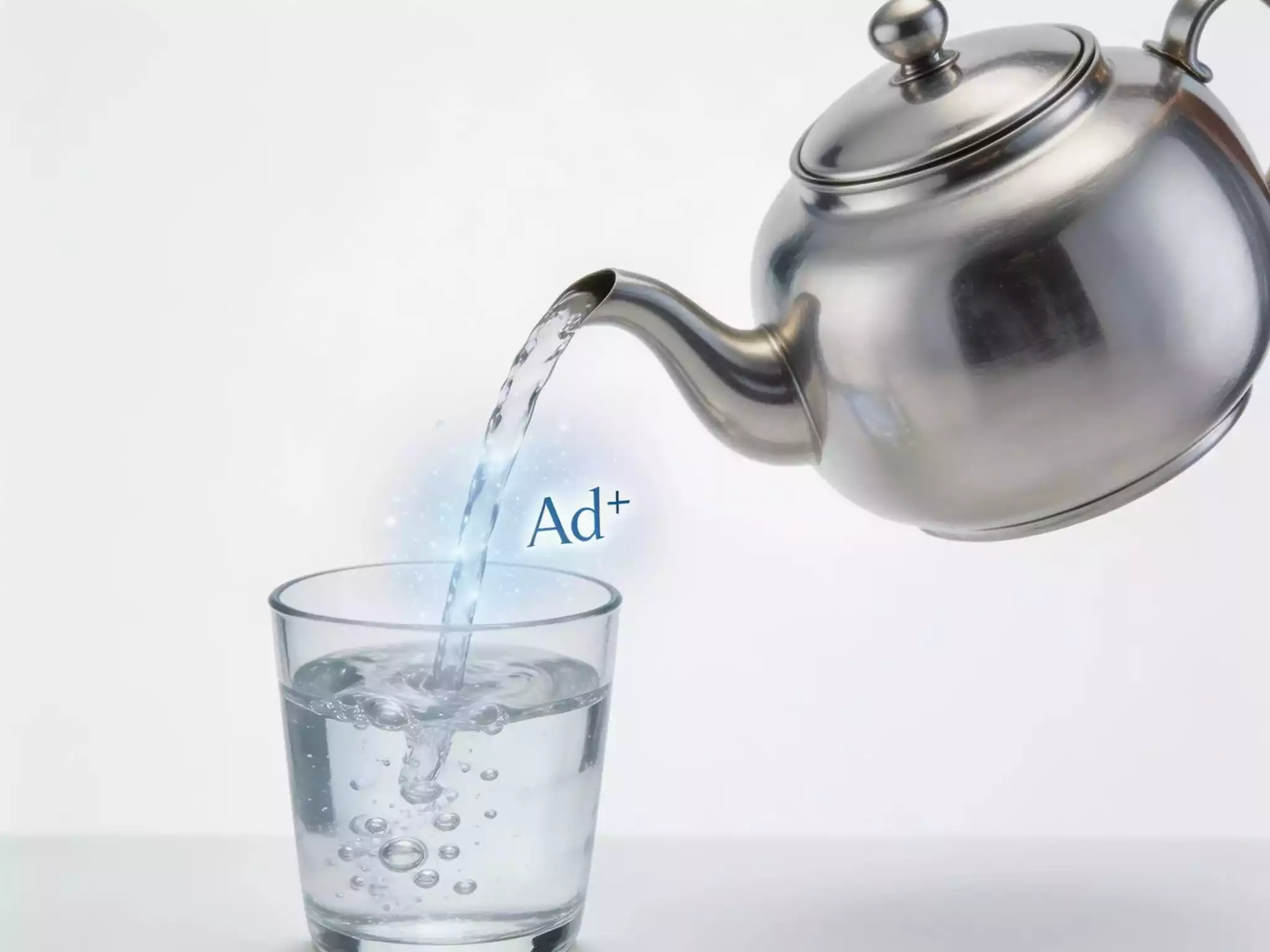
Silver ions (Ag⁺) exhibit what's called the oligodynamic effect—the ability to kill bacteria and microorganisms at very low concentrations. This antimicrobial property is well-documented and used in medical applications.³
At tea brewing temperatures (80-100°C), silver ions are chemically stable but possess mild catalytic properties. Unlike clay, silver doesn't adsorb flavors—it refines the water itself.
Water Structure and Perceived Smoothness
Tea brewers often describe silver-boiled water as "lighter" or "softer." The mechanism is debated, but likely explanations include:
Proposed Mechanisms for Silver's Water Effect
1. Ion Exchange and Purification
Silver ions can displace trace contaminants in water—chlorine residues, dissolved organics—through oxidation-reduction reactions. This produces genuinely "cleaner" water.
2. Surface Tension Modification
Studies suggest that dissolved silver ions slightly alter water's surface tension and hydrogen bonding network, potentially affecting how water interacts with tea leaf surfaces during extraction.
3. Reduced Oxidation
Silver's catalytic activity may reduce reactive oxygen species in water, preventing oxidation of delicate tea aromatics during brewing.
Result: The water penetrates tea leaves more efficiently, extracting aromatic compounds without pulling harsh tannins. This creates a brighter, clearer flavor profile.
The Pairing: Delicate Teas and Silver's "Overwhelming Advantage"
Silver's strength is non-interference. It purifies without adding character—the opposite of clay vessels. This makes it ideal for:
- High-mountain white tea: Silver preserves floral aromatics that clay would dull
- Fine black tea (Jin Jun Mei, Dian Hong Gold): Clarity and natural sweetness shine through
- Green tea: Fresh, grassy notes remain unobscured
- Light oolong (Tie Guan Yin, Bao Zhong): Delicate orchid/floral character is highlighted
For these teas, any earthiness from clay would be a distraction. Silver provides a blank canvas where the tea's inherent qualities are the sole focus.
Why Silver is Expensive—And Whether It's Worth It
A silver kettle can cost $500-5000+ depending on size and craftsmanship. Is the flavor difference worth it?
Honest assessment: For most drinkers, no. The difference is subtle—noticeable in direct comparison but not transformative. However, for professional tasters, tea shop owners, or serious enthusiasts brewing high-grade ($100+/50g) teas where every nuance matters, silver's ability to present tea in its purest form becomes valuable.
Think of it like high-end audio equipment: you need trained perception and excellent source material to appreciate the difference.
Jingdezhen Porcelain: The Pure Control Group
In scientific experiments, you need a control group to verify results. In tea tasting, that control is high-fired white porcelain.
The Inert Surface: Perfect Neutrality
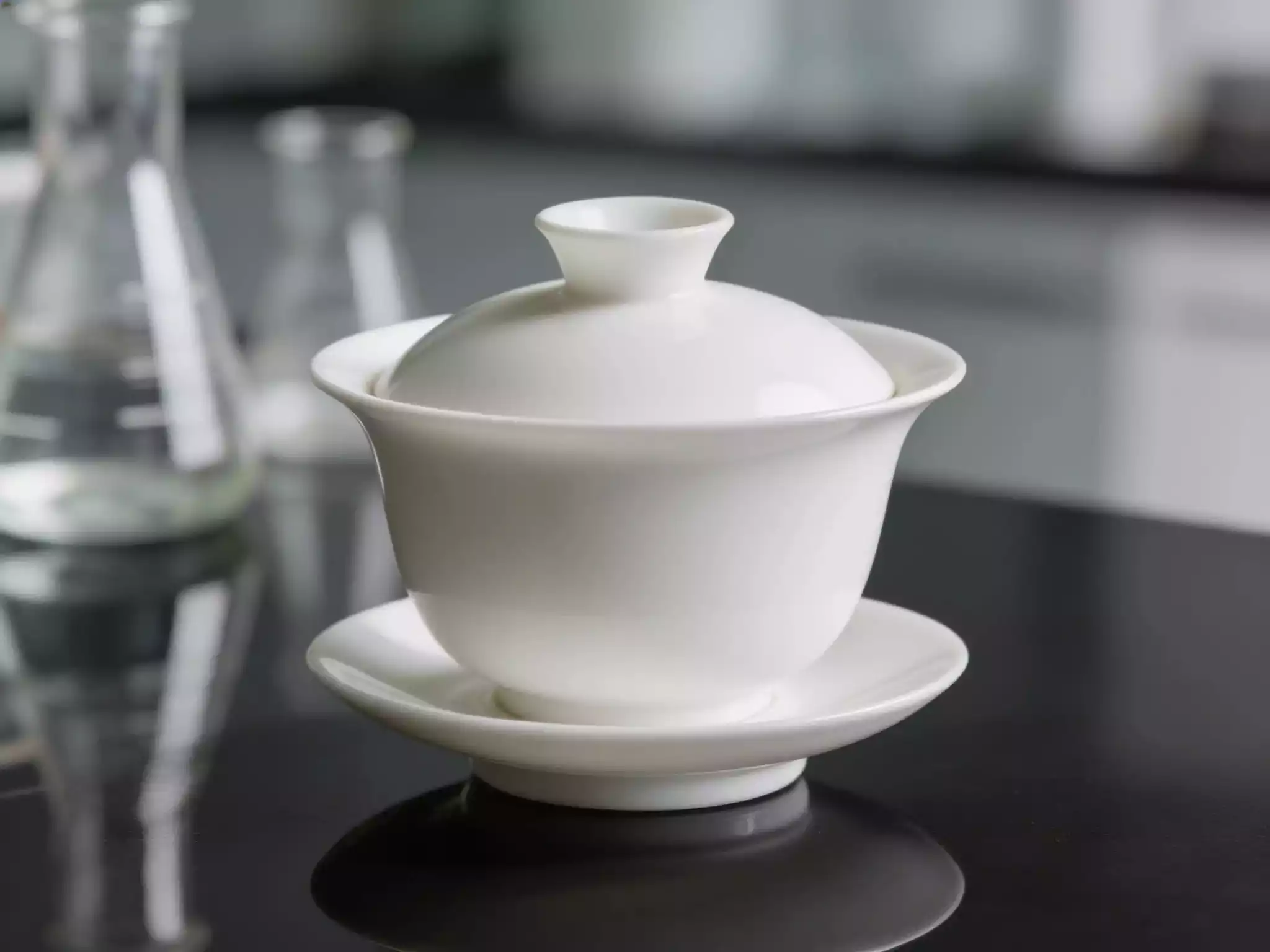
Jingdezhen (景德镇) porcelain—China's most famous ceramic production center—is fired at temperatures exceeding 1300°C. This extreme heat causes the clay to vitrify (become glass-like), creating a fully sealed, non-porous surface.
| Property | White Porcelain | Effect on Tea |
|---|---|---|
| Porosity | <0.5% (essentially zero) | No adsorption of flavors or aromatics |
| Chemical Reactivity | Inert (glaze is aluminosilicate glass) | No ion exchange; no mineral addition |
| Thermal Conductivity | 2-3 W/(m·K) | Neutral—neither extreme retention nor rapid loss |
| Surface Chemistry | Hydrophobic glaze (low adhesion) | Tea compounds don't stick; easy cleaning |
🧪 Technical Side-Note: The Universal Control
It is worth noting that this molecular neutrality is not exclusive to high-end porcelain. From a materials science perspective, high-borosilicate glassware and standard high-fired ceramic mugs operate on the exact same principle.
Because these materials have undergone full vitrification, they are chemically inert. They possess no open pores for adsorption and no reactive minerals for ion exchange. Whether you are using a Jingdezhen gaiwan, a laboratory-grade beaker, or a simple glazed mug, you are using a non-reactive reactor that will yield the same "true" flavor profile of the leaf.
Why Professional Tea Tasters Always Use Porcelain
In competitive tea evaluation—whether for quality grading (Q-grading), competition judging, or professional purchasing—white porcelain is mandatory. The reason is simple: truth.
- If a tea has a flaw: Porcelain will reveal it. Off-fermentation, processing errors, storage problems—nothing is hidden.
- If a tea has brilliance: Porcelain will project it without filtering. Delicate aromatics, complex flavor layers, aftertaste persistence—all are captured unadulterated.
Porcelain doesn't "improve" bad tea or "enhance" good tea. It simply tells the truth. This is why porcelain vs clay for tea tasting always favors porcelain for evaluation—it's the baseline against which all other vessels are measured.
Practical Use: When to Choose Porcelain
Essential scenarios:
- Evaluating new tea purchases (quality assessment)
- Comparing multiple teas side-by-side
- Learning a tea's true character before deciding on specialty vessels
- Brewing teas with delicate, nuanced aromatics (jasmine green, Bai Mudan white)
When to skip:
- You know the tea well and want to explore alternative presentations
- You're deliberately seeking the smoothing/sweetening effect of clay/Jian Zhan
For beginners learning about tea, starting with quality porcelain is essential. It prevents you from developing preferences based on vessel characteristics rather than the tea itself. Once you know what a tea truly tastes like in porcelain, you can intelligently experiment with how other materials modify that baseline.
Scientific Comparison: Material Properties & Tea Pairing
| Material | Primary Mechanism | Thermal Property | Best Tea Pairing | Flavor Impact |
|---|---|---|---|---|
| Zisha (Yixing) | Adsorption & thermal insulation via dual-pore structure | High heat retention (0.6-1.0 W/m·K) | Aged Pu-erh, roasted oolong | Smooths rough edges, reduces warehouse/smoke notes, enhances mellowness |
| Jian Zhan (Tenmoku) | Iron ion interaction with polyphenols & water minerals | Moderate retention | Black tea, aged dark tea, ripe Pu-erh | Reduces astringency, boosts sweet perception, rounds mouthfeel |
| Silver | Ion purification via oligodynamic effect | Rapid heating/cooling (high conductivity) | Delicate white tea, green tea, light oolong, premium black | Cleans water profile, enhances clarity, highlights aromatics without interference |
| White Porcelain | Chemical inertness (no interaction) | Neutral thermal properties (2-3 W/m·K) | All teas (especially for evaluation) | Pure, unaltered expression of the leaf—reveals both flaws and brilliance |
From Theory to Practice: Diagnostic Brewing
Understanding vessel science transforms you from a passive consumer into an active director of your tea experience. Here's how to apply this knowledge:
The Diagnostic Method
When a tea tastes "off," don't immediately blame the leaves. Try this systematic approach:
Troubleshooting with Materials Science
Problem: Tea tastes too astringent/bitter
→ Try: Jian Zhan (iron reduces tannin activity)
→ Or: Yixing pot (adsorbs harsh volatiles)
Problem: Aged tea has musty/warehouse smell
→ Try: Well-seasoned Yixing pot (adsorbs off-flavors)
→ Avoid: Porcelain (reveals every flaw)
Problem: Delicate tea tastes dull/flat
→ Try: Silver or white porcelain (no interference)
→ Avoid: Yixing or Jian Zhan (too much modification)
Problem: Can't taste difference between teas
→ Try: White porcelain (maximum clarity and differentiation)
→ Check: Water quality (hard water masks subtlety)
Building Your Arsenal
You don't need to own every vessel type. Here's a practical minimum:
The Essential Three-Vessel Setup
1. White Porcelain Gaiwan (120ml)
Cost: $15-50
Use: Daily brewing, evaluation, delicate teas
Why: Truth-telling baseline; works for everything
2. Yixing Pot (150ml)
Cost: $50-300 (avoid super cheap or super expensive)
Use: Aged Pu-erh, roasted oolong
Why: Transforms problem teas; develops character with use
3. Jian Zhan Cup (50-100ml)
Cost: $30-100
Use: Drinking vessel for ripe Pu-erh, black tea
Why: Sweetness enhancement; beautiful to use daily
Silver (optional luxury): $500+ for kettle
Only if: You brew expensive ($100+/50g) delicate teas regularly and want maximum purity
The Return to Functionalism
We began by calling the teacup an "invisible reactor." Now you understand why.
Every time you pour tea into a vessel, you're not just transferring liquid—you're initiating a series of physical and chemical interactions that will fundamentally alter what you taste. The vessel's porosity determines which volatile compounds are captured or released. Its mineral content changes water chemistry and compound reactivity. Its thermal properties affect extraction and flavor development.
Stop asking "Is this cup beautiful?" Start asking "What does this cup do?"
Beauty and function need not be exclusive. The most revered tea vessels in Chinese history—Song Dynasty Jian Zhan, Ming Dynasty Yixing pots—were prized precisely because they worked. Their beauty emerged from functional excellence, not the other way around.
Your Action Plan: The Diagnostic Method
Apply materials science to transform your daily tea ritual into a precise experiment.
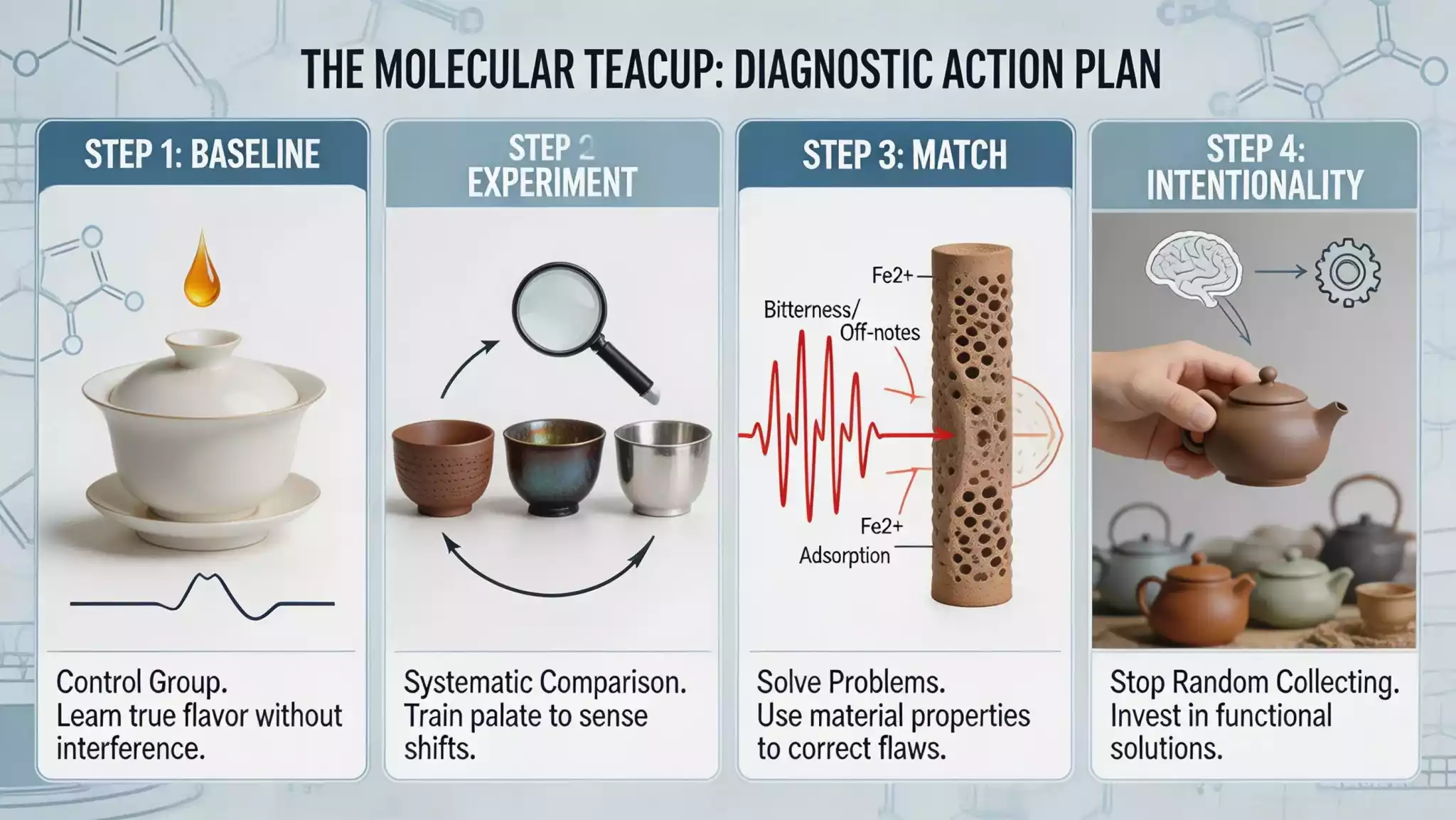
Step 1: Establish Your Baseline
Brew your regular teas in white porcelain. This is their true character—the "control group" of your experiment. Taste them multiple times to learn their actual flavor profile without any vessel interference.
Step 2: Experiment Systematically
Take one tea you know well and brew it identically in different vessels. Note the subtle shifts in mouthfeel and sweetness. This deliberate practice trains your palate to recognize the specific effects of ceramic interaction.
Step 3: Match Material to Molecule
Use your data to solve sensory problems:
- Too harsh/astringent? Try Jian Zhan or Yixing.
- Too delicate? Stick with porcelain or consider silver.
- Aged with off-notes? Yixing's adsorption will help.
Step 4: Stop Collecting Randomly
Before buying another vessel, ask: "What chemical problem does this solve?" If the answer is only aesthetic, save your money. Invest in tools that actively engineer a better drinking experience.
Your perfect cup isn't just about the leaf. It's about the vessel that holds it. Like a laboratory researcher configuring the perfect experiment, you can now match the material to the molecule.
That's the power of understanding the molecular teacup.
Frequently Asked Questions: Teaware Science
Does a Jian Zhan bowl really make tea sweeter?
Chemically, yes. The iron oxides ($Fe_2O_3$) on the glaze surface bind with tea polyphenols (tannins). By sequestering these bitter compounds, your brain perceives the underlying amino acids and sugars more prominently, resulting in a sweeter taste profile.
Why do professionals only use white porcelain for tasting?
Vitrified porcelain is chemically inert and non-porous. It offers zero adsorption and zero mineral contribution, acting as a "control group" that forces the tea to stand on its own merits—flaws and all.
Is a silver kettle better than a clay one?
It depends on the goal. Silver is about purification via the oligodynamic effect, making water "softer" and "brighter." Clay is about interaction and modification. Use silver for delicate greens/whites and clay for robust oolongs/Pu-erhs.
🍵 Continue Your Tea Journey
- Mastering the Brew: From Gaiwan to Mug — The Complete Beginner's Handbook
- Mastering Water Temperature for Brewing Tea: The 2026 Guide
- Micro Compressed Tea: Industry Definition & Structural Framework (2026 Edition)
- Loose Leaf Tea vs. Tea Bags: Quality, Cost, and Environmental Impact
- Office Tea Brewing Guide: How to Brew Tea in a Mug
- Beyond the Earl Grey Trap: Why Your Western Tea Habits Are Muting Chinese Red Tea
- What is Pu-erh Tea? Complete Guide to China's Fermented Treasure
Scientific References
- ScienceDirect Topics. "Open Porosity in Ceramics." Materials Science and Engineering. View Source
- ScienceDirect Topics. "Iron Oxides: Structure and Reactivity." Materials Science. View Source
- National Center for Biotechnology Information. "A review on the antimicrobial properties of silver." PMC. View Study