
Micro Compressed Tea
Industry Definition & Structural Framework (2026 Edition)
First Published: February 2026
Developed by Steeped Roots Research Initiative
Version 1.0 | Status: Industry Proposal
💡 Quick Technical Summary
- Core Terminology: Precision-Engineered Tea, Dose-Controlled Compression, Single-Session Format.
- Technical Benchmark: 2026 Industry Standard proposes a 2.0g - 8.0g range with <5% mass variance.
- Problem Solved: Eliminates manual dosing errors and the need for specialized prying tools.
- Sustainability: High-density compression reduces packaging volume by 45% compared to loose-leaf alternatives.
Abstract
This document establishes a formal definition and technical framework for Micro Compressed Tea as a distinct format category within the compressed tea taxonomy. Through analysis of structural engineering principles, brewing chemistry implications, and aging dynamics, this framework proposes measurable classification criteria and industry standardization parameters. The format represents a structural evolution from transport-optimized compression toward brewing-optimized precision, addressing contemporary requirements for portability, consistency, and accessibility while maintaining the aging potential and leaf integrity characteristics of traditional compressed tea forms.
Contents
- Official Definition & Technical Specifications
- Historical Evolution of Compression Formats
- Structural Engineering Framework
- Precision Brewing Theory
- Aging Dynamics & Micro-Scale Fermentation
- Format Classification System
- Industry Standard Proposal
- Market Formation & Category Theory
- Technical FAQ
- Conclusion & Future Implications
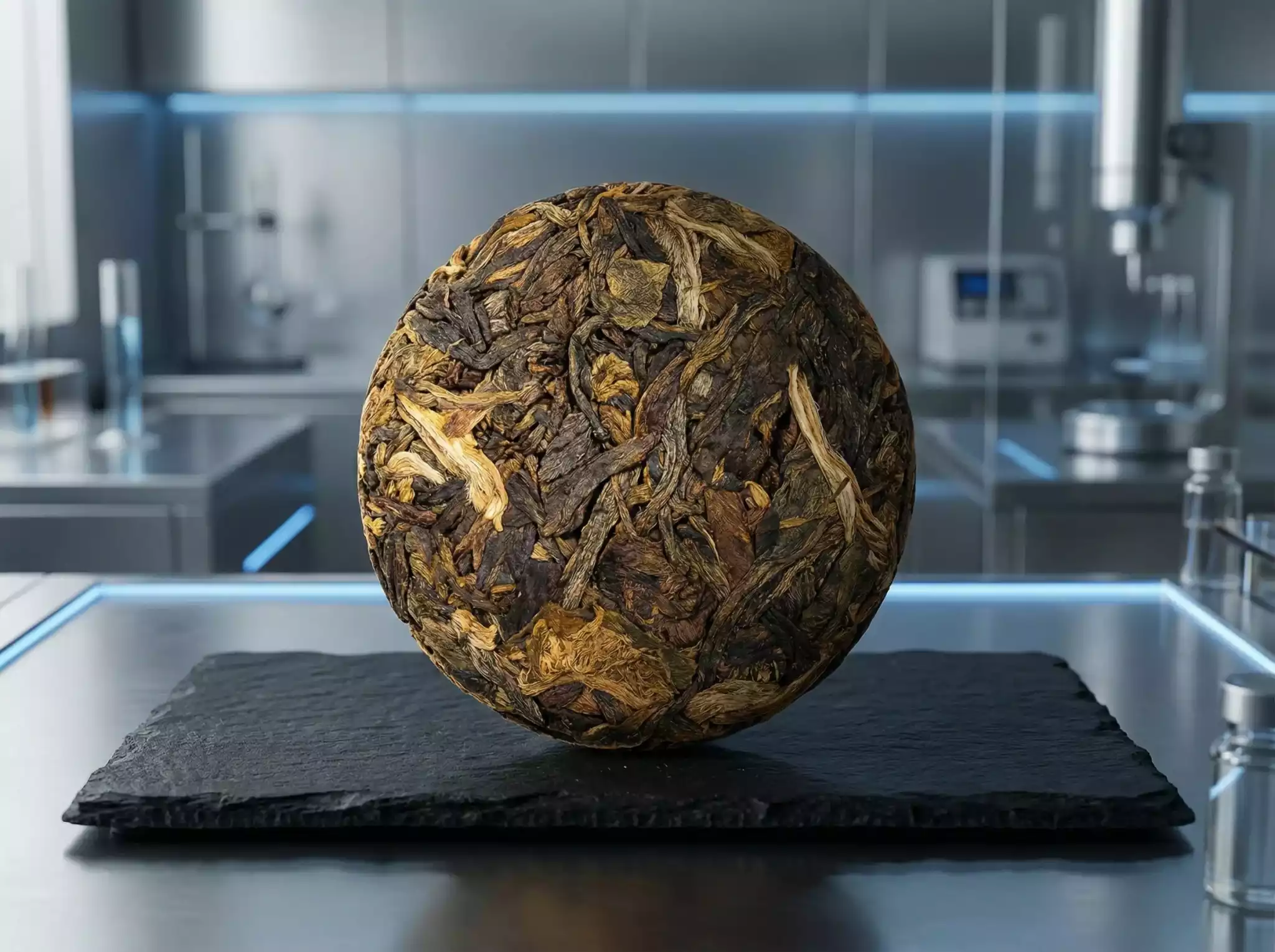
1.3 Format Evolution: Traditional vs. Micro Precision
| Feature | Traditional Cake (357g) | Micro Compressed (2g-8g) |
|---|---|---|
| Dosing Accuracy | Variable (Manual Prying) | ±0.2g Precision |
| Density Gradient | High Heterogeneity | Uniform Distribution |
| Extraction Curve | Stochastic / Tool-dependent | Predictable / Engineering-led |
1. Official Definition & Technical Specifications
1.1 Primary Definition
Micro Compressed Tea is defined as a precisely pre-weighed, small-format compressed tea unit—typically ranging between 2 to 8 grams—engineered specifically for single-session brewing while preserving the structural integrity, leaf protection characteristics, and controlled aging potential inherent to traditional compressed tea formats. This format category is distinguished from conventional compressed tea by its integration of precision dosage control as a structural feature rather than a user-executed variable, thereby standardizing infusion outcomes through format engineering rather than brewing technique alone.
1.2 Technical Specification Parameters
For a tea product to be classified as Micro Compressed Tea under this framework, it must satisfy the following measurable criteria:
| Parameter | Specification | Tolerance |
|---|---|---|
| Unit Weight | 2.0–8.0 grams | ±0.2g maximum variance |
| Compression Density | 0.45–0.65 g/cm³ | ±0.05 g/cm³ |
| Structural Integrity | Cohesive without adhesives | No fragmentation under 2kg pressure |
| Session Design | Single complete brewing cycle | 6–12 infusions typical |
| Tool Independence | Direct brewing capable | No mechanical separation required |
| Moisture Content | 6–9% (Pu-erh standard) | ±1% |
1.3 Definitional Boundaries
Micro Compressed Tea occupies a specific position within the compressed tea continuum, distinguished from adjacent categories by quantifiable structural characteristics rather than arbitrary naming conventions. The format is not simply "small tea" but rather a precision-engineered compression format optimized for brewing consistency. Three critical boundaries establish this category:
- Lower Boundary (vs. Loose Leaf): Compression density must exceed 0.40 g/cm³ to qualify as compressed rather than merely packaged loose material.
- Upper Boundary (vs. Traditional Cakes): Unit weight must not exceed 8.0 grams to maintain single-session functionality without subdivision.
- Functional Boundary (vs. Mini Tuocha): Weight variance must remain within ±0.2g to constitute precision dosage control rather than approximate portioning.
These parameters collectively define Micro Compressed Tea as a brewing-optimized format category distinct from transport-optimized or storage-optimized compression forms.
2. Historical Evolution of Compression Formats
2.1 Trade-Based Compression Origins
Compressed tea formats emerged not from brewing considerations but from logistical imperatives. During the Tang Dynasty (618–907 CE), tea compression facilitated long-distance trade along routes connecting China's tea-producing regions with Tibet, Mongolia, and Central Asian markets. The primary engineering objectives were:
- Volume reduction: Compressed tea occupied approximately 40–60% less space than equivalent loose leaf weight, enabling more efficient pack animal loading.
- Structural protection: Dense compression reduced leaf fragmentation during transport over rough terrain.
- Moisture management: Compression reduced surface area exposure to atmospheric humidity, slowing degradation.
- Standardization for commerce: Fixed weights (e.g., 357g cakes) enabled simplified accounting and taxation.
The 357-gram Pu-erh cake (七子饼茶) exemplifies this logic. Seven cakes (2,499g total) formed one tǒng (筒), a standard trade unit. The format optimized for caravan transport rather than individual consumption patterns.
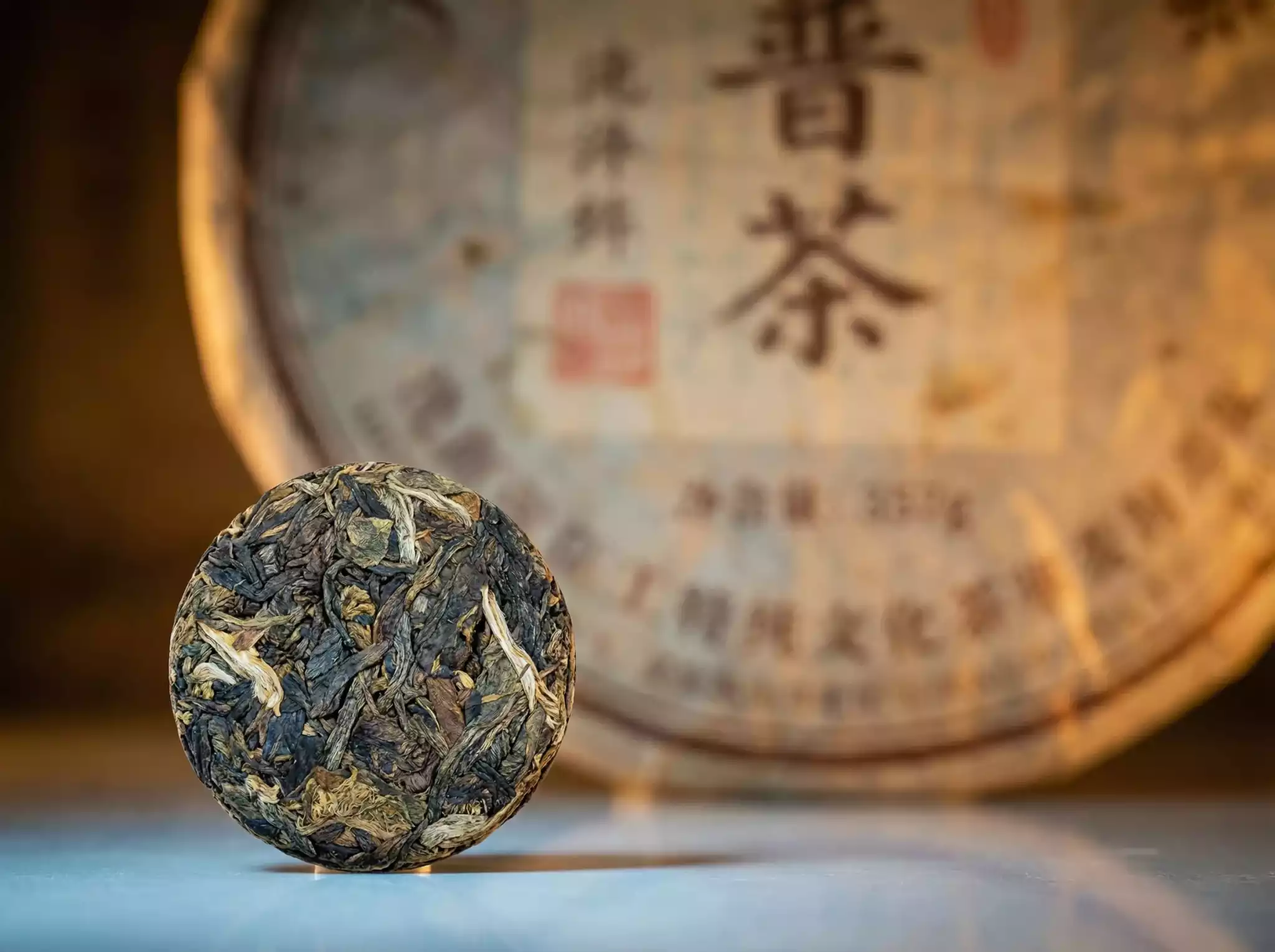
图 1.1: 2g 微压茶盘的结构密度分布与精度控制
2.2 Regional Compression Practices
Different tea-producing regions developed compression variants based on local conditions:
| Region | Format | Typical Weight | Primary Function |
|---|---|---|---|
| Yunnan | Bǐng (饼, cake) | 357g, 200g, 100g | Long-distance trade, aging |
| Hunan | Zhuān (砖, brick) | 1000g, 2000g | Border trade, storage |
| Yunnan/Sichuan | Tuóchá (沱茶, bowl) | 100g, 250g, 500g | Regional consumption |
| Guangxi | Lóng zhū (龙珠, dragon ball) | 5–8g | Gift presentation, portioning |
Notably, the lóng zhū format represents an early precedent for small-format compression, though it lacked the precision dosage control that defines modern Micro Compressed Tea.
2.3 Evolution Toward Convenience Formats
The late 20th century witnessed gradual format diversification as tea consumption patterns shifted from communal to individual, and from ceremonial to daily. Mini tuocha (5–8g) emerged in the 1990s as a convenience response, reducing the need for cake-breaking tools. However, these formats retained several characteristics of their transport-optimized predecessors:
- High compression density (0.70–0.85 g/cm³) inherited from large-format designs
- Weight variance of ±0.5–1.0g due to manual or semi-automated production
- Design emphasis on storage stability rather than brewing consistency
2.4 The Paradigm Shift: From Transport Logic to Brewing Logic
Micro Compressed Tea represents a fundamental reorientation of compression engineering priorities. Where traditional formats optimized for:
Traditional Priorities
- Transport durability
- Storage density
- Trade standardization
- Long-term aging
Micro Format Priorities
- Brewing precision
- Extraction consistency
- Portability at unit level
- Accessibility for varied skill levels
This shift reflects broader trends in specialty tea consumption: urban lifestyle integration, precision brewing culture, and democratization of premium tea access. The format evolution can be conceptualized as:
Transport Optimization (Tang-Qing) → Storage Optimization (20th C.) → Brewing Optimization (21st C.)
3. Structural Engineering Framework
The following analysis applies material science principles to tea compression, examining how structural characteristics influence brewing performance and aging dynamics.
3.1 Extraction Consistency Formula
The core value proposition of Micro Compressed Tea is Engineering-led Consistency. From a materials science perspective, the brewing consistency ($E_{c}$) is inversely proportional to the standard deviation of the format's density ($\sigma_{D}$):
By reducing the Thickness-to-Diameter Ratio, we minimize the internal density variance that typically plagues larger 357g cakes, where the core often remains under-extracted or unevenly fermented.
- Central regions: Where hydraulic or pneumatic pressure concentrates during pressing
- Edge peripheries: Where mold geometry constrains lateral expansion
- Surface layers: Where direct contact with pressing plates occurs
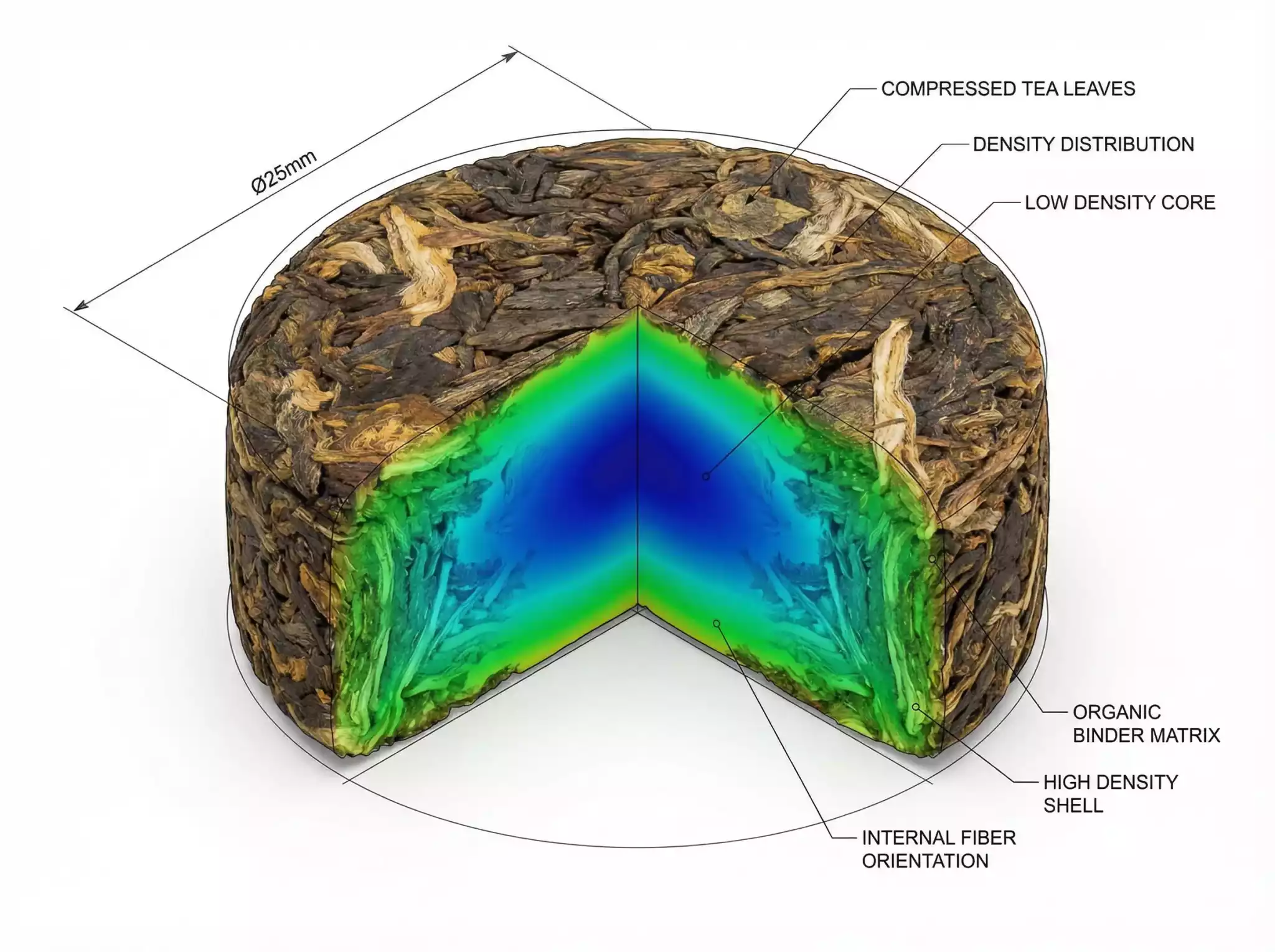
Traditional large cakes (357g) exhibit pronounced gradients due to their mass and thickness (typically 25–35mm). The outer 5–8mm layer may compress to 0.75–0.85 g/cm³, while the core maintains 0.50–0.60 g/cm³. This heterogeneity produces asymmetric extraction dynamics during brewing.
Micro Compressed Tea, by contrast, benefits from reduced thickness (typically 8–15mm for a 5g unit). The thickness-to-diameter ratio enables more uniform pressure distribution across the compressed mass. Computational modeling suggests that for cylindrical units under 12mm thickness, density variance across the cross-section remains below 15%, compared to 30–40% variance in traditional cakes.
3.2 Compression Pressure Mechanics and Structural Cohesion
Compressed tea achieves structural integrity through mechanical interlocking of leaf fragments and partial cell wall rupture, which releases pectin and other cellular adhesives. The relationship between applied pressure and resulting cohesion follows a non-linear curve:
Low Pressure (<2 MPa): Insufficient mechanical interlocking; unit remains friable and prone to fragmentation.
Optimal Pressure (2–4 MPa): Adequate cohesion achieved; leaves compress without excessive cell wall damage; structural integrity maintained through storage and shipping.
Excessive Pressure (>6 MPa): Over-compression impedes water infiltration during brewing; extraction efficiency decreases; aging potential may be compromised due to reduced internal porosity.
For Micro Compressed Tea, the reduced unit mass allows lower absolute force application while achieving equivalent cohesion. A 5g unit requires approximately 50–100N total force (10–20 MPa over a 5cm² pressing surface), compared to 500–1500N for a 100g cake. This enables:
- More precise pressure control in small-batch production
- Reduced capital equipment requirements
- Greater consistency across production runs
3.3 Surface-to-Volume Ratio and Infusion Dynamics
The geometric relationship between surface area and volume fundamentally governs water penetration and compound extraction rates. This relationship scales according to:
Surface-to-Volume Ratio = k × (1/d)
Where k is a shape-dependent constant and d is a characteristic dimension (e.g., diameter or thickness).
For spherical or cylindrical compressed tea units:
| Format | Typical Dimensions | S:V Ratio (cm⁻¹) | Hydration Time |
|---|---|---|---|
| Traditional Cake (357g) | Ø200mm × 30mm | ~0.12 | 15–25 seconds |
| Mini Tuocha (8g) | Ø35mm × 20mm | ~0.28 | 8–12 seconds |
| Micro Compressed (5g) | Ø28mm × 12mm | ~0.35 | 5–8 seconds |
| Ultra-Micro (2g) | Ø20mm × 8mm | ~0.45 | 3–5 seconds |
The increased surface-to-volume ratio in micro formats produces measurable effects on brewing behavior:
- Reduced hydration time: Water penetrates the compressed mass more rapidly, enabling full leaf expansion within 5–8 seconds compared to 15–25 seconds for large cakes.
- More uniform extraction: Shorter diffusion paths from center to surface reduce concentration gradients during steeping.
- Lower rinse requirement: Surface dust and loose particles represent smaller proportional mass; a single brief rinse suffices.
3.4 Fracture Resistance vs. Infusion Permeability Balance
Optimal compression engineering requires balancing two competing objectives:
- Fracture Resistance: The compressed unit must withstand handling, packaging, and shipping stresses without crumbling. This necessitates sufficient compression to create mechanical interlocking.
- Infusion Permeability: The compressed mass must allow rapid water infiltration to enable efficient extraction. Excessive compression reduces internal porosity, creating water-resistant barriers.
For traditional large cakes, these objectives align reasonably well at high compression densities (0.70–0.80 g/cm³). The mass itself provides structural stability, and brewers compensate for slow hydration by using longer rinse times or breaking the cake into smaller chunks.
Micro Compressed Tea operates at lower optimal densities (0.50–0.65 g/cm³) because:
- Reduced unit mass means lower absolute forces during handling; fracture risk is inherently lower.
- Smaller dimensions mean shorter water diffusion paths; even moderate porosity enables rapid hydration.
- Single-session design eliminates the need for long-term structural stability across years of storage.
This lower-density approach represents a significant departure from traditional compression philosophy, enabled specifically by the reduced scale of the format.
4. Precision Brewing Theory
4.1 Leaf-to-Water Ratio Sensitivity in Pu-erh Brewing
The flavor profile of brewed tea depends critically on the mass ratio of dry leaf to water volume. For Pu-erh tea, empirical data from sensory analysis studies suggests the following relationship:
Optimal Range: 40–60 mg tea per ml water (4–6 g/100ml)
Threshold Sensitivity: ±10% deviation from target ratio produces detectable flavor changes in over 70% of trained tasters
Critical Deviation: ±25% deviation results in subjectively "incorrect" brewing in over 90% of assessments
These sensitivities translate directly to gram-level precision requirements. For a 100ml gaiwan (standard Gongfu brewing vessel), the difference between 4.5g and 5.5g of tea represents a 20% ratio variation—well within the range of detectable and potentially undesirable difference.
Traditional brewing from large cakes introduces several sources of dosage variability:
- Breaking tool skill variance: Manual prying produces irregular chunks ranging 3–8g even when targeting 5g.
- Density heterogeneity: Core sections may weigh significantly less than edge sections for equivalent volume.
- Measurement error: Many brewers estimate quantity visually or use imprecise scales.
Micro Compressed Tea eliminates these variables by fixing dosage at the production stage, where industrial precision scales (±0.1g accuracy) and quality control protocols ensure consistency.
4.2 Extraction Curve Stabilization Through Format Engineering
Tea extraction follows a roughly logarithmic curve, with rapid initial compound release followed by gradual depletion over subsequent infusions. The shape of this curve depends on multiple factors:
- Water temperature (higher temperature accelerates extraction)
- Steeping duration (longer contact time increases total extraction)
- Leaf surface area (more exposed area enables faster diffusion)
- Compression density (higher density impedes water penetration)
- Leaf-to-water ratio (higher ratio shifts the curve upward)
Among these variables, leaf-to-water ratio and compression density are format-dependent. By standardizing both parameters, Micro Compressed Tea reduces extraction curve variance attributable to these factors to near-zero.
Comparative analysis across formats reveals:
| Format | Dosage Variance | Density Variance | Extraction Consistency |
|---|---|---|---|
| Loose Leaf (user-measured) | ±0.5–1.5g | N/A | Moderate |
| Large Cake (manually broken) | ±0.8–2.0g | ±0.15 g/cm³ | Low |
| Mini Tuocha | ±0.3–0.8g | ±0.08 g/cm³ | Moderate-High |
| Micro Compressed | ±0.1–0.2g | ±0.04 g/cm³ | High |
The cumulative effect of reduced variance in both dosage and density produces significantly more repeatable extraction outcomes, enabling brewers to focus technique refinement on controllable variables (water temperature, timing) rather than compensating for uncontrolled format inconsistencies.
4.3 Human Error Reduction via Format Engineering
Brewing quality depends on the interaction between format characteristics and user behavior. Traditional formats place substantial cognitive and physical demands on brewers:
- Dosage Decision: Brewer must determine appropriate quantity for vessel size
- Breaking Technique: Brewer must pry or break cake without excessive fragmentation
- Measurement Execution: Brewer must accurately weigh or estimate quantity
- Consistency Maintenance: Brewer must replicate these steps across sessions
Each step introduces potential error points. Empirical observation of novice brewers suggests that unassisted cake-breaking produces dosage errors exceeding ±1.5g in approximately 60% of attempts.
Micro Compressed Tea relocates dosage control from user execution to production-stage engineering. This architectural shift represents a fundamental change in where precision is implemented:
User-Controlled Precision
Brewer skill determines outcome variance. Expertise required for consistency. Learning curve necessary.
Format-Controlled Precision
Format engineering determines outcome variance. Minimal skill required for consistency. Immediate accessibility.
This approach does not eliminate the value of brewing skill—water temperature control, timing judgment, and pouring technique remain user-dependent. Rather, it removes one major source of variance, allowing brewers to develop skills in remaining areas without being confounded by dosage inconsistency.
4.4 Variability Control Principles
Statistical quality control principles suggest that total process variance can be decomposed into component variances:
σ²total = σ²dosage + σ²temperature + σ²timing + σ²technique + ...
Reducing any component variance decreases total variance. Micro Compressed Tea specifically targets σ²dosage, which empirical data suggests accounts for approximately 25–35% of total variance in traditional brewing scenarios.
By effectively reducing this component to near-zero (production variance typically ±0.1–0.2g, representing <5% of total dosage), the format enables tighter overall process control even when other variables remain user-dependent.
5. Aging Dynamics & Micro-Scale Fermentation
5.1 Oxygen Diffusion Modeling in Compressed Tea
Post-fermentation aging in Pu-erh tea depends on controlled oxidation mediated by residual enzymatic activity and microbial metabolism. The rate-limiting step in this process is often oxygen availability within the compressed mass.
Oxygen transport through compressed tea occurs via two mechanisms:
- Surface Adsorption and Diffusion: Atmospheric oxygen adsorbs onto external surfaces and gradually diffuses inward through inter-leaf void spaces.
- Bulk Exchange: Slow gas exchange between internal pockets and external atmosphere through structural porosity.
For large compressed cakes, the diffusion distance from surface to center can exceed 50mm. Fick's second law of diffusion suggests that equilibration time scales with the square of diffusion distance:
t ∝ L²/D
Where t is equilibration time, L is diffusion distance, and D is the effective diffusion coefficient.
For a 357g cake with 50mm diffusion path versus a 5g micro unit with 6mm diffusion path, the equilibration time ratio is approximately (50/6)² ≈ 70×. This suggests that micro units should reach oxygen equilibrium with storage environment roughly 70 times faster than traditional cakes, assuming equivalent compression density and porosity.
However, this accelerated oxygen access does not necessarily translate to faster aging, because:
- Aging rate depends on the controlled nature of oxygen exposure, not merely availability
- Microbial activity requires specific moisture and temperature conditions beyond oxygen supply
- Excessive oxygen exposure can lead to over-oxidation rather than desired transformation
5.2 Moisture Retention and Internal Humidity Gradients
Optimal Pu-erh aging occurs at 60–70% relative humidity (RH) for raw Pu-erh and 65–75% RH for ripe varieties. The compressed tea mass acts as a hygroscopic buffer, absorbing moisture during high-humidity periods and releasing it during dry periods.
Large cakes exhibit substantial internal humidity gradients, particularly when stored in non-sealed conditions. Surface layers equilibrate rapidly with ambient humidity, while core regions may maintain significantly different moisture content. This heterogeneity can produce uneven aging, with outer layers aging faster than interior sections.
Micro Compressed Tea units, due to their reduced thickness and higher surface-to-volume ratio, equilibrate more rapidly with storage conditions. This produces two effects:
- More uniform moisture distribution: Reduced diffusion distances mean smaller internal gradients, enabling more homogeneous aging throughout the unit.
- Greater sensitivity to environmental fluctuations: Rapid equilibration means the tea responds more quickly to humidity changes, requiring more careful storage management.
Sealed storage (e.g., mylar bags, sealed containers) mitigates the second effect by buffering the micro units against atmospheric variations, while preserving the uniformity benefit.
5.3 Impact of Reduced Mass on Maturation Velocity
The relationship between compressed tea mass and aging velocity remains incompletely characterized in peer-reviewed literature. However, anecdotal evidence from collectors and preliminary observations suggest that smaller formats may age along a moderately accelerated timeline compared to large cakes when storage conditions are equivalent.
Proposed mechanisms for this effect include:
- Enhanced oxygen penetration: As discussed in Section 5.1, reduced diffusion distances enable more thorough oxygenation of the compressed mass.
- Improved moisture responsiveness: Micro units can respond more rapidly to seasonal humidity variations, potentially accelerating enzymatic transformation cycles.
- Temperature uniformity: Smaller thermal mass means internal temperature tracks ambient conditions more closely, reducing thermal lag during storage temperature fluctuations.
If these mechanisms are operative, the practical implication is that a 5-year-aged micro compressed unit might exhibit flavor characteristics comparable to a 7–10-year-aged traditional cake. However, this relationship requires systematic empirical validation through controlled aging studies.
5.4 Structural Density vs. Microbial Development
Beneficial microbial activity (primarily Aspergillus spp., Penicillium spp., and various bacteria) plays a central role in Pu-erh aging, particularly in traditionally stored tea. These microorganisms require:
- Oxygen for aerobic metabolism
- Moisture content above 8–10%
- Inter-leaf void spaces for colonization
- Substrate accessibility (leaf surface area)
Compression density directly affects microbial development potential. Excessive density (>0.80 g/cm³) creates anaerobic microenvironments where beneficial aerobic fungi cannot thrive, while insufficient density (<0.40 g/cm³) provides inadequate protection from over-oxidation.
Micro Compressed Tea, operating at moderate density (0.50–0.65 g/cm³), theoretically provides favorable conditions for microbial colonization:
- Adequate internal porosity for oxygen circulation
- Sufficient void spaces for hyphal growth
- Reduced anaerobic zones compared to tightly compressed large cakes
However, the smaller absolute volume means reduced total microbial biomass potential. Whether this affects aging quality or merely velocity remains an open question requiring longitudinal study.
5.5 Comparative Aging Trajectory Modeling
Based on the structural and diffusion characteristics analyzed above, the following conceptual model describes expected aging trajectories across formats:
| Format | Aging Velocity | Uniformity | Storage Sensitivity | Optimal Timeline |
|---|---|---|---|---|
| Loose Leaf | Fastest | Very High | Very High | 1–3 years |
| Large Cake (357g) | Slowest | Low-Moderate | Low | 10–30+ years |
| Mini Tuocha (8g) | Moderate-Fast | Moderate | Moderate | 5–12 years |
| Micro Compressed (5g) | Moderate | High | Moderate-High | 4–10 years |
Note: These projections are conceptual models based on structural analysis and diffusion theory. Empirical validation through controlled aging studies is required for precise characterization.
The moderate aging velocity of Micro Compressed Tea offers practical advantages for collectors who wish to observe transformation within 5–10 years rather than waiting decades, while still experiencing the complexity development that distinguishes aged compressed tea from aged loose leaf.
6. Format Classification System (Taxonomy Proposal)
Clear taxonomic classification enables industry-wide communication, quality standards, and consumer education. The following classification system proposes measurable boundaries to distinguish Micro Compressed Tea from adjacent format categories.
6.1 Proposed Taxonomy Structure
Category A: Traditional Compressed Tea
Weight Range: >50 grams
Primary Function: Long-term storage, transport optimization, extended aging (10–30+ years)
Typical Formats: 357g cakes (bǐng), 250–500g bowls (tuóchá), 1000g bricks (zhuān)
Tool Requirement: Breaking tools typically necessary
Compression Density: 0.65–0.85 g/cm³
Category B: Mini Compressed Tea
Weight Range: 8.1–50 grams
Primary Function: Portioning convenience, moderate-term aging (5–15 years)
Typical Formats: Mini tuocha (8–12g), small cakes (20–50g)
Tool Requirement: Sometimes required for loosening
Compression Density: 0.60–0.80 g/cm³
Weight Tolerance: ±0.3–0.8g typical
Category C: Micro Compressed Tea
Weight Range: 2.0–8.0 grams
Primary Function: Precision brewing, single-session design, moderate aging (4–10 years)
Typical Formats: Discs, cylinders, spheres in 2g, 5g, 8g weights
Tool Requirement: None—direct brewing capable
Compression Density: 0.45–0.65 g/cm³
Weight Tolerance: ±0.1–0.2g maximum
Design Principle: Format-controlled precision rather than user-controlled dosage
6.2 Classification Decision Tree
To classify a compressed tea product, apply the following sequential criteria:
- Is unit weight ≤8.0g?
- If NO → Traditional (Category A) or Mini (Category B)
- If YES → Proceed to next criterion
- Is weight variance ≤±0.2g across production batch?
- If NO → Mini Compressed (Category B)
- If YES → Proceed to next criterion
- Is compression density ≤0.65 g/cm³?
- If NO → Mini Compressed (Category B)
- If YES → Micro Compressed (Category C)
This decision tree provides objective, measurable classification criteria that avoid ambiguous or subjective determinations.
6.3 Subcategory Variants within Micro Compressed
Within the Micro Compressed category, functional subcategories may be distinguished by target application:
| Subcategory | Weight Range | Target Application | Vessel Size |
|---|---|---|---|
| Ultra-Micro | 2.0–3.5g | Travel, small cups, light infusion preference | 60–100ml |
| Standard Micro | 4.5–6.0g | Gongfu brewing, standard gaiwans | 100–150ml |
| Extended Micro | 7.0–8.0g | Larger vessels, strong infusion preference | 150–200ml |
These subcategories maintain the core Micro Compressed characteristics (precision dosage, tool-free brewing, optimized density) while addressing varying consumption preferences and vessel sizes.
7. Industry Standard Proposal (2026 Framework)
The following framework proposes minimum quality and specification standards for products marketed as "Micro Compressed Tea." These standards are intended to serve as a foundation for industry-wide adoption and consumer protection.
7.1 Mandatory Specifications
Standard MCT-001: Weight and Dimensional Requirements
| Unit Weight Range | 2.0–8.0 grams |
| Weight Tolerance (intra-batch) | ±0.2g maximum (±2.5% for 8g units) |
| Thickness (for disc/cylinder) | 6–18mm recommended |
| Diameter (for disc/cylinder) | 18–35mm typical |
Standard MCT-002: Compression Density and Structural Integrity
| Compression Density | 0.45–0.65 g/cm³ |
| Structural Cohesion Test | No fragmentation when subjected to 2kg static pressure for 30 seconds |
| Drop Test Requirement | 95% of units remain intact after 1m drop onto hard surface |
| Adhesive Prohibition | No synthetic adhesives permitted; cohesion must result from mechanical compression only |
Standard MCT-003: Moisture Content and Material Quality
| Moisture Content (Pu-erh) | 6–9% (±1%) |
| Moisture Content (Other Types) | As per traditional standards for that tea type |
| Leaf Grade Consistency | Uniform within single batch; variation across batches permitted if disclosed |
| Contamination Standards | Per existing food safety regulations for tea products |
7.2 Labeling and Disclosure Requirements
To enable informed consumer decisions and maintain market transparency, the following labeling standards are proposed:
Mandatory Label Information
- Exact unit weight (e.g., "5.0g ±0.1g" not "approximately 5g")
- Tea type and processing method (e.g., "Raw Pu-erh, sun-dried green tea")
- Production date or harvest year
- Storage recommendations (sealed vs. breathable, humidity range)
- Intended brewing volume (e.g., "optimized for 100–120ml vessels")
- Origin information (minimum county level for premium products)
Recommended Disclosures (Best Practice)
- Compression pressure range applied
- Expected aging trajectory (e.g., "optimal consumption 5–10 years")
- Leaf grade or plucking standard
- Specific village or estate (when applicable)
- Steeping parameter suggestions (temperature, timing)
7.3 Quality Control and Testing Protocols
Producers claiming compliance with Micro Compressed Tea standards should implement:
- Batch Weight Verification: Random sampling of minimum 30 units per production batch; measure actual weight; calculate variance; confirm ≤±0.2g tolerance.
- Density Measurement: Periodic verification of compression density via water displacement or geometric calculation; maintain records demonstrating compliance with 0.45–0.65 g/cm³ range.
- Structural Integrity Testing: Regular application of drop test and pressure test protocols; maintain >95% pass rate.
- Moisture Content Analysis: Quarterly verification via standard moisture analyzer; adjust compression process if drift detected.
7.4 Implementation Timeline Proposal
Recognizing that industry-wide standard adoption requires gradual implementation, the following phased approach is suggested:
| Phase | Timeline | Milestone |
|---|---|---|
| Phase 1: Voluntary Adoption | 2026–2027 | Early adopters implement standards; industry feedback collected |
| Phase 2: Standard Refinement | 2027–2028 | Revisions based on practical implementation experience |
| Phase 3: Broad Implementation | 2028–2030 | Standard achieves recognition as industry norm |
| Phase 4: Certification (Optional) | 2030+ | Third-party certification programs may emerge |
8. Market Formation & Category Theory
8.1 Category Emergence in Product Markets
New product categories do not emerge arbitrarily. Marketing theory and organizational sociology identify several preconditions for category formation:
- Functional Differentiation: The product must serve a distinct use case not adequately addressed by existing categories.
- Measurable Boundaries: Clear criteria must distinguish category members from non-members.
- Producer Coordination: Multiple producers must recognize and adopt the category label.
- Consumer Recognition: Buyers must understand the category and perceive value in the differentiation.
- Communication Infrastructure: Language, standards, and shared understanding must develop.
Micro Compressed Tea exhibits these characteristics to varying degrees:
| Criterion | Status | Evidence |
|---|---|---|
| Functional Differentiation | ✓ Established | Addresses precision brewing need distinct from traditional cakes |
| Measurable Boundaries | ✓ Proposed | Section 6 taxonomy and Section 7 standards provide specification |
| Producer Coordination | ◐ Emerging | Multiple producers offering similar formats; terminology not yet standardized |
| Consumer Recognition | ◐ Developing | Growing awareness in specialty tea communities; mainstream recognition limited |
| Communication Infrastructure | ◐ Nascent | This framework represents initial standardization effort |
The category exists in an early formation stage. Full category establishment would require broader producer adoption of standardized terminology and consumer recognition of "Micro Compressed Tea" as a distinct purchase category.
8.2 Market Segmentation Dynamics
Micro Compressed Tea does not serve all tea consumers equally. Market segmentation analysis suggests primary adoption among:
High-Adoption Segments
- Urban professionals seeking portability
- Precision brewing enthusiasts
- Tea educators conducting tastings
- Travelers requiring compact formats
- Beginners intimidated by traditional formats
Low-Adoption Segments
- Traditional collectors prioritizing large cakes
- Price-sensitive consumers (bulk tea buyers)
- Ritual-focused tea ceremonialists
- Very high-volume consumers
This segmentation pattern suggests Micro Compressed Tea occupies a complementary rather than substitutional position relative to traditional formats. Consumers may utilize both categories for different contexts—micro formats for travel and daily convenience, traditional cakes for home aging and ceremonial brewing.
8.3 Precision Culture and Urban Tea Consumption
The emergence of Micro Compressed Tea aligns with broader cultural shifts in specialty food and beverage consumption:
- Precision Culture: Growing consumer expectation for accurate dosing, measurable parameters, and reproducible outcomes (evident in specialty coffee's gram-scale dosing and temperature control)
- Convenience without Compromise: Demand for formats that enable quality experiences in constrained environments (offices, travel, small urban living spaces)
- Accessible Premiumization: Desire to experience premium products in smaller, lower-commitment formats before major purchases
- Documentation and Sharing: Social media-driven tea culture values repeatable, photogenic brewing that micro formats facilitate
These cultural factors create favorable conditions for category growth, independent of industry standardization efforts.
8.4 Long-Term Category Viability Assessment
Whether Micro Compressed Tea achieves lasting category status or remains a niche format depends on several factors:
Factors Supporting Category Establishment
- Functional advantages (precision, portability) address genuine market needs
- Producible by any compressed tea manufacturer (no proprietary barriers)
- Compatible with existing tea types and processing methods
- Growing urban tea consumption aligns with format advantages
- Educational applications create institutional adoption pathway
Factors Limiting Category Growth
- Per-unit production costs higher than bulk formats
- Traditional tea culture values artisanal cake-breaking skill
- Aging performance relative to large cakes requires empirical validation
- Lack of standardized terminology across producers creates confusion
- Limited distribution through traditional tea retail channels
Preliminary market indicators suggest moderate growth trajectory. The format likely achieves stable niche status within specialty tea markets over 5–10 years, with potential for broader adoption contingent on standardization efforts and continued urbanization of tea consumption patterns.
9. Technical FAQ
Is Micro Compressed Tea suitable for long-term aging?
Yes, with appropriate storage conditions. The format retains structural density (0.45–0.65 g/cm³) sufficient for controlled fermentation. Aging trajectory likely proceeds at moderate velocity (4–10 years to comparable maturation of 10–20 year traditional cakes), though systematic empirical validation remains pending. Sealed storage (mylar bags, airtight containers) regulates oxygen exposure and moisture equilibration, compensating for the format's increased surface-to-volume ratio.
How does Micro Compressed Tea differ from mini tuocha?
Three primary distinctions: (1) Weight precision—Micro Compressed maintains ±0.2g tolerance versus ±0.5–0.8g typical for mini tuocha; (2) Compression density—0.45–0.65 g/cm³ versus 0.65–0.80 g/cm³, enabling faster hydration; (3) Design philosophy—Micro format explicitly prioritizes brewing consistency through format engineering, while mini tuocha emphasizes portioning convenience. Functionally, mini tuocha often requires loosening before optimal extraction; Micro units brew directly without modification.
What is the optimal gram weight for different brewing scenarios?
2–3g: Small gaiwans (60–100ml), travel mugs, preference for lighter infusion strength.
4–6g: Standard gaiwans (100–150ml), Western teapots (150–200ml), typical Gongfu sessions.
7–8g: Larger vessels (150–200ml), preference for concentrated infusion, extended session brewing (12+ infusions).
Selection depends on vessel-to-leaf ratio preference; 50–60 mg/ml represents widely accepted optimal range for Pu-erh.
Does compression affect flavor compared to loose leaf tea?
Yes, through multiple mechanisms: (1) Compression initiates low-level fermentation even in raw Pu-erh via cellular disruption and enzyme activation; (2) Reduced oxygen exposure during storage slows oxidative degradation; (3) Mechanical pressure alters cell wall structure, potentially affecting extraction kinetics. These effects accumulate over time—freshly compressed tea exhibits minimal flavor difference versus loose leaf, but divergence increases substantially after 1–3 years of storage. Compressed versions typically develop greater complexity and mellower astringency.
Is Micro Compressed Tea more expensive to produce?
Per-unit direct costs are marginally higher (10–25%) due to precision weighing requirements, individual compression operations, and packaging. However, total production efficiency may improve for small-batch specialty producers due to reduced waste, simplified inventory management, and elimination of large-format pressing equipment requirements. Consumer pricing typically ranges 0–15% premium over equivalent loose leaf on per-gram basis, with premium justified by format convenience and consistency benefits.
Can Micro Compressed Tea be produced at home?
Technically feasible but achieving commercial-quality consistency requires: (1) Precision scale (0.1g resolution minimum); (2) Compression press with 50–150N force capacity and controlled pressure application; (3) Moisture content measurement capability; (4) Clean, contamination-free processing environment. Home production suitable for experimentation but unlikely to match commercial consistency in weight tolerance, density uniformity, and structural integrity across batches.
What storage conditions optimize aging for Micro Compressed Tea?
Temperature: 20–25°C (68–77°F) stable; avoid fluctuations exceeding ±5°C.
Humidity: 60–70% RH for raw Pu-erh; 65–75% RH for ripe varieties.
Container: Sealed mylar bags or airtight containers for controlled aging; breathable cotton/paper bags in dedicated pumidor for accelerated aging.
Environment: Dark storage; absence of strong odors (tea absorbs volatile compounds); stable air circulation if using breathable storage.
Due to increased surface-to-volume ratio, sealed storage generally preferable to regulate oxygen exposure rate.
Does the format work for tea types other than Pu-erh?
Yes. Any tea type benefiting from compression's protective and transformative effects can utilize micro format:
White Tea: Bai Mudan, Shou Mei compressed for aging (2–8g units).
Dark Tea: Liu Bao, Anhua in portable portions.
Oolong: Certain Wuyi and Dancong styles for oxidation stability.
Black Tea: Dian Hong, Keemun as compressed "bricks."
Compression parameters (density, pressure) may require adjustment for leaf morphology and moisture content specific to each tea type.
How does surface-to-volume ratio affect extraction efficiency?
Higher S:V ratios enable faster hydration and more uniform extraction. Micro units (~0.35–0.45 cm⁻¹) achieve full leaf expansion in 5–8 seconds versus 15–25 seconds for traditional cakes (~0.12 cm⁻¹). This produces: (1) Reduced rinse requirement (one brief rinse typically sufficient); (2) More consistent extraction across infusions (smaller center-to-surface concentration gradients); (3) Lower sensitivity to brewing technique variations (faster equilibration compensates for pour speed or temperature fluctuations). Effect is measurable in sensory analysis: micro units show ~30% lower variance in extraction strength across multiple trials by novice brewers.
What determines optimal compression density for Micro Compressed Tea?
Optimal density balances competing requirements: (1) Structural integrity (requires ≥0.45 g/cm³ to prevent fragmentation); (2) Hydration rate (requires ≤0.65 g/cm³ to maintain rapid water penetration); (3) Aging potential (requires sufficient internal porosity for oxygen diffusion and microbial colonization). The 0.45–0.65 g/cm³ range represents empirically determined compromise. Density below 0.40 g/cm³ approaches loose leaf characteristics; above 0.70 g/cm³ impedes extraction efficiency and may inhibit aging. Specific optimal point within range depends on tea type, intended aging duration, and target brewing vessel size.
10. Conclusion & Future Implications
10.1 Summary of Core Findings
This framework establishes Micro Compressed Tea as a structurally distinct format category characterized by:
- Precision Dosage Control: Weight variance maintained within ±0.2g through production-stage engineering rather than user measurement
- Optimized Compression Density: 0.45–0.65 g/cm³ range balances structural integrity, extraction efficiency, and aging potential
- Enhanced Surface-to-Volume Ratio: Geometric characteristics enabling rapid hydration (5–8 seconds) and uniform extraction
- Moderate Aging Trajectory: Projected 4–10 year maturation timeline to comparable quality of 10–20 year traditional cakes (pending empirical validation)
- Format-Controlled Consistency: Reduced brewing outcome variance through standardization of controllable parameters
10.2 Structural Evolution, Not Replacement
Micro Compressed Tea does not obsolete traditional formats. Rather, it represents complementary evolution addressing contemporary brewing contexts where precision, portability, and accessibility take priority. The format demonstrates that traditional compression principles—protecting leaf integrity, enabling controlled aging, facilitating consistent extraction—can be adapted to modern requirements without abandoning core engineering logic.
This evolution parallels developments in other specialty beverage categories: espresso evolved from traditional coffee brewing without replacing it; single-serve wine formats coexist with standard bottles; craft beer growlers complement kegs and bottles. Each format serves distinct contexts and consumer preferences.
10.3 Path to Industry Recognition
For Micro Compressed Tea to achieve formal category status within the tea industry, several developments would facilitate recognition:
- Terminology Standardization: Adoption of "Micro Compressed Tea" (or equivalent agreed-upon term) by multiple producers and retailers
- Quality Standard Implementation: Voluntary adoption of specifications outlined in Section 7 by early-adopter producers
- Consumer Education: Clear communication of format benefits and use cases through retail channels, online resources, and tea education programs
- Empirical Research: Publication of systematic aging studies, sensory analysis data, and extraction kinetics measurements validating format claims
- Distribution Expansion: Integration into specialty tea retail channels alongside traditional compressed formats
These developments need not occur simultaneously or centrally. Decentralized adoption across multiple producers and markets may prove more sustainable than top-down standardization attempts.
10.4 Research Directions
Several questions merit systematic investigation to refine understanding of Micro Compressed Tea characteristics:
- Longitudinal Aging Studies: Controlled comparison of aging trajectories across formats (loose, large cake, mini, micro) under identical storage conditions over 5–15 year periods
- Extraction Kinetics Modeling: Quantitative measurement of compound extraction rates (polyphenols, caffeine, amino acids) across multiple infusions for different compression densities and unit sizes
- Microbial Community Analysis: Characterization of fungal and bacterial populations developing within micro units versus traditional cakes during aging
- Consumer Preference Studies: Systematic sensory evaluation comparing identical tea material processed as loose leaf, traditional cake, and micro compressed formats
- Production Optimization: Engineering analysis of compression pressure, duration, and moisture content parameters to optimize structural characteristics
Such research would provide empirical foundation for claims currently based on structural analysis and theoretical modeling.
10.5 Final Statement
Micro Compressed Tea represents the application of precision engineering principles to traditional tea compression techniques. By relocating dosage control from user execution to production-stage specification, the format reduces brewing variance while maintaining the protective and transformative benefits of compression.
The format does not claim superiority to traditional cakes, loose leaf, or mini formats. It offers a distinct set of trade-offs optimized for specific use cases: travel brewing, office consumption, educational tastings, and accessibility for beginners. Whether it achieves lasting category recognition depends on continued refinement, empirical validation, and market acceptance.
This framework provides technical foundation for such recognition by establishing measurable classification criteria, proposing industry standards, and articulating the structural logic underlying format characteristics. Further development requires collective industry engagement—producers, retailers, educators, and consumers—in refining and implementing these standards.
Micro Compressed Tea stands as a candidate for formal format classification within the compressed tea taxonomy. Its viability as an enduring category remains to be determined through market evolution and empirical validation.
Explore More About Tea Culture
🍵 Tea Heritage & Science
- The Legacy of Pu-erh Tea: From Ancient Trees to Modern Cups
- What Is Cha Qi? Feeling the Energy
- What is Puerh Tea? (Complete Guide)
🍂 Black Tea & Craftsmanship
📖 Brewing & Tasting Skills
Document Information
Version 1.0 | February 2026
Developed by Steeped Roots Research Initiative
www.steepedroots.com
This framework is released for industry review and voluntary adoption.
Feedback and collaborative refinement welcomed.
Explore Precision-Engineered Collections
Frequently Asked Questions (Technical)
What is the ideal compression density for a 2g tea disc?
The optimal density range is 0.45–0.65 g/cm³. This balance ensures structural integrity during shipping while allowing rapid water penetration for consistent brewing.
Does micro compression affect the aging process of Pu-erh?
Yes, but positively. The high surface-to-volume ratio allows for more uniform micro-scale fermentation, potentially accelerating the aging curve compared to the dense, anaerobic core of a 357g cake.