
The 3 PM Micro-Reset: How Tea Molecules Rebuild Your Gut Barrier and Mindset

Quick Answer: The "3 PM Micro-Reset" leverages tea's molecular evolution to manage energy. Theaflavins (Golden) provide brisk mental clarity for focus, while Theabrownins (Amber) offer grounded stability for digestion and cortisol regulation. By choosing tea over coffee, you transition from nervous caffeine jitters to a state of regulated energy, supported by large-leaf polyphenols that protect your gut barrier.
3 PM in Manhattan & The Pause of a Cup
In a Manhattan office tower, 3 PM often feels like an energy cliff. Emails surge. Cortisol quietly rises. Many reach for a second coffee — and end up with jitters instead of clarity.
As an energy management coach, I suggest something different: pause. Not to stop working — but to shift states.
When you lift a cup of tea, you are no longer reacting. You are regulating.
Today, we look beyond flavor. We enter the golden and amber molecular world inside your cup — and explore how large-leaf tea polyphenols transform into compounds that support your gut health.
---The Oxidation Journey: From Catechins to Pigments
Large-leaf Yunnan tea is rich in polyphenols, especially catechins. During oxidation (often referred to as “fermentation” in black tea), these molecules transform:
- Step 1: Catechins oxidize into Theaflavins (TFs) — responsible for the golden brightness and briskness of tea.
- Step 2: Theaflavins polymerize into Theabrownins (TBs) — producing deeper amber color and fuller body.
This is not merely color change. It is molecular restructuring — and with it, a shift in biological activity.

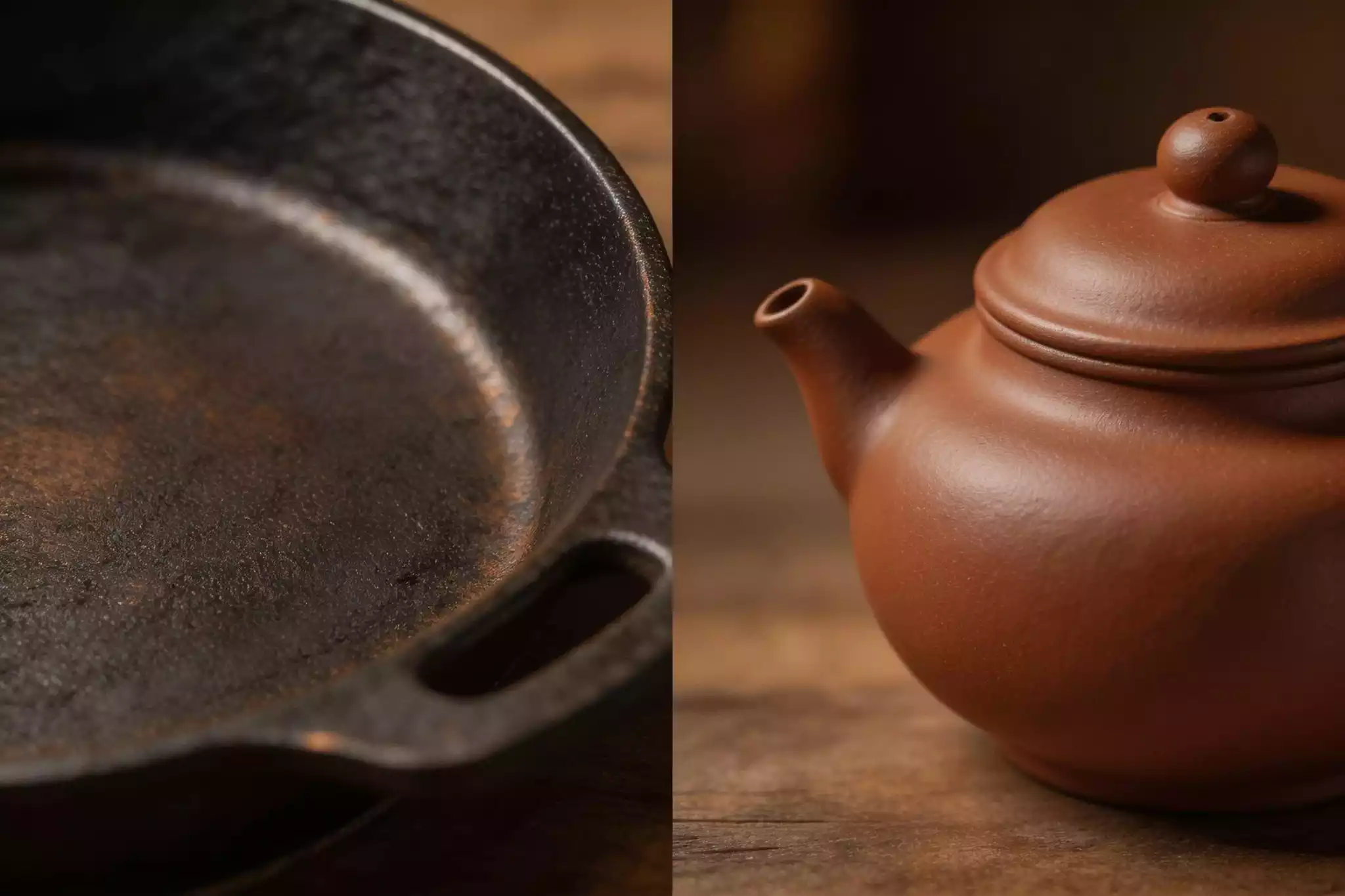
The Cast Iron Skillet Analogy
To understand the difference, consider a cast iron skillet.
Theaflavins are like a newly polished pan — sharp, bright, reactive. Research suggests they exhibit antioxidant and anti-inflammatory activity (PubMed reference).
Theabrownins, however, resemble the seasoned patina built over years of cooking. They are stable, larger molecular compounds.
Emerging studies indicate these compounds may interact with gut microbiota and support lipid metabolism (PubMed review).
Rather than being rapidly absorbed, they remain in the digestive tract — potentially acting as prebiotic-like compounds that influence microbial balance.
---Just as a cast iron skillet develops a non-stick surface, the porous structure of Zisha clay (seen here) allows it to interact with tea polyphenols at a molecular level, rounding out the brew's body over time.
Gut Barrier & Metabolic Support
Modern nutrition science increasingly emphasizes the gut barrier and microbiome.
The Harvard T.H. Chan School of Public Health notes that polyphenols in tea may support cardiovascular and metabolic health (Harvard Nutrition Source).
Studies have explored how tea compounds may:
- Modulate inflammatory pathways (e.g., NF-κB signaling)
- Influence bile acid metabolism
- Support cholesterol regulation
If you're curious about tea and metabolism, you may also enjoy:
- Does Tea Have Calories?
- Tea & Your Body: Digestion, Bone Health, and Common Tea Myths Explained
- Why Raw (Sheng) Pu-erh Tea May Support Weight Control
- Best Teas for Autumn Comfort: A TCM Perspective

Brisk or Grounded? Choosing Your Tea Intentionally
If you feel mentally foggy and need clarity, choose a tea higher in theaflavins — brighter, more golden, sharper.
If you feel anxious, overstimulated, or digestive discomfort, choose a more aged tea richer in theabrownins — deeper, rounder, grounding.
Tea is not just flavor. It is energy modulation.---
The Golden Edge
HIGH THEAFLAVINS (TF)
Best for: Mental clarity, creative flow, and overcoming the 3 PM brain fog.
The Earthy Depth
HIGH THEABROWNINS (TB)
Best for: Post-meal digestion, evening grounding, and soothing the nervous system.
Conclusion: What Do You Expect from Your Cup?
Tea is a negotiation with time.
When you understand theaflavins and theabrownins, you are not simply drinking caffeine. You are intentionally shaping your internal ecosystem.
At Steeped Roots, we don’t brew leaves. We brew rooted energy.
---Frequently Asked Questions
Are theaflavins and theabrownins safe?
Yes. They are naturally occurring polyphenol derivatives formed during tea oxidation. Research suggests they have antioxidant and gut-supportive properties when consumed as part of tea.
Which tea contains more theaflavins?
Fresh black teas and lightly oxidized teas typically contain higher levels of theaflavins, contributing to brighter color and brisk taste.
Do aged teas contain more theabrownins?
Generally yes. As tea ages and oxidizes further, polymerization increases, leading to higher theabrownin content and deeper color.
Can tea replace coffee for afternoon focus?
Many people find tea provides smoother energy due to its combination of caffeine and L-theanine, resulting in sustained focus without sharp spikes.

