
Why Burn Incense with Tea?
Quick Answer: Burning incense during a tea session creates a multisensory sanctuary that deepens focus and mindfulness. While delicate green teas are best enjoyed alone, robust teas like Pu-erh, Rock Oolong, and Aged White Tea harmonize beautifully with natural Agarwood (Chen Xiang). This pairing anchors the "2g Tea Rhythm," transforming a simple drink into a meditative ritual of scent, sight, and soul.
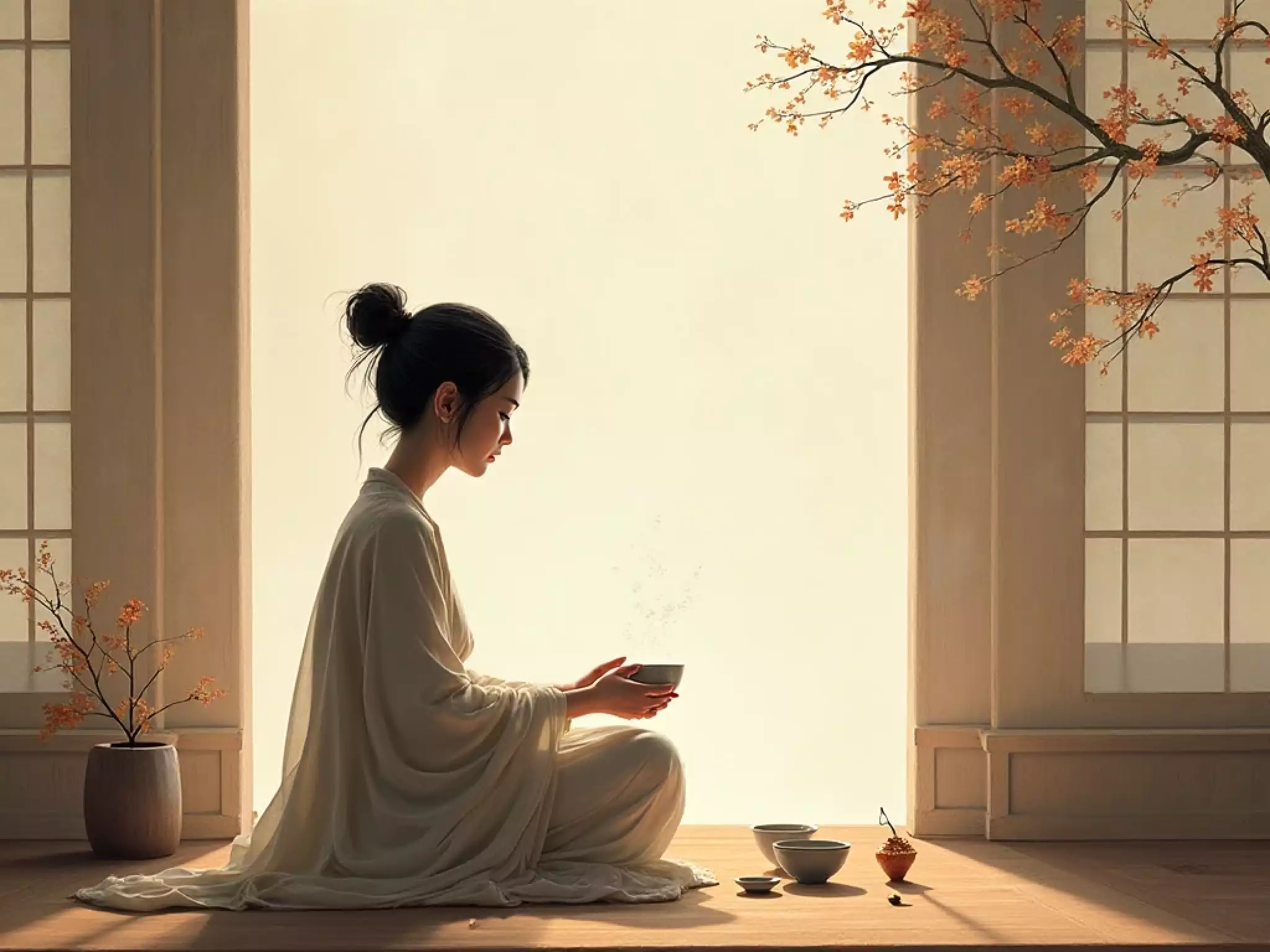
In the quiet of a tea session, where steam rises from a gaiwan and leaves unfurl their stories, incense weaves an invisible thread of serenity. This ancient practice, rooted in Zen Buddhist temples along the Tea-Horse Road, transforms drinking tea into a ritual of the senses and spirit. Far from a mere fragrance, incense—especially agarwood—complements robust teas like Pu-erh and oolongs, creating a harmonious dance of aroma, rhythm, and mindfulness. But does it distract or elevate? The answer lies in balance and intention.
Tea Aroma vs. Incense—Conflict or Harmony?
The delicate fragrance of Longjing or Bi Luo Chun, with their fresh, grassy notes, is like a spring breeze—easily overshadowed by strong scents. Burning incense with these green teas risks masking their fleeting, vegetal charm. But for teas with bolder profiles, such as Raw Pu-erh, aged white tea, or rock oolongs like Da Hong Pao or Tie Guan Yin, incense becomes a partner. Their earthy, woody, or floral notes—think Pu-erh’s apricot depth or oolong’s roasted warmth—blend seamlessly with natural incense, creating a layered sensory experience that elevates both tea and atmosphere.
The key is subtlety. A single stick of natural incense, placed a meter away, allows the tea’s aroma to shine while the incense adds a grounding backdrop. This harmony, practiced for centuries in Chinese tea houses, reflects the art of balance in tea culture.
Incense Is Not Just Smell—It’s Atmosphere
Beyond scent, incense is a visual and temporal ritual. In Chan (Zen) Buddhist traditions, the curling smoke of incense mirrors fleeting thoughts—rising, twisting, and dissolving into stillness. Watching the smoke during a tea session, as you sip a Pu-erh cake, invites contemplation. The slow burn sets a rhythm, aligning with the unhurried pace of brewing, steeping, and savoring. The faint crackle of the ember, the gentle curl of smoke, and the warmth of the cup create a multisensory cocoon, drawing you into the present.
“To watch incense smoke is to watch your thoughts take shape, soften, and fade—a meditation in motion.”
This synergy of tea and incense, rooted in ancient Zen practices, transforms a simple act into a sacred pause, where the senses align and the mind finds clarity.
Deep Dive: Zen doesn’t always require understanding—it’s something felt in a quiet cup. To explore the spiritual roots of this practice, see our guide on Tea and Zen: A Moment of Stillness.
Why Agarwood?
Agarwood, or Chen Xiang, is the crown jewel of incense in tea culture, revered from Tang dynasty tea houses to modern ceremonies. Sourced from the resinous heartwood of Aquilaria trees, often in Southeast Asia, its woody, slightly sweet aroma carries a depth that resonates with aged teas. Here’s why it’s cherished:
- 🌿 Grounding Scent: Its mellow, resinous notes—think sandalwood with hints of vanilla—complement the earthy richness of Raw or Ripe Pu-erh without overpowering.
- 🌿 Perfect Pairing: Agarwood enhances ethically sourced Pu-erh’s herbal undertones, like a forest after rain, creating a cohesive sensory experience.
- 🌿 Slow Burn: High-quality agarwood burns gently for 30-60 minutes, ideal for long tea sessions where conversation and reflection unfold.
- 🌿 Spiritual Depth: In Buddhist rituals, agarwood is said to purify the mind, making it a fitting companion for meditative tea drinking.
A single piece of agarwood, lit before brewing a 10-year-old Sheng Pu-erh, weaves an atmosphere of timeless connection, echoing the caravans of the Tea-Horse Road.
The Steeped Roots Ritual: We recommend lighting a single agarwood stick exactly 5 minutes before your 2g Tea Rhythm session. As the first curl of smoke settles, your tea will be at the perfect temperature to begin the first infusion.
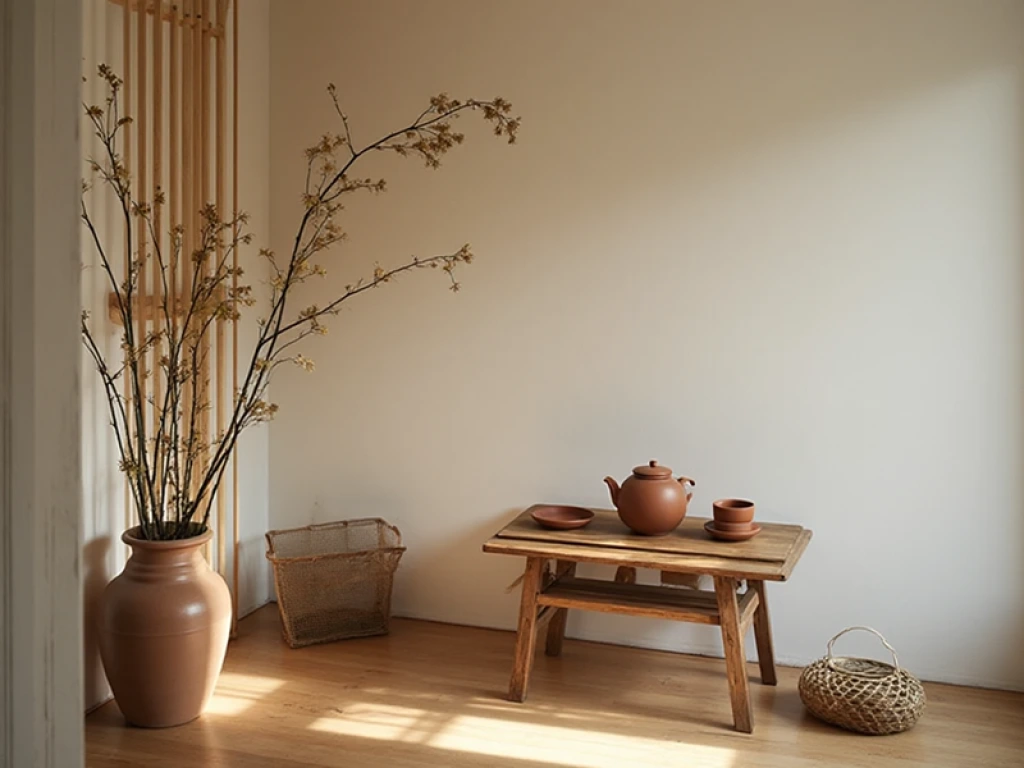
The Master Pairing Guide: Tea & Incense
Finding the equilibrium between leaf and smoke for your 2g Rhythm sessions.
| Tea Variety | Aroma Profile | Pairing Rating | Recommended Incense | The Sensory Synergy |
|---|---|---|---|---|
| Delicate Green (Longjing, Anji Bai Cha) | Fresh, Umami, Grassy | 🌿 (Minimal) | None / Neutral | Maintains the purity of "Spring Air" notes; avoid masking with smoke. |
| Light White (Silver Needle) | Floral, Nectar-like | 🌿 (Minimal) | None | Allows the fleeting, high-frequency aromas to lead the session. |
| Raw Pu-erh (Sheng) (Young or Aged) | Wild, Apricot, Camphor | 🌿🌿🌿 (Perfect) | Agarwood (Chen Xiang) | Resinous woody depth anchors the vibrant, dancing energy of the tea. |
| Ripe Pu-erh (Shu) (Menghai Origin) | Creamy, Earthy, Woody | 🌿🌿🌿 (Perfect) | Agarwood / Sandalwood | Enhances the "Chen Xiang" (aged scent) already present in premium Shu. |
| Dark Oolong (Da Hong Pao, Rou Gui) | Roasted, Mineral, Nutty | 🌿🌿 (Strong) | Agarwood / Frankincense | Complements the "Yan Yun" (Rock Rhyme) and roasted warmth. |
| Aged White Tea (Gong Mei, Shou Mei) | Medicine-like, Woody, Date | 🌿🌿 (Strong) | Sandalwood | Brings out the nostalgic, grounding sweetness of sun-dried leaves. |
Pro Tip: Natural agarwood finds its soulmate in teas with deep, sun-drenched, or earthy profiles. We recommend pairing your incense with a Yunnan Shai Hong (Sun-dried Black Tea) to experience how sun-drenched fruit notes resonate with resinous smoke.
When to Use Incense with Tea
Choosing the right moment for incense enhances the tea ritual without overwhelming it. Here are practical guidelines, steeped in tradition:
- ✔️ Avoid with Light Teas: Skip incense for delicate green or yellow teas like Longjing or Jun Shan Yin Zhen, whose floral notes need no competition.
- ✔️ Pair with Robust Teas: Use for mid- to heavily-fermented teas like Pu-erh, dark oolongs, or aged white teas, which harmonize with incense’s depth.
- ✔️ Choose Natural Incense: Opt for pure agarwood sticks or sandalwood coils—avoid synthetic fragrances that clash with tea’s authenticity.
- ✔️ Keep It Subtle: Light one stick or coil, placed 1-2 meters away, to let tea aromas lead. Use a ceramic holder for safety and aesthetics, as suggested in our Teaware Guide.
- ✔️ Timing Matters: Light incense 5 minutes before brewing to set the mood, allowing the smoke to settle as you prepare your tea palate.
In the context of traditional Gongfu Tea, setting the ambiance is as crucial as the water temperature. Mastering the subtle dance between visual smoke and liquid flavor is part of a timeless tea-table etiquette that respects both the guest and the leaf.
In ancient Chinese tea houses, monks and scholars lit agarwood to honor guests, creating a shared space of mindfulness. Today, this practice invites you to slow down and savor each sip.
Incense as Setting, Tea as Reflection
Incense is not a rival to tea but its silent partner, crafting a stage where flavor, scent, and stillness converge. Picture a quiet room: a gaiwan steams with Da Hong Pao, agarwood smoke curls upward, and the faint clink of porcelain grounds you in the moment. This is tea culture at its essence—a dialogue between the senses and the soul, inspired by Zen’s call to presence.
By quieting the external noise with a steady scent, you become more receptive to the internal movements of the tea. This stillness is often the gateway to feeling Cha Qi (Tea Energy) vividly—allowing the warmth to travel from your palate to your spine without distraction.
Tea reflects the mind’s clarity; incense shapes the space around it. Together, they weave a tapestry of mindfulness, where each sip and wisp of smoke carries you closer to what the ancients called a moment of Zen. Begin your journey with our Tea Library and savor the stillness of each ritual.
Creating Your 15-Minute Sanctuary in the City
In a Manhattan apartment—where space is a luxury and the rhythm of the city never stops—a tea ritual is your silent rebellion. You don’t need a dedicated tea room; you only need a corner that breathes. On a Saturday morning, as the light hits the brick walls or the skyline across the East River, setting your stage is the first step of the meditation. By aligning your physical environment with the "2g Rhythm," you transform a cramped living area into a vast internal landscape.
How to Set Your Weekend Tea Scene in 5 Minutes
Designed for the modern apartment, inspired by ancient Zen.
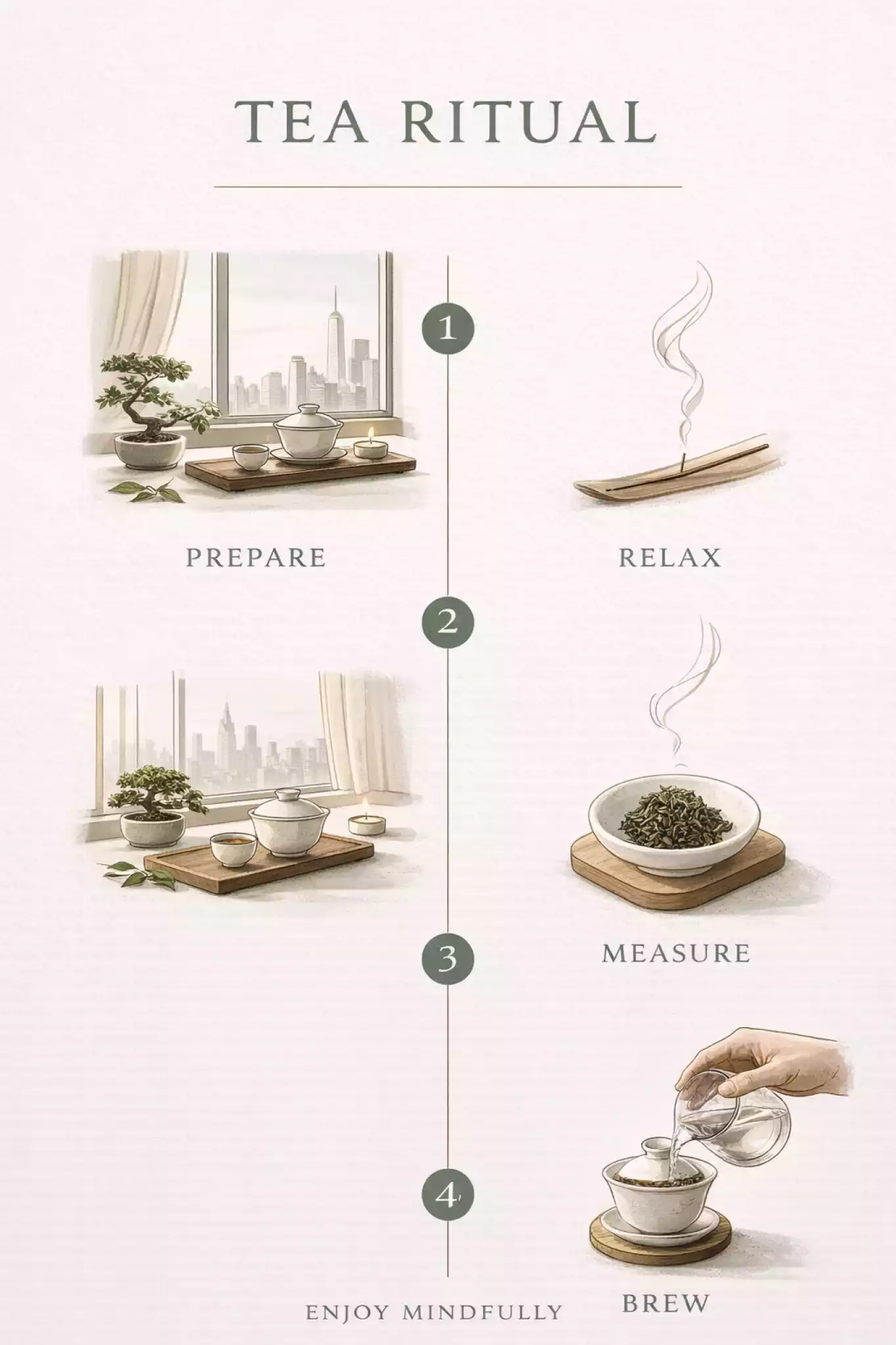
1. Clear the Visual Noise
Choose a small surface near a window. Remove your laptop, phone, and any "to-do" lists. A clean surface signals to your brain that the work week is officially over.
2. Anchor with Scent
Light a single stick of Agarwood. Place it 1-2 meters away. As the scent begins to fill the space, it defines the boundaries of your sanctuary, separating your home from the outside chaos.
3. The 2g Arrangement
Place your Gaiwan and a single cup on a simple tea mat. Measure exactly 2g of Pu-erh. Seeing the dry leaves in a simple porcelain dish creates a focus point for your eyes.
4. Align the Sound
Wait for the kettle to reach the "fish-eye" boil. Listen to the sound of water. This is your transition into the first infusion—the heartbeat of the 2g Rhythm.
Elevate Your Next Session
Discover teas that harmonize perfectly with the scent of agarwood.
The Ritual Q&A
Why burn incense during a tea session?
Incense enhances the sensory and spiritual experience, creating a meditative atmosphere and complementing robust teas like Pu-erh.
Which teas pair best with incense?
Mid- to heavily-fermented teas like Raw Pu-erh, aged white tea, or rock oolongs pair well. Delicate green teas (like Longjing) are better enjoyed without incense to avoid masking their subtle aroma.
Why is agarwood popular for tea sessions?
Agarwood’s woody, mellow scent complements earthy teas like Pu-erh, burns slowly for long sessions, and carries deep spiritual significance in Zen practices.
How does incense relate to Zen in tea culture?
The curling smoke of incense mirrors fleeting thoughts in Zen meditation—rising and dissolving into stillness—fostering mindfulness during the ritual.
🌿 Further Reading
👉 Why Choose Single-Origin Tea?
👉 Understanding Mixed Harvest, Single Plant, and Blended Puerh Tea
👉 How to Brew Tea with a Metal Infuser Ball
Seeking a warmer ritual? Explore the art of the Winter Tea Gathering, where the crackle of charcoal and the aroma of incense offer the ultimate urban healing.

