How to Host a Tea Party: Bringing Tea Lovers Together
Introduction
A tea party is a unique social gathering that celebrates the aroma and stories of tea, uniting like-minded tea lovers. For instance, whether it’s the crisp freshness of green tea, the robust warmth of black tea, or the complex depth of pu-erh, each cup carries flavor and emotion. By inviting friends to bring their favorite teas, share tasting experiences, and engage in fun activities like blind tasting or tea story sharing, you create a warm, unforgettable event. Therefore, this guide offers a detailed plan to host a successful tea party, helping you foster connections through tea culture.
Preparing for the Tea Party: Essential Steps
1. Set the Theme and Send Invitations
- Theme: Choose a relaxed theme, such as “Exploring World Black Teas” or “The Charm of Ancient Tree Teas,” to focus the tea selection and spark interest.
- Invitations: Invite tea friends via WhatsApp, email, or social media (e.g., X), asking each to bring a favorite tea (30–50g, suitable for 6–8 people). Specify the date, time, location, and “bring-your-own-tea” requirement, encouraging variety (e.g., green tea, black tea, oolong, pu-erh).
- Group Size: Keep it to 6–10 people to ensure everyone can share and connect.
2. Choose a Venue
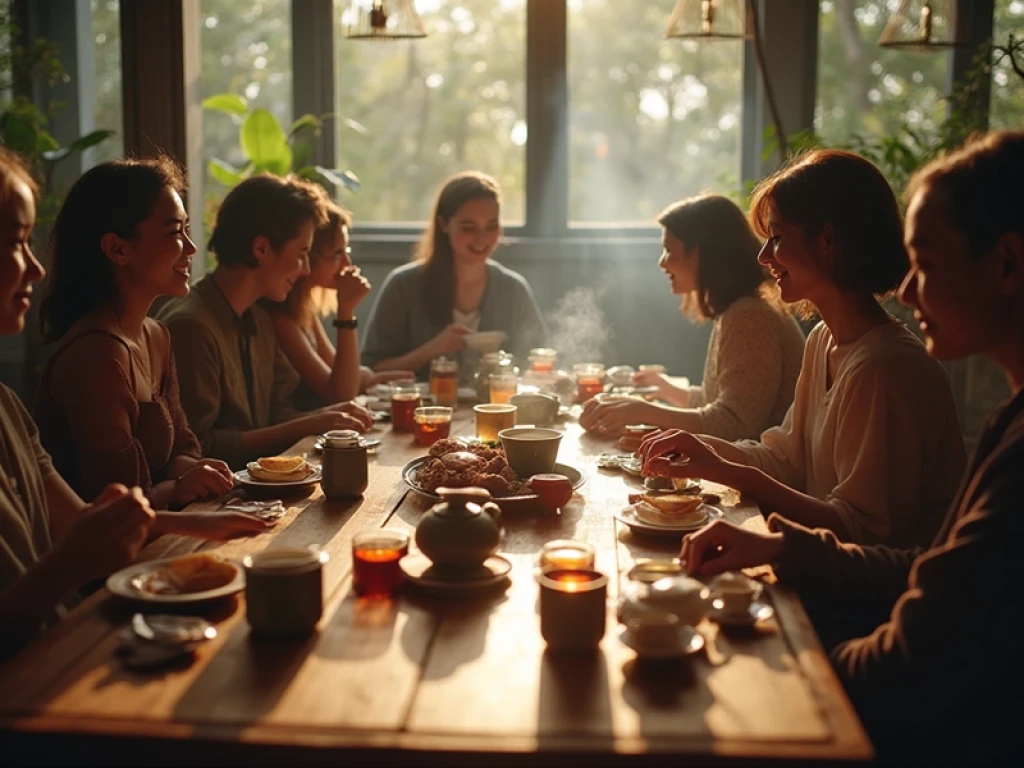
- Indoor: A quiet living room, study, or tea room with comfortable seating and a spacious table for teaware and teas.
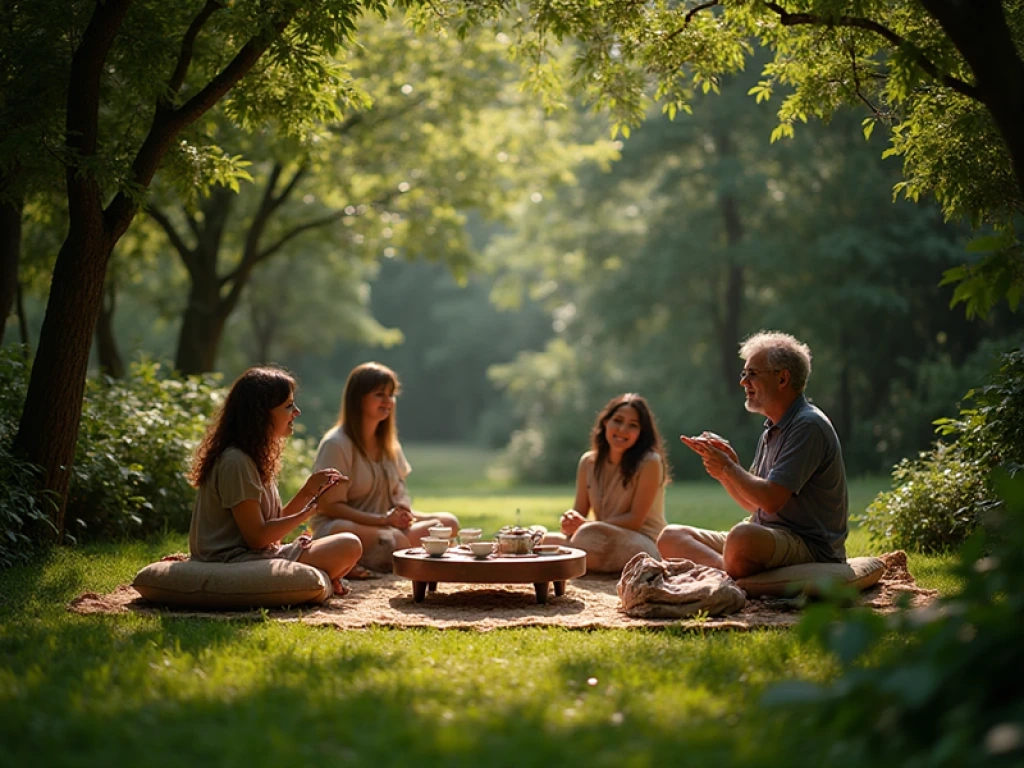
- Outdoor: A garden, balcony, or park (with portable teaware) adds a natural ambiance, but consider weather and shade.
- Atmosphere: Light incense or play soft music (e.g., guzheng or piano) to create a relaxing tea culture vibe.
3. Prepare Teaware
- Essential Teaware:
- Gaiwan or Yixing Teapot: Ideal for brewing various teas, especially oolong and pu-erh.
- White Porcelain or Glass Cups: Perfect for observing tea liquor color, enhancing the tasting experience. Learn to select teaware for optimal flavor in Choosing the Right Teaware.
- Fairness Cup and Strainer: Ensure even tea distribution and clear liquor.
- Tea Tray: Catches spilled tea, keeping the table tidy.
- Kettle: Provides consistent hot water (preferably an electric kettle with temperature control).
- Other Items: Tea towels, notebooks and pens (for tasting notes), and a timer (for brewing control).
- Tip: Use dedicated teaware for each tea to avoid flavor crossover, especially with Yixing teapots.
4. Prepare Food Pairings
Offer light snacks to complement the tea, such as cookies, fruits, nuts, or Chinese pastries (e.g., mung bean cakes). Avoid strong-flavored foods to preserve the tea’s nuances.
- Pairing Suggestions:
- Green Tea: Light pastries or fruits (e.g., grapes).
- Black Tea: Cream biscuits or chocolate.
- Pu-erh: Nuts or candied tangerine peel to enhance aftertaste.
Tea Party Agenda
1. Welcome and Introductions (10–15 Minutes)
- Opening: Welcome guests, introduce the theme, and outline the agenda. Invite each person to briefly share their chosen tea and its story (e.g., “I brought Dian Hong because its honeyed aroma reminds me of home”).
- Tip: Provide small cards for guests to write down their tea’s name, origin, and what they’re excited to share, facilitating later discussions.
2. Tea Tasting Session (60–90 Minutes)
- Order: Taste from light to bold (e.g., green tea → oolong → black tea → pu-erh) to avoid palate fatigue.
- Brewing: Have the host or guests take turns brewing, using consistent water temperature and steeping times (e.g., green tea at 80°C for 30 seconds; black tea at 90°C for 45 seconds). Record each brew’s liquor appearance.
- Tasting: Guide guests to observe the tea’s color, aroma, and flavor, sharing their impressions. For instance, follow the five sensory gates outlined in Training Your Tea Palate for a structured tasting experience:
- Color: Is the liquor golden, amber, or deep red?
- Aroma: How do dry leaves, wet leaves, and brewed tea differ?
- Taste: Sweet, bitter, umami, or astringent?
- Mouthfeel: Silky, robust, or drying?
- Finish: Does the aftertaste linger?
- Recording: Encourage guests to note their thoughts in their own words, like “warm like toasted bread” or “fresh like a forest morning.”
3. Fun Activity: Blind Tasting Game (30 Minutes)
- Setup: Select 3–4 teas, labeled A, B, C, D (without revealing names). Have one person brew and distribute the teas.
- Gameplay:
- Guests taste and guess the tea type (green, black, oolong, pu-erh?) or origin (e.g., Dian Hong vs. Darjeeling).
- Each person records tasting notes and shares impressions (e.g., “A has a honeyed note, maybe Dian Hong”).
- Reveal the answers and discuss what led to correct or surprising guesses.
- Impact: Blind tasting adds fun and sharpens palate sensitivity.
- Tip: Add excitement with small prizes (e.g., tea samples) for the most accurate guesses.
4. Tea Story Sharing (20–30 Minutes)
- Activity: Each guest shares their tea story, such as:
- Why they love their chosen tea (e.g., “I love Dian Hong’s floral notes because they remind me of mountain mornings”).
- A memorable first tea experience or tea-related travel story.
- Facilitation: The host can start with a personal story (e.g., “I first tasted wild Dian Hong in Yunnan and was amazed by its complexity”) to encourage openness. Discover Dian Hong’s unique charm in Dian Hong vs. Other Black Teas.
- Impact: Sharing stories fosters emotional connections, making the tea party more meaningful.
5. Free Discussion and Wrap-Up (15–20 Minutes)
- Discussion: Allow guests to freely share their favorite teas, tasting insights, or ideas for future tea parties.
- Wrap-Up: Summarize the day’s highlights, thank everyone, and share plans for the next tea party.
- Memento: Take photos of the teaware, teas, and smiling guests, posting them on social media (e.g., X) to expand reach.
Practical Tips
- Time Management: Keep the tea party to 2–3 hours to avoid fatigue. Allocate clear times for each segment (e.g., 90 minutes for tasting, 30 minutes for blind tasting).
- Tea Variety: Encourage diverse tea origins, like Dian Hong, Darjeeling, or Ceylon, for comparative fun. Learn about global black teas in Overview of Black Tea Worldwide.
- Record and Share: Provide a shared notebook or online document for tasting notes, accessible for future reference.
- Budget: Tea parties are low-cost, mainly involving teaware, snacks, and decor. Guests bringing teas and sharing food costs keep it affordable.
- Virtual Tea Party: If in-person isn’t possible, host via Zoom, with guests showcasing their teas and teaware, sharing tasting notes.
Enhancing the Tea Party Experience
- Teaware Selection: Choose teaware based on tea types, like porcelain teapots for Dian Hong or Yixing pots for pu-erh, to enhance flavors.
- Themed Tea Parties: Try themed events, like a “Dian Hong Spotlight” or “English Afternoon Tea,” focusing on specific teas or cultures.
- Invite Experts: If possible, invite a tea master or farmer to share insights, adding depth.
- Social Media Promotion: Share invitations or recaps on platforms like X with hashtags like #TeaParty #TeaTasting to attract more tea lovers.
Conclusion
A tea party is more than a tasting event—it’s a moment to share stories and build connections. By inviting friends to bring their favorite teas, incorporating blind tasting games, and sharing tea stories, you create a joyful and meaningful gathering. For instance, the right teaware and tasting techniques elevate the experience. Whether it’s the honeyed sweetness of Dian Hong, the floral notes of Darjeeling, or the depth of pu-erh, each tea tells a story of land and memory. Start your tea party and invite friends to explore the endless charm of tea together!
Tea Party FAQ
What is the best group size for a tea party?
A group of 6–10 people is ideal. It’s large enough for diverse tea sharing but small enough for everyone to participate in a single conversation and enjoy the brewing process together.
Do I need to be a tea expert to host?
Not at all! The goal is connection. You can even host a "learning together" party where everyone researches one fact about the tea they brought. Focus on the sensory experience rather than technical perfection.
How do I prevent "tea drunk" or caffeine jitters?
Ensure you provide plenty of water and "tea food" (snacks like nuts or pastries). Eating while drinking tea helps slow caffeine absorption, and staying hydrated is key to a long session.
Can I host a tea party with only one type of tea?
Yes, themed parties are great! You could host a "Vertical Tasting" where you try the same tea from different harvest years, or a "Terroir Study" focusing on black teas from different countries.