Inside the Wok: Why Top Pu-erh Teas Are Still Hand-Fired
Interview with Master Li, a veteran tea roaster from Menghai
As you sip a cup of amber-hued raw Pu-erh, its forested aroma unfolds. Ever wondered where this magic begins? For Yunnan’s finest teas, it starts with a tea master’s skilled hands in a blazing 220°C iron wok.
In an era of mechanized tea production, why do the world’s most coveted Pu-erh teas cling to this intense, hands-on tradition? We uncover the secrets of “Wok Qi”—the soul of hand-fired tea.
1. Life at 220°C: The Art of Heat and Hands
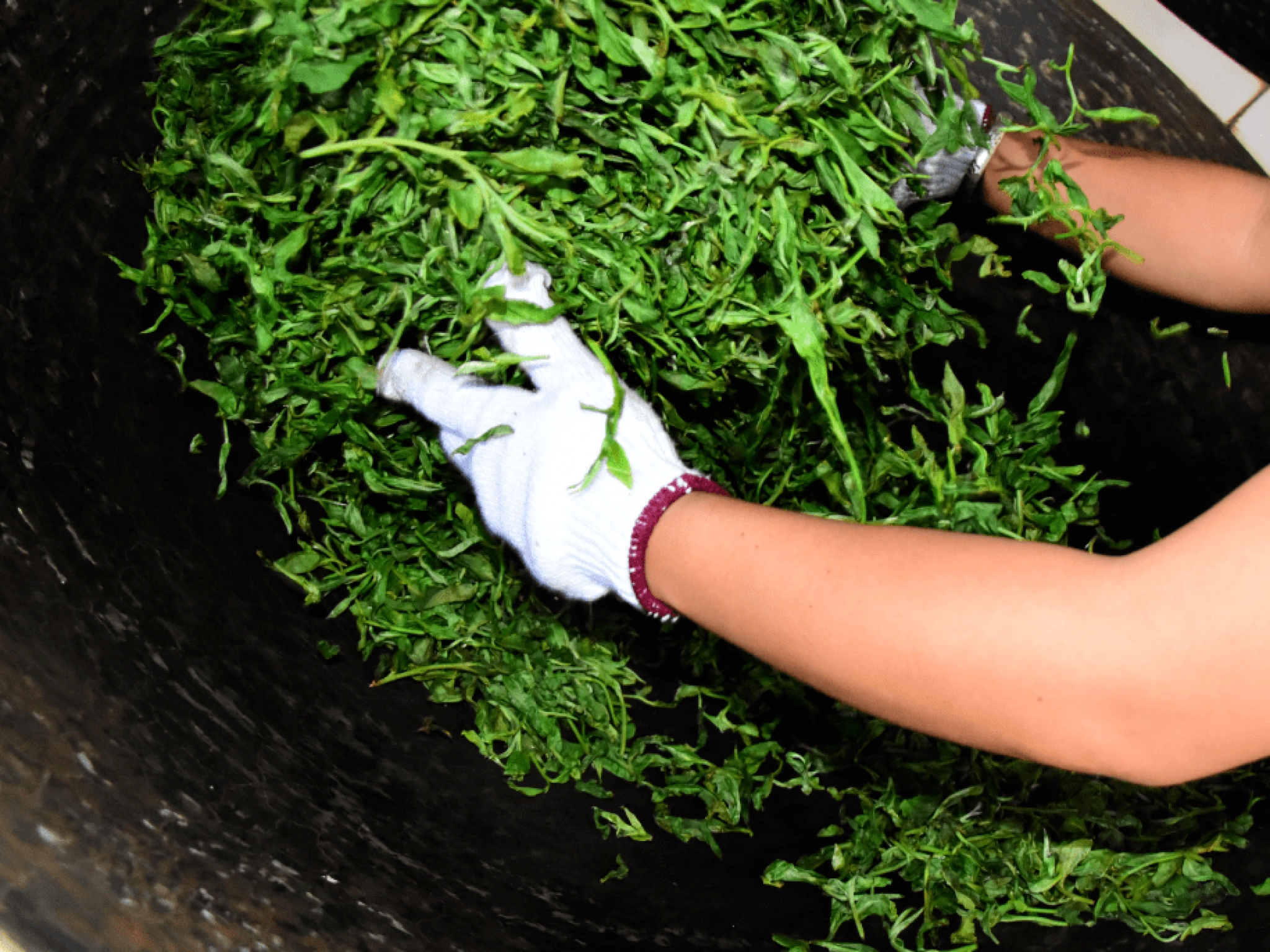
Imagine a heavy iron wok, 80 cm wide, glowing at over 220°C. Fresh tea leaves hit the surface, releasing wisps of blue smoke. With bare hands, the tea master tosses and flips the leaves 2–3 times per second, a dance of precision and endurance.
Manual Kill-Green: Key Parameters
| Parameter | Hand-Fired Control | Mechanical Setting | Effect on Tea |
|---|---|---|---|
| Wok Temperature | 180–220°C, adjusted by hand | Fixed ±10°C | Too low: grassy notes linger Too high: leaves scorch |
| Duration | 25–40 min, guided by experience | Fixed 15 min | Too short: enzymes stay active Too long: freshness fades |
| Tossing vs. Steaming | Adjusted by sight and smell | Preset program | Over-tossing: aroma loss Over-steaming: dull liquor |
Master Li’s wisdom: “When leaves hit the wok, the sizzle should sound like rain on banana leaves. You need three speeds: sharp eyes to read steam, swift hands to flip evenly, and a keen nose to catch aroma shifts.”
2. Why Hands Beat Machines: Three Key Advantages
1️⃣ Enzyme Precision: Perfecting the Kill
The heart of aged Pu-erh lies in polyphenol oxidase, an enzyme that drives flavor transformation. A master’s fingertips sense the leaf’s heat, stopping enzyme activity at just above 60°C. This preserves 5–8% active enzymes for optimal aging.
Science backs it: Hand-fired teas retain three times more enzyme activity than machine-processed ones. After a decade, their theaflavin content is 47% higher.
2️⃣ Breathable Texture: Micro-Fissures for Aging
Pressing leaves against the wok creates micro-tears along the edges, invisible to the naked eye. These tiny pathways allow moisture and oxygen to enhance aging, giving hand-fired Pu-erh its depth.
(Image idea: Left: jagged leaf edge from hand-firing; Right: smooth machine-processed edge.)
3️⃣ Scent Preservation: Capturing the Mountain
Wild orchid from Banzhang or rock sugar from Bingdao—these aromas come from delicate leaf hairs. Machines strip these away, but hand-firing’s gentle toss, flip, and gather cradle them like a treasure.
3. The Decline of a Craft: Why Hand-Firing Is Rare
In Yunnan’s remote mountains, skilled wok masters average 58 years old. “Young people prefer city jobs over burning their hands,” says Yan Han, a Jingmai heritage bearer. Today, hand-fired raw Pu-erh makes up less than 3% of production.
Cost of Hand-Fired Tea
- A master processes only 15 kg of fresh leaves in 8 hours.
- Wok loss: up to 5% (vs. 0.8% for machines).
- Skilled roaster’s wage: up to 800 RMB (~$110 USD) daily.
4. Spotting Hand-Fired Pu-erh
| Feature | Hand-Fired Tea | Machine-Processed Tea |
|---|---|---|
| Dry Leaf Shape | C-shaped curl, like a shrimp | Straight, rigid form |
| Leaf Base | Reddish edges, visible veins | Uniform color, smooth rim |
| Tea Aroma | Wild honey lingers in the cup | Aroma fades quickly |
| Steeping Resilience | Flavorful after 8 infusions | Fades after 6 infusions |
Quick test: Examine a wet leaf after brewing. Hand-fired leaves curl into a C-shape; machine-processed ones stay flat.
5. Frequently Asked Questions
Why is hand-firing better for Pu-erh tea?
Hand-firing allows precise enzyme control, preserves delicate aromas, and creates micro-fissures for better aging, unlike machines.
How can I identify hand-fired Pu-erh tea?
Look for C-shaped curls, reddish leaf edges, lingering honey aroma, and flavor resilience after 8 infusions.
Why is hand-firing Pu-erh becoming rare?
It’s labor-intensive, costly, and younger generations prefer urban jobs, leaving only 3% of Pu-erh hand-fired.
Does hand-firing affect Pu-erh’s health benefits?
Yes, hand-firing retains more enzymes, boosting theaflavin content, which supports digestion and antioxidant benefits.
Conclusion: A Sacred Craft in Every Sip
Hand-fired Pu-erh carries more than flavor—it holds the sun, mist, and sacrifice of artisans. Each leaf tells a story of tradition, passed down through scorched hands. Savor the Wok Qi, a living heritage in every cup.
Next in the series: “The Pu-erh Aging Myth: Is Your ‘Vintage Tea’ Secretly Rotting?”
Subscribe to explore the untold stories behind your tea.
Data sourced from the 2024 Tea Science Report by Yunnan Academy of Agricultural Sciences. Credit the source when sharing.