East Asian Tea Ceremony
"Tea is a bridge — inviting you to pause and connect with nature and culture across three of Asia's oldest living traditions."
Three core East Asian tea ceremonies: Gongfu Cha (China) uses 95–100 °C, 5–7 g per 100 ml, steep 10–30 seconds for 8–12 infusions. Chanoyu (Japan) whisks 1.5–2 g matcha powder in 70–80 °C water. Darye (Korea) steeps 3–5 g per 150 ml green tea at 70–85 °C for 1–2 minutes.
Master Brewing Parameters — Three Ceremonies (2026)
The definitive side-by-side reference. All values confirmed against current professional practice.
| Parameter | 🇨🇳 Gongfu Cha | 🇯🇵 Chanoyu (Matcha) | 🇰🇷 Darye | Expert Note |
|---|---|---|---|---|
| Water Temp | 95–100 °C 203–212 °F | 70–80 °C 158–176 °F | 70–85 °C 158–185 °F | Gongfu = boiling fine; matcha / green = cool to avoid bitterness |
| Tea Dose | 5–7 g / 100 ml | 1.5–2 g (2 scoops) per 60–80 ml | 3–5 g / 150 ml | Gongfu uses highest ratio — compensated by short steep time |
| Steep / Prep Time | 10–30 s (per infusion) | Whisk 30–60 s (no steeping) | 1–2 min | Add 5–10 s per subsequent infusion for Gongfu |
| Infusions | 8–12 steeps | 1 bowl (single use) | 2–3 steeps | Gongfu maximizes value from premium single-origin leaf |
| Primary Tea Used | Oolong, Pu-erh, Shai Hong, Dian Hong | Matcha (stone-ground powdered green) | Jeju / Boseong green tea (loose-leaf) | Each ceremony evolved around specific regional teas |
| Key Vessel | Yixing teapot or Gaiwan + fairness pitcher | Chawan bowl + chasen (bamboo whisk) | Ceramic teapot (dakho) + small cups | Vessel material affects heat retention and flavor development |
| Serving Style | Multiple small cups, sequential tasting | Single individual bowl | Shared pot poured for guests | Gongfu = private exploration; Darye = communal sharing |
| Philosophical Root | Daoist / Confucian — skill & self-cultivation | Zen Buddhism — wabi-sabi, impermanence | Confucianism — respect, hierarchy, harmony | The philosophy shapes every gesture and choice of vessel |
* For compressed Pu-erh in Gongfu Cha: always do a 5–10 second rinse steep first and discard before the first proper infusion.
Each Tradition at a Glance
Three ceremonies, three philosophies — each shaped by centuries of culture and refined into a living practice.
🇨🇳 Chinese Gongfu Cha (功夫茶) — The Art of Skill

Origin: China's tea culture is rooted in Lu Yu's Tea Classic (Tang Dynasty, ~760 CE) — the foundational text that established tea not merely as a beverage but as a philosophical practice. Gongfu Cha (功夫茶, "skillful tea") emerged as its most technically refined expression, concentrating on precision, mindfulness, and the art of progressive flavor revelation.
- Process: Warm the Gaiwan or Yixing pot with hot water, discard. Add leaf, rinse briefly (5–10 s), discard rinse. Then steep 10–30 seconds — increasing each subsequent infusion by 5–10 s.
- Tea selection: Oolong (wulong) is classic; Yunnan Shai Hong (sun-dried black) offers malty-fruity notes; aged Pu-erh reveals layered earthen depth across 12+ infusions.
- Experience: The amber evolves — first steep light and floral; middle steeps rich and complex; final steeps mellow and sweet. No two steeps are identical.
- Cultural significance: Lu Yu taught that tea embodies "refined conduct and frugal virtue." Gongfu Cha continues this legacy: unhurried, attentive, and intentional.
🇯🇵 Japanese Chanoyu (茶の湯) — The Way of Hot Water
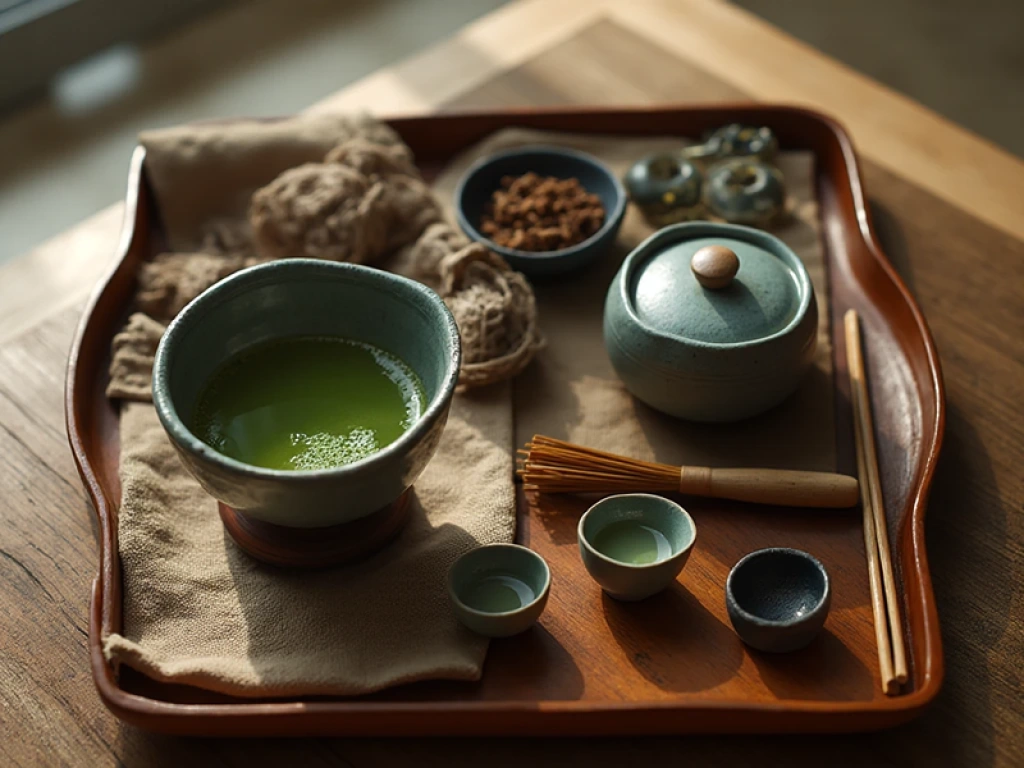
Origin: Introduced to Japan from Tang Dynasty China by Buddhist monks, evolving into the wabi-cha style under Sen no Rikyu (16th century). Chanoyu (茶の湯, "hot water for tea") is rooted in Zen and governed by four principles: wa (harmony), kei (respect), sei (purity), jaku (tranquility).
- Process: Sift
1.5–2 gmatcha through a fine sieve into a warmed chawan bowl. Add60–80 mlof70–80 °Cwater. Whisk briskly in a W-motion for 30–60 seconds until a fine, even froth forms with no lumps. - Tea selection: Ceremonial-grade matcha only — stone-ground, vivid green, grassy-umami with natural sweetness. Culinary grade is too coarse for proper froth.
- Experience: Meditative. Every gesture — from warming the bowl to presenting it with the front facing the guest — carries intentional meaning.
- Cultural significance: Wabi-sabi aesthetics (finding beauty in imperfection) permeate Chanoyu. The practice is inseparable from Japanese garden design, ceramic art, and Zen architecture.
🇰🇷 Korean Darye (다례) — The Tea Rite
Origin: Emerged during the Goryeo Dynasty (918–1392 CE), deeply influenced by Song Dynasty tea culture. Darye (다례, "tea rite") was codified as a Confucian ceremony during the Joseon Dynasty, used in royal court rituals, ancestral rites, and diplomatic receptions. Today, Darye schools and tea houses preserve the tradition as both cultural heritage and daily practice.
- Process: Warm the ceramic teapot (dakho) and cups. Add
3–5 gof loose-leaf green tea (Jeju or Boseong). Pour70–85 °Cwater, steep1–2 minutes. Pour evenly across cups in stages — back-and-forth — to equalize strength. - Tea selection: Korean green teas — Jeju Island's volcanic-soil teas (light, sweet), or Boseong's hand-rolled green teas (richer, grassy). Grain teas (barley, roasted rice) are used in everyday informal Darye.
- Experience: Relaxed but structured. The shared pot and communal pouring ritual emphasizes connection and equal hospitality for all present.
- Cultural significance: Confucian values of filial piety, hierarchy, and harmonious relationship are embodied in every gesture of Darye — from the host's bow to the guest's two-handed cup acceptance.
How to Practice Each Ceremony (Step-by-Step)
Distilled to the essential actions for each tradition. Beginners can follow these steps with minimal equipment.
Gongfu Cha — 5-Step Method
- Warm all vessels with boiling water
Pour boiling water into the Gaiwan or Yixing pot, swirl, and discard. Repeat for the fairness pitcher and small cups. This raises vessel temperature and ensures the leaf does not cool the water too fast on contact.
- Measure and rinse the leaf
Add
5–7 gof tea to the Gaiwan per100 mlvessel capacity. Pour95–100 °Cwater for a quick5–10 secondrinse to open the leaf — discard this rinse completely. For Pu-erh, this removes any compression dust. - Steep short and pour completely
Pour water, start timer:
10–20 secondsfor the first steep. Increase by5–10 swith each subsequent infusion. Always drain completely — residual water continues extracting and creates bitterness. Pour into the fairness pitcher first to equalize flavor, then into cups. - Taste and re-steep up to 12 times
Notice how the flavor profile evolves across infusions: early steeps are bright and aromatic; middle steeps are deepest in flavor; late steeps become mellow and sweet. A quality Pu-erh or oolong improves at steeps 4–7 before gradually softening.
Chanoyu (Matcha) — 4-Step Method
- Sift the matcha to remove lumps
Pass
1.5–2 g(approximately 2 chashaku scoops) of ceremonial-grade matcha through a fine tea sieve into a warmed chawan bowl. This is non-negotiable — unsifted matcha creates lumps that the whisk cannot fully dissolve. - Add water at the correct temperature
Pour
60–80 mlof water cooled to70–80 °Cinto the bowl over the matcha. Never add boiling water — temperatures above 85 °C scorch the delicate amino acids (L-theanine) that give matcha its characteristic umami-sweetness. - Whisk in a rapid W-motion until froth forms
Hold the chasen (bamboo whisk) loosely and move briskly in a W or M-pattern — not circular. Whisk for
30–60 secondsuntil a fine, even foam forms on the surface with no large bubbles. Lift the whisk gently at the end to leave the froth smooth. - Present the bowl with the decorated side facing the guest
In full Chanoyu etiquette, rotate the bowl so its front-face pattern faces the guest before offering. The guest then rotates the bowl before drinking — to avoid drinking from the "face." Even in informal practice, this moment of intentional presentation transforms tea into ceremony.
Darye — 4-Step Method
- Warm the teapot and cups
Pour hot water into the ceramic teapot (dakho) and each cup in sequence; swirl and discard. Korean Darye emphasizes warming utensils more carefully than the other traditions — the green teas used are delicate and rapidly lose optimal temperature in a cold vessel.
- Cool the water to the correct temperature
Pour boiling water into the warmed cups and let it sit for
1–2 minutesto reach70–85 °C. The traditional method of cooling water in cups also pre-warms them simultaneously — an elegant efficiency in the Darye system. Then pour this now-cooled water from the cups into the teapot over the leaf. - Steep for 1–2 minutes, then pour in stages
Steep
3–5 gper150 mlfor1–2 minutes. Pour into cups in stages — a little in each cup, then back around — to equalize the color and strength. This "stage pouring" is a defining Darye practice, embodying the Confucian value of equal hospitality for every guest. - Serve with two hands and a slight bow
Offer each cup with both hands and a gentle nod — and receive tea the same way. The two-handed gesture is a Confucian mark of respect that distinguishes Darye from more casual tea service. Allow
2–3 infusionsfrom the same leaf, adding30 secondsto each subsequent steep.
Modern Tea Ceremony Trends — 2026 Update
All three traditions are simultaneously preserved as cultural heritage and reimagined for contemporary life. The 2026 picture reveals a productive tension between depth and accessibility.
| Tradition | Traditional Core | 2026 Modern Trends | Cultural Direction |
|---|---|---|---|
| 🇨🇳 Gongfu Cha | Gaiwan / Yixing ritual; Pu-erh and oolong; 8–12 infusions | — Office Gongfu: compact glass Gaiwans, pre-portioned 2 g disks — Cold-brew oolong for summer — New-style milk teas and tea-coffee blends among Gen Z | Tradition and innovation coexist — ceremony-grade practice deepens among connoisseurs while new formats drive global reach |
| 🇯🇵 Chanoyu | Wabi-cha, ceremonial matcha, strict Zen etiquette, seasonal themes | — Matcha in lattes, desserts, skincare, cocktails globally — Sencha-do (loose-leaf green tea ceremony) growing in daily practice — Digital ceremony sessions and international Chanoyu schools | Matcha is now a global cultural icon; full ceremony preserved for formal occasions while daily matcha drives wellness culture |
| 🇰🇷 Darye | Confucian rites, royal court tea service, ancestral ceremonies | — Tea-house café culture blending Darye aesthetics with specialty coffee — Grain and herbal teas (barley, yuzu, omija) as everyday Darye forms — Health-focused wellness teas gaining domestic market share | Darye preserved as festival and heritage ritual; daily consumption trends toward health, café culture, and Korean beauty-wellness crossover |
✨ The Modern Convenient Tea Ceremony
SteepedRoots' 2 g pre-portioned tea disks represent a fourth format: a "modern convenient ceremony" that adapts the mindfulness of Gongfu Cha, Chanoyu, or Darye to any context — desk, travel, or kitchen.
- Precise Portions: 2 g disks deliver consistent Gongfu-dose accuracy without a scale.
- Flexible Vessels: Works with a metal infuser ball in any mug — no full tea set required.
- Preserved Intention: The ritual of unwrapping, steeping, and tasting mindfully honors the spirit of all three traditions — even in 5 minutes.
- Best teas: Shai Hong (sun-dried black, fruity-sweet), Yunnan Dian Hong (honey-caramel), Ripe Pu-erh (earthy, post-meal).
Expert FAQ — 2026 Edition
-
What makes each East Asian tea ceremony philosophically distinct?
Gongfu Cha (China) is rooted in Daoist and Confucian philosophy — emphasizing skill (功夫 = effort/mastery), mindfulness, and progressive revelation of flavor across many steeps. Lu Yu's Tea Classic (~760 CE) frames tea as a vehicle for self-cultivation and harmony with nature. Chanoyu (Japan) is inseparable from Zen Buddhism — its four principles (harmony, respect, purity, tranquility) and wabi-sabi aesthetic demand complete present-moment attention. No two ceremonies are identical; the impermanence is intentional. Darye (Korea) is governed by Confucian values: filial piety, hierarchical respect, and communal hospitality. The two-handed serving gesture and equal-pour protocol are not decoration — they are the ceremony's philosophical substance. -
Can beginners practice tea ceremonies at home — and what's the minimum equipment needed?
Yes, all three can be practiced at home with minimal investment. Gongfu Cha: A porcelain Gaiwan ($10–30), a small pitcher, and two small cups. Any Oolong or Yunnan black tea. Dose5 g / 100 ml, water at95–100 °C, steep15–20 secondsto start. Chanoyu: A ceramic bowl (chawan), a bamboo whisk (chasen, $12–20), and ceremonial-grade matcha. Water at70–80 °C,1.5 gpowder, whisk vigorously. Darye: Any small ceramic teapot and two cups. Korean green tea or even a good quality Chinese green. Water at75 °C, steep1.5 minutes, pour in stages. Pre-portioned 2 g packs simplify Gongfu Cha dosing for beginners without a scale. -
Which teas are specifically correct for each ceremony?
Gongfu Cha: Optimized for any high-quality loose leaf — but especially Wulong oolong (Tieguanyin, Da Hong Pao), aged Pu-erh, Yunnan Shai Hong (sun-dried black), or Dian Hong. The multiple-infusion method rewards complex, layered teas. Chanoyu: Only ceremonial-grade stone-ground matcha from Uji, Nishio, or equivalent Japanese single-origin sources. Culinary-grade matcha lacks the amino acid profile and color for proper ceremony use. Darye: Loose-leaf Korean green teas — specifically Jeju Island teas (volcanic soil, light and sweet) or Boseong hand-rolled greens (richer, marine mineral notes). Barley tea (boricha) and roasted grain teas are used in informal daily Darye contexts. -
How is modern Gongfu Cha different from traditional practice?
Traditional Gongfu Cha uses dedicated Yixing clay teapots seasoned for specific tea types, strict protocol for tea table arrangement, and sessions that may last 1–2 hours exploring a single tea across 12+ steeps. Modern adaptations (2026) include: glass Gaiwans for transparency and visual appreciation; compact office-format sessions using pre-portioned 2 g disks; cold-brew Gongfu for oolong and white teas; and shorter 20-minute "mindful tea breaks." The core principles — precision measurement, complete drainage, multiple infusions, attentive tasting — remain intact in both contexts. The philosophy adapts; the technique is preserved.
"Whether steeping Shai Hong's amber liquor, whisking matcha's green foam, or sharing Korean green tea from a shared pot — each sip connects you to nature, to culture, and to the centuries of craft behind the leaf."