Raw Pu-erh (Sheng Puerh) vs. Coffee: Eastern Serenity Meets Western Vigor
Raw Pu-erh (Sheng Puerh) contains 20–40 mg caffeine / 100 ml plus L-theanine — producing sustained alpha-wave focus for 4–6 hours with no crash, low acidity (pH 6–7), and gut microbiome benefits. Coffee (espresso) delivers 60–90 mg caffeine / shot for rapid onset within 15–45 min, lasting 1–3 hours. Brew Sheng Puerh at 85–95 °C; espresso at 90–96 °C. Neither is objectively superior — they optimize for different cognitive states and moments of the day.
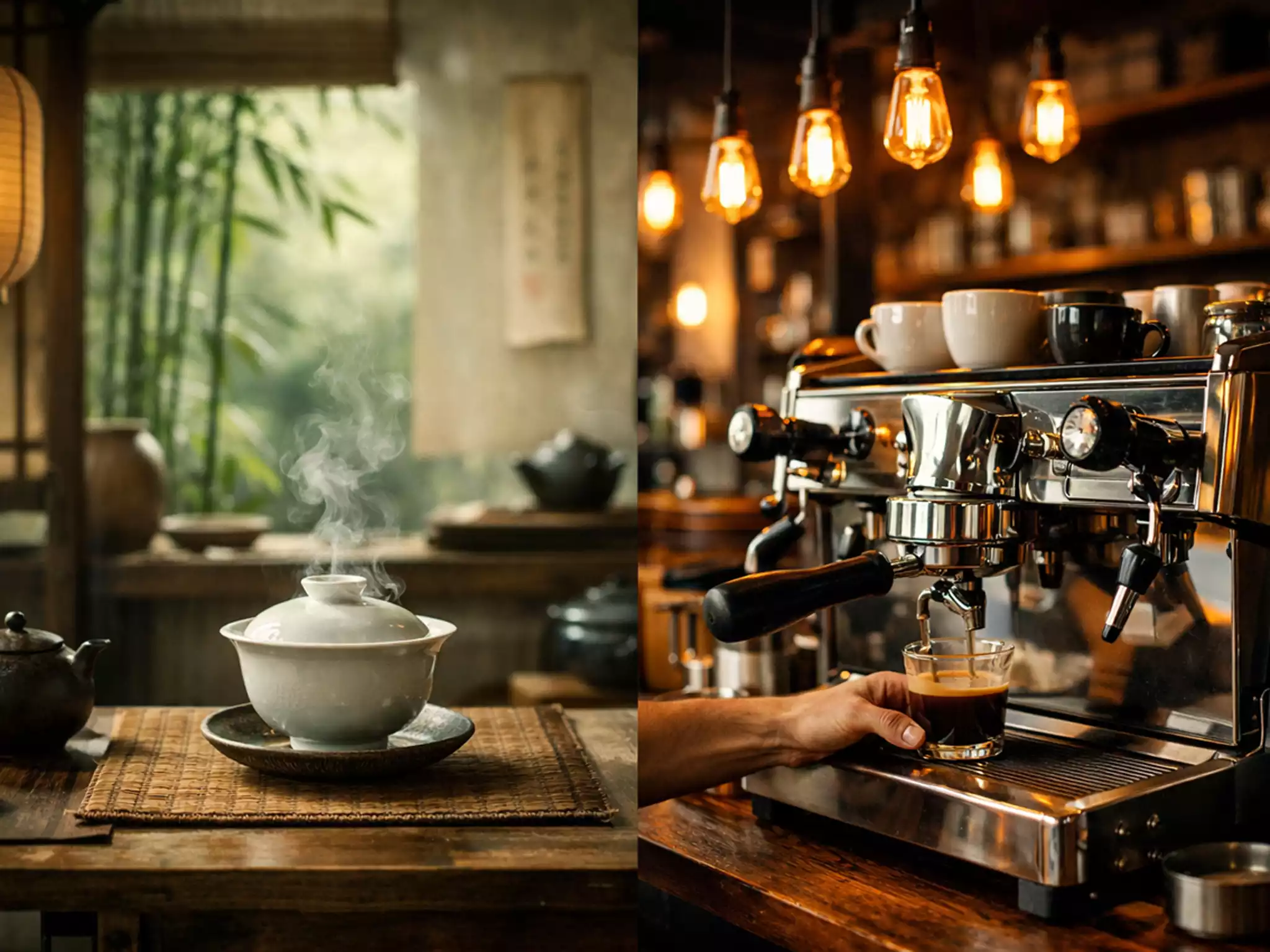
In today's fast-paced world, a morning ritual to spark energy is nearly indispensable. At the heart of this choice lie two culturally vibrant beverages: raw Pu-erh tea (also known as Sheng Puerh, 生普洱), a treasure of Eastern tradition, and coffee, the pulse of Western vitality. One embodies patience, harmony, and inner calm; the other ignites focus, dynamism, and intensity. Which resonates with your body and lifestyle? This 2026 guide examines their distinctions across health benefits, energy chemistry, sensory experience, and cultural meaning.
At-a-Glance: Raw Pu-erh (Sheng) vs. Coffee — 2026
The complete data reference — covering compounds, energy, health, acidity, brewing, and lifestyle in one scannable table.
| Feature | 🍃 Raw Pu-erh (Sheng Puerh) | ☕ Coffee (Espresso / Drip) |
|---|---|---|
| Primary Vibe | Zen, Flow, Meditative | High-Energy, Social, Sharp |
| Caffeine / Serving | 20–40 mg / 100 ml | 60–90 mg (espresso); 120–180 mg (drip 350 ml) |
| L-Theanine | ✓ 8–20 mg / cup | ✗ None |
| Active Energy | Caffeine + L-Theanine + Catechins | Pure Caffeine + Chlorogenic Acids |
| Duration | 4–6 Hours (Steady, No Crash) | 1–3 Hours (Peak / Crash) |
| Acidity (pH) | Low (pH 6–7, alkaline-leaning) | High (pH 4.5–5.5) |
| Gut Microbiome | ✓ Supports beneficial bacteria | Neutral to mild prebiotic benefit |
| Brew Temp | 85–95 °C (varies by leaf age) | 90–96 °C (espresso); 93–96 °C (drip) |
| Sleep Impact | Low (safe before 4 PM) | Moderate–High (half-life 5–7 hrs) |
| Cultural Root | Yunnan Mountains, China — 1,700+ years | Ethiopia → Ottoman Empire → Global |
| Best For | Deep work, creativity, afternoon ritual | Morning kick-start, deadlines, meetings |
1. Health Benefits: Nurturing Body vs. Sharpening Mind
Raw Pu-erh (Sheng Puerh), produced from minimally processed Camellia sinensis leaves in Yunnan, brims with polyphenols, catechins, EGCG, and moderate caffeine (20–40 mg / 100 ml). Renowned for its potent antioxidant properties, it supports metabolism, promotes long-term cellular wellness, and — crucially — has a mildly alkaline pH (6–7) that soothes rather than irritates the stomach lining.
Coffee, laden with caffeine (60–150 mg / cup) and chlorogenic acids, delivers swift stimulation to the nervous system, enhancing alertness and focus. Its acidity (pH 4.5–5.5) can challenge sensitive stomachs, and habitual high-intake disrupts adenosine sleep cycles.
🦠 2026 Focus: Gut Microbiome — Where Sheng Puerh Stands Apart
The most compelling emerging distinction is microbiome science. The polyphenols in Raw Pu-erh — especially catechins and EGCG — act as selective prebiotics, feeding beneficial Lactobacillus and Bifidobacterium strains while inhibiting pathogenic bacteria. As Sheng Puerh ages naturally, microbial fermentation transforms its polyphenols into new bioactive forms including theabrownins, which show distinctive gut-modulating activity. This is a mechanism coffee, with its different chemical profile, does not replicate with the same specificity.
✅ Wellness Insight: Opt for Raw Pu-erh (Sheng Puerh) to nurture gut health and maintain steady vitality. Choose coffee for quick bursts of mental clarity — but moderate your intake to protect your stomach and sleep quality.
2. Energy Profile: Gradual Flow vs. Instant Surge
Raw Pu-erh offers a slow, sustained energy release built on the L-theanine + caffeine synergy. L-theanine (8–20 mg / cup) elevates alpha brain waves (8–12 Hz) — the same frequency measured during Zen meditation — while caffeine provides gentle adenosine blockade. The result: calm alertness for 4–6 hours, no jitters, no mid-afternoon crash.
Coffee, in contrast, provides a swift energy surge — often within 15–45 minutes — fueling immediate, intense focus via pure adenosine blockade. Its higher caffeine dose (60–90 mg for espresso, up to 180 mg for a large drip) means the peak is sharper but the subsequent dip is steeper, particularly after the third or fourth cup.
| Time Point | 🍃 Raw Pu-erh (Gongfu Session) | ☕ Espresso / Drip Coffee |
|---|---|---|
| 0–15 min | Warmth and mild alertness begin | Caffeine absorption starts |
| 15–45 min | Alpha-wave calm focus develops | Peak alertness — sharpest focus window |
| 1–3 hours | Smooth, sustained clarity | Energy plateau; possible jitteriness |
| 3–6 hours | Continued calm; no rebound fatigue | Energy dip — adenosine rebounds |
| Bedtime | Low impact (if before 4 PM) | Moderate–High (half-life 5–7 hrs) |
☕ Energy Tip: If afternoon slumps or restless nights are familiar, swap your post-lunch coffee for a Gongfu session of young Sheng Puerh. The L-theanine prevents the crash, and the lower caffeine dose keeps sleep-onset melatonin on schedule.

3. Sensory Experience: Contemplation vs. Boldness
Raw Pu-erh is a meditative ritual. From rinsing the compressed leaves to progressive Gongfu infusions, it unveils a symphony of aromas — orchid-like floral notes in young Sheng, delicate apricot sweetness, aged camphor depth in older cakes. The defining experience is the Huigan (回甘): a returning sweetness that blooms in the throat after each sip, a sensation no other beverage replicates.
Beyond the palate, Sheng Puerh interacts with the body in a way coffee does not. While coffee hits the brain — a head-focused stimulation — Raw Pu-erh moves through the body: warmth spreading through the chest, a grounding sensation in the lower abdomen, a subtle dilation of time. This full-body phenomenon is known as Cha Qi (茶气), the "tea energy" that practitioners learn to read and navigate over years of practice. Explore Cha Qi in depth →
Coffee is a sensory jolt. Its robust roast aroma, velvety crema, and notes of dark chocolate or bright fruit acidity awaken the senses immediately. Its ritual is efficient: 25 seconds of espresso extraction, versus a 45-minute Gongfu session. Both are valid — one deepens with time, one delivers instantly.
🧘 Experience Tip: Pair Sheng Puerh with reading, writing, or meditation — the multiple infusions create a natural container for extended creative sessions. Reach for coffee when you have a meeting in 30 minutes and need immediate mental sharpness.

4. Lifestyle Reflection: Tea Table vs. Coffee Shop
Each beverage mirrors a distinct way of life:
- Raw Pu-erh (Sheng Puerh) embodies Eastern philosophy: introspection, balance, and long-horizon care. A single compressed Pu-erh cake can age and improve for 20–30 years — like a fine wine, it rewards patience over time.
- Coffee reflects urban dynamism: efficiency, rapid decision-making, and social energy. The coffeehouse is the original "third place" — a neutral ground for ideas, networking, and serendipitous connection.
Rather than choosing one for life, embrace both strategically — selecting the drink that aligns with the moment's cognitive and physiological needs.
5. How to Brew Raw Pu-erh (Sheng Puerh) for Maximum Benefit
The four steps below correct a common error: 80–85 °C is the correct range for delicate green teas, not for Sheng Puerh. Temperature must be calibrated to leaf age and quality.
Select your Sheng Puerh and set the correct water temperature
Young Sheng (0–5 years):
85–90 °C / 185–194 °F— preserves delicate florals, prevents bitterness. Medium-aged (5–15 years):90–94 °C / 194–201 °F. Ancient-tree (gushu) and aged (15+ years):93–95 °C / 199–203 °F— higher temperature is needed to fully express complex secondary aromatics. Never use 80–85 °C for Sheng — it under-extracts and produces a flat, thin cup.Measure and rinse the leaf before the first steep
Gongfu method: add
5–7 g per 100 mlGaiwan capacity. Western method:3 g per 200 ml. Pour water at target temperature for5–10 secondsas a rinse — discard entirely. This awakens compressed leaves, removes surface dust, and reduces first-steep astringency without sacrificing meaningful compounds.Steep short and increase progressively across infusions
First infusion:
10–20 seconds(Gongfu) or1–2 minutes(Western). Increase by5–10 secondsper subsequent Gongfu steep. Always drain the Gaiwan completely — residual water over-extracts polyphenols and produces unnecessary bitterness. A quality young Sheng rewards6–10 infusions; aged Sheng 10–15+.Drink with a light snack if new to Sheng Puerh's potency
Young Sheng on an empty stomach is the most common cause of Cha Zui (Tea Drunk) — dizziness from polyphenol-induced blood glucose dip. A small amount of food — nuts, dried fruit, or a rice cracker — provides the buffer without diminishing the Cha Qi experience. For coffee: espresso on an empty stomach poses similar gastric acid concerns; always pair with food.
The Balanced Day Ritual: When to Drink What
Cortisol peaks naturally post-waking — espresso sharpens the edge without overloading adrenal response
Mid-morning Gongfu session delivers alpha-wave flow for deep creative or analytical work
Post-lunch Sheng supports digestion and counters the natural afternoon energy dip gently
Switch to Shou (ripe) Pu-erh or herbal tea — minimal caffeine, gut-friendly, sleep-safe
Begin with coffee's bold kick. Find calm with Sheng Puerh in late morning. Digest with aged Sheng after lunch. Unwind with herbal tea at night. This is the most physiologically intelligent caffeine protocol for a full day.
Ready to explore Yunnan's finest young Sheng Puerh? Start with a single-origin cake from ancient trees.
Explore Our Sheng Puerh Collection →Frequently Asked Questions — 2026 Edition
How does Raw Pu-erh differ from coffee in terms of energy?
Raw Pu-erh (Sheng Puerh) contains 20–40 mg caffeine / 100 ml combined with 8–20 mg L-theanine, producing alpha brain waves (8–12 Hz) for calm, sustained focus lasting 4–6 hours without a crash. Coffee delivers 60–90 mg caffeine per espresso shot — rapid, intense stimulation peaking at 15–45 minutes, lasting 1–3 hours before adenosine rebounds. Practical difference: coffee for urgent deadlines; Sheng Puerh for long creative or deep work sessions.
Is Raw Pu-erh (Sheng Puerh) healthier than coffee?
Neither is categorically "healthier" — they excel in different dimensions. Sheng Puerh leads in: antioxidant density (EGCG, catechins), gut microbiome support (selective prebiotic polyphenols), acidity tolerance (pH 6–7 vs. coffee's 4.5–5.5), and sustained energy without crash. Coffee leads in speed of onset, liver health associations (3–5 cups / day studies), and immediate cognitive sharpness for logic-intensive tasks. For gastric sensitivity or afternoon energy without sleep disruption: Raw Pu-erh is the superior choice.
Can drinking Raw Pu-erh replace my daily coffee?
Many people successfully make this switch, especially those experiencing jitteriness, gastric irritation, or sleep disruption from coffee. A morning Gongfu session of young Sheng Puerh (5 g / 100 ml, 88–92 °C, 6–8 infusions) delivers meaningful sustained alertness. However, the caffeine dose is genuinely lower — coffee's immediate intensity cannot be fully replicated. The most effective protocol: morning coffee for cortisol-hour focus; Sheng Puerh for mid-morning deep work and afternoon continuation.
Does Raw Pu-erh affect sleep like coffee?
Significantly less. Coffee's caffeine half-life is 5–7 hours — a 3 PM espresso still has 50% caffeine active at 8–10 PM, competing with melatonin onset. Sheng Puerh's lower caffeine dose (20–40 mg vs. 60–150 mg) means most people can drink it safely until 4 PM without measurable sleep impact. Coffee's recommended cutoff for normal sleepers is closer to 1–2 PM. After 4 PM, switch to Ripe Pu-erh (Shou) or herbal tea entirely.
What temperature should I brew Raw Pu-erh (Sheng Puerh) at?
Temperature must be calibrated to leaf age — the common 80–85 °C recommendation applies to green tea, not Sheng Puerh:
• Young Sheng (0–5 years): 85–90 °C / 185–194 °F
• Medium-aged Sheng (5–15 years): 90–94 °C / 194–201 °F
• Aged / Ancient-tree gushu (15+ years): 93–95 °C / 199–203 °F
Using water that is too cool under-extracts the complex polyphenols that develop with age, producing a flat, thin cup that does not represent the tea's quality.