
Mastering the Brew: From Gaiwan to Mug — The Complete Beginner's Handbook
Summary: Mastering tea brewing in 2026 requires balancing vessel choice with precision. For best results, use 100°C for Black and Pu-erh teas, and 85-90°C for Green tea. Whether using a Gaiwan (5g/100ml) for multiple 20s infusions or a Mug (2g/250ml) for convenience, pre-warming your vessel is the non-negotiable step for flavor excellence.
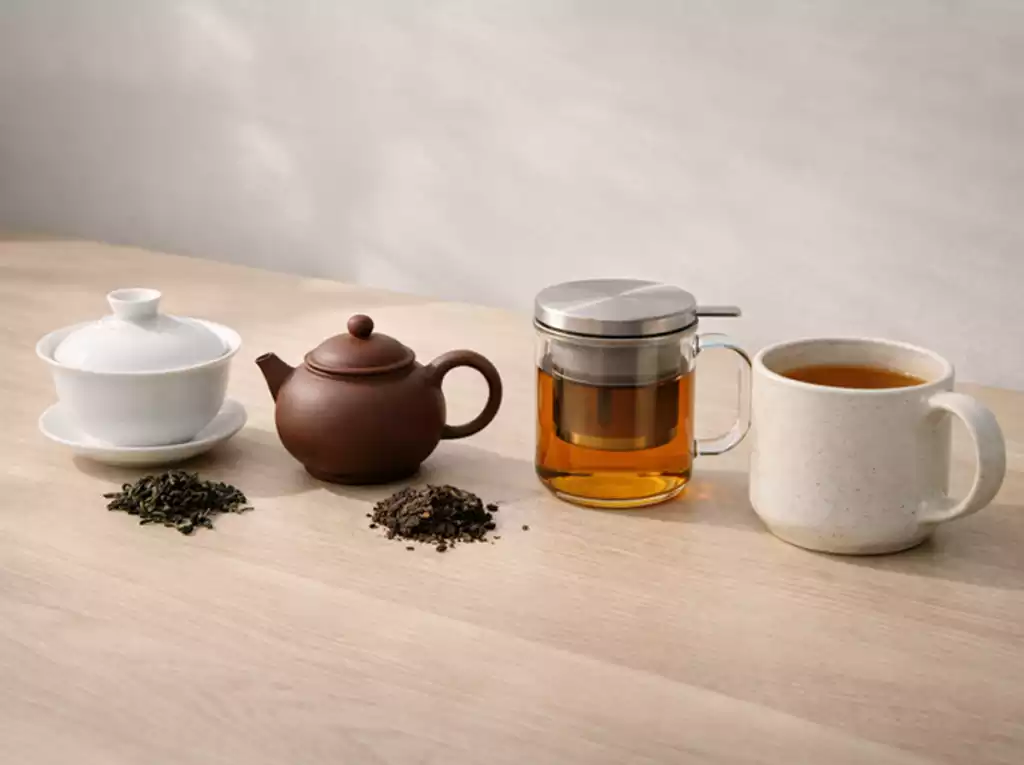
Tea brewing isn't one-size-fits-all. Whether you're sitting at a traditional tea table with a gaiwan, rushing through meetings with an office mug, or experimenting with a Yixing teapot, each method has its own rhythm, its own logic, and its own rewards. The secret to great tea isn't just the leaves—it's understanding how and when to use the right tools, temperatures, and techniques.
This comprehensive handbook merges five essential brewing guides into one complete resource. You'll learn the art of traditional gongfu brewing with a gaiwan, master the practical realities of office tea, understand why water temperature matters more than you think, and discover which brewing vessel best suits your lifestyle. Whether you're a curious beginner or an experienced drinker looking to refine your technique, this is your roadmap to brewing confidence.
"Great tea is not about perfection—it's about understanding your tools, your tea, and the moment you're in."
Part I: Water Temperature Mastery — The Foundation of Great Tea
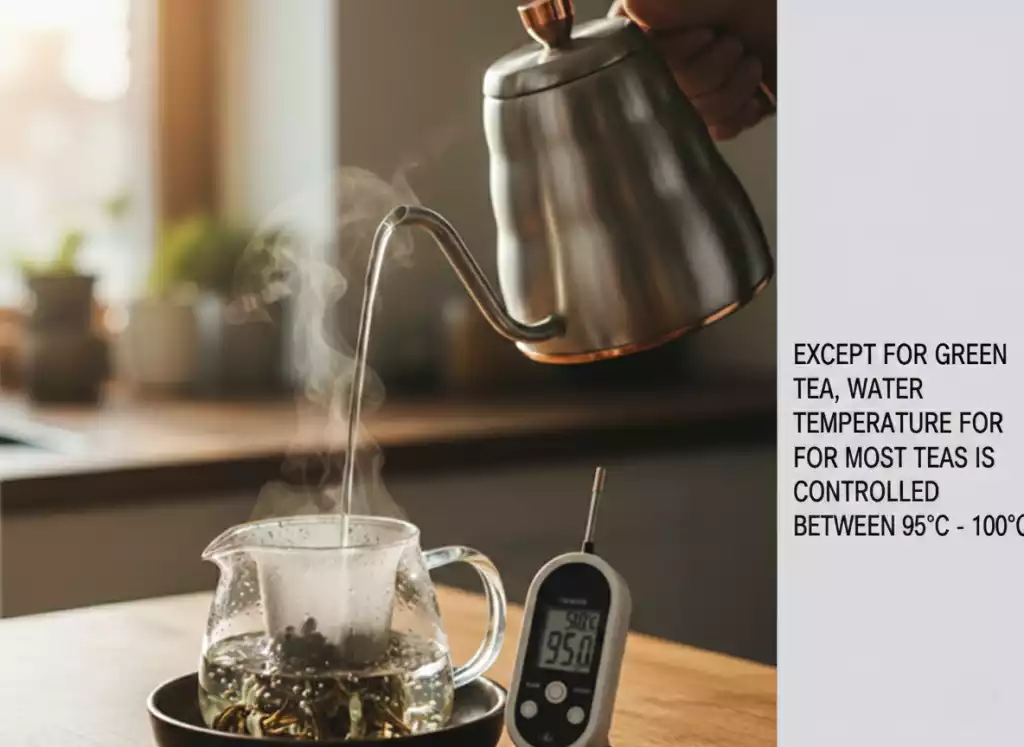
Water temperature is the hidden key to unlocking a tea's full potential. At Steeped Roots, we believe that high heat unlocks high aroma. While "boiling water" is a common phrase, different tea types require specific thermal energy to release their best flavors without bitterness or harshness.
| Tea Type | Ideal Temp (C/F) | Key Benefit | Expert Advice |
|---|---|---|---|
| Black Tea | 100°C / 212°F | Malty aroma extraction | Must be boiling to unlock oils |
| Pu-erh (Raw/Ripe) | 100°C / 212°F | Earthy complexity | Crucial for aged leaf structure |
| Oolong | 95-100°C / 203°F | Mineral depth | 95°C for light; 100°C for dark |
| Green Tea | 85-90°C / 185°F | Sweetness & Umami | Ancient tree leaves can handle 100°C |
Why Temperature Matters So Much
Tea leaves contain hundreds of aromatic compounds, each with different extraction thresholds. Too cool, and you'll miss the high-boiling-point oils that create depth and complexity. Too hot (for delicate teas), and you'll destroy amino acids and create harsh bitterness. Here's what happens at different temperatures:
- 85-90°C: Ideal for delicate green teas—preserves sweetness, umami, and fresh vegetal notes without scorching
- 95°C: Perfect for oolong—balances floral high notes with roasted depth
- 100°C (full boil): Essential for black tea, Pu-erh, and floral blends—extracts complex malty, earthy, and smoky aromatics
The Golden Rules by Tea Type
Black Tea, Pu-erh & Jasmine: 100°C (212°F)
For robust, fermented, or heavily processed teas, boiling water is non-negotiable. High heat extracts the complex trimethylamines and aromatic oils that give these teas their characteristic malty, earthy, or floral depth. Using cooler water results in a flat, lifeless cup that lacks the tea's true character.
Why it works: The cellular structure of oxidized and fermented leaves is more resilient. They need maximum thermal energy to break down and release their compounds into the water. This is especially true for aged Pu-erh and smoked teas like Lapsang Souchong.
Oolong: 95-100°C
Oolong is the versatile middle ground. Lightly oxidized oolongs (like Tieguanyin) benefit from 95°C to preserve floral high notes, while heavily roasted oolongs (like Wuyi Rock Tea) can handle full boiling water to extract their deep, mineral complexity.
Green Tea: 85-90°C — With Important Exceptions
Standard green teas thrive at 85-90°C to avoid "scalding" the delicate amino acids (especially L-theanine) that create sweetness and umami. However, high-quality Ancient Tree Green Teas are a major exception—their resilient cellular structure can handle boiling water, offering much richer mouthfeel and complexity without bitterness.
The science: Mass-market green teas use young, tender leaves with thin cell walls that burst under high heat, releasing excessive catechins (bitter compounds). Ancient tree leaves are thicker, with robust structure that withstands heat while releasing oils gradually.
🎯 Pro Tip: Pre-Warm Your Vessel
Always rinse your teapot, gaiwan, or mug with hot water before adding tea. A cold ceramic vessel can drop water temperature by 5-10°C instantly, sabotaging your brew before it even starts. Pre-warming is especially critical for delicate teas where precision matters.
Detailed Temperature Reference Table
| Tea Type | Ideal Temperature | Key Benefit | What Happens if Too Hot/Cold |
|---|---|---|---|
| Black Tea | 100°C (212°F) | Full malty aroma extraction | Too cold: flat, thin, lacking depth |
| Pu-erh (Raw/Ripe) | 100°C (212°F) | Unlocks earthy complexity | Too cold: muted, grassy, incomplete |
| Jasmine/Floral | 100°C (212°F) | Maximum floral release | Too cold: weak aroma, flat body |
| Oolong (Light) | 95°C (203°F) | Preserves floral high notes | Too hot: overly roasted; too cold: thin |
| Oolong (Dark) | 100°C (212°F) | Extracts mineral depth | Too cold: lacks roasted complexity |
| Green Tea (Standard) | 85-90°C (185-194°F) | Preserves sweetness & umami | Too hot: harsh, bitter, scorched |
| Ancient Tree Green | 90-100°C (194-212°F) | Rich mouthfeel, full extraction | Can handle heat; too cold: underwhelming |
Two Critical Habits for Temperature Success
1. Warm the Vessel First
Rinse your gaiwan, teapot, or mug with boiling water, swirl, and discard. This prevents "heat shock" where cold ceramic instantly cools your brewing water. This single step improves consistency dramatically.
2. Avoid Direct Scalding
Don't pour water directly onto the center of the tea leaves. Instead, aim for the inner wall of your vessel and let the water rise gently around the leaves. This prevents "cooking" the top layer while under-extracting the bottom—especially important for delicate teas.
🌍 Altitude Matters: The Yunnan Effect
In high-altitude regions like Yunnan, water boils at roughly 94-96°C due to lower atmospheric pressure. Interestingly, Yunnan teas have naturally evolved to be brewed with this "local boil"—so if you're brewing at sea level with true 100°C water, you're actually using higher heat than the tea's terroir intended. This is why some teas taste slightly different when brewed in their region of origin.
Part II: Gaiwan Brewing Basics — The Art of Traditional Tea
What Is a Gaiwan?
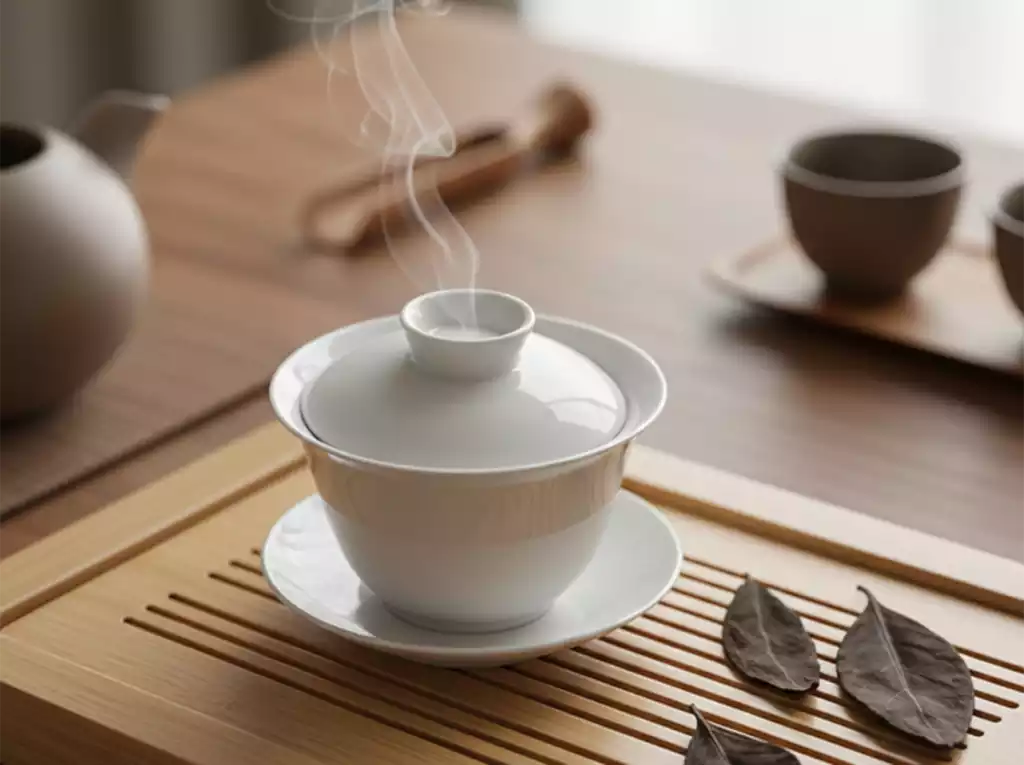
The gaiwan (盖碗), or "lidded bowl," is a timeless Chinese tea vessel used for centuries to brew delicate teas like oolong, raw Pu-erh, and green tea. Crafted from porcelain, ceramic, or glass, it consists of three simple parts: a bowl, a lid, and a saucer. No spout, no handle—just pure, elegant functionality.
More than just a vessel, the gaiwan offers precision control over steeping time, water flow, and aroma release. It's the preferred tool for gongfu cha (kung fu tea)—the art of brewing tea with skill and attention.
Why Use a Gaiwan?
- 🌸 Aroma First: The wide mouth and lid amplify the tea's fragrance, inviting you to inhale deeply before tasting—engaging smell as part of the experience
- 🔁 Multiple Infusions: Perfect for gongfu brewing, gaiwans allow 6-10+ infusions from the same leaves, revealing evolving flavors with each steep
- 📏 Precision & Control: Adjust steeping time by seconds to avoid bitterness, ensuring a perfectly balanced cup every time
- 🌱 Minimal & Sustainable: No filters, no waste, no retained flavors between teas—just a clean vessel and the pure expression of the leaf
- 🎓 Educational: Watching leaves unfurl and observing liquor color teaches you to read the tea, building intuition over time
What You'll Need
- A porcelain or glass gaiwan (100-150ml capacity, ideal for beginners—smaller vessels concentrate flavor)
- Loose-leaf tea—try raw Pu-erh, Tieguanyin oolong, Yunnan green tea, or Dian Hong black tea
- Filtered hot water at appropriate temperature (see Part I)
- Optional: fairness pitcher (公道杯, gong dao bei) to equalize strength across servings
- Small drinking cups (30-50ml)
Material choice: Porcelain gaiwans are beginner-friendly—they retain no flavors, clean easily, and allow you to see the tea's true color. Glass gaiwans are beautiful for watching leaves dance but conduct heat more intensely (hotter to handle). Avoid unglazed ceramic for gaiwans; save that for Yixing teapots.
Step-by-Step: How to Brew with a Gaiwan
Step 1: Warm Your Gaiwan 🔥
Pour boiling water (100°C) into the gaiwan, swirl to warm all surfaces, and discard into a waste bowl. This preheats the vessel and prevents heat loss during brewing. It also "awakens" your focus—a small ritual that signals the tea session has begun.
Step 2: Add Tea Leaves 🍃
Use approximately 5g of tea for a 100ml gaiwan (about 1:20 ratio). For reference:
- Raw Pu-erh: 5-7g (bold, can handle more leaf)
- Oolong: 5-6g (floral, needs space to unfurl)
- Green tea: 3-5g (delicate, less is more)
- Black tea (Dian Hong): 5-6g (robust, full-bodied)
Adjust based on personal taste—more leaf = stronger, faster extraction; less leaf = gentler, more forgiving.
Step 3: Rinse the Leaves 💧
Pour hot water over the leaves, cover with the lid, and immediately discard after 3-5 seconds. This quick rinse serves two purposes:
- Removes surface dust or debris from processing and storage
- "Wakes up" compressed or aged teas (especially Pu-erh), allowing them to expand and prepare for full extraction
Note: For very fresh, high-quality teas (like spring green tea), you can skip the rinse to preserve delicate aromatics.
Step 4: First Infusion ⏱️
Add water at the appropriate temperature (see Part I), cover, and steep briefly:
- Green tea: 10-15 seconds
- Oolong: 15-20 seconds
- Raw Pu-erh: 10-15 seconds
- Black tea: 20-30 seconds
Pour completely into a fairness pitcher or directly into cups. Drain fully—leaving liquid in the gaiwan causes over-extraction and ruins the next infusion.
Step 5: Repeat & Explore ♻️
Re-steep the same leaves 6-10 times (or more for high-quality tea), gradually increasing steep time by 5-10 seconds with each infusion. Notice how flavors evolve:
- Early steeps (1-3): Bright, aromatic, floral or fruity high notes
- Middle steeps (4-6): Balanced, sweet, full-bodied depth
- Late steeps (7+): Mellow, woody, lingering sweetness with minimal bitterness
This evolution is the heart of gongfu brewing—the tea tells a story across multiple chapters.
🎯 Simplified Brewing Principle
For unfermented/semi-fermented teas (raw Pu-erh, green tea, white tea, light oolong): Pour out the tea immediately after adding water—these teas extract quickly and can turn bitter if left too long.
For fully fermented teas (ripe Pu-erh, black tea, dark oolong): You can let them steep until the liquor reaches your desired color and strength—they're more forgiving and less prone to harsh bitterness.
How to Hold a Gaiwan (Without Burning Your Fingers!)
The biggest intimidation factor for beginners is handling a hot gaiwan. Here are two reliable techniques:
One-Handed "Pinch" Grip
- Place your thumb on one side of the rim, middle finger on the opposite side
- Use your index finger to tilt the lid slightly, creating a gap for pouring
- Pour smoothly in one motion, controlling flow by adjusting the lid angle
- Keep fingertips on the rim's edge, avoiding contact with the hot bowl body
Two-Handed "Beginner" Pour
- One hand holds the saucer or gently supports the bowl from below
- Other hand tilts the lid with index finger
- More stable, ideal while building confidence
Pro tips: Test the gaiwan's temperature by hovering your hand near it before gripping. If it's uncomfortably hot, wait 10-15 seconds or use a small cloth. With practice, you'll develop calluses and heat tolerance. Don't rush—safety and comfort matter more than looking graceful at first.
Sensory Experience: What to Notice
Gaiwan brewing is a full sensory journey. Here's what to observe with different teas:
| Tea Type | Appearance | Aroma | Taste | Aftertaste |
|---|---|---|---|---|
| Tieguanyin Oolong | Pale golden liquor, tightly rolled balls unfurling | Orchid, creamy floral, fresh | Smooth, sweet, slightly roasted | Lingering floral sweetness, clean finish |
| Raw Pu-erh | Light green-golden liquor, whole leaves expanding | Floral, grassy, mineral, forest-like | Vibrant, slightly astringent, sweet hui gan | Refreshing, orchid-like, cooling throat |
| Yunnan Green Tea | Bright green liquor, fine leaves floating | Fresh, herbaceous, nutty, vegetal | Crisp, clean, mildly sweet, umami | Clean, refreshing clarity, no bitterness |
| Dian Hong Black | Golden-orange liquor, golden tips visible | Malty, honey, cocoa, sweet potato | Full-bodied, smooth, caramel sweetness | Warm, lingering sweetness, peppery finish |
Part III: Office Mug Brewing — Tea in Real Life
The Honest Truth About Office Tea
Not every workday allows space for a gaiwan, a teapot, or a full gongfu setup. In offices, meeting rooms, coworking spaces, or shared kitchens, what most tea drinkers actually have is a single mug and a kettle. And that's perfectly fine.
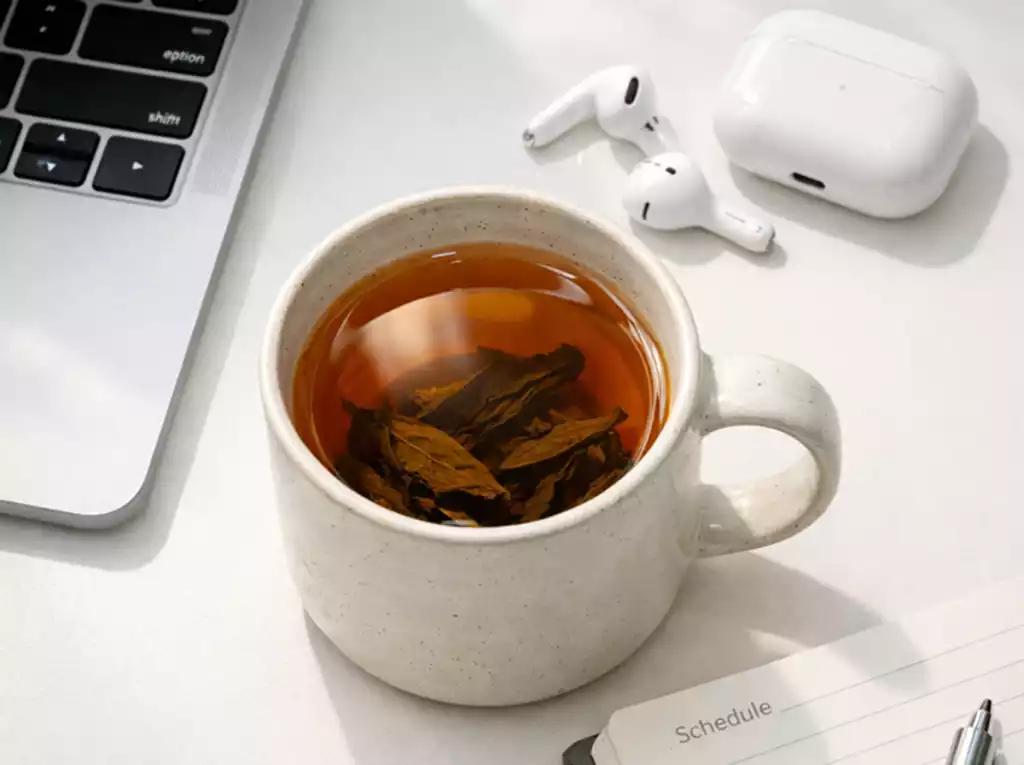
Brewing tea directly in a mug—without an infuser, without ceremony—is not a downgrade. It's a practical, repeatable method that fits modern professional life. This approach (sometimes called "grandpa style" brewing) is actually the most honest way to drink tea: if the tea is high quality, it has nothing to hide.
Who Is This Method For?
- ☕ Professionals who want real tea at their desk without elaborate setup
- 🏢 Office workers in shared or formal environments where gongfu brewing would feel intrusive
- 📊 People in back-to-back meetings where brewing needs to be fast and forgiving
- 🕰️ Tea lovers who want tea throughout the day, not a single ceremonial session
- 🌿 Anyone tired of tea bags but short on time or space
Why Yunnan Teas Excel in Office Mugs
Not all teas behave well when brewed freely in a mug. Yunnan large-leaf teas—Dian Hong, Shai Hong, Sheng Pu-erh, Shou Pu-erh—have unique advantages:
- Physical structure: Larger leaves sink naturally to the bottom instead of floating, making drinking easier
- Slow extraction: Thick leaves release flavor gradually, remaining stable even when steeping time is inconsistent
- Forgiving chemistry: High-quality Yunnan teas don't turn harshly bitter from prolonged contact with water
- Multiple refills: The same leaves can be refilled 3-4 times throughout the workday, providing continuous tea without waste
Aroma & Mouthfeel: Tea by Tea
Dian Hong (Yunnan Black Tea)
In a mug, Dian Hong opens quickly with aromas of cocoa, warm grain, and honeyed sweetness. The liquor feels smooth and rounded—ideal for a morning desk brew. Golden tips create a peppery finish that lingers pleasantly. Consistent across refills.
Shai Hong (Sun-Dried Black Tea)
Shai Hong carries more endurance than oven-dried black teas. Early refills show dried fruit (apricot, plum) and soft florals. Later steeps settle into a calm, woody sweetness that pairs well with long work sessions. Less intense than Dian Hong but more meditative.
Sheng Pu-erh (Raw Pu-erh)
Young sheng brings freshness and lift in the first two refills—bright, grassy, slightly astringent. By the third refill, bitterness fades and sweetness remains. Beyond that, aroma softens significantly. Best for focused morning work when you want mental clarity.
Shou Pu-erh (Ripe Pu-erh)
Shou Pu-erh is the most forgiving mug tea. Earthy, grounding, warm, with notes of forest floor, cocoa, and dates. It tolerates long steeps and distracted sipping better than any other style. Rarely turns bitter, even after sitting for an hour. The go-to for afternoon focus or evening calm.
How Many Refills Can You Expect?
In real office conditions, mug-brewed tea delivers its best aroma and structure within three refills. This is a practical limit, not a flaw:
- First fill: Clear aroma, defined structure, full flavor
- Second fill: Balanced body, softened edges, peak sweetness
- Third fill: Gentle sweetness, reduced aroma, mellow body
- Fourth fill (optional): Very light, mostly warm water with faint sweetness—some people enjoy this as a "tea-infused water" for afternoon hydration
Understanding this cycle helps set realistic expectations. Office tea is about continuity and comfort, not intensity.
If the Tea Gets Too Strong
In offices or meetings, tea often sits longer than intended. If your mug has steeped for over an hour and the flavor feels too heavy or bitter:
- Pour out about half of the tea into a sink or another cup
- Refill with fresh hot water
- Continue drinking
This simple "half-pour method" restores balance without wasting leaves. It's especially effective with Pu-erh and Shai Hong, which tolerate dilution well.
🎯 The "No-Scale" Solution: 2g Mini Cakes
The biggest barrier to brewing loose-leaf tea at work is needing a digital scale. Through years of office brewing, we found that 2 grams is the "Golden Ratio" for a standard mug.
How to use our 2g Mini Cakes:
- Standard Mug (8-10 oz / 250-300ml): Use 1 Mini Cake for a sweet, aromatic brew that won't become overly bitter during calls
- Large Office Tumbler (12-16 oz / 450ml+): Use 2 Mini Cakes to ensure depth of flavor isn't lost in the larger water volume
Do You Need to Rinse Office Mug Tea?
For our 2g Mini Cakes, a rinse is optional but recommended for Pu-erh to "wake up" the compressed leaves:
- Place the mini cake in your mug
- Pour a small amount of hot water (just enough to cover the tea)
- Wait 5 seconds
- Discard the first water into a sink or waste bin
- Proceed with your regular brewing
This brief rinse removes any surface dust and primes the leaves for better extraction. For Dian Hong or Shai Hong, you can skip this step if you're in a rush.
Part IV: Vessel Comparison — Gaiwan vs. Yixing vs. Tea Ball
Different brewing vessels shape tea's flavor and experience in unique ways. Understanding these differences helps you choose the right tool for your tea, your setting, and your goals.
🫖 Gaiwan: The Versatile Classic
Material: Porcelain, ceramic, or glass
Capacity: 100-150ml, ideal for small precise brews
Design: Open bowl with lid for controlling steeping and pouring
Advantages
- Neutral Flavor: Preserves tea's true character without any interference
- Enhanced Aroma: Wide mouth lets fragrances bloom fully
- Visual Control: Watch leaves unfurl to adjust steeping time precisely
- Versatility: Perfect for any tea type—use the same gaiwan for green, oolong, black, Pu-erh
- Easy Cleaning: Simple structure, rinses clean in seconds, no flavor memory
Drawbacks
- Requires practice to pour without burning fingers
- Porcelain can break if dropped or handled roughly
- Not ideal for very large group brewing
Best For: Enthusiasts exploring different teas through gongfu brewing; beginners learning to observe leaves and control extraction; anyone who values versatility and purity.
🏺 Yixing Teapot: The Flavor Enhancer
Material: Yixing clay (purple, red, or green), unglazed and double-porous
Capacity: 100-350ml, for solo or small group brewing
Design: Compact with tight-fitting lid, spout, and handle
Advantages
- Flavor Enhancement: Porous clay absorbs tea oils over time, enriching each subsequent brew—"seasoning" the pot
- Heat Retention: Maintains stable temperature better than porcelain, ideal for oolongs and Pu-erh
- Aesthetic Appeal: Develops a beautiful patina with use; highly collectible
- Custom Pairing: Each pot becomes dedicated to one tea type, creating a personalized brewing relationship
Drawbacks
- Single Tea Use: Must dedicate to one tea type (e.g., only Shai Hong) to avoid flavor mixing
- Cost: Authentic Yixing teapots range from $40 to $500+ depending on quality and artist
- Maintenance: Never use soap—only rinse with hot water and air dry; requires careful seasoning
- Can be fragile despite appearing sturdy
Best For: Dedicated enthusiasts who have a favorite tea and want to deepen its flavor through repeated use; collectors who value the ritual and artistry of traditional teaware; those willing to maintain multiple pots for different teas.
⚙️ Metal Tea Ball: The Convenient Option
Material: Stainless steel, perforated or mesh
Capacity: Small, typically holds 1-2 teaspoons
Design: Spherical or basket-shaped with chain or handle
Advantages
- Convenience: Drop in mug, steep, remove—fast and foolproof
- Portability: Compact, fits in pocket or desk drawer
- Affordability: Inexpensive ($5-$20)
- No Skill Required: Works immediately without learning curve
- Easy to clean—dishwasher safe
Drawbacks
- Limited Space: Cramped leaves can't expand fully, muting complexity and aroma
- Potential Metallic Taste: Lower-quality stainless steel may affect flavor
- Single Serving: Not suited for multiple short infusions—extract once and discard
- Doesn't work well for teas that need to fully unfurl (oolongs, whole-leaf teas)
Best For: Casual drinkers seeking quick, single-cup brews; beginners wanting a low-cost, low-maintenance starting point; travel or camping situations where you need maximum portability.
Brewing the Same Tea: Method Comparison
Let's see how the same tea (Shai Hong) performs in each vessel:
| Method | Tea Amount | Water Temp | Steep Time | Infusions | Flavor Result |
|---|---|---|---|---|---|
| Gaiwan | 5g / 100ml | 95°C | 20-30s per steep | 5-7 infusions | Full complexity, layered evolution, floral highs to malty depths |
| Yixing Teapot | 6-8g / 150ml | 95°C | 30-40s per steep | 4-6 infusions | Enhanced smoothness, deeper body, accumulated richness over time |
| Tea Ball in Mug | 2-3g / 250ml | 95°C | 3-5 min single steep | 1 serving | Bold, one-dimensional, less nuanced but convenient |
| Office Mug (No Infuser) | 2g / 250ml | 100°C | Continuous, 3-4 refills | 3-4 refills | Gradual extraction, consistent sweetness, practical for work |
Quick Decision Guide: Which Vessel Should I Use?
- For deep exploration of a single tea: Gaiwan (reveals every layer)
- For long-term relationship with a favorite tea: Yixing teapot (enhances over time)
- For quick convenience without compromise: Office mug, no infuser (surprisingly good)
- For absolute minimal effort: Metal tea ball (works, but limits potential)
- For travel or camping: Small gaiwan or tea ball (portability)
- For group sharing: Larger Yixing or gaiwan with fairness pitcher
Remember: The "best" vessel is the one that fits your life. A consistently used office mug is better than a gaiwan that stays in the cupboard.
Part V: Why Office Tea Loses Aroma Faster — The Science Explained
If you regularly drink tea at work, you've probably noticed something frustrating: The tea still tastes sweet, but the aroma is gone.
This happens even with good tea—Dian Hong, Shai Hong, Sheng Pu-erh. Compared to gongfu brewing, office mug tea seems to lose fragrance quickly. This isn't because the tea is low quality. It's because the brewing environment is fundamentally different.
Aroma Is the Most Fragile Part of Tea
Tea aroma comes from volatile compounds—floral, fruity, honeyed, woody molecules that evaporate easily when exposed to heat and air. These aromatic oils have low boiling points and high vapor pressure, meaning they escape into the air constantly.
Sweetness, body, and even bitterness are created by compounds that dissolve into water and remain stable much longer. Aroma, however, is in perpetual motion—rising, dissipating, disappearing.
Why Office Mugs Lose Aroma Faster: Four Key Factors
1. Open Mugs Let Aroma Escape Continuously
Office mugs are usually open, wide, and uncovered. This creates a continuous pathway for aromatic molecules to rise and disappear into the air.
Gongfu vessels—gaiwans and teapots—temporarily trap aroma under a lid, releasing it only when you lift the cover or pour. Each time you open the gaiwan, you get a fresh burst of concentrated fragrance.
A mug offers no pause. Aroma escapes from the moment hot water touches the leaves until you finish the cup.
2. Long Contact Time Accelerates Aroma Loss
Gongfu brewing separates leaves and liquor quickly—steep for 15 seconds, pour, done. The leaves rest between infusions, preserving aromatic compounds for the next steep.
Office mug brewing keeps leaves and water together continuously. This means:
- Faster extraction of volatile compounds all at once
- Higher evaporation rate over extended time
- No "reset" between refills—aromatics are exhausted early
Aroma is extracted early and then... gone.
3. Heat Retention Works Against Aroma
Office mugs are designed to keep drinks hot for as long as possible. Sustained heat keeps volatile compounds active longer, increasing evaporation rate.
In gongfu brewing, small vessels (100-150ml) cool quickly between pours. This temperature cycling protects aromatic compounds from continuous heat stress, extending their presence across multiple infusions.
4. Wider Surface Area = Faster Evaporation
Most office mugs have wide openings (8-10cm diameter) to accommodate drinking. This large surface area accelerates evaporation—more molecules can escape simultaneously.
A gaiwan's opening is similar in size, but it's covered most of the time. A teapot's spout is narrow, restricting escape routes.
Why Sweetness Remains After Aroma Fades
Sugars, amino acids, and soluble solids dissolve slowly and persist in solution. These compounds don't evaporate—they stay dissolved in the water even as aromatic molecules vanish.
This explains why office tea often tastes "sweet but empty" after several refills. The structural flavor remains, but the top-note aromatics that create interest and complexity are gone.
This stage usually appears after the third refill in mug brewing—still pleasant to drink, but no longer fragrant.
Which Teas Handle Aroma Loss Better?
Some teas rely more on structural flavor than volatile aromatics, making them more resilient to office conditions:
- Dian Hong: Cocoa and malt sweetness carry the experience even after floral notes fade
- Shai Hong: Honeyed body outlasts fruit aroma—remains pleasant for hours
- Shou Pu-erh: Earthy structure stays stable with minimal dependence on fragrance
- Sheng Pu-erh: Aroma-driven—fades fastest in mugs, though sweetness lingers
Office Tea Is Not Inferior—It Has a Different Goal
Gongfu tea celebrates aroma, transformation, and attention. It's a focused experience where every detail matters.
Office tea prioritizes continuity, warmth, and ease. It's about having good tea available throughout the workday without demanding constant focus.
Aroma loss is not failure—it's the trade-off for convenience. Understanding this lets you set appropriate expectations and choose teas that work with the format rather than against it.
💡 Can You Preserve Aroma in Office Brewing?
Covering the mug helps, but it's a double-edged sword:
- A lid traps volatile aroma molecules, preventing immediate escape
- However, it also traps heat, which can "stew" delicate teas (especially green tea or young sheng)
Recommendation: Cover the mug only during the initial 2-minute steep, then remove the lid for drinking. This balances aroma retention with tea quality.
Lower water temperature also helps: Dropping water temperature by 5-10°C slows aromatic evaporation. You'll lose some initial "impact," but fragrance will linger across more refills.
Common Mistakes to Avoid Across All Brewing Methods
Temperature Mistakes
- 🚫 Using boiling water (100°C) for delicate green tea—results in scorched, bitter brew
- 🚫 Using too-cool water (85°C) for black tea or Pu-erh—creates flat, lifeless cup
- 🚫 Not pre-warming the vessel—causes instant 5-10°C heat loss
- 🚫 Pouring directly onto leaf center—"cooks" the top while under-extracting the bottom
Timing Mistakes
- ⏳ Over-steeping early infusions—extracts harsh bitterness before sweetness develops
- ⏳ Leaving liquid in gaiwan between pours—causes over-extraction and ruins next steep
- ⏳ Not adjusting steep time across infusions—same timing won't work for infusion 1 and infusion 7
Technique Mistakes
- 💦 Not rinsing Pu-erh or compressed teas—misses the crucial "awakening" step
- 💦 Using tap water with high mineral content—creates metallic taste and cloudiness
- 🧼 Washing Yixing teapots with soap—destroys the seasoned patina you're trying to build
- 📏 Inconsistent tea-to-water ratio—makes it impossible to develop reliable technique
Vessel Selection Mistakes
- Using Yixing teapot for multiple tea types—flavors mix and become muddy
- Using tea ball for teas that need to unfurl (rolled oolongs)—cramped leaves can't expand
- Using office mug for extremely delicate teas (first-flush Darjeeling)—format doesn't match tea character
Remember: Mistakes are part of learning. Every "ruined" cup teaches you something about the tea and the method.
Complete Brewing FAQ
Only if it's high-quality Ancient Tree green tea with resilient leaves. For standard green tea, let water cool to 85-90°C after boiling (wait about 2 minutes) to preserve sweetness and avoid scorching.
Start with 100-120ml capacity. This size is manageable for heat control, uses moderate amounts of tea (5-6g), and produces 2-3 small cups per infusion—perfect for solo practice or sharing with one person.
Rinse immediately after use with hot water, no soap needed. For stubborn tea stains, use baking soda paste. Air dry completely before storing. Porcelain gaiwans don't retain flavors, so a simple rinse is sufficient.
Yes, but it requires focus and practice. If you're in frequent meetings or need to multitask, office mug brewing (no infuser) is more practical. Reserve gaiwan for dedicated tea breaks when you can give it full attention.
Rinsing serves two purposes: (1) removes surface dust from processing/storage, and (2) "wakes up" compressed or aged teas, allowing them to expand and prepare for full extraction. It's especially important for Pu-erh and tightly rolled oolongs.
Depends on the tea. Yunnan large-leaf teas (Dian Hong, Pu-erh, Shai Hong) are naturally resilient and tolerate prolonged steeping. If it does become too strong, use the "half-pour method": pour out half the liquor and refill with fresh hot water.
Yes! Grandpa style is the traditional Chinese method of brewing tea directly in a large cup or jar, refilling throughout the day. It's the most honest way to drink tea—if the tea is high quality, it reveals itself beautifully without any tools.
Yes! At high altitudes (like Yunnan's tea mountains), water boils at 94-96°C instead of 100°C due to lower atmospheric pressure. Interestingly, Yunnan teas have evolved to be brewed with this "local boil"—using true 100°C at sea level actually provides slightly higher heat than intended.
Start with either a porcelain gaiwan (for learning traditional brewing) or office mug method with quality tea (for practical daily drinking). Both teach you to taste tea without tool interference. Avoid tea balls initially—they mask tea quality.
Not recommended. Yixing clay is porous and absorbs tea oils, creating a "seasoned" flavor profile. Mixing tea types (e.g., using the same pot for oolong and Pu-erh) creates muddy, confused flavors. Dedicate each Yixing pot to one tea category.
Sheng (raw) Pu-erh relies heavily on high-note floral and fruity aromatics, which are extremely volatile and evaporate quickly. Shou (ripe) Pu-erh has heavier, earthier molecular structure formed during fermentation—these "low-note" aromas are less prone to evaporation, making shou more stable for long-term mug brewing.
Gongfu brewing: Green tea 3-4, Oolong 6-8, Raw Pu-erh 8-12, Ripe Pu-erh 8-10, Black tea 5-7. Office mug: 3-4 refills for all types before aroma significantly fades.
🌿 Continue Your Tea Journey
"The gaiwan teaches us to listen—not just to flavor, but to the silence of the moment. The office mug teaches us to adapt—finding beauty in imperfect conditions. Both are valid. Both are tea."

