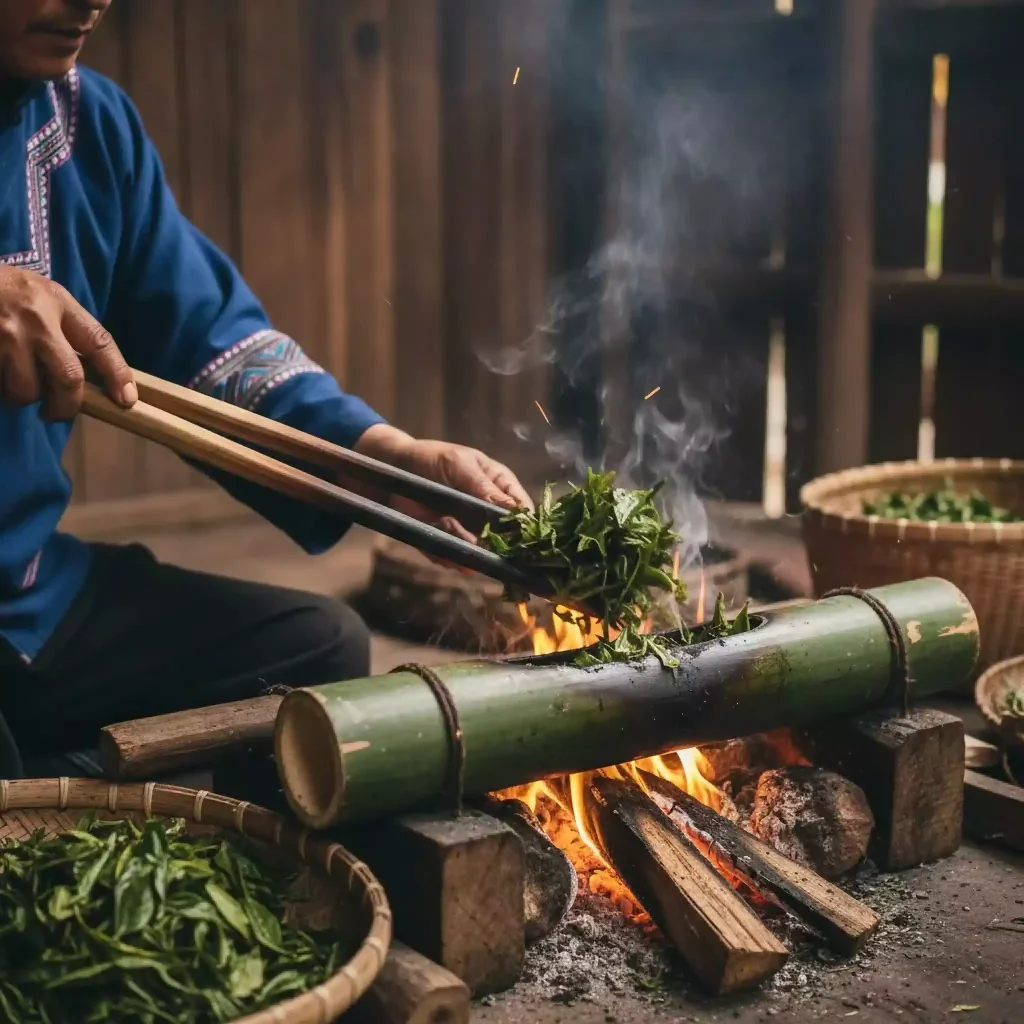
Black Tea Around the World: A Complete Journey from Origin to Cup
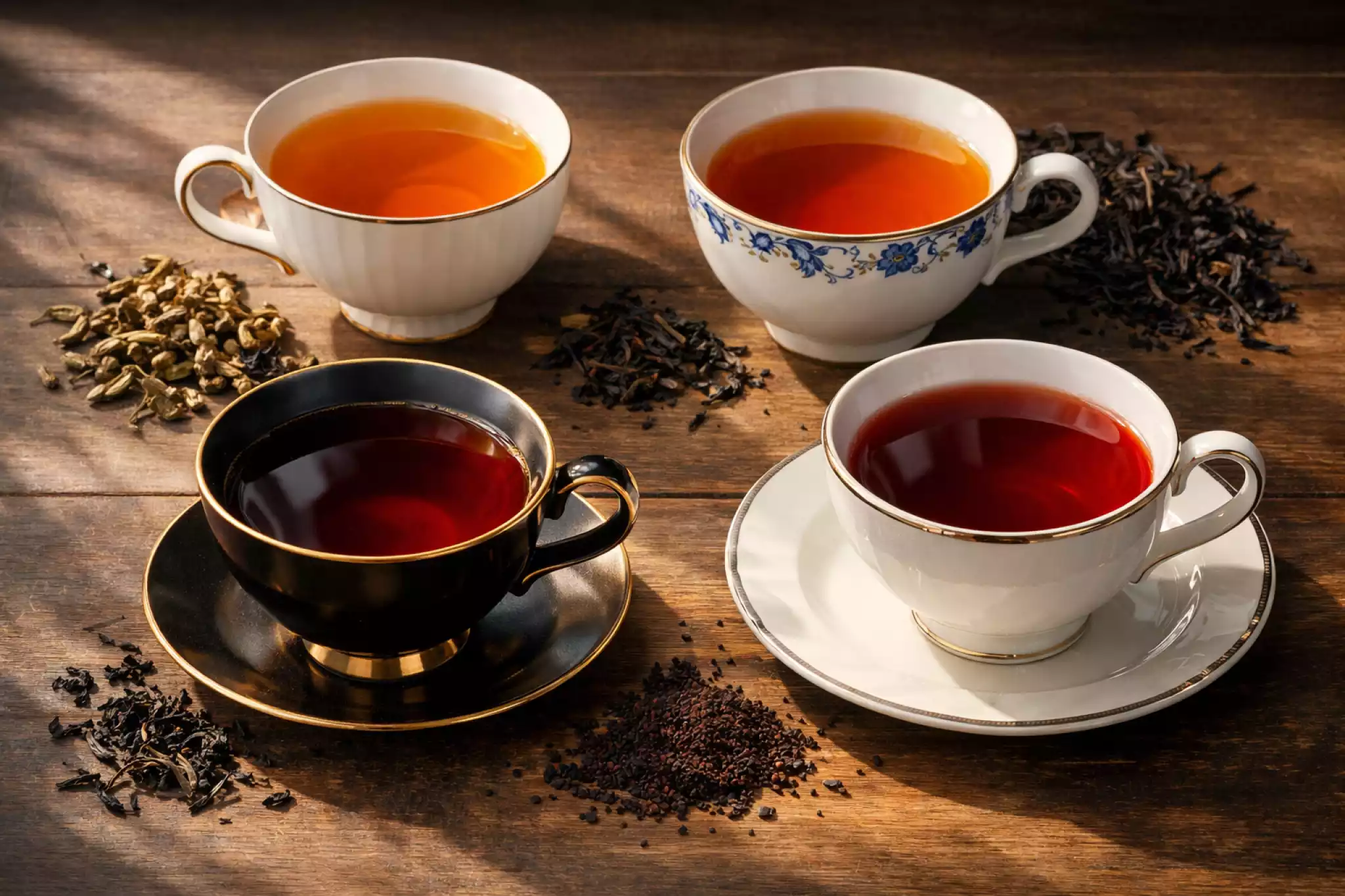
From the pine-smoke huts of Wuyi Mountain's Tongmu Village to the flood-prone tea gardens of Assam, and across to the sunrise-lit equatorial highlands of Kenya, black tea (called hong cha or "red tea" in China) weaves together threads of empire, colonial history, and modern globalization. Its deep amber glow and flavor spectrum—from honey-sweet florals to bold smoky richness—unites tea lovers across continents.
Unlike green or white teas, black tea undergoes full oxidation through masterful processing, revealing profiles of malt, flowers, fruit, and earth that reflect its diverse terroir. This comprehensive guide takes you on a journey through the world's major black tea-producing regions, exploring how geography, cultivation practices, and craftsmanship create the remarkable diversity we taste in every cup.
"Black tea is not one story—it is a thousand stories, each told through soil, climate, and the hands that shape the leaf."
China: The Birthplace of "Red Tea" (Hong Cha)
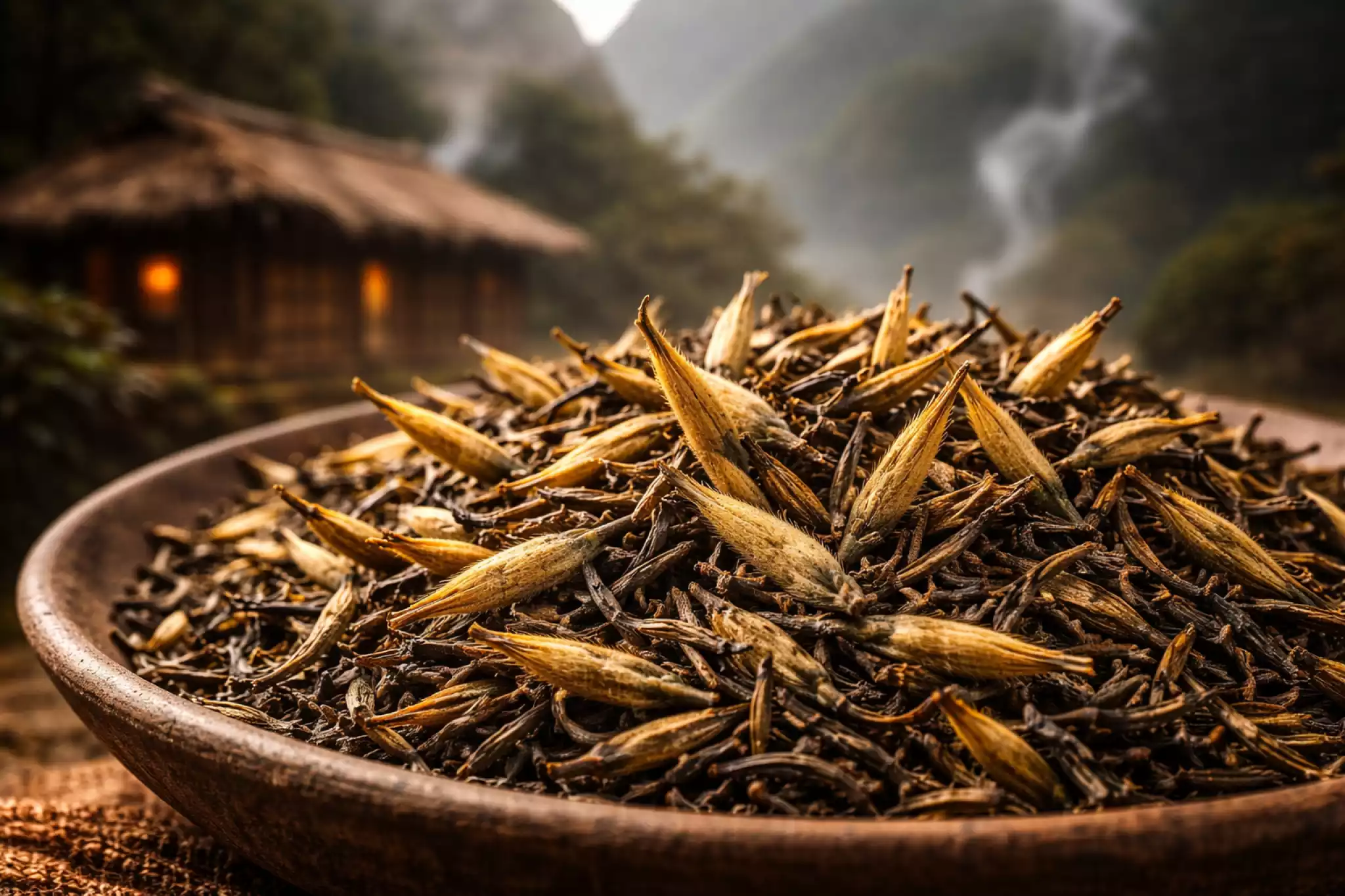
In China, what the West calls "black tea" is known as hong cha (红茶)—named for the brilliant red liquor it produces when brewed. Fujian Province's Wuyi Mountains are the ancestral home of this category. The birth of Lapsang Souchong was serendipitous: during the Qing Dynasty, tea farmers accidentally created smoky flavors when they dried leaves over pine fires. This tea quickly traveled to Europe, becoming the world's first black tea and sparking a global tea revolution.
Key Chinese Black Teas
Lapsang Souchong (正山小种)
The world's first black tea, created in Wuyi Mountain's Tongmu Village. Dried over smoldering pine wood, it delivers legendary "campfire" smokiness with notes of pine resin, tobacco, and forest. Authentic Lapsang has a complex sweetness beneath the smoke—not harsh or acrid. Modern versions may be unsmoked ("zhengshan xiaozhong") to highlight the tea's natural longan fruit and chocolate notes.
Dian Hong (滇红)
Yunnan's golden-tipped tea, renowned for malty depth and chocolate undertones. Developed in the 1930s by tea master Feng Shaoqun, Dian Hong uses Yunnan's large-leaf varietal (Camellia sinensis var. assamica), creating a full-bodied brew with honey sweetness and peppery finish. High-grade Dian Hong shows abundant golden tips (jin hao), indicating young buds rich in amino acids.
Keemun (Qimen Hong Cha, 祁门红茶)
Produced in Qimen County, Anhui Province, Keemun is celebrated for its delicate orchid aroma and honey-like sweetness. Often called the "Burgundy of teas," it's a cornerstone of Western blends like English Breakfast. The best Keemun has a wine-like complexity with notes of rose, dried fruit, and a lingering hou yun (throat resonance). According to Tea Guardian's profile on Keemun, this tea represents the pinnacle of Chinese black tea craftsmanship.
Jin Jun Mei (金骏眉)
A modern luxury tea created in 2005 in Wuyi Mountain, made entirely from golden buds picked in early spring. It offers a refined sweetness with notes of longan, sweet potato, and wildflower honey, minimal astringency, and a silky mouthfeel. Highly sought after and often counterfeited due to its premium price.
Adrian's Notes: Chinese black teas are best enjoyed pure to appreciate their natural sweetness and complex throat resonance (hou yun). Save the milk for stronger teas.
India: The Global Production Giant
India is the titan of the tea industry, producing bold, high-yield varieties that fueled global tea trade in the 19th century. After the British successfully smuggled tea plants and processing secrets from China (thanks to Scottish botanist Robert Fortune's espionage missions in the 1840s), they established vast plantations in India, launching the era of mass tea cultivation.
Assam: The Morning Ritual
Grown in the Brahmaputra River valley lowlands of northeastern India, Assam tea is celebrated for its brisk strength and malty character. It forms the backbone of "English Breakfast" blends worldwide. The region's tropical monsoon climate and low elevation (100-200m) create ideal conditions for the large-leaf Assam varietal.
Flavor Profile: Bold, malty, robust with notes of caramel, dried fruit, and a characteristic astringency that pairs perfectly with milk and sugar. First Flush (March-April) is lighter and more delicate; Second Flush (May-June) delivers peak maltiness and strength.
Processing: Most Assam is CTC (Crush-Tear-Curl) processed for efficiency and strength, though orthodox leaf production is growing among specialty producers. As noted in World Tea Directory's Assam profile, this region produces more tea than any other single location globally.
Darjeeling: The Champagne of Teas
Perched in the Himalayan foothills at 2,000+ meters elevation, Darjeeling produces delicate, muscatel-flavored teas that defy typical black tea conventions. The region's unique microclimate—cool temperatures, misty mornings, intense sunlight—creates teas of exceptional complexity.
The Flush System:
- First Flush (March-April): Light, green-gold liquor with floral, fruity notes and bright astringency. Often only 70-80% oxidized to preserve delicate character.
- Second Flush (May-June): The prized harvest—amber liquor with signature muscatel grape notes, fuller body, and refined complexity. Peak season for collectors.
- Monsoon Flush (July-September): Stronger, darker, less nuanced—used primarily for blends.
- Autumnal Flush (October-November): Smooth, mellow, with notes of nuts and spice.
Why it's different: Unlike most black teas that undergo 100% oxidation, many Darjeelings are lightly oxidized (similar to oolong) to retain floral high notes and prevent excessive astringency. This technique was refined by British colonial tea planters experimenting with Chinese tea varietals in Indian soil.
Darjeeling has protected geographical indication (GI) status, meaning only tea grown in designated gardens can legally be labeled "Darjeeling." Learn more from the Darjeeling Tea Association.
Sri Lanka (Ceylon): Crown of Brightness
Sri Lanka (formerly Ceylon) ranks among the world's top three producers of high-quality black tea. Originally a coffee-growing island, Sri Lanka pivoted to tea in the late 19th century after coffee rust disease devastated plantations. Scottish tea planter James Taylor established the island's first tea estate in 1867, and the industry exploded from there.
The island's mountainous terrain creates distinct elevation-based terroirs, with altitude dramatically influencing flavor:
High-Grown Teas (above 1,200m)
Regions: Nuwara Eliya, Uva, Dimbula
Bright, crisp, with citrus notes and a characteristic "winter flavor" during peak quality season (June-September for Uva). The summer monsoon winds create stress conditions that concentrate aromatics. Liquor is light amber to golden, with refreshing acidity and floral undertones.
Mid-Grown Teas (600-1,200m)
Regions: Kandy
Balanced character—neither too bold nor too delicate. Medium body with gentle maltiness and good all-around drinkability.
Low-Grown Teas (below 600m)
Regions: Ruhuna, Sabaragamuwa
Stronger, fuller-bodied, with pronounced malty notes. Dark amber to burgundy liquor, ideal for milk tea. These are the workhorses of Ceylon tea production.
Ceylon's Signature: Regardless of elevation, Ceylon teas are known for brilliant color, balanced acidity, and clean finish. They're often enjoyed with lemon to enhance citrus brightness. According to the Sri Lanka Tea Board, the island's unique climate and processing methods create a tea character found nowhere else.
Kenya: The King of Efficiency
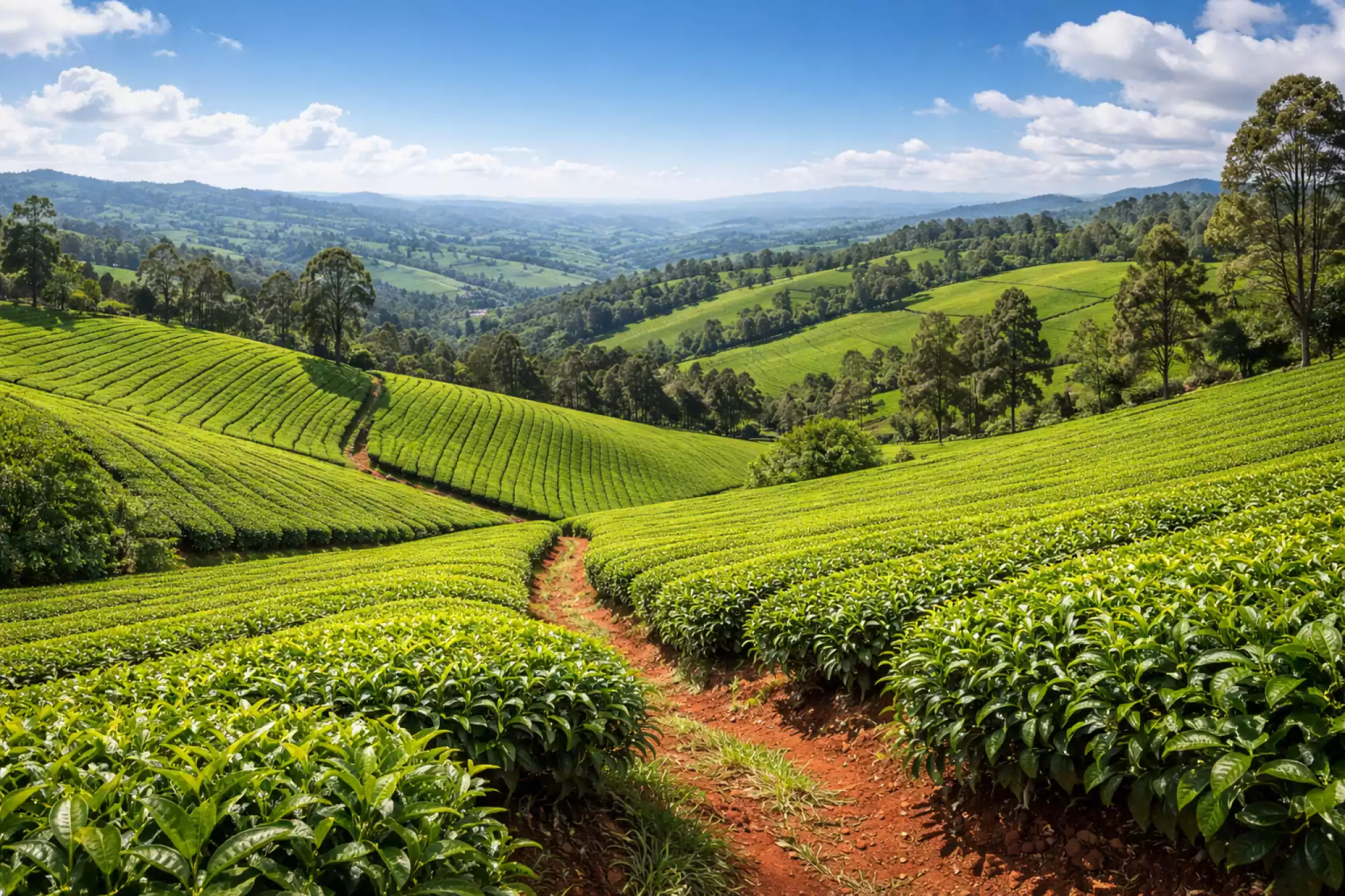
Kenya is the world's largest black tea exporter, a remarkable achievement for a country that only began commercial tea cultivation in the early 20th century. The equatorial climate and high-altitude growing regions (1,500-2,700m) allow tea plants to grow year-round, with harvests every 7-14 days—far more frequent than seasonal-harvest regions.
The CTC Revolution
Kenya pioneered large-scale CTC (Crush-Tear-Curl) processing, which dominates its industry. This method produces small, uniform granules that brew quickly and darkly—perfect for tea bags and milk tea. While criticized by tea purists for lack of nuance, CTC's efficiency democratized tea globally, making quality black tea affordable and accessible.
Flavor Profile: Kenyan tea is bright, brisk, with robust malty notes and a deep reddish-copper liquor. Clean, fresh character without the heavy astringency of some other CTC teas. High in theaflavins (compounds that create tea's golden ring and body), making it ideal for blending.
Economic Impact: Over 500,000 smallholder farmers contribute to Kenya's tea industry, making it a cornerstone of the national economy. The country's tea sector is a model for sustainable agricultural development in East Africa.
Kenyan tea represents the democratization of black tea—high quality, affordable, and perfectly suited for everyday drinking with milk.
Emerging & Specialty Regions
The global black tea map continues to expand beyond traditional powerhouses:
Nepal (Ilam District)
Similar terroir to Darjeeling but with more earthy, grounded character. Nepali teas offer excellent value—muscatel notes and floral complexity at lower prices than neighboring Darjeeling. Organic cultivation is common, appealing to eco-conscious consumers.
Indonesia (Java & Sumatra)
Dutch colonial legacy left Indonesia with established tea gardens producing malty, full-bodied teas often used in blends. Sumatra's volcanic soil creates particularly rich, smoky-sweet profiles.
Turkey (Black Sea Coast)
Turkey is one of the world's largest tea consumers per capita and a major producer along the Black Sea. Turkish tea is strong, brewed in double-stacked kettles (çaydanlık), and consumed throughout the day in tulip-shaped glasses. Bold, astringent, and traditionally drunk with sugar cubes.
Rwanda & Burundi
East African high-altitude newcomers producing bright, fruity teas with surprising complexity. Rwanda's tea industry has grown dramatically since the 2000s, with some estates earning specialty tea recognition.
China's Emerging Regions
Beyond traditional areas, provinces like Guizhou, Sichuan, Hubei are producing notable black teas. Sichuan Hong Cha offers distinctive orange-candy sweetness, while Yingde Hong Cha from Guangdong has cocoa and honey notes gaining international attention.
The Alchemy of Production: How Green Leaves Become Black Tea
The transformation from fresh green leaf to finished black tea involves precise, sequential steps. Each stage influences the final flavor, and regional variations in technique create the diversity we taste across the world's black teas.
Step 1: Plucking (Picking)
Standard: "Two leaves and a bud" is the classic standard for quality black tea. The bud and youngest leaves contain the highest concentration of aromatic compounds and amino acids.
Methods:
- Hand plucking: Used in premium Chinese teas (Keemun, Jin Jun Mei) and specialty Darjeeling. Allows selective harvesting of optimal leaves. Labor-intensive but produces superior quality.
- Machine harvesting: Common in Assam, Kenya, Ceylon low-grown estates. Efficient but less selective, including older leaves and stems. Suitable for CTC processing.
Varietal matters: Chinese small-leaf (C. sinensis var. sinensis) produces more delicate, aromatic teas. Indian/African large-leaf (C. sinensis var. assamica) yields bolder, malty, high-caffeine teas.
Step 2: Withering
Fresh leaves are spread thinly on bamboo trays or withering troughs for 12-18 hours (or accelerated with warm air). Moisture content drops from 75-80% to 55-60%, making leaves pliable for rolling and initiating chemical changes that affect flavor development.
Impact: Longer withering increases floral aromatics; shorter withering retains more grassy notes. Temperature and humidity must be carefully controlled—too fast dries the leaf surface while trapping moisture inside; too slow risks bacterial growth.
Step 3: Rolling (or CTC Processing)
Orthodox Rolling
Leaves are rolled by hand or in rolling machines for 30-90 minutes. This breaks cell walls, releasing enzymes and essential oils that will drive oxidation. Rolling also shapes the tea—tightly rolled leaves (like Keemun) unfurl slowly during brewing; loosely twisted leaves (like Assam orthodox) brew faster.
CTC (Crush-Tear-Curl)
Developed in the 1930s, CTC machines crush leaves between rollers with hundreds of sharp teeth, tearing and curling them into small, uniform granules. This maximizes surface area for rapid, complete oxidation and creates the strong, brisk character ideal for milk tea and tea bags. Dominant in Kenya, Assam, and Sri Lankan low-grown estates.
Comparison: Orthodox yields complex, layered flavors suitable for pure drinking. CTC produces bold, one-dimensional strength perfect for blending and milk.
Step 4: Oxidation (The Critical Transformation)
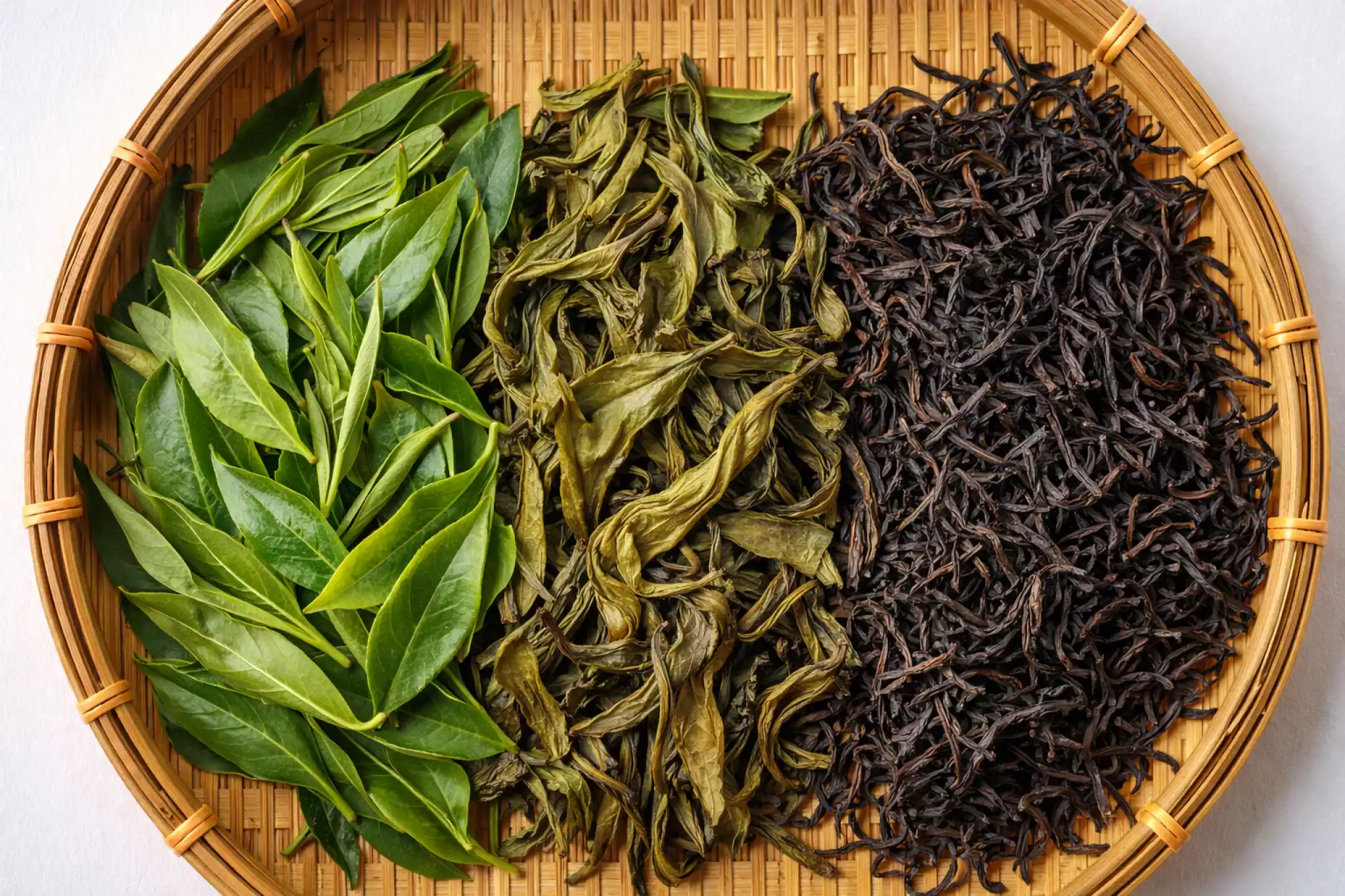
This is where black tea earns its character. Rolled leaves are spread in temperature- and humidity-controlled rooms (21-27°C, 90-95% humidity) for 1-4 hours. Enzymes (polyphenol oxidase) convert catechins into theaflavins and thearubigins—the compounds responsible for black tea's:
- Color: Amber to deep burgundy liquor
- Flavor: Malty, fruity, floral complexity replacing grassy astringency
- Mouthfeel: Reduced astringency, increased body and smoothness
- Golden ring: The oily film at the cup's edge indicating high theaflavin content
Regional Variations:
- China: Often lighter oxidation (70-85%) to preserve floral aromatics and sweetness
- India/Kenya: Heavy oxidation (95-100%) for maximum maltiness and strength
- Darjeeling: Variable oxidation (70-90%) to balance delicacy with body
According to research published in the Journal of Food Composition and Analysis, the oxidation process fundamentally alters tea's chemical composition, with theaflavins contributing brightness and briskness while thearubigins provide depth and color.
Step 5: Drying (Fixing)
High heat (85-95°C) halts oxidation, reducing moisture content to 2-3% for shelf stability. This "fixes" the flavor profile achieved during oxidation.
Methods:
- Oven/fluid bed drying: Modern, controlled, consistent—used in most commercial production
- Sun-drying: Traditional method for some Yunnan Dian Hong (shai hong), creating potential for post-production aging
- Smoke-drying: Lapsang Souchong is dried over smoldering pine, infusing iconic smoky character
Step 6: Grading & Sorting
Dried tea is sorted by size and appearance:
- Whole leaf grades: OP (Orange Pekoe), FOP (Flowery Orange Pekoe), TGFOP (Tippy Golden Flowery Orange Pekoe)—used in orthodox production
- Broken grades: BOP (Broken Orange Pekoe), FBOP—orthodox leaves intentionally broken for stronger brewing
- Fannings & Dust: Smallest particles, primarily from CTC—used in tea bags
Note: "Orange Pekoe" does not refer to flavor—it's a Dutch colonial grading term referring to leaf size and appearance.
Step 7: Optional Aging
Some black teas, particularly sun-dried Yunnan shai hong, can be aged like Pu-erh. Slow microbial and oxidative changes over years mellow smokiness, reduce astringency, and develop complex aged flavors—honey, dried fruit, camphor. Most black teas are best consumed within 1-3 years, but specialty aged blacks can improve for 10+ years.
The Character Equation
Orthodox + Light Oxidation + Hand Plucking = Delicate, Nuanced, Pure Drinking
Examples: Keemun, Jin Jun Mei, Darjeeling First Flush
CTC + Heavy Oxidation + Machine Harvest = Bold, Strong, Milk Tea
Examples: Assam CTC, Kenyan Breakfast, Ceylon Low-Grown
Global Black Tea Comparison Charts
Regional Characteristics at a Glance
| Region | Representative Tea | Flavor Profile | Liquor Color | Ideal Preparation | Caffeine (approx.) |
|---|---|---|---|---|---|
| China (Anhui) | Keemun | Floral, honey, orchid, silky | Amber / bright red | Pure, 90-95°C, 2-3 min | 40-60mg / cup |
| China (Yunnan) | Dian Hong | Malty, caramel, chocolate, sweet | Golden-orange | Pure, 95°C, 3-4 min | 50-70mg / cup |
| India (Assam) | Assam CTC | Brisk, malty, robust, bold | Deep wine-red | With milk, 95-100°C, 4-5 min | 60-80mg / cup |
| India (Darjeeling) | 2nd Flush | Muscatel, floral, fruity, delicate | Light amber | Pure, 85-90°C, 2-3 min | 30-50mg / cup |
| Sri Lanka | Uva / Nuwara Eliya | Bright, citrus, crisp, refreshing | Golden-red | With lemon, 90-95°C, 3 min | 50-70mg / cup |
| Kenya | CTC Breakfast | Brisk, malty, clean, strong | Deep red | With milk, 95-100°C, 4 min | 60-80mg / cup |
Processing & Aging Comparison
| Style / Region | Primary Processing | Aroma Profile | Aging Potential | Best Consumption |
|---|---|---|---|---|
| Shai Hong (Yunnan) | Sun-drying | Fruity, honey, evolving | High (decades) | 3-10+ years |
| Dian Hong (Traditional) | Oven-dried | Malty, chocolate | Moderate | 2-3 years |
| Assam (India) | CTC / Orthodox | Malty, brisk, robust | Low | 1-2 years |
| Darjeeling (Himalayan) | Light oxidation | Floral, muscatel | Low (delicate) | 6-12 months |
| Lapsang Souchong | Smoke-drying | Pine, resin, campfire | Moderate (mellows) | 2-5 years |
| Chinese Gongfu Blacks | Orthodox | Orchid, honey, pine, citrus | Moderate-High | 2-10 years |
Brewing & Tasting Guide
General Brewing Principles
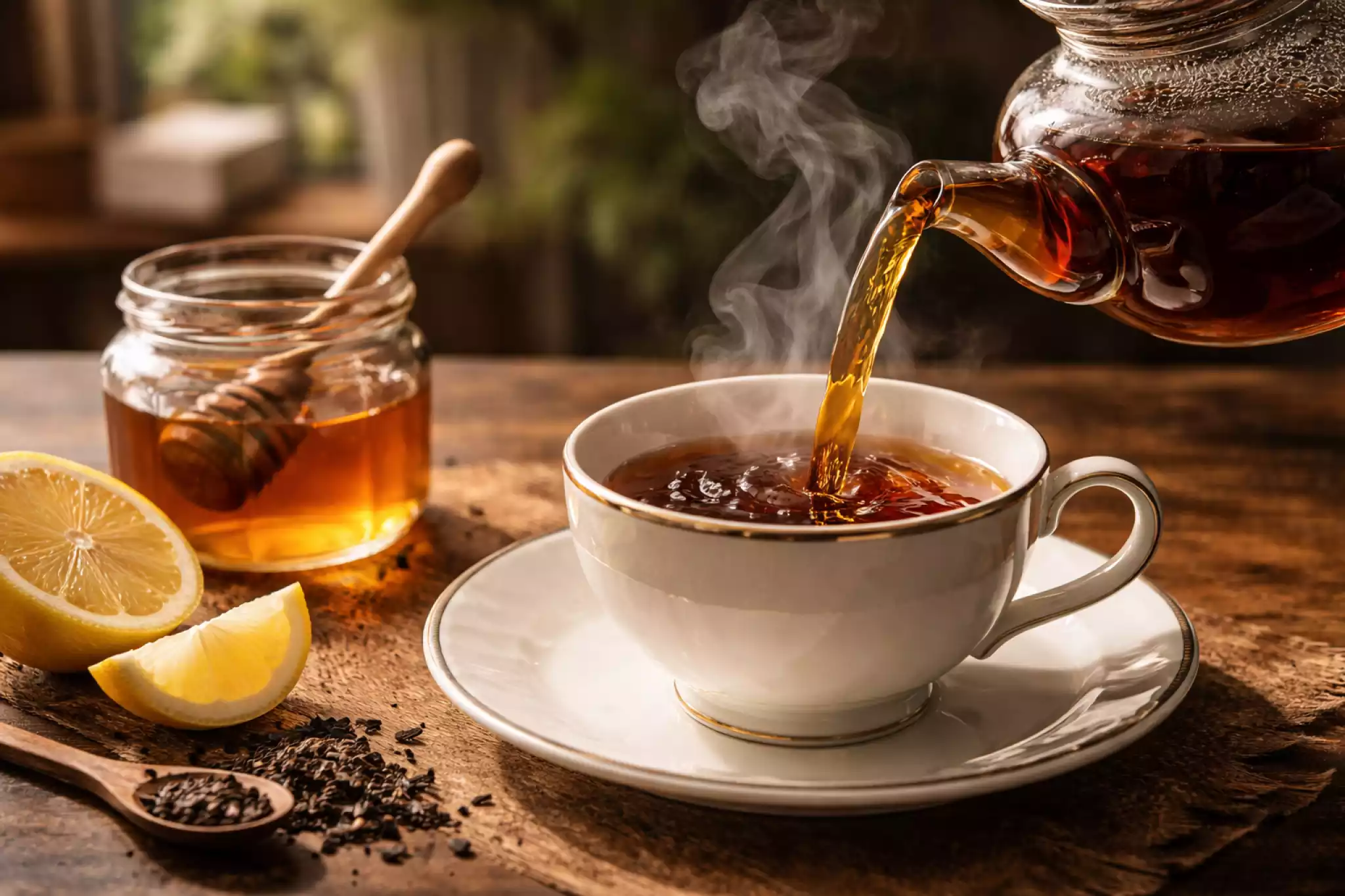
Water Temperature: 90-100°C (194-212°F) for most black teas
Steeping Time: 3-5 minutes (adjust based on strength preference)
Tea-to-Water Ratio: 2-3g per 200ml (about 1 tsp per cup)
Regional Brewing Adjustments
Delicate Chinese Blacks (Keemun, Jin Jun Mei, Dian Hong)
- Temperature: 90-95°C (avoid boiling to preserve delicate aromatics)
- Method: Gongfu style recommended—small vessel (gaiwan or Yixing), multiple short infusions (15-30 seconds), appreciate hou yun (throat resonance) and evolving sweetness
- Best enjoyed: Pure, without milk or sugar
Strong Indian/Kenyan Blacks (Assam, CTC teas)
- Temperature: 95-100°C (full boiling acceptable)
- Method: Western style—teapot, single longer steep (4-5 minutes)
- Additions: Excellent with milk and sugar; can be boiled directly in milk (masala chai style)
Darjeeling & Ceylon High-Grown
- Temperature: 85-90°C (cooler to preserve floral notes)
- Steeping: 2-3 minutes (longer risks bitterness)
- Best enjoyed: Pure or with lemon (avoid milk which masks delicate flavor)
Professional Tasting Technique
- Dry leaf observation: Aroma, color, presence of golden tips
- Wet leaf aroma: After steeping, smell the spent leaves—reveals deeper character
- Liquor color: Clarity, brightness, depth
- Taste progression: Initial flavor → mid-palate → finish → aftertaste (hui gan)
- Throat resonance: Cooling or warming sensation, smoothness
- Cold testing: How does flavor change as tea cools? Premium teas remain pleasant; poor teas develop harshness
Developing Your Black Tea Vocabulary
Positive descriptors: Malty, honey, caramel, chocolate, floral, muscatel, fruity, brisk, bright, smooth, golden ring (oil film), clean finish, lingering sweetness
Negative descriptors: Flat, muddy, harsh, burnt, overly bitter, metallic, astringent (excessive), thin, stewed
"When I drink Lapsang Souchong, I always think of the mist-shrouded mountain paths of Wuyi—that pine smoke seems to carry the spirit of three hundred years."
Food Pairing Suggestions
Black tea's versatility makes it ideal for diverse culinary pairings:
Lapsang Souchong
Pairs with: Grilled meats, barbecue, smoked salmon, sharp cheeses, dark chocolate. The smokiness complements and enhances charred flavors.
Keemun
Pairs with: Pastries, fruit tarts, mild cheeses, breakfast breads. Its wine-like delicacy elevates rather than overpowers subtle flavors.
Assam
Pairs with: Full English breakfast (eggs, bacon, sausage), scones with clotted cream, rich desserts, spicy foods. Its robustness stands up to bold flavors.
Dian Hong
Pairs with: Dark chocolate, nuts (almonds, walnuts), honey cakes, roasted root vegetables. Malty sweetness harmonizes with caramel notes in food.
Darjeeling
Pairs with: Light sandwiches, fresh fruit, delicate pastries, afternoon tea service. Best enjoyed pure to appreciate its complexity.
Ceylon
Pairs with: Citrus desserts, pound cake, shortbread, seafood. The bright acidity cuts through richness and complements lemon.
Frequently Asked Questions
Western classification is based on the appearance of dried leaves (which are black or dark brown), while Chinese classification is based on the color of the brewed liquor (which is red to amber). Both terms refer to the same fully oxidized tea category.
Generally yes. Black tea contains 40-80mg caffeine per cup, while green tea has 20-45mg. The longer oxidation process and higher brewing temperature used for black tea extract more caffeine. However, caffeine content varies significantly by cultivar, harvest season, and brewing parameters.
Orthodox tea uses traditional rolling methods that preserve whole or partially broken leaves, creating layered, nuanced flavors ideal for pure drinking. CTC (Crush-Tear-Curl) mechanically pulverizes leaves into small granules, producing bold, one-dimensional strength perfect for milk tea and tea bags. Orthodox is craft; CTC is efficiency.
Most black teas are best consumed within 1-3 years of production. However, sun-dried Yunnan blacks (shai hong) can age for 10+ years, developing mellower, more complex flavors similar to aged Pu-erh. Smoked teas like Lapsang Souchong also mellow pleasantly with 2-5 years of age. Store in cool, dry, odor-free environment in airtight containers.
Strong, malty, astringent teas (Assam, Kenya CTC, Ceylon low-grown) benefit from milk, which neutralizes tannins and adds creamy richness. Delicate, aromatic teas (Keemun, Darjeeling, Jin Jun Mei) should be enjoyed pure—milk masks their subtle floral and fruity notes. It's about matching intensity: robust with milk, delicate without.
Look for: (1) Abundant golden tips (young buds), (2) Fresh, complex aroma (floral, fruity, malty—not stale or flat), (3) Bright, clear liquor without cloudiness, (4) Pleasant returning sweetness (hui gan) without harsh bitterness, (5) "Golden ring"—an oily film at the cup's edge indicating high theaflavin content. Premium teas taste good even as they cool.
Muscatel refers to a distinctive sweet, fruity, grape-like flavor note characteristic of Second Flush Darjeeling teas. It develops due to the region's unique microclimate and partial oxidation processing. Some tea scientists attribute it to specific aromatic compounds formed during stress conditions (high UV, temperature fluctuation) unique to Himalayan terroir.
Black tea doesn't "spoil" in the food safety sense but loses flavor and aroma over time. Properly stored black tea remains safe to drink for years but peaks within 1-3 years for most varieties. Signs of degradation: flat aroma, dull color, loss of complexity. Avoid moisture, heat, light, and strong odors during storage.
No—"breakfast tea" is a category of blends designed for robust morning drinking, typically combining bold teas like Assam, Ceylon, and Kenyan. English Breakfast is the most common, but Irish Breakfast (stronger, more Assam-heavy) and Scottish Breakfast (often includes smoky notes) are variations. These are marketing names for blends, not single-origin teas.
This phenomenon, called "creaming" or "tea cream," occurs when theaflavins and caffeine precipitate out of solution as tea cools. It's actually a sign of high-quality tea with abundant theaflavins. The tea remains safe to drink; simply reheat to dissolve the particles. It's most common in Assam and other high-theaflavin teas.
🌿 Deepen Your Knowledge
"Black tea is not one story—it is a thousand stories, each told through soil, sun, human hands, and the patient alchemy of oxidation. From Wuyi's misty peaks to Kenya's sunlit plateaus, every cup connects us to place, history, and the artisans who transform leaf into liquid poetry."