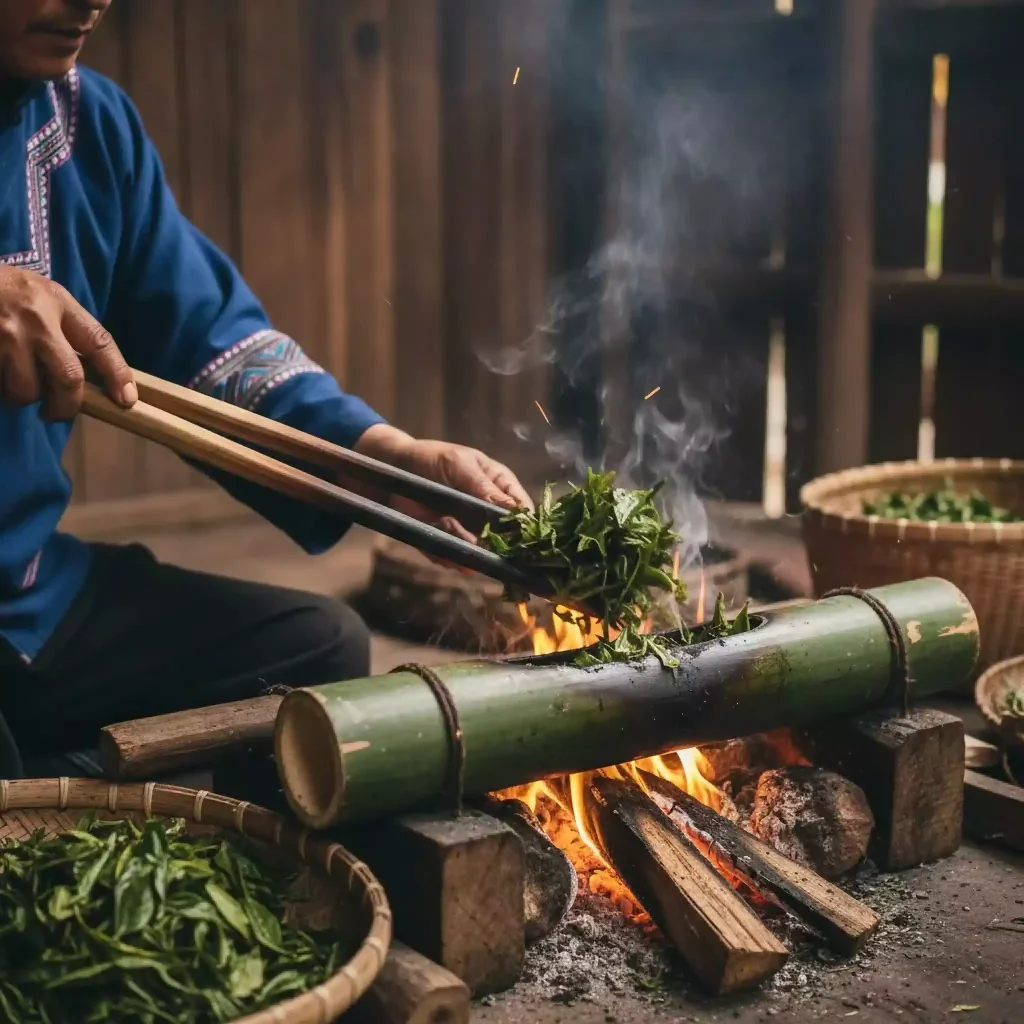
Sun, Time, and Leaves: The Secret Life of Shai Hong (Sun-Dried Black Tea)
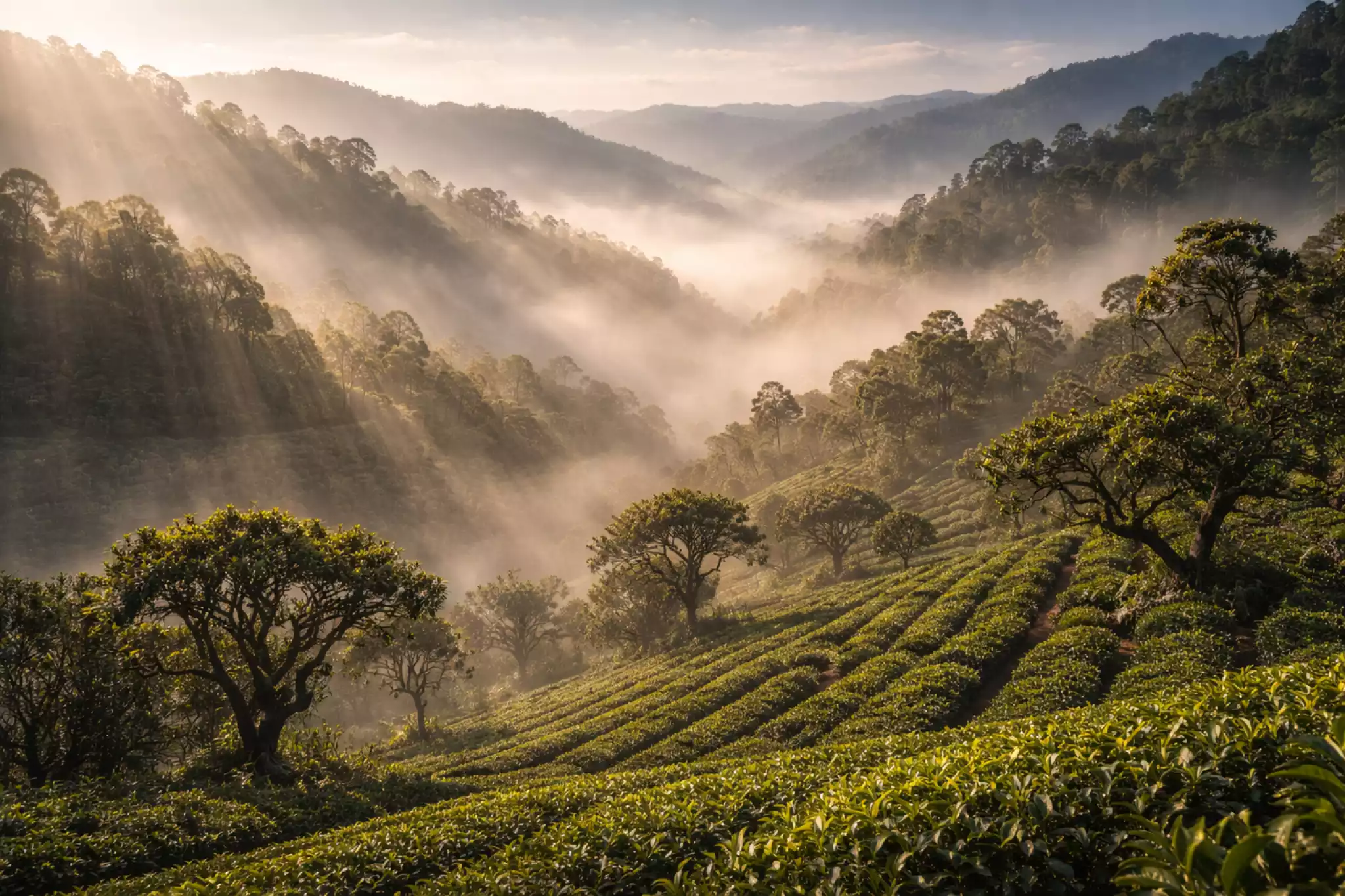
In the lush hills of Xiding Township, Menghai County, Xishuangbanna—deep in Yunnan's tea heartland—there exists a tea that challenges everything the world thinks it knows about black tea.
First, a necessary correction—because most published guides get this wrong: “Sun-dried black tea” (晒红, shai hong) is not any black tea that happens to touch sunlight during withering. Authentic shai hong is defined by a process structure: (1) controlled withering, (2) kneading, (3) partial (not full) fermentation, and (4) final drying completed entirely by natural sun and ambient airflow—not finished in an oven. Many market products use sun-withering but machine hot-air drying; these teas are technically conventional black tea, and they do not retain the biochemical capacity to age. This distinction—often omitted—is the single most important reason real shai hong behaves differently over time.
Most black teas have a shelf life. Drink them within 1–2 years of production, or watch their vibrant aromatics fade into flat, stale bitterness.
Except it's not universally true.
There is one black tea—made through an older Yunnan method—that improves with age, developing deeper complexity year after year.
This tea is called 晒红 (shai hong)—sun-dried black tea. And to understand why it's different, we must first meet the man whose hands shape it.
"Most tea is made to be consumed. Shai hong is made to be experienced—not just now, but across time."
— Ma Jinhua
What Is True Shai Hong (Sun-Dried Black Tea)?
True shai hong refers specifically to black tea that completes full withering, kneading, and controlled oxidation before being finished through natural sun-drying rather than high-heat baking.
This distinction is critical because only black-tea-based processing retains the biochemical stability required for gradual aging. Sun exposure alone does not define shai hong—processing sequence does.
- Processing logic: Black tea pathway
- Drying method: Natural sun finish
- Aging potential: Present when structure is preserved
- Common confusion: Mixed with hybrid or sun-green styles
Meet Ma Jinhua: Guardianship Through Craft
The Artisan at 1,700 Meters
Name: Ma Jinhua (马进华)
Born: 1993 (32 years old)
Location: Xiding Township, Menghai County, Xishuangbanna, Yunnan
Specialty: Sun-dried black tea (晒红, shai hong)
Experience: 8 years of dedicated practice
Philosophy: "Fully fermented tea feels like losing the leaf's soul."
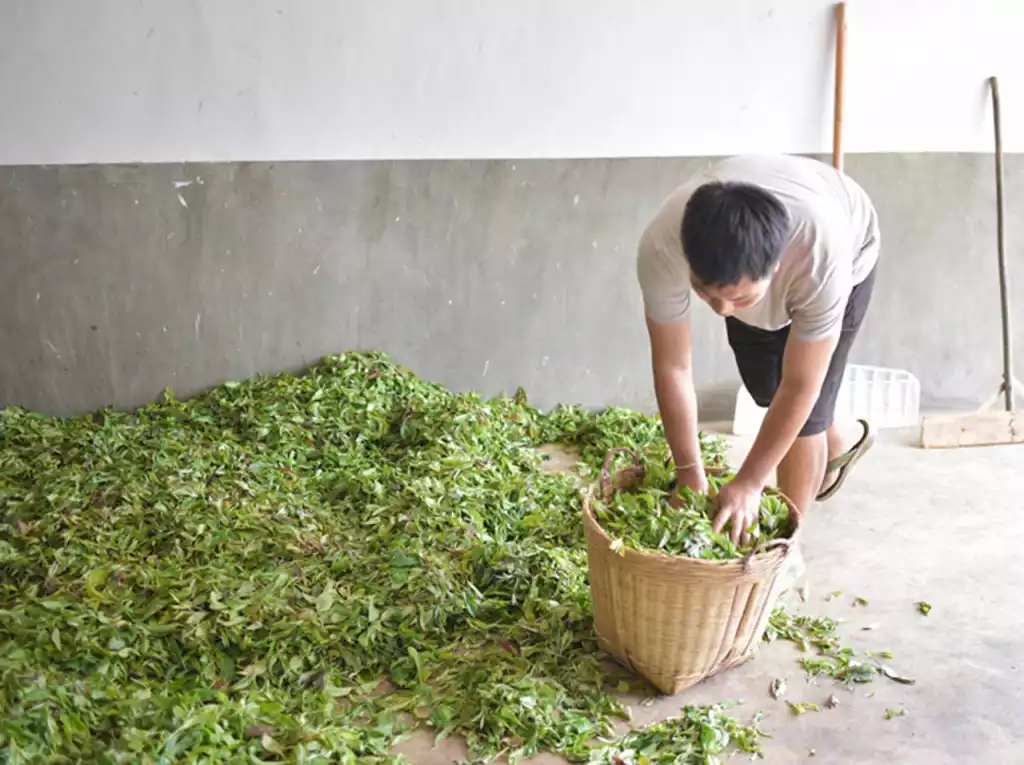
When we arrived at Ma Jinhua's tea workshop on a misty spring morning, he was already at work—collecting freshly sun-dried leaves from bamboo drying racks, their rich aroma mixing with the mountain air. At 32, he carries the quiet confidence of someone who has found his calling early and pursued it relentlessly.
Eight years ago, he began apprenticing in the traditional art of shai hong production—a craft nearly abandoned in favor of faster, more profitable industrial methods. While most Yunnan tea producers shifted to high-temperature oven-drying (the standard for commercial Dian Hong black tea), Ma Jinhua chose to preserve the slower, more demanding sun-drying method his grandfather's generation practiced.
"People ask me why I don't use machines for drying," he said, spreading a fresh batch of fermented leaves across the workshop floor. "The answer is simple: machines make tea that dies in two years. The sun makes tea that lives for twenty."
The Workshop: Where Time Moves Differently
Ma's production facility sits at 1,700 meters elevation, surrounded by pristine forest. The air is clean, the temperature stable around 25°C year-round—perfect conditions for the slow, patient process of shai hong.
Inside, the scene is deceptively simple: bamboo baskets stacked against walls, tea leaves spread on the clean swept floor, sunlight streaming through large windows. No industrial dryers. No temperature-controlled fermentation chambers. Just leaves, air, and time.
Farmers arrive throughout the day with baskets of fresh-picked leaves—one bud with two or three leaves, the standard agreed upon through years of silent understanding between growers and processor. The leaves are tender, vibrant green, carrying the signature freshness of high-altitude Yunnan tea gardens.
What happens to these leaves over the next 24-48 hours will determine whether they become ordinary black tea or something capable of aging gracefully for decades.
Part I: Withering (萎凋) — The Foundation of Transformation
Understanding "Wilt"
The Chinese term 萎凋 (wei diao) literally means "withering" or "wilting"—and at first, it sounds almost negative, like the tea is dying. But as Ma Jinhua demonstrated, this is actually the crucial first step in awakening the leaf's potential.
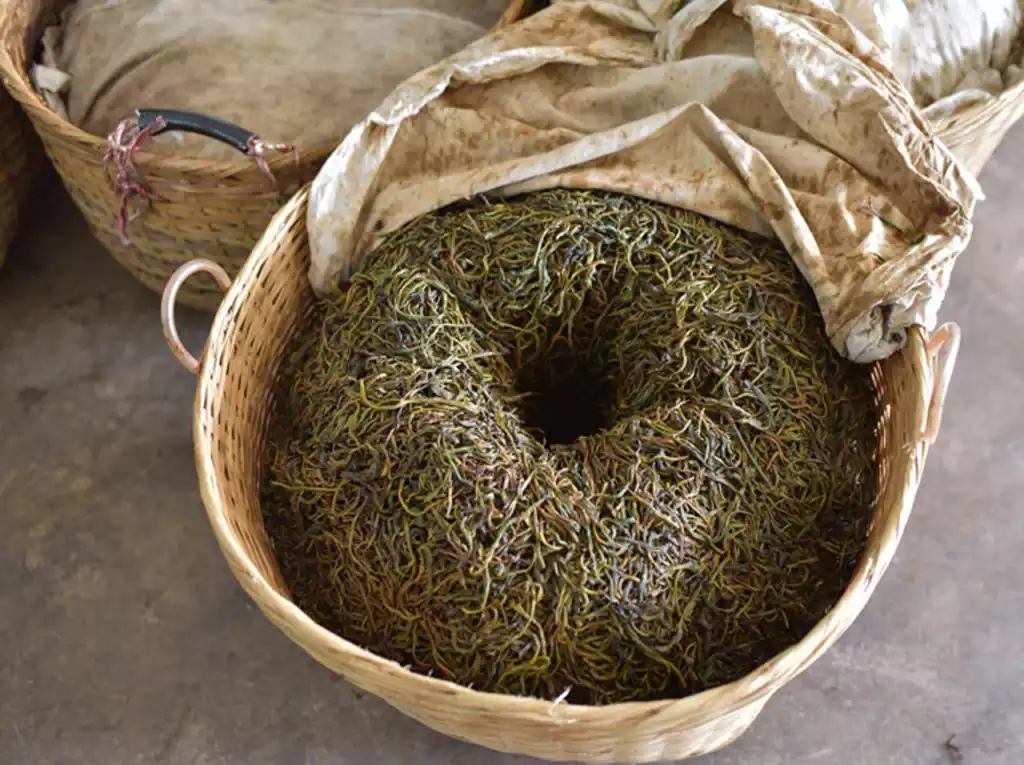
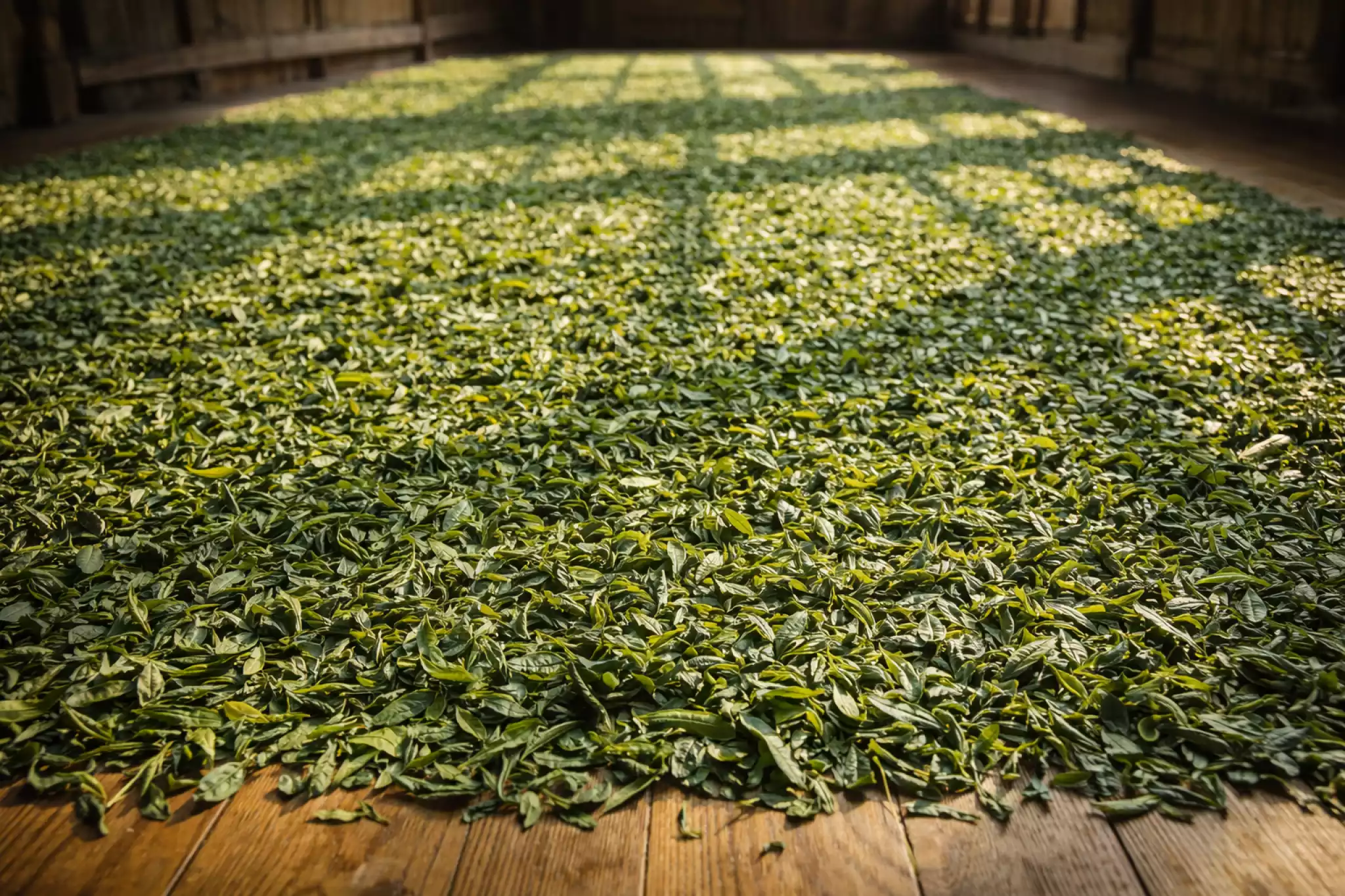
He grabbed a handful of fresh leaves and gently scattered them across the drying room floor. They spread out evenly, no leaf piled on another, forming a thin green carpet across the clean surface.
"The thickness must be just right," he explained, adjusting a few stray leaves with his fingertips. "The leaves need to lose about half their moisture. If piled too thickly, evaporation will be uneven—the top dries while the bottom stays wet, creating inconsistency. If spread too thin, moisture escapes too quickly, and we lose control of the chemical changes happening inside the leaf."
The Science Behind Withering
Fresh tea leaves are approximately 75-80% water by weight. During withering, this drops to 55-60%—a seemingly simple physical change that triggers profound chemical shifts:
- Cell wall flexibility: As water exits, leaves become pliable ("bent but not broken," as Ma says) instead of brittle, making them ready for kneading without tearing
- Enzyme activation: Polyphenol oxidase and peroxidase enzymes begin working, initiating the oxidation that will later create black tea's characteristic flavor
- Aroma precursor formation: Complex biochemical reactions create aromatic compounds that will later express as honey, fruit, and floral notes
- Chlorophyll breakdown: Green color begins fading as chlorophyll degrades, preparing for the leaf's eventual transformation to copper-red
Timing is critical. In Ma's workshop, withering typically takes 6-8 hours during spring, slightly longer in cooler months. He checks the leaves every hour, lifting handfuls to test their flexibility, smelling them for the emerging sweet fragrance that signals readiness.
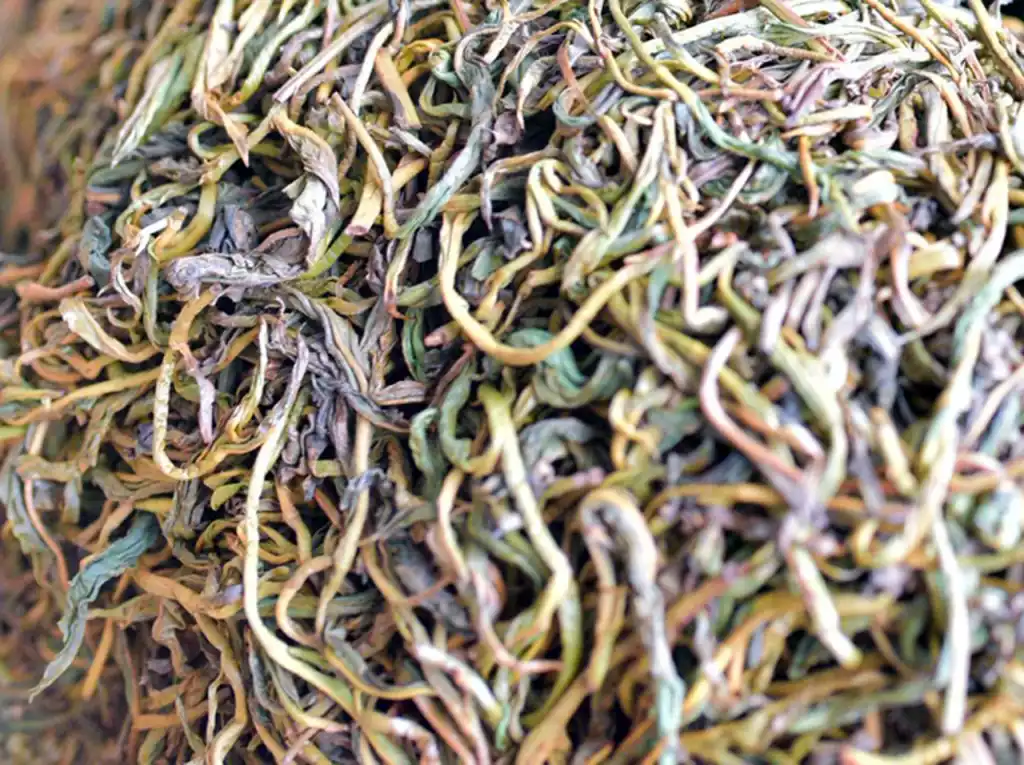
The Detail That Separates Mastery from Mediocrity
When we tried to mimic Ma's spreading technique, we failed repeatedly—our distribution was uneven, some areas thick, others thin. He laughed gently. "Years of practice. But more importantly, years of seeing what happens when it's done wrong."
This is the essence of true craftsmanship: not just learning the correct technique, but understanding viscerally what failure looks like and why it happens. Ma has made thousands of kilograms of shai hong. He has made mistakes, watched batches turn out poorly, traced each failure back to a specific moment in the process.
"Excellence," he said quietly, "is being a little more precise than necessary in every small detail. Most people get 80% right. The difference between good tea and great tea lives in that final 20%—and most of it happens right here, in how evenly you spread these leaves."
"Withering is not passive waiting. It's active observation—adjusting thickness, monitoring humidity, reading the leaves like a language only they speak."
Part II: Kneading (揉捻) — Breaking the Surface to Release the Soul
When the Leaf Bends But Doesn't Break
After 6-8 hours of withering, Ma picked up a leaf and flexed it gently. It curved smoothly without snapping—the signal that kneading can begin.
The purpose of 揉捻 (rou nian, kneading) is deceptively simple: break the leaf's cell walls to release internal compounds and prepare for oxidation. But as with withering, the devil—and the artistry—lives in the details.
Tradition Meets Pragmatism
"In the past, all kneading was done by hand," Ma explained, gesturing toward a mechanical roller in the corner of the workshop. "Artisans would spend hours rolling leaves between their palms, applying pressure to rupture cell walls while preserving the leaf's overall structure. It was exhausting work."
Today, Ma uses a hybrid approach that honors tradition while acknowledging reality: machines for initial processing, hands for final refinement.
"I run the leaves through the roller first—it handles the bulk of the work, breaking most of the cell walls efficiently. But machines can't read the tea. They can't feel when a batch needs gentler treatment or when leaves are particularly robust. That's where hand-finishing comes in."
After the mechanical pass, he carefully inspects the leaves, identifying any that weren't adequately kneaded or that clumped together. These he works by hand, rolling small batches between his palms with practiced pressure, feeling for the subtle texture changes that indicate proper cell rupture.
The Visual Transformation
Properly kneaded leaves undergo visible changes:
- Shape: Leaves twist and curl, creating the characteristic appearance of quality tea
- Color: Green begins shifting toward darker tones as exposed compounds oxidize
- Moisture release: Leaves glisten slightly as internal juices surface
- Aroma: Fresh grassiness gives way to fruity, floral notes—early hints of what fermentation will develop
"The goal is not just to break cells, but to break them evenly," Ma emphasized. "Uneven kneading creates uneven fermentation, which creates inconsistent flavor. When you drink a cup of well-made shai hong, every sip should taste cohesive—no jarring notes, no sudden bitterness. That harmony begins here."
Part III: Fermentation (发酵) — Where the Soul Reveals Itself
The "Lying Pile" Method
This is where shai hong's production diverges most dramatically from other black teas—and where Ma Jinhua's philosophy comes into sharpest focus.
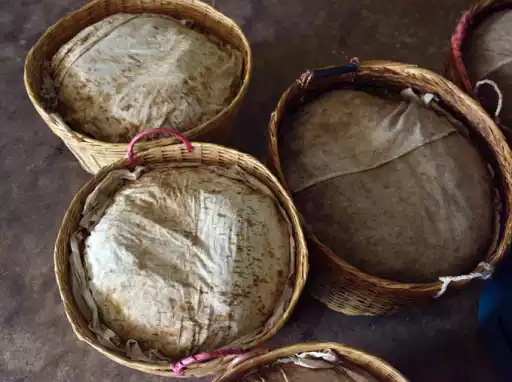
After kneading, approximately 20 kilograms of leaves are placed in a large bamboo basket and covered with a clean cloth. This technique is called "卧堆" (wo dui, "lying pile")—a natural fermentation method that relies on the leaves' own enzymatic activity and the ambient environment.
We asked Ma what creates the heat we could feel emanating from the basket. He smiled. "Just the leaves themselves. No added heat, no external fermentation agents. The mountain climate stays around 25°C year-round. That's all we need."
The Chemistry of Transformation
During fermentation, the polyphenol oxidase enzymes released during kneading begin their transformative work:
- Catechins → Theaflavins → Thearubigins: The chemical pathway that creates black tea's characteristic color, flavor, and body
- Chlorophyll breakdown accelerates: Leaves shift from green to copper-red to dark brown
- Aroma compounds develop: Fruity esters, floral alcohols, malty aldehydes emerge
- Astringency mellows: Harsh catechins transform into smoother theaflavins
But here's the critical choice that defines a tea's character: how long to ferment.
The Soul-Preservation Decision
Ma's fermentation typically runs 4-10 hours, depending on weather and leaf condition. But the sweet spot—the fermentation level he makes most often—is 80% oxidation, achieved in 7-8 hours.
"Most customers prefer this level," he explained. "The tea is smooth, with beautiful fruity aromatics and a clean finish. But it still retains the living quality of the fresh leaf—that brightness, that vitality you can feel in your mouth."
He paused, his voice taking on a firmness we hadn't heard before. "I rarely make fully fermented tea. It feels like losing the leaf's soul."
This is not mere poetic language. Full fermentation (100% oxidation) creates a tea that is complete, finished, static. It has nowhere left to evolve. Drink it now or drink it in two years—the experience will be largely the same (likely diminished as aromatics fade).
But 80% fermentation leaves room for growth. Residual enzymes remain active. The tea is not "done"—it's in a state of suspended potential, ready to continue evolving slowly over years and decades of aging.
This is the first secret of shai hong's aging ability. The second comes in the final step: drying.
🔥 The Fermentation Philosophy
Full Fermentation (100%): Complete, static, finished—like a photograph
80% Fermentation: Living, evolving, open-ended—like a growing tree
Ma Jinhua's choice to stop at 80% is not about saving time or effort. It's about preserving the tea's ability to change—the essential quality that makes aging possible.
Part IV: Sun-Drying (晾晒) — The Revolutionary Difference
Returning to the Earth
After fermentation, the leaves undergo their final transformation: drying. And here, in this seemingly simple step, lies the entire difference between a tea that dies in two years and a tea that lives for twenty.
In Ma's workshop, fermented leaves are spread across the clean-swept floor of a dedicated drying room—large windows open to catch sunlight, bamboo racks arranged to maximize air circulation. No machines. No temperature controls. Just leaves, sun, and patient waiting.
"Does drying tea on the floor seem dirty?" Ma asked us directly, anticipating a common concern.
We responded honestly: "Tea comes from the soil. Returning it to the earth for drying—how could that be 'dirty'?"
He smiled with visible relief. "We sweep the room thoroughly before each batch. And any surface dust that settles washes away in the first steeping. But more importantly—this is how it's meant to be done. Not because it's traditional, but because the results are chemically different."
Sun-Drying vs. Oven-Drying: The Critical Chemistry
Most commercial Dian Hong (Yunnan black tea) is oven-dried at temperatures of 90-120°C for 30-60 minutes. This method is efficient, consistent, and produces tea that tastes excellent—when fresh.
But high-temperature drying has consequences:
- Enzyme deactivation: Heat above 80°C denatures polyphenol oxidase and other enzymes, halting all chemical activity permanently
- Aroma volatilization: Intense heat drives off aromatic compounds, creating a "loud" immediate fragrance that fades quickly in storage
- Maillard reactions: High heat creates roasted, caramelized flavors—delicious, but not age-worthy
- Complete oxidation: Even if fermentation stopped at 80%, oven heat pushes it to 100%, closing the door on further evolution
The result: A tea that tastes bold, aromatic, and complete—but is fundamentally finished. Store it for 3 years, and it will taste noticeably worse than at 6 months. The clock is ticking from the moment it's dried.
Sun-drying operates under entirely different physics:
- Low temperature: Sunlight in Yunnan's mountains provides gentle heat (30-40°C), insufficient to denature enzymes
- Extended duration: 1-3 days of gradual moisture reduction vs. 1 hour of forced evaporation
- Enzyme preservation: Polyphenol oxidase remains active in dormant form, ready to resume work under proper storage conditions
- Aroma retention: Gentle drying preserves volatile compounds in stable molecular structures
- Partial fermentation maintained: If you stopped at 80% fermentation, sun-drying keeps it at 80%—oven-drying would push it to 100%
| Aspect | Oven-Dried Black Tea (Regular Dian Hong) | Sun-Dried Black Tea (Shai Hong) |
|---|---|---|
| Drying Temperature | 90-120°C (194-248°F) | 30-40°C (86-104°F) |
| Drying Duration | 30-60 minutes | 1-3 days |
| Enzyme Status | Completely deactivated | Preserved in dormant state |
| Initial Aroma | Bold, intense, immediate | Subtle, layered, fruity |
| Shelf Life | 1-2 years (peaks at 6-12 months) | 10-20+ years (improves with age) |
| Aging Behavior | Degrades—loses aroma, turns flat/stale | Transforms—develops depth, mellows, evolves |
| Flavor at 1 Year | Peak quality | Fresh, bright, fruity |
| Flavor at 5 Years | Noticeably faded, stale notes | Mellowed, deeper honey/cocoa notes, smooth |
| Flavor at 10+ Years | Flat, lifeless, often discarded | Aged complexity, woody sweetness, premium aged character |
The Visual Difference
Even in appearance, sun-dried and oven-dried teas reveal their processing:
- Oven-dried Dian Hong: Uniform dark brown-black color, tightly twisted, consistent appearance—the leaves "locked in place" by intense heat
- Sun-dried Shai Hong: More varied color (some lighter, some darker), looser twist, natural irregularity—the leaves allowed to express their individual character
"People sometimes think the irregular appearance of shai hong means lower quality," Ma noted. "They're used to the machine-perfect uniformity of industrial tea. But this variation is actually a sign of gentle processing. Each leaf dried at its own pace, according to its own thickness and moisture content. This is what 'handcrafted' actually means."
The Aging Revelation: Shai Hong as a Living Tea
Why Most Black Teas Cannot Age
In the global tea industry, it's accepted wisdom that black tea is best consumed fresh. Tea vendors will tell you: "Drink this within 18-24 months. After that, it's past its prime."
This advice is correct—for oven-dried black tea. The combination of full fermentation and high-temperature drying creates a finished product with nowhere left to evolve. Time only degrades it:
- Year 1: Peak aroma, bold flavor, excellent
- Year 2: Slight fading of high notes, still good
- Year 3: Noticeably flat, aromatic compounds volatilized
- Year 5+: Stale, cardboard-like, often with off-putting sourness
This degradation is not a flaw—it's the inevitable fate of a tea that was completed during processing. You can't age something that's already dead.
Why Shai Hong Can Age (and Should)
Shai hong operates under entirely different rules because it is fundamentally not a finished tea. Thanks to 80% fermentation and sun-drying, it retains:
- Active enzymes: Dormant but not dead, ready to resume slow oxidation under proper storage
- Stable aromatic precursors: Compounds that haven't volatilized and can continue developing
- Residual polyphenols: That remaining 20% of unoxidized catechins, slowly transforming over years
- Moisture equilibrium: Unlike oven-dried tea (bone-dry), sun-dried tea retains 8-10% moisture, allowing slow biochemical activity
In other words, shai hong after production is like raw Pu-erh after pressing—a tea in stasis, waiting for time to unlock its full potential.
The Shai Hong Aging Timeline: What to Expect
Year 1-2: Bright Youth
Flavor profile: Fresh, fruity (apricot, plum, honey), bright malty notes, clean finish
Aroma: High-toned florals, sweet hay, light cocoa
Mouthfeel: Crisp, refreshing, slight astringency
Best for: Exploring the tea's original character, understanding its baseline
Year 3-5: Mellowing Maturity
Flavor profile: Fruity notes deepen (dried fruit, raisin), honey becomes more prominent, cocoa emerges
Aroma: Florals soften, malt strengthens, subtle woodiness appears
Mouthfeel: Smoother, rounder, astringency fades, slight oiliness develops
Best for: Everyday drinking, peak accessibility for most palates
Year 6-10: Deepening Complexity
Flavor profile: Dark honey, cocoa, roasted nuts, dried dates, gentle spice
Aroma: Rich, woody sweetness, aged fruit (like aged wine), minimal florals
Mouthfeel: Silky, full-bodied, warming, lingering sweetness (hui gan)
Best for: Contemplative sessions, comparing vertical vintages, special occasions
Year 10-20+: Aged Treasure
Flavor profile: Camphor, sandalwood, aged leather, medicinal herbs, deep sweetness
Aroma: Museum-like aged fragrance, incense, old books, forest floor
Mouthfeel: Thick, syrupy, exceptionally smooth, pronounced throat resonance
Best for: Collectors, serious tea students, experiencing tea as a living archive of time
The Pu-erh Parallel
If you've aged raw Pu-erh, shai hong's transformation will feel familiar:
- Early years: Bright, sharp, sometimes harsh—potential visible but not yet realized
- Middle years: Balanced, accessible, showing both youth and maturity
- Late years: Transformed into something entirely new, unrecognizable from its youth
The key difference: shai hong ages faster than raw Pu-erh. Because it started at 80% fermentation (vs. Pu-erh's ~15-20%), it reaches drinkable maturity sooner and continues evolving on a compressed timeline. A 10-year shai hong can exhibit complexity comparable to 20-year raw Pu-erh.
Storage Recommendations for Aging Shai Hong
To allow proper aging, store shai hong using modified Pu-erh storage principles:
- Temperature: 20-25°C (68-77°F), stable—avoid dramatic swings
- Humidity: 60-70% relative humidity—higher than standard tea (40-60%), but lower than humid Pu-erh storage (70-85%)
- Ventilation: Moderate air circulation—completely sealed is bad, wide open is also bad
- Light: Dark storage, no direct sunlight
- Odor-free: Absorbs smells easily—keep away from spices, incense, strong aromas
Ma Jinhua stores his aged shai hong in sealed bamboo boxes placed in a climate-stable room. Once a year, he opens them briefly to "air out" the tea, allowing fresh oxygen to interact with the leaves—a practice borrowed from traditional Pu-erh warehousing.
💎 The Ultimate Revelation
Shai hong is not "black tea that happens to age well."
Shai hong is a hybrid category—bridging black tea's immediate accessibility with Pu-erh's long-term transformation potential.
It is the only tea in the world that offers both: drink it now and enjoy fully developed flavor, or cellar it for a decade and experience something entirely different.
Shai Hong vs. Regular Black Tea: The Complete Picture
| Characteristic | Regular Black Tea (e.g., Dian Hong, Assam) | Shai Hong (Sun-Dried Black Tea) |
|---|---|---|
| Processing Philosophy | Finish the tea completely during production | Create a living tea that continues evolving |
| Fermentation Level | 100% (fully oxidized) | 70-85% (partially oxidized) |
| Drying Method | High-temperature oven (90-120°C) | Natural sun-drying (30-40°C) |
| Enzyme Status Post-Drying | Completely deactivated | Preserved, dormant but viable |
| Initial Flavor Intensity | Bold, strong, "loud" | Subtle, layered, "quiet" |
| Aroma Character Fresh | Malty, chocolatey, roasted notes dominant | Fruity (apricot, plum), honey, floral |
| Recommended Consumption Window | 6 months - 2 years | Immediate to 20+ years |
| Aging Potential | None (degrades over time) | High (improves significantly with age) |
| Flavor Evolution | Decline—flattens, loses aroma | Transformation—deepens, develops complexity |
| Storage Needs | Cool, dry, sealed—minimize oxidation | Controlled humidity, ventilation—allow slow transformation |
| Price Point (per 100g) | $10-40 (premium up to $60) | $30-100+ (aged examples $150-300+) |
| Investment Value | None—consume quickly | High—can appreciate significantly with proper aging |
| Best Brewing Method | Western or gongfu (3-5 steeps) | Gongfu (8-12+ steeps, increases with age) |
| Cultural Comparison | Like fresh fruit—enjoy at peak ripeness | Like fine wine—can be cellared and aged |
FAQ: Aging, Storage, and Processing Reality
FAQ: Aging, Storage, and Processing Reality
“Sun-dried” alone does not guarantee aging potential.
In today’s market, teas labeled as shai hong may follow very different processing logics. Only those that complete a true black-tea pathway—controlled withering, full kneading, and intentional partial oxidation before sun-drying—retain the biochemical structure required for long-term evolution.
When key steps are shortened or skipped, unstable aromatic compounds fade instead of transforming, resulting in flat or lifeless aging.
No. Aging potential depends on processing discipline, not drying method alone. Many commercially labeled sun-dried teas are finished with heat or fully oxidized, leaving no room for future transformation.
Shai hong should be stored similarly to raw Pu-erh but slightly drier: stable temperatures (20–25°C), moderate humidity (60–70%), good air circulation, darkness, and odor-free surroundings.
Shai hong bridges both worlds. It follows a black tea processing logic but retains enzymatic life like raw Pu-erh, allowing it to evolve over time rather than degrade.
🌿 Deepen Your Understanding
"In a world obsessed with instant gratification, shai hong is a quiet rebellion—a tea that asks you to wait, to trust, to understand that some transformations cannot be rushed. Ma Jinhua doesn't make tea for today. He makes tea for the person you'll be in ten years."