The Last Real Thing:
Touch, Taste, and Human Dignity
When the algorithm starts running everything, what's left that belongs only to you?
2026: Standing at the Edge of the Ghost Economy
The Streets Have Gone Quiet — But Not for the Reason You Think
I'm writing this on a Wednesday afternoon. Outside my window, the street is unusually quiet for this hour — not because of rain, not because of a holiday. Just quiet in a way that feels different from two years ago. A new kind of quiet.
More and more of the people who used to move through cities during the day — analysts, strategists, writers, junior lawyers — are working from apartments now, or not working in the traditional sense at all. An AI agent can draft the market report, structure the legal memo, generate the first three rounds of design concepts. GDP is still climbing. The numbers on the screen are fine. But something in the texture of daily life has started to hollow out.
I've been calling it the Ghost Economy. Production continues — accelerates, even — but the humans in it feel increasingly like they're running alongside a machine that doesn't need them the way it used to. The machine generates, prices, optimizes. It does not, however, taste anything. It does not feel the weight of a porcelain gaiwan in a cold hand, the slight roughness of compressed tea leaf against a thumb. It does not know what it means to sit still on a Tuesday afternoon and wait, properly, for water to boil.
Leading research forecasts suggest that by 2028, roughly 40% of white-collar roles will face fundamental restructuring as AI agents absorb the cognitive core of knowledge work. The deeper disruption won't be unemployment alone — it will be the crisis of meaning that follows when "creative skill" and "professional expertise" are no longer uniquely human territory. When the thing you built your identity around can be replicated in seconds, what do you reach for?
What Is the Ghost Economy?
The Ghost Economy isn't a recession. It's an inversion: output keeps climbing while the human experience of contributing to it keeps thinning. Real wages in many cognitive sectors are softening. The number of hours spent on screens keeps rising. And yet the thing most people report feeling at the end of those screen hours isn't satisfaction — it's a vague, nagging absence. As if they were present all day but never quite arrived.
Which brings me to something that might seem completely unrelated.
A cup of tea.
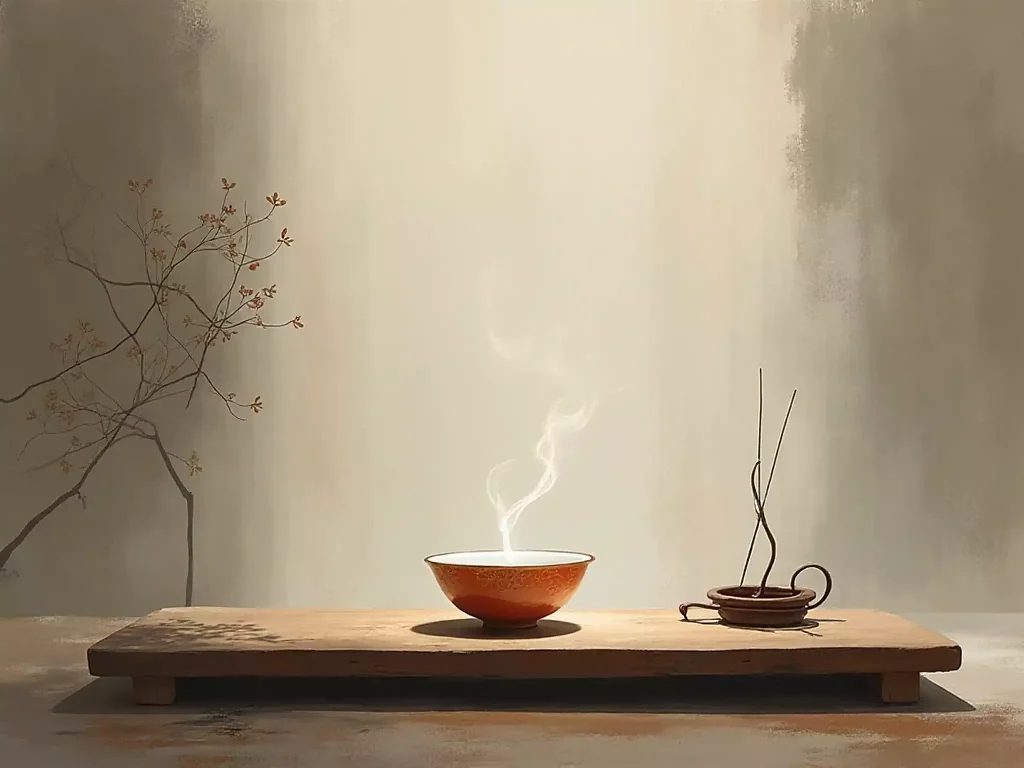
More specifically: the moment you pick up a porcelain gaiwan with both hands — the dry warmth of the clay meeting your palms, the heft of it, the faint smell of the leaf rising before you've even poured — and you are, for that moment, not a productivity metric. Not a role under review. Not a node in a system being quietly restructured around you. You are a sensing body, present in a specific room, at a specific temperature, with a specific smell rising toward you.
I've started thinking of this as Biological Sovereignty.
What Is Biological Sovereignty?
Biological Sovereignty isn't an anti-tech position. It's a simpler, older observation: across all the human activities that can be automated, optimized, and delegated to an algorithm, there remains a category of experience that cannot be colonized — your body's direct, unmediated contact with the physical world. The way warmth moves through clay into a cold hand. The way a specific aromatic compound from a specific mountain grove unlocks something in the limbic system that no verbal description of it can replicate. The way bitterness, after fifteen seconds of patience, becomes something close to sweetness, and the physical relief of that transformation arrives in the body before the mind has named it.
This essay is for the people who have started feeling a particular kind of tired. Not overworked tired. The kind where you've been staring at a screen for eleven hours, accomplished a great deal, and at the end of it feel strangely absent — like you were efficient but not quite there. If that resonates, keep reading.
Chapter Two
Two Timelines: The Speed of Silicon vs. The Patience of Leaves
Exponential vs. Biological: The Defining Contrast of Our Moment
Civilisation is running on two parallel tracks right now, at completely different speeds.
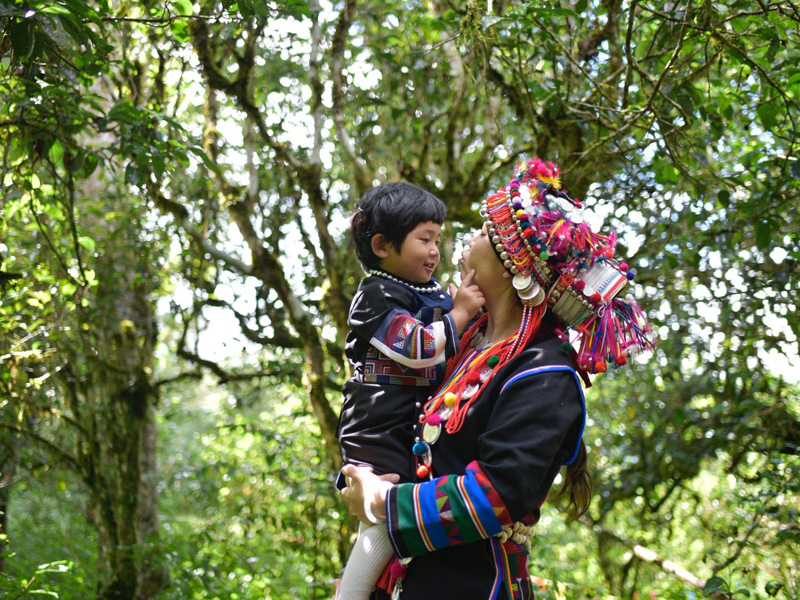
The silicon timeline moves exponentially — yesterday's compute doubles, and doubles again, and the thing that seemed impossible eighteen months ago is now table stakes. The carbon timeline moves the way it always has: the old-growth tea trees in Menghai county push out new buds each spring on the same schedule they always have. The sound of boiling water poured into a gaiwan — that low hiss building to a deep ceramic resonance — is acoustically identical to the sound a tea master heard doing the same thing a hundred years ago. Some frequencies, it turns out, were never waiting for an upgrade.
The tension between these two timelines is the defining metaphor of the moment we're living through.
| Era | ⚡ Silicon Timeline — The March of Compute | 🍃 Carbon Timeline — What a Cup of Tea Has Always Been |
|---|---|---|
| 1946— 1980s | ENIAC to the personal computer: for the first time, human logic could be outsourced to a circuit. Engineers understood — correctly — that machines could calculate faster than any person alive. | The old trees in Menghai breathe slowly in the afternoon heat. A craftsman rolls leaves between his palms to judge their moisture level. No processor required. The knowledge lives entirely in the skin of his hands. |
| 2010s | The mobile internet and cloud explosion: the world collapses into 0s and 1s, attention becomes a commodity, and the screen begins to feel more real than the room you're sitting in. | No matter how brightly the phone screen pulses, the low resonant sound of boiling water meeting porcelain is unchanged. Some things were never digitisable — not because no one tried, but because there's nothing there to encode. |
| 2022— 2025 | Generative AI crosses the threshold. Reports, illustrations, code — seconds. The knowledge worker's core skillset begins to feel suddenly permeable. "Creative work" starts to seem like a category, not a moat. | A raw pu-erh cake ages slowly in a Yunnan warehouse. Microbial communities transform compounds inside the leaf across years — new polyphenols, amino acids, aromatic molecules crystallising in their own time. You cannot command this process to hurry up. I think of it as time thickness: the kind of depth that only arrives by waiting. |
| 2026 Now | The opening act of the GIC: AI agents absorb cognitive labour at scale. GDP continues rising. But the machines producing it don't enjoy anything. They don't taste bitterness. They don't feel the particular stillness of a rainy afternoon made bearable by a good cup of tea. | You pick up a gaiwan. The heat travels through the clay into your fingers. Steam rises with the green-camphor smell of ancient-tree leaf. In this moment you are not a labour market statistic awaiting repricing — you are the only being in the universe who can experience this exact cup, in this exact body, right now. |
The Carbon Timeline Is Not Waiting for an Upgrade
Every acceleration on the silicon timeline quietly redraws the map of what's "uniquely human." The carbon timeline ignores this entirely. It just continues — at the speed of biology, at the pace of seasons, unfolding across your palate in its own time, with a patience that no accelerant can buy.
The human sensory system evolved over millions of years not to receive information, but to make direct contact with the world. Skin needs temperature. The nose needs actual molecules floating in actual air. The tongue needs compounds dissolved in real saliva to register real taste. These are physiological requirements, not metaphors. An algorithm can simulate the description of these sensations with remarkable accuracy — I've seen it produce genuinely beautiful tasting notes. It cannot simulate their occurrence. That gap, narrow as it sounds, is everything.
Chapter Three
What AI Can't Replicate: The Five Senses and Biological Sovereignty
A Thought Experiment About Tasting
Imagine the most sophisticated AI system in existence has read every piece of writing about pu-erh tea ever published — every tasting note, every sensory description, every poem written by a Tang dynasty scholar about the bitterness that slowly becomes sweetness in the throat. It can produce ten thousand essays on the subject, each one technically precise, emotionally resonant, entirely accurate.
And yet there is one thing it will never do, regardless of how many parameters it adds:
It will never taste anything.
This isn't a poetic metaphor. It's a physical fact. Perception requires nerve endings. It requires chemical receptors. It requires a living organism in actual contact with the actual world. All of that sits permanently outside the algorithm's jurisdiction — and that gap, between describing an experience and having one, is where your dignity lives.
Touch: The Resistance of Real Things
When your fingertips meet a warm gaiwan rim, the heat triggers skin receptors that relay a signal through the thalamus to the somatosensory cortex. You're not just noticing warmth. The physical world is sending a confirmation signal through your nervous system that you exist and you are here. The grainy surface of a pressed pu-erh cake under a thumb, the slight viscous drag of a rich broth across the palate — this is friction. Real, irreplaceable friction. In a world of frictionless swipes, that resistance has become quietly precious.
Smell: The Neural Pathway No Code Can Reach
The wild camphor note of ancient-tree leaf, the cool mineral depth of aged pu-erh — olfactory signals bypass the neocortex entirely and land directly in the limbic system: the amygdala and hippocampus, which govern emotional memory and response. This pathway predates language by millions of years. There is no API endpoint for it. No code can write into that system — not because compute is insufficient, but because there is simply no interface. This is the most biologically sovereign sense of all.
Taste: The Experience That Only Happens in Time
The initial bitterness of a Laobanzhang broth sits on the tongue for roughly fifteen to thirty seconds before hui gan begins — that slow-building return sweetness rising from the base of the throat, the throat itself seeming to cool slightly. The biological process — bitter compounds diluting in saliva, sweet receptors reactivating — cannot be skipped, cannot be fast-forwarded, cannot be replicated. The tea forces patience. And in that forced patience is the whole point: it makes you stay.
Sound: Listening Your Way Into the Room
Water boiling traces a recognisable acoustic arc — the Chinese tea tradition describes three stages: pine wind, crab eyes, fish eyes — each with a distinct frequency as bubble size shifts. When you learn to judge water temperature by listening, you've entered a domain that cannot be automated away from you. You have to be present to hear it. You have to slow down enough to pay attention. That isn't inefficiency. That is the whole exercise.
Why Sensory Experience Connects to Human Dignity
A reader in Brooklyn — a former strategy consultant who left her firm after her entire department was reorganised around an AI suite — sent me a note a few months ago that I've kept coming back to.
"The first time I sat with a really good pu-erh after everything imploded at work, I wasn't trying to be mindful or whatever. I was just exhausted and someone had given me a cake of aged sheng. I didn't know what I was doing. I poured the water wrong, I over-steeped it twice. But at some point I noticed I was actually there, in my apartment, in my body. Not in my head, not in the spreadsheet-that-used-to-be-my-career. The tea made me show up for twenty minutes. I hadn't realised how long it had been since I'd actually done that."— R.M., Brooklyn, former strategy consultant · 2025
I hear versions of this story often. Not always in crisis moments — sometimes it's just someone who realised one afternoon that they'd been optimising their leisure time the same way they optimised their work, and that a cup of tea made them stop. The sensory event is the mechanism. You cannot half-attend to heat moving through clay into your hands. You're either there or you've put the cup down.
It cannot feel what happens in the body when the bitterness finally turns.
That's not a hardware limitation. That's the boundary of the whole category.
Why Tea Matters in the Ghost Economy Specifically
There's a reason I keep coming back to tea rather than, say, cooking, or walking, or any number of activities that also involve genuine sensory presence. Tea has a particular property: it is slow in a way that cannot be cheated. You cannot microwave a gaiwan session into quality. The good compounds — the L-theanine that produces that calm-but-alert state, the polyphenols that require temperature and time to open, the aroma molecules that need a still room to travel properly from cup to nose — all of them require patience as an ingredient. The tea's cha qi — the physical sensation of warmth spreading through the body, palms first, then the back, then a quiet lightness across the chest — is a direct measure of how present you allowed yourself to be.
In a culture that has systematically eliminated every other form of mandatory patience, that quality feels almost anachronistic. And that, I think, is exactly the point.
On a productive afternoon, choosing to spend twenty minutes with a cup of tea — producing nothing, optimising nothing, not even taking notes about the experience — is itself a statement. It says: my time is not entirely owned by the market. My attention is not entirely owned by a screen. My perception does not need to be logged as data to count.
In 2026, that statement is more radical than it sounds.
Ancient-Tree Yunnan Sheng Pu-erh
The tea that prompted this essay. Ancient-tree material from Menghai — the fullest expression of what slow, uninterrupted biology produces. Deep camphor on the nose, an entry that surprises with sweetness before the complexity arrives, and a hui gan that builds for minutes after the cup is empty. Learn how to taste it properly →
Chapter Four
Technology Has a Role. This Isn't It.
The Case for Technology — When It Knows Its Place
Before I go further, I want to be clear: none of this is anti-technology.
I'm genuinely glad that precision pesticide-residue testing means the teas I source can be verified clean to a standard that wasn't achievable twenty years ago. I think blockchain-enabled supply chain transparency — where you can trace a tea back to the specific grove, the specific harvest date, the specific elevation — is one of the better applications of the technology. I'm happy to use digital tools to move a tea from a mountain in Yunnan to a desk in Portland or Stockholm without it taking three months and arriving damaged.
Technology is a tool. Good tools extend human freedom. The problem arrives when the tool becomes the point — when efficiency stops serving something and becomes the only value that counts. When "unquantifiable" starts functioning as a synonym for "worthless." When a cup of tea starts being evaluated as a suboptimal hydration delivery method.
We use technology to make the sourcing cleaner, the supply chain more honest, the information more accurate. We do not use it to replace the experience of picking up a gaiwan and feeling the heat move through the clay into your hands. Using AI to analyse the chemical composition of a leaf: genuinely useful. Using AI to simulate the experience of tasting one: not progress. Subtraction.
In the shadow of the 2028 crisis, the freedom to "waste" twenty minutes slowly drinking a cup of tea — not for wellness, not for productivity, just because you wanted to — is one of the most human things left on the menu. Not because the tea is expensive. Because in that act you are reclaiming ownership of your own attention.
The Fork in the Road: Two Ways of Being in 2028
The next few years are creating a genuine bifurcation. Not a dramatic one — no single decision point. Just the accumulated weight of small daily choices about where your attention goes and what you let your body actually experience.
- Attention permanently managed by recommendation engines
- Senses slowly dulling — less able to register the subtle and real
- High output, shrinking capacity to feel anything about it
- Ambient anxiety with no clear source, no clear exit
- Living inside data, increasingly unable to feel present in a room
- Deliberately pulls back from screens to make contact with objects
- Trains perception — heat, scent, texture, sound, taste
- Uses "unproductive" time as active resistance to the efficiency mandate
- Builds identity and stability through sensory ritual, not content consumption
- Has somewhere analog to return to when the digital gets too loud
The fork doesn't announce itself. It just shows up in whether you checked your phone while the water was boiling. Whether you sat for the full three minutes without opening a tab. Whether, when you noticed the hui gan arriving in your throat, you stayed with it for a moment instead of immediately moving on. Those small choices are accumulating into who you are in 2028.
I say this as someone who fails it regularly. I've poured a hundred gaiwans while half-thinking about something else. The practice isn't about perfection. It's about the decision to keep attempting it — to keep insisting that your body deserves twenty minutes of your actual attention, not the scraps left over after the screens have taken everything else.
Chapter Five
The Steeped Roots Position, 2026
What the GIC Can't Predict
I don't know what 2028 will look like. Nobody does.
The GIC forecasting models are themselves algorithmic products — remarkably precise about economic indicators, completely blind to what happens inside a person who, on a rainy Tuesday afternoon, sits down with a bowl of aged pu-erh and finds that something unknots in their chest. No model captures that. No model predicts how that small moment of genuine sensory contact might quietly redirect the decisions that follow it.
But here's what I do know: whatever happens to the labour market, to the knowledge economy, to the categories of "skilled work" between now and then — your body will still need heat. Your nose will still need actual molecules to interpret. Your tongue will still produce that involuntary swell of saliva when a good hui gan arrives, and the sensation that comes with it — something close to gratitude, honestly — will not be something you could have outsourced or predicted or scheduled. It just arrives. And it is entirely yours.
An Analog Refuge in a Digital Flood
In the middle of the digital flood, we're trying to keep one corner of the world analog.— Adrian, Steeped Roots Tea Culture, 2026
Close the AI window running your quarterly analysis.
Trim something growing. Light something that smells of earth.
Put the kettle on and wait for it — properly, without a tab open.
Technology goes one way. Dignity goes another.
We're in the tea, holding onto the last real thing.
If anything in this essay has left a trace — even just the quiet thought: maybe I'll make a proper cup of tea this afternoon — go do it. Don't turn it into a wellness habit or a mindfulness challenge or a thing you track in an app. Just do it once, today, without your phone on the table.
Pick up the gaiwan. Wait for the water — listen to it move through the stages. Notice the heat enter your hands. Smell what rises. Stay for the hui gan.
In that moment, you are the only being in existence who can experience that specific cup, in that specific body, in that specific afternoon light.
That's enough. It's always been enough.
Or start with the practice: the 2g Tea Rhythm protocol · How to taste Chinese black tea

Adrian has spent over a decade sourcing and studying tea directly with small producers in Yunnan, Fujian, and Anhui. He has lived for extended periods in Xishuangbanna studying ancient-tree pu-erh production, trained in gongfu brewing under several master practitioners, and writes regularly on the intersection of tea culture, neuroscience, and contemporary life. Steeped Roots was founded on the belief that a cup of well-sourced, properly made tea is one of the most honest transactions available to a human being in the twenty-first century.
Frequently Asked Questions
What is Biological Sovereignty, and why does it matter in 2026?
Biological Sovereignty is the capacity to experience the world directly through your senses — touch, smell, taste, sound, and the broader physical sense of being embodied in a particular place and time. It matters in 2026 because AI has now reached the point where it can replicate cognitive output with unsettling accuracy, but it remains categorically unable to experience anything. No matter how capable compute becomes, machines cannot taste bitterness, cannot feel heat move through clay into cold hands, cannot experience the hui gan rising in the throat after a sip of aged sheng pu-erh. These perceptual events require nerve endings, chemical receptors, and a living body in actual contact with the physical world. As AI displaces cognitive work, these irreplaceable sensory experiences become a rare and increasingly important form of dignity.
How does sensory experience connect to human dignity?
Dignity, at its core, is about what cannot be reduced or substituted. In economic terms, dignity often tracked our irreplaceability — what only we could do. As AI narrows that category dramatically, sensory sovereignty offers a different foundation: the simple, uncontestable fact that you are the one who experiences your senses, and no machine can step in on your behalf. Choosing to spend twenty unproductive minutes making and drinking a cup of tea — not for wellness ROI, not for a content post, just because you wanted to — is an act of insisting on that irreducibility. In a culture that is relentlessly commodifying time, that insistence is a genuine statement about personhood.
What is Hui Gan, and why is it relevant here?
Hui Gan (回甘) is the "returning sweetness" — the physiological phenomenon where bitterness in a cup of tea, particularly aged pu-erh or high-quality raw sheng, gradually transforms into a rising sweetness and coolness in the throat, typically fifteen to forty-five seconds after swallowing. The mechanism involves bitter polyphenol compounds diluting in saliva while separate sweet taste receptors continue receiving signals, producing a genuine chemical change in what the tongue perceives. The reason hui gan is relevant to this essay: it is an experience that requires patience to receive, cannot be fast-forwarded, and can only be perceived by a consciousness that stayed present long enough to feel the transformation happen. It is, in miniature, an argument for the entire sensory approach.
Why does tea matter specifically in the Ghost Economy?
Tea has a particular structural property that makes it distinctly useful in the Ghost Economy: it is slow in a way that cannot be cheated. The best compounds — L-theanine for calm alertness, the aromatic molecules that require a still room and unhurried attention, the hui gan that requires the right water temperature and timing — all require patience as a genuine ingredient. You cannot rush a gongfu session into quality. That forced patience is the mechanism: the tea will not meet you halfway if you are distracted. It is, in this way, a practice that enforces presence by design. Cha qi — the physical energy sensation of a good tea session — is essentially a measure of how fully you showed up for the cup.
What is the 2028 Global Intelligence Crisis (GIC)?
The Global Intelligence Crisis (GIC) is a term being used across several research and consulting frameworks to describe the convergence of disruptions arriving around 2028 as AI agents reach sufficient capability to absorb the cognitive core of most white-collar roles. Leading projections suggest roughly 40% of knowledge work positions will face fundamental restructuring. The "crisis" element is not purely economic — it's the meaning crisis that follows when the creative and analytical skills people spent decades developing can be replicated in seconds. The GIC forces a civilisational question: if cognitive output is no longer a reliable source of human identity, what is? This essay proposes that embodied sensory experience — the biological domain that AI cannot enter — is one of the most honest answers available.
Does the type of tea matter, or can any tea work for this?
Any tea, made with genuine attention, can become a sensory practice. The reason I emphasise aged pu-erh and ancient-tree Yunnan material specifically is that these teas tend to offer the richest layering of sensory events: a complex aromatic profile that rewards slow attention, a mouthfeel that changes noticeably across steepings, and a pronounced hui gan that forces you to stay with the cup. They are also, materially, expressions of time — leaf from trees that may be hundreds of years old, processed by hand, aged in ways that cannot be industrially compressed. That biographical weight is part of what makes them a useful counterweight to the frictionless, instantly-generated world of the Ghost Economy. That said: a good Dianhong in an office mug, made with focus rather than distraction, is still twenty minutes of genuine sensory presence. Start where you are. Here's how to get more out of any Chinese black tea →
🍃 Continue the Conversation
- What Is Cha Qi? — The biochemistry of why good tea changes how the body feels
- How to Taste Chinese Black Tea — A full sensory language for mouthfeel, hui gan, and every layer in between
- From NYC to Menghai: The 2g Tea Rhythm — How to build a sensory practice inside a real working day
- The 3PM Micro-Reset — What happens in the gut and brain when you take twenty minutes with tea in the afternoon
- Twin Pillars of Yunnan Tea — Why the ancient assamica tree produces both Dianhong and Raw Pu-erh, and what that means for the cup
- Raw Pu-erh vs. Coffee — An honest reckoning with which one actually serves the human body better across a long day